IB DP Chemistry: HL復習筆記11.2.2 Processing Errors
Types of Errors An error is the difference between a value or quantity obtained in an experiment and an accepted or literature value for an experiment There are two types of errors in experiments,?...
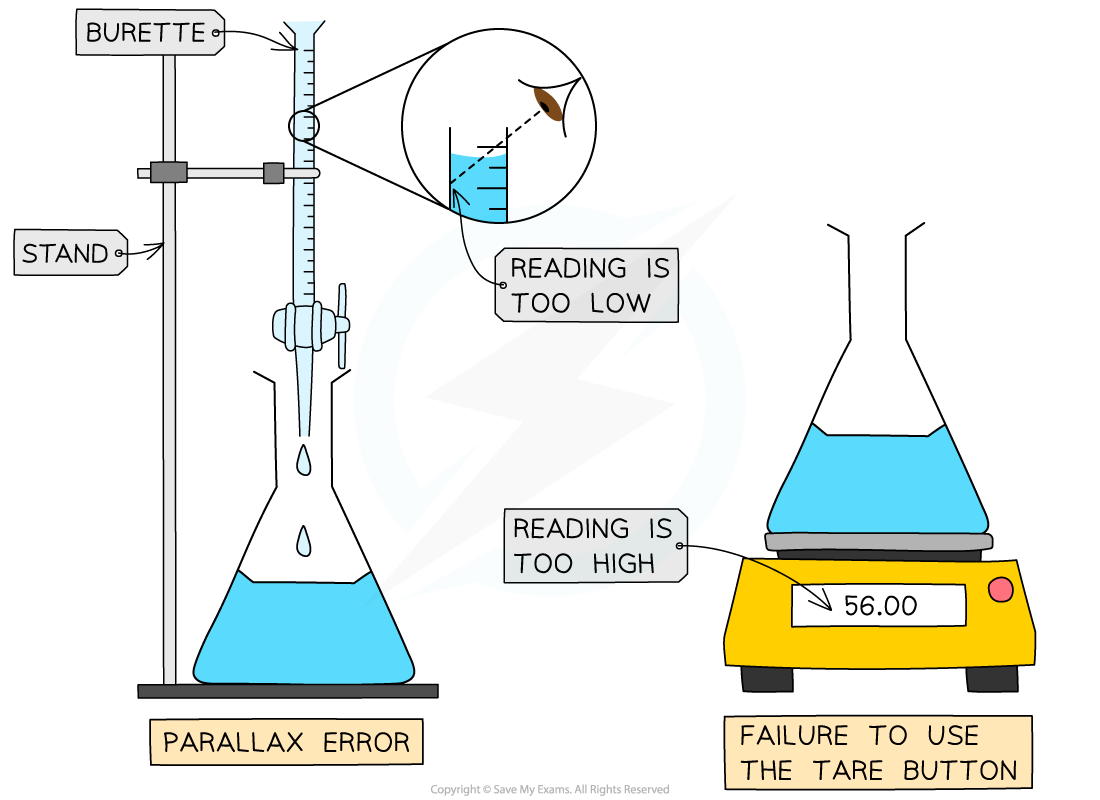
Types of Errors An error is the difference between a value or quantity obtained in an experiment and an accepted or literature value for an experiment There are two types of errors in experiments,?...
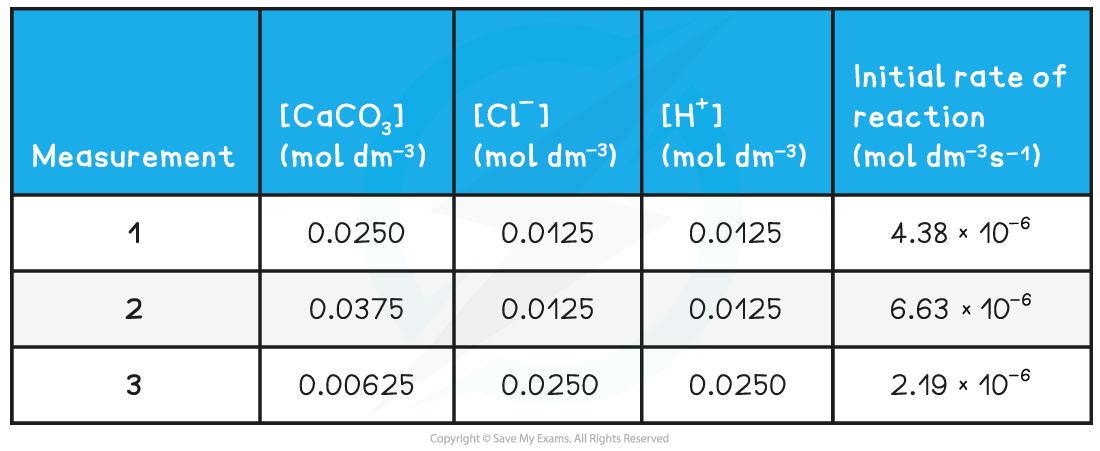
Qualitative & Quantitative data When recording results of experiment, both?quantitative?and?qualitative?data should be obtained Quantitative data?is obtained from measurements whereas?qualitati...
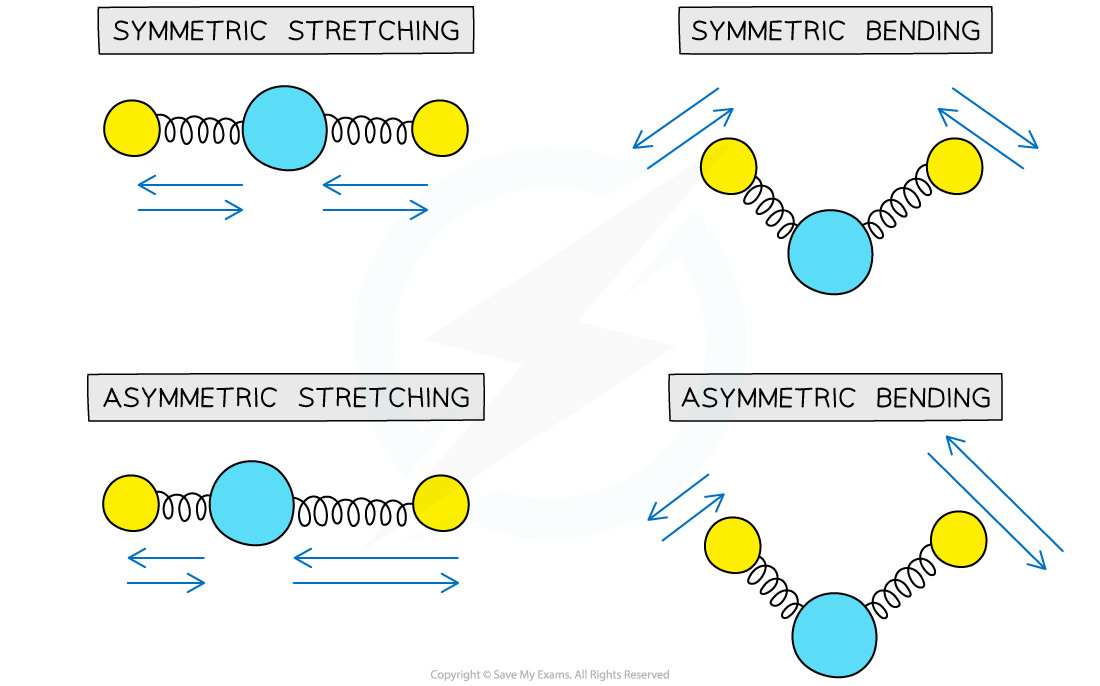
How IR Spectroscopy works All?covalent bonds?act rather like springs, as opposed to rigid bars Like springs, the bonds can vibrate in a number of different ways The frequency of vibration occurs in...
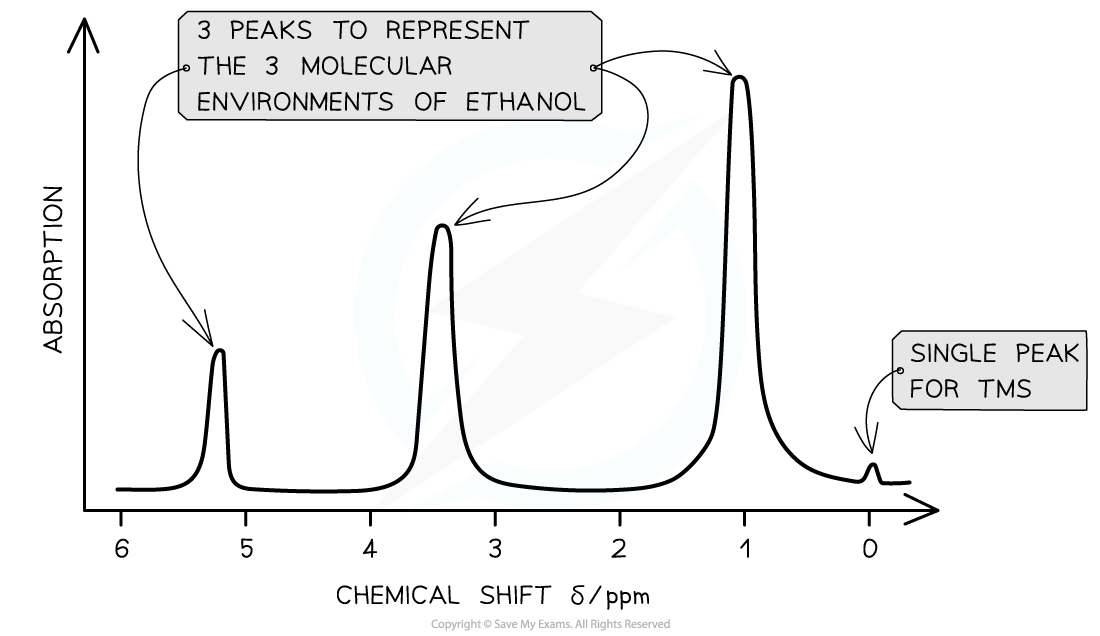
How NMR works Nuclear Magnetic Resonance (NMR)?spectroscopy is used for analysing organic compounds Only atoms with?odd?mass numbers?show signals on?NMR?spectra and have the property of?nuclear?spi...

Determining Molecular Mass When a compound is analysed in a mass spectrometer, vaporised molecules are bombarded with a beam of high-speed electrons These knock off an electron from some of the mol...
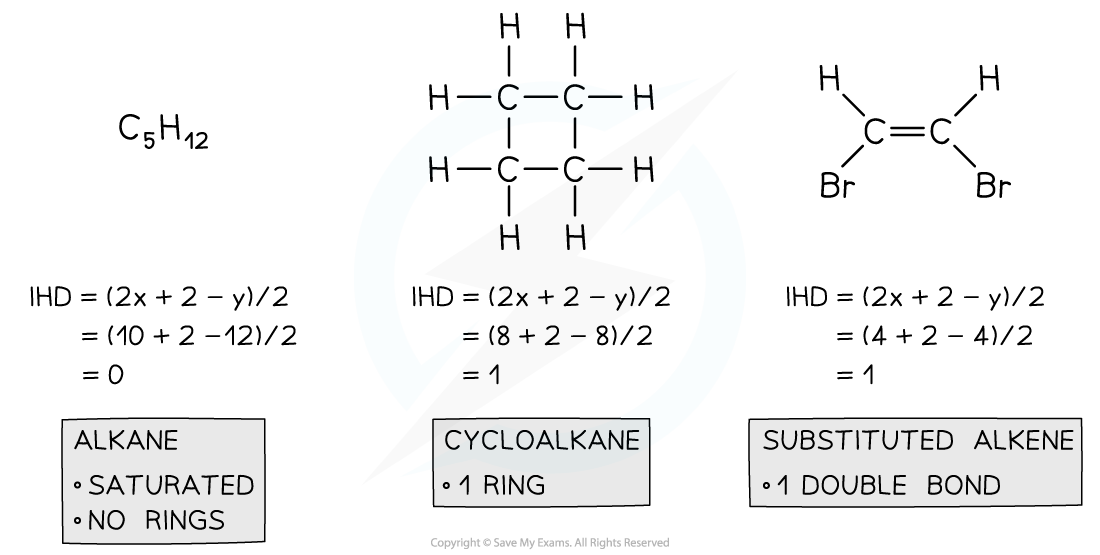
Index of Hydrogen Deficiency The?degree of unsaturation?or?index of hydrogen deficiency?provides information about the number of double or triple bonds in a molecule The?IHD?is the number of hydrog...

Reactions of Benzene Arenes?are very stable compounds due to the?delocalisation of π electrons?in the ring This is because the electron density is spread out over the molecule instead of being conf...
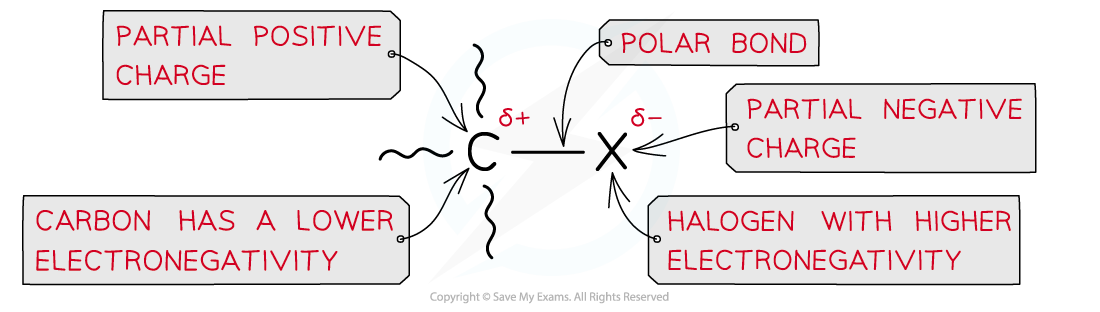
Reactions of Halogenoalkanes Halogenoalkanes?are much more reactive than alkanes due to the presence of the?electronegative?halogens The halogen-carbon bond is polar causing the carbon to carry a p...
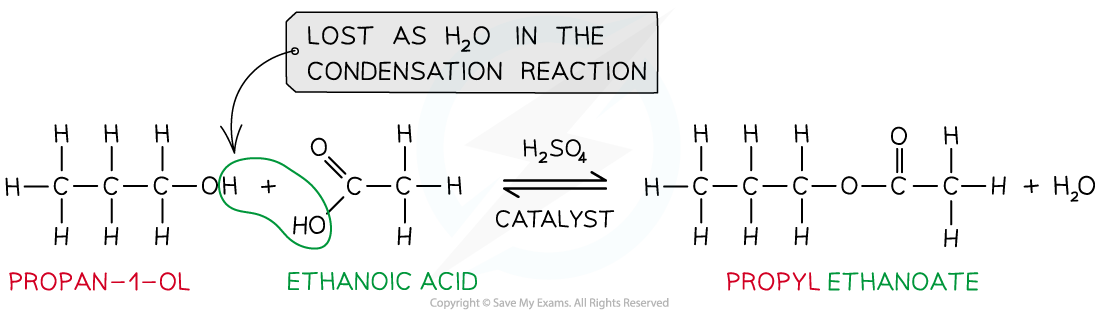
Esterification Esters?are compounds with an -COOR functional group and are characterised by their?sweet?and?fruity?smells They are prepared from the?condensation?reaction between a?carboxylic acid?...





