John Locke Essay Competition約翰·洛克寫作競賽參賽指南!

1賽事介紹
一年一度的John Locke Essay Competition(約翰·洛克論文學(xué)術(shù)活動)的評委由牛津大學(xué)教授組成。每年暑期,學(xué)術(shù)活動吸引了全球最擅長思考和寫作的中學(xué)生。往屆優(yōu)勝者遍布哈耶普斯牛劍世界名校。
比賽分為15歲-18歲的高年級組和15歲以下的低年級組。高年級組的參賽題目涉及政治、哲學(xué)等7個人文社科領(lǐng)域,共二十一個可選題,15歲及以下的低年級參賽者的寫作題目是五個有趣的跨學(xué)科話題。
極高含金量、世界性獎項(xiàng)、免費(fèi)參與、獲得學(xué)術(shù)論文寫作經(jīng)驗(yàn),這些是準(zhǔn)申請生不可錯過此項(xiàng)比賽的理由!
2賽事基本信息
 官網(wǎng)地址
https://www.johnlockeinstitute.com/essay-competition
 時間安排
時間安排
英文2022年賽季官網(wǎng)時間暫未公布(等待2月份公布和放題)。
以下為2021年賽季時間參考:
學(xué)術(shù)活動時間:2021年6月30日;
提交截止日期:2021年7月14日;
通知入圍候選人:2021年9月;
獲獎?wù)咴谂=蚺e行的頒獎典禮上公布。
2022新賽季題目已公布,參考鏈接:
《2022John Locke約翰·洛克寫作學(xué)術(shù)活動題目公布啦!》
2022年John Locke論文學(xué)術(shù)活動已經(jīng)放題啦!
可掃碼添加微信咨詢
【免費(fèi)領(lǐng)取】歷年相關(guān)獲獎?wù)撐膶W(xué)習(xí)

 參賽要求
參賽要求
1.個人參賽,各個國家、各個學(xué)校的學(xué)生都可以參加;
2.參賽者年齡:15-18高年級組,參賽者在截止提交稿件時不得超過18歲;15歲以下低年級組,ddl時不得超過15歲;
3.每篇文章只需回答所選主題類別中的一個問題,且不得超過2000字;(不包括圖表、數(shù)據(jù)表、腳注、參考書目或作者聲明);
4.以pdf附件格式提交,附件的標(biāo)題應(yīng)為姓氏拼音、名字拼音,如POPHAM, Alexander。
 適合人群
適合人群
對Philosophy, Politics, Economics, History, Psychology, Theology and Law等人文學(xué)科方向感興趣、或是想展現(xiàn)自己人文特質(zhì)的理工科學(xué)生。建議托福105+,或有著較好的英文閱讀、表達(dá)能力。
 考察能力
考察能力
基本知識結(jié)構(gòu)
邏輯和辯證分析能力
獨(dú)立思考能力
議論文的基本寫作格式和技巧
 如何提交
如何提交
1.官網(wǎng)注冊
2.補(bǔ)充信息:
https://www.johnlockeinstitute.com/submit-essay)
 獎項(xiàng)設(shè)置
來自牛津大學(xué)的資深教師擔(dān)任評委。每年學(xué)術(shù)活動會評選出一篇最佳文章(Best Essay)。
高年級組以每個話題為單位(哲學(xué)、政治、經(jīng)濟(jì)、歷史、心理、神學(xué)、法律),每個話題會評選出優(yōu)秀上榜文章,并從中選出一、二、三等獎(學(xué)科獎)。低年級組為一個參賽單位,評選出優(yōu)秀上榜文章,并從中選出一、二、三等獎。只有以上這些上榜文章的學(xué)生會獲得參賽證書。
一般情況下,截止日期后的一個半月公布優(yōu)秀上榜文章(去年為2021年7月14日)。John Locke Institute有舉辦學(xué)術(shù)研討會暨優(yōu)秀文章頒獎晚宴的慣例,邀請這些優(yōu)秀學(xué)生到牛津參會,每個話題的一、二、三等獎和最佳文章會在晚宴當(dāng)天公布(2022年具體安排未更新,可能因疫情等原因暫定)。
3往屆題目參考
哲學(xué)
Q1. Are there some subjects about which we should not even ask questions?
Q2. What is slavery? Is jury duty? Is conscription? Is income tax?
Q3. Are you more moral than most people you know? How do youknow? Should?you strive to be more moral? Why or why not?
政治
Q1: Discrimination on the basis of race is widely condemned, but on the basis of??nationality it is widely accepted. Is it not odd that you may not discriminate against?me for where my great-great-grandparents were born, but you may discriminate?against me for where my parents were born?
Q2: Should the John Locke Institute change its name?
Q3: Do we need Greta?
經(jīng)濟(jì)
Q1: How would the education sector change if governments were no longerinvolved?
Q2: There is considerable excess demand for undergraduate places at Oxford. Theadmissions process rations supply by favouring cleverer students at the expense ofothers. Is this fair? Does it exacerbate inequality? What is the University’s optimalresponse to this scarcity?
Q3: Should we abolish the minimum wag?
歷史
Q1: Should we judge those from the past by the standards of today? How willhistorians in the future judge us?Q2: Has the ‘construct of gender’ been more beneficial or more harmful tohumanity throughout history?
Q3: ‘More history has happened in Oxford, per square foot, than any other placein the world.’ Discuss.“
心理
Q1: Do we do everything we do to maximise our own utility?
Q2: ‘The function of religions and cults, including the political or ideological ones,is to short-circuit the normal ‘common sense’ process of doubt,,investigation,further doubt, further investigation... a belief system only requires a rule book(sacredscripture, Das Kapital, or whatever) and a good memory.’ Is this true? Doesit matter?
Q3: Who is responsible for my mental health?
神學(xué)
Q1: Is Christianity a religion of peace?
Q2: Why did Jesus of Nazareth reserve his strongest condemnation for the self-righteous?
Q3: Did God create coronavirus?
法律
Q1: Should ‘innocent until proven guilty’ apply not only to courts of law, but alsoto public censure?
Q2: To what extent does a codified constitution help or hinder liberty?
Q3: When should force of law prevent a transaction, entered into freely betweentwo competent, consenting adults?
翰林文科學(xué)術(shù)活動課程體系流程圖
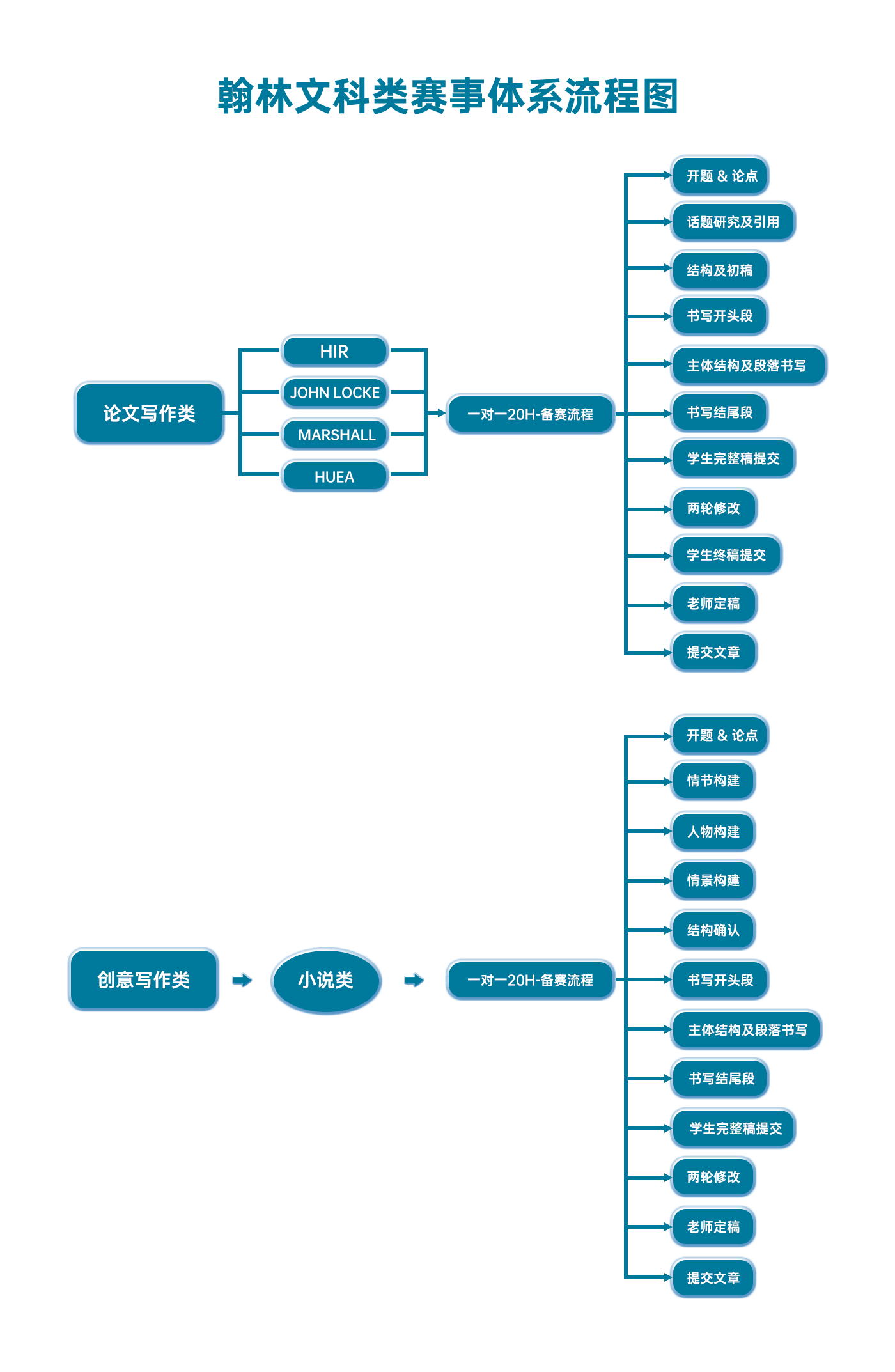
以上就是關(guān)于【John Locke Essay Competition約翰·洛克寫作競賽參賽指南!】的解答,如需了解學(xué)校/賽事/課程動態(tài),可至翰林教育官網(wǎng)獲取更多信息。
往期文章閱讀推薦:
??2027年QS最佳留學(xué)城市排名發(fā)布!倫敦位列第三,北美竟無緣Top10 ?
王虹、鄧煜!兩位中國數(shù)學(xué)家同獲菲爾茲獎!中國數(shù)學(xué)史新紀(jì)元!


翰林AMC8視頻課重磅上線!

國際競賽真題資源免費(fèi)領(lǐng)取






