Edexcel IGCSE Biology 復習筆記 3.1.2 Sexual Reproduction in Flowering Plants

Edexcel IGCSE Biology 復習筆記 3.1.2 Sexual Reproduction in Flowering Plants
Pollination
- Flowers are the?reproductive organs?of plants
- They usually contain both male and female reproductive parts
- Plants produce?pollen, which contains a nucleus inside that is the?male gamete
- Unlike the male gamete in humans (sperm), pollen is?not capable of locomotion?(moving from one place to another)
- This means plants have to have mechanisms in place to?transfer?pollen from the?anther?(male part of the flower) to the?stigma?(female part of the flower)
- This process is known as?pollination?and there are two main mechanisms by which it occurs:
- Pollination where the pollen is transferred by?insects?(or sometimes other animals like birds or bats)
- Pollination where the pollen is transferred by the?wind
- The?structure?of insect and wind-pollinated flowers are?slightly different?as each is?adapted?for their?specific function

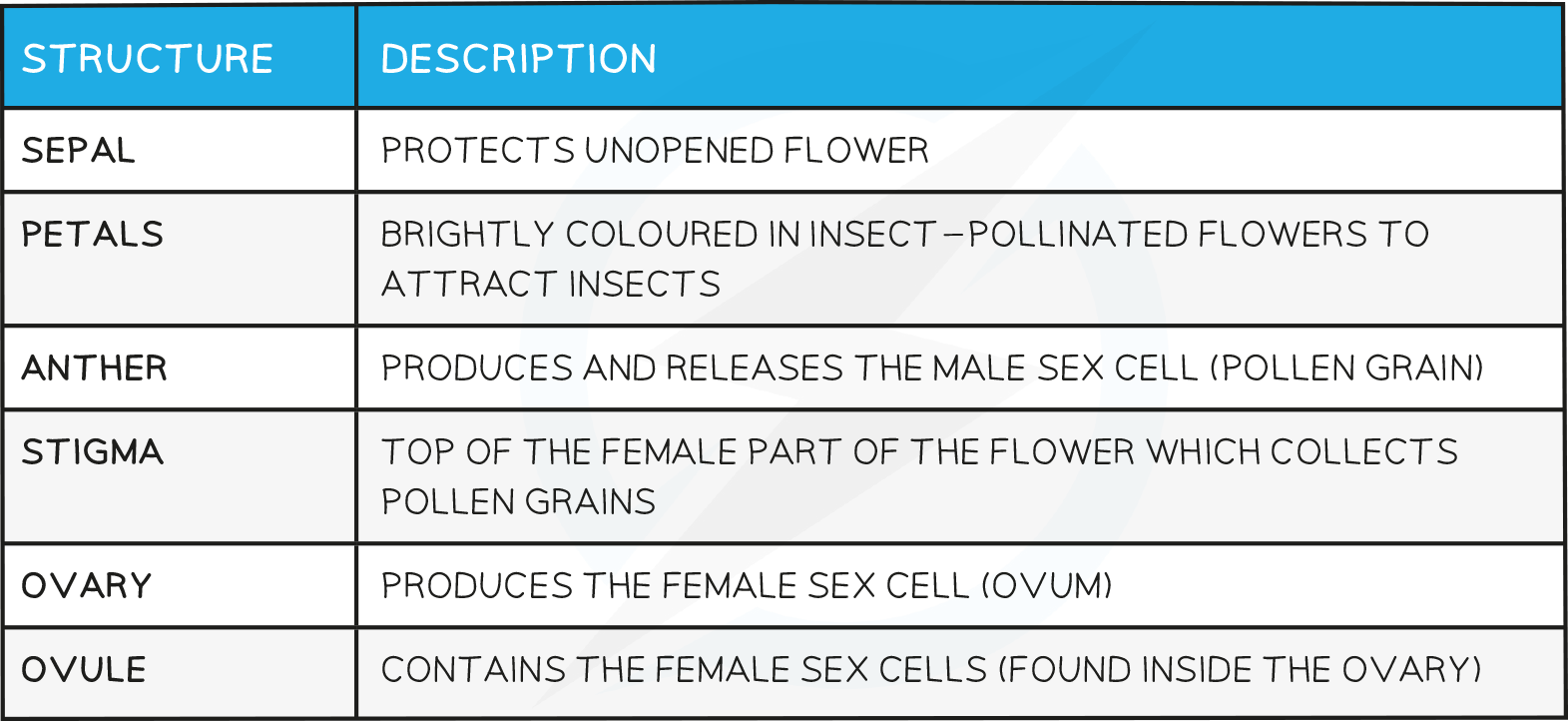
The general structure of a typical flower
Parts of the Flower Table
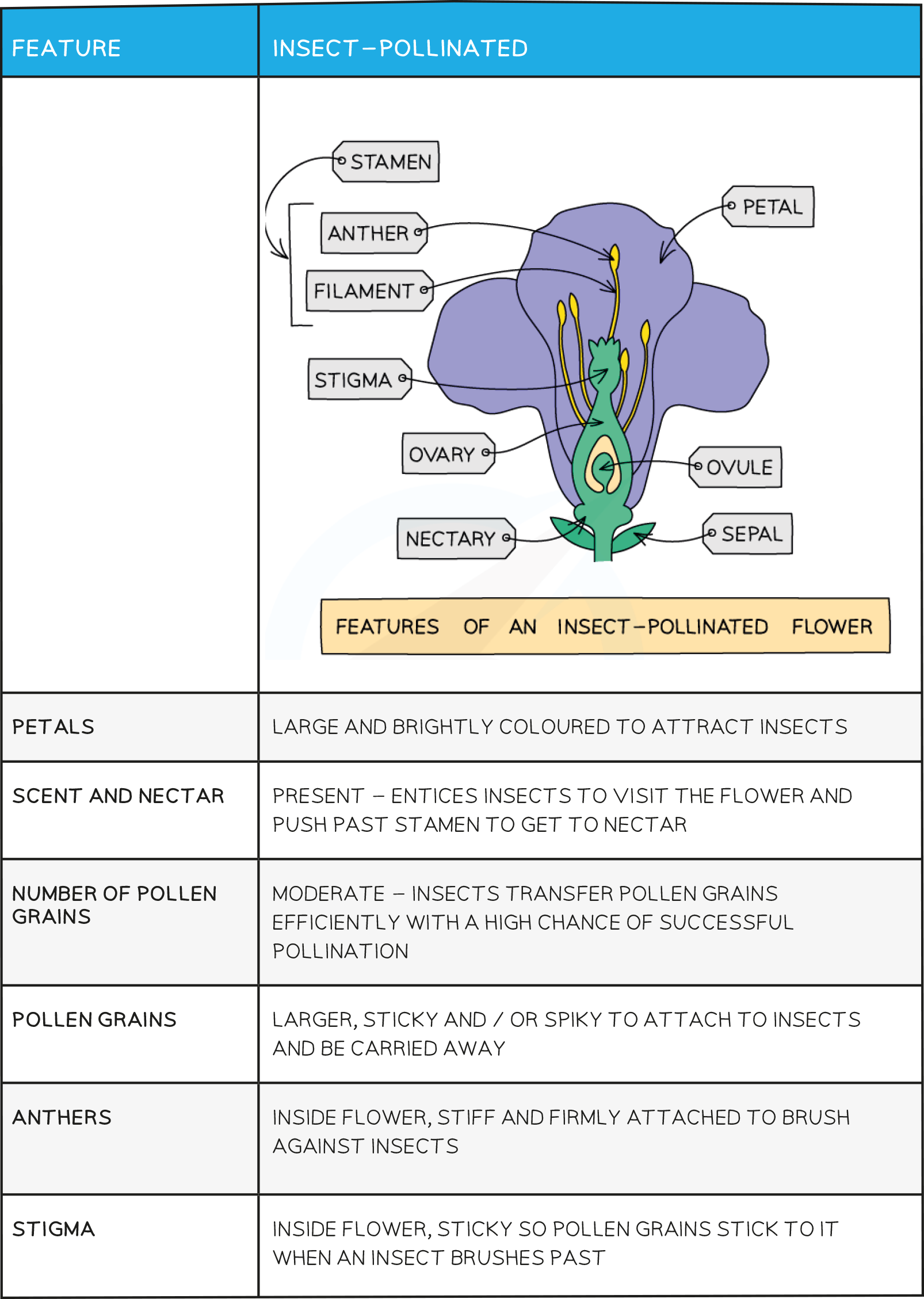
Insect-pollinated flowers
- For the flowers of many plant species, the?pollinating agents?are?insects?(e.g. bees)
- Insects often visit these flowers to collect?nectar?(a sugary substance produced by insect-pollinated flowers and the base of their petals, which provides the insects with?energy)
- As an insect enters the flowers in search of nectar, it often brushes against the?anthers, which deposit?sticky pollen?onto the insect's?body
- When the insect visits another flower, it may brush against the?stigma?of this second flower and in the process, may?deposit?some of the pollen from the?first flower, resulting in?pollination
- The structures of an insect-pollinated flower ensure that the flower is well-adapted for pollination by insects
Features of an Insect-pollinated Flower Table
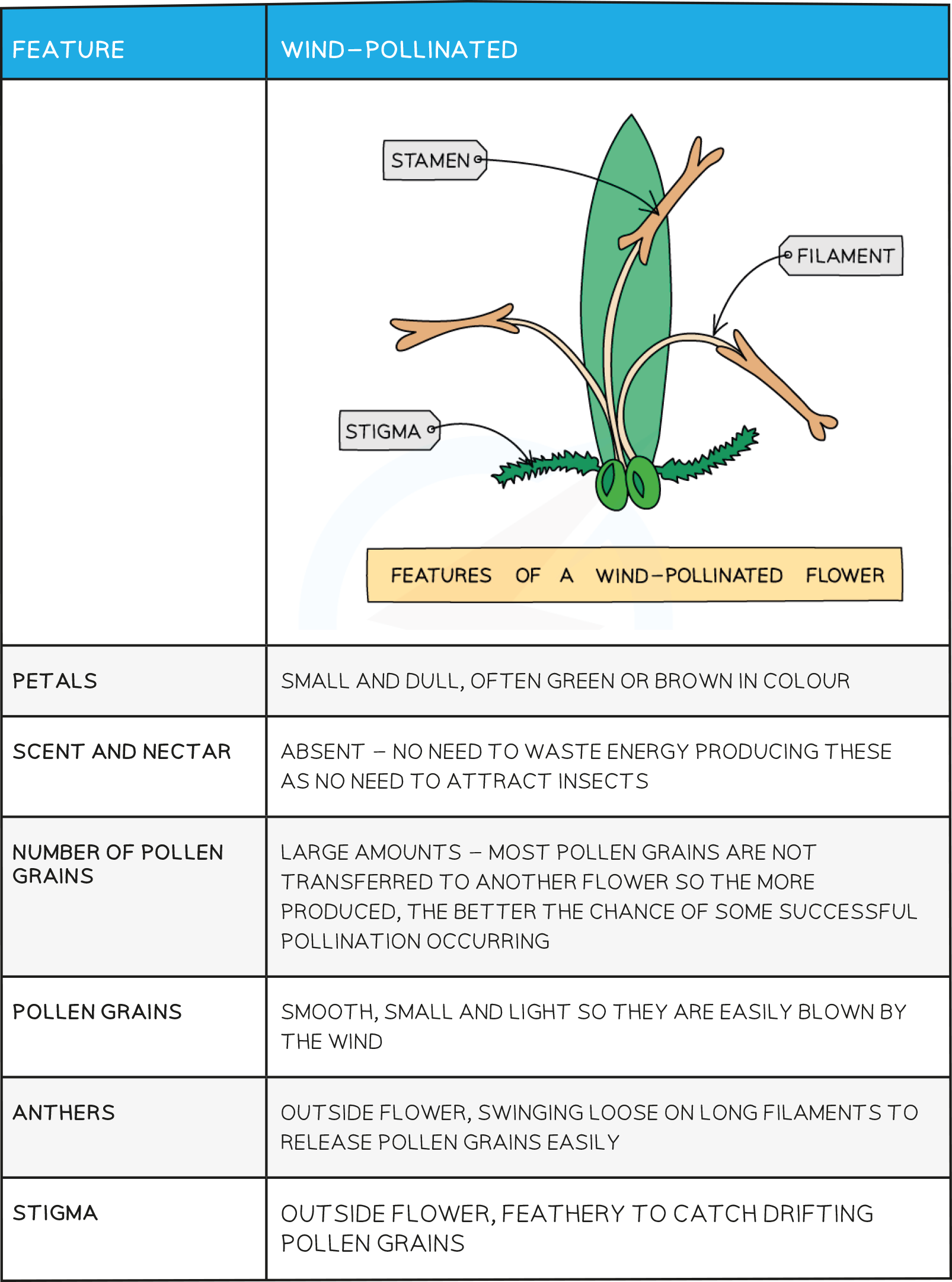
Wind-pollinated flowers
- For wind-pollinated flowers, the process of pollination is more?random?than it is for insect-pollinated flowers
- When ripe, the?anthers open?and?shed their pollen?into the open air
- The pollen is then either blown by the wind or carried by air currents until it (by chance) lands on the?stigma?of a plant of the same species, resulting in?pollination
- The structures of a wind-pollinated flower ensure that the flower is well-adapted for pollination by the wind
Features of a Wind-pollinated Flower Table
Cross-pollination and self-pollination
- In insect or wind-pollinated plants, pollination can either occur via?cross-pollination?or?self-pollination
- Cross-pollination occurs when the?pollen from one plant?is transferred to the stigma of?another plant of the same species
- This is the way most plants carry out pollination as it?increases the genetic variation in the offspring
- Occasionally, the pollen from a flower can?land on its own stigma?or on the stigma of another flower on the?same plant?- this is known as self-pollination
- Self-pollination?reduces the genetic variation in the offspring?as all the gametes come from the?same parent?(and are therefore?genetically identical)
- Lack of variation in the offspring is a disadvantage if environmental conditions change, as it is?less likely that any offspring will have adaptations that suit the new conditions?well
Fertilisation
- In plants, the?ovary?contains one or more?ovules
- The ovules are the structures that eventually develop into?seeds
- Each ovule contains an?ovum
- An ovum is an?egg cell?that contains the?female nucleus?that a?male pollen nucleus?can?fuse with
- In plants,?fertilisation?occurs when the pollen grain nucleus fuses with the ovum nucleus
The growth of the pollen tube
- Unlike the male gametes in animals (sperm), the pollen grain has no ‘tail’ to swim to the ovary of the flower
- Instead, in order to reach the ovum nucleus, the pollen grain grows a?pollen tube
- This only happens if the pollen grain has landed on the right kind of?stigma?(i.e. of the?same species?as the flower the pollen came from)
- The?nucleus?inside the pollen grain?moves down the tube?as the tube grows down the?style?towards the?ovary?(which contains the ovule that, in turn, contains the ovum)
- Once the nucleus of the pollen grain and the nucleus of the ovum have?fused?(joined together), that particular ovule has been?fertilised?and a?zygote?has been formed
- The zygote will then start to?divide?(it is the structure that eventually develops into an?embryo plant)
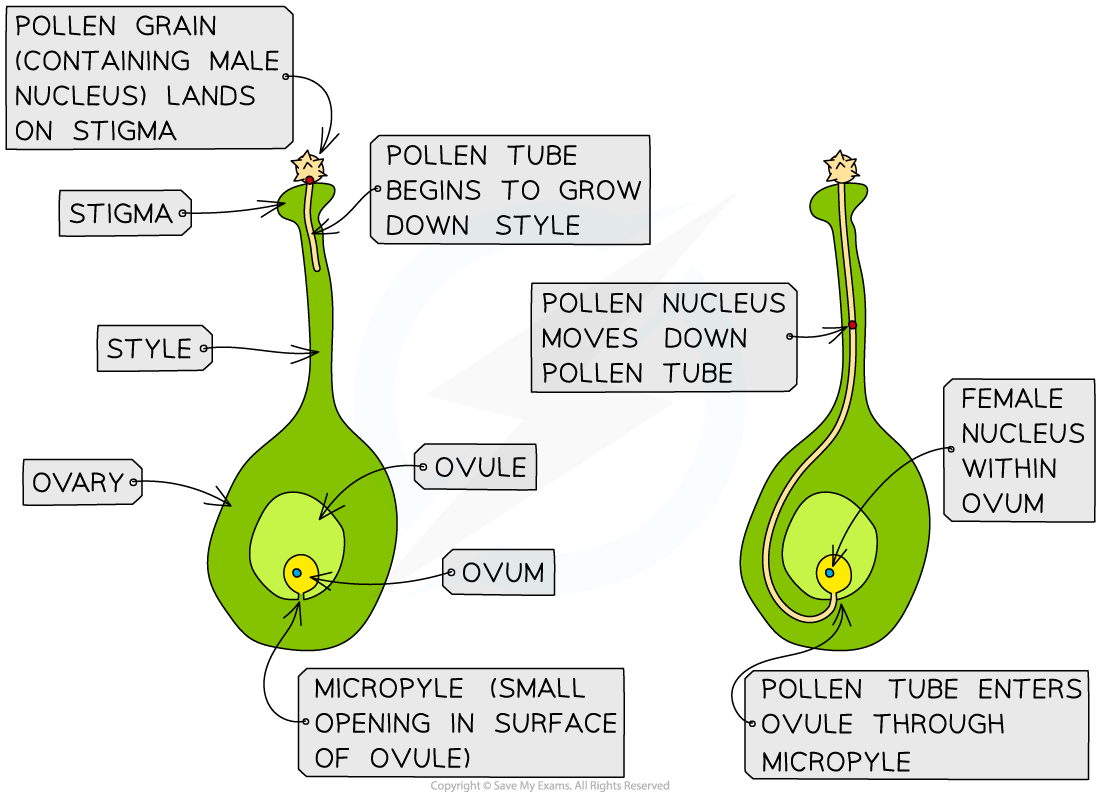
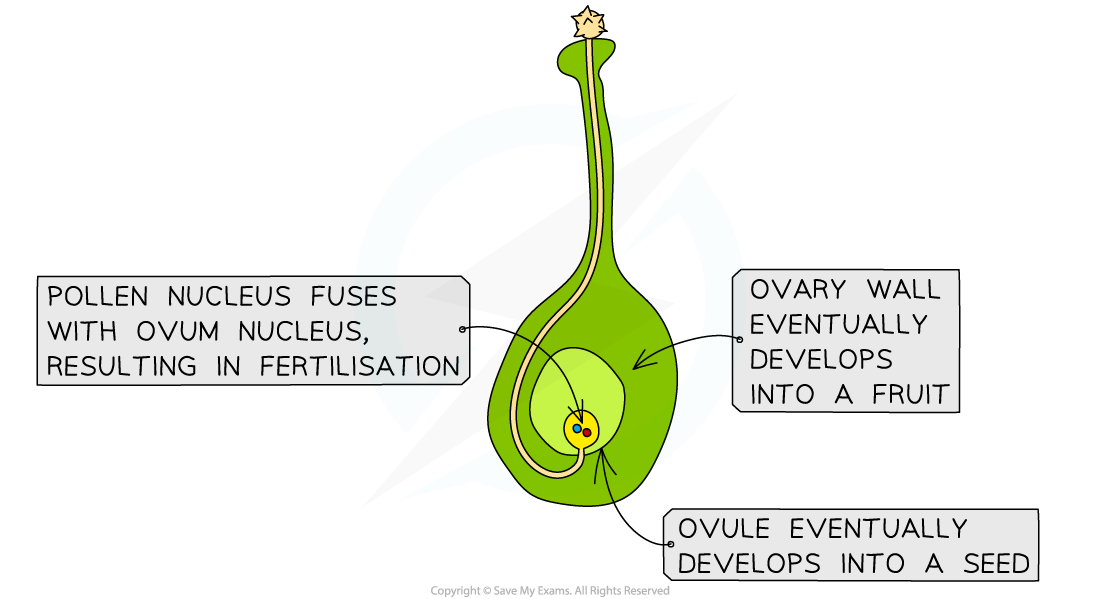
The process of fertilisation in a typical plant
Seed and fruit formation
- After fertilisation, the?ovule?(that contains the zygote) develops into the?seed
- The?wall of the ovule?develops into the?seed coat, known as the?testa
- The parts of the flower surrounding the ovule (mainly the?ovary walls) develop into the?fruit, which contains the seeds
- The fruit provides a mechanism for?seed dispersal?(getting the seeds?away from the parent plant)
- Some fruits are eaten by animals, which then disperse the seeds in their droppings (the tough outer coat of seeds stops them from being digested)
- Some other fruits have sticky hooks that get caught in the fur of passing animals
- As different plants have different numbers of ovules, this explains why different fruits have different numbers of seeds (which develop from the ovules)
Exam Tip
Students often get confused between pollination and fertilisation in plants, but they are not the same thing.Think of pollination as the plant’s equivalent to human sexual intercourse – after sex, the male sex cells (sperm) have been deposited into the female. But, for fertilisation to occur, the nucleus from a male sperm cell has to fuse with the nucleus of a female sex cell (egg) and the sperm has to travel to find the egg before this happens. It’s exactly the same in plants!
Germination
- Germination?is the?start of growth?in the seed
- The seed contains the?zygote?(the fertilised egg cell), which?divides?into cells that then develop into the?embryo plant
- When the seed?germinates, this embryo begins to grow into the young?seedling
- Structures known as?cotyledons?surround the embryo
- Some plants have?one?cotyledon, whereas others have?two
- The cotyledons contain?food reserves?that supply the young seedling with?food?(and, therefore,?energy for growth) when the seed starts to germinate
- The cotyledons fulfil this role?until the young plant grows its own leaves?and becomes capable of?making its own food via photosynthesis
- After taking in water, the?seed coat?(testa)?splits
- This leads to the production of the?plumule?(the?first emerging shoot) and?radicle?(the?first emerging root)
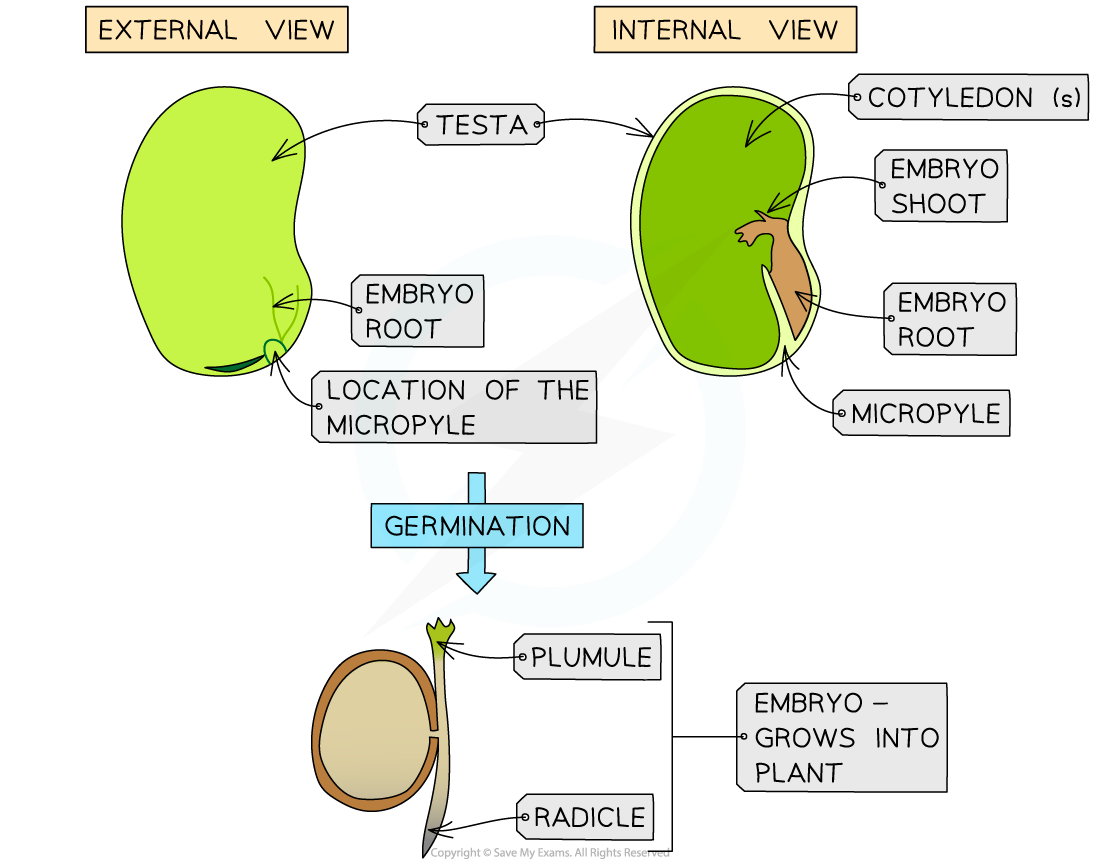
The structures of a germinating seed
轉載自savemyexam
以上就是關于【Edexcel IGCSE Biology 復習筆記 3.1.2 Sexual Reproduction in Flowering Plants】的解答,如需了解學校/賽事/課程動態,可至翰林教育官網獲取更多信息。
往期文章閱讀推薦:
IGCSE全A*,A-Level階段卻崩了?別忽視IGCSE選課的重要性!
2026 CAIE IGCSE 夏季大考放榜!A* 線全面揭曉,今年真的卷到新高度?


翰林AMC8視頻課重磅上線!

國際競賽真題資源免費領取






