AQA A Level Biology復習筆記6.2.7 Cholinergic Synapses

Cholinergic Synapses
- Where two neurones meet, they do not actually come into physical contact with each other – a very small gap, known as the?synaptic cleft, separates them
- The ends of the two neurones, along with the synaptic cleft, form a?synapse
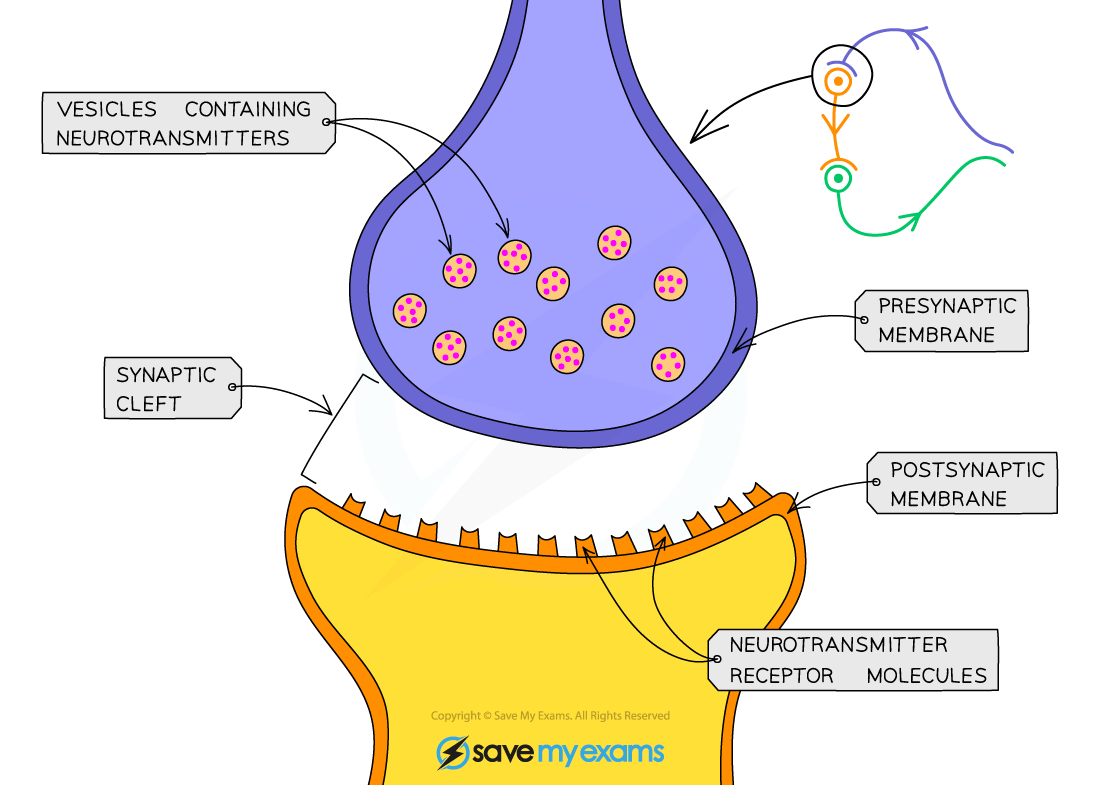
A synapse
Synaptic transmission
- Electrical impulses cannot ‘jump’ across synapses
- When an electrical impulse arrives at the end of the axon on the?presynaptic neurone, chemical messengers called?neurotransmitters?are released from?vesicles?at the?presynaptic membrane
- The neurotransmitters?diffuse?across the?synaptic cleft?and?temporarily bind with receptor molecules?on the?postsynaptic membrane
- This?stimulates?the postsynaptic neurone to generate an electrical?impulse?that then travels down the?axon?of the?postsynaptic neurone
- The neurotransmitters are then?destroyed?or?recycled?to prevent continued stimulation of the second neurone, which could cause repeated impulses to be sent
- Synapses that use?acetylcholine?as a?neurotransmitter?are described as?cholinergic synapses
轉載自savemyexams
以上就是關于【AQA A Level Biology復習筆記6.2.7 Cholinergic Synapses】的解答,如需了解學校/賽事/課程動態,可至翰林教育官網獲取更多信息。
往期文章閱讀推薦:
2026 AMC10/12美國數學競賽新賽季!【翰林教育 × 清華大學出版社】獨家教材全面發售!
CAIE A-Level分數線新鮮出爐!三大考試局查分攻略+出分急救指南速覽!


翰林AMC8視頻課重磅上線!

國際競賽真題資源免費領取






