
HIR哈佛國際評論夏季賽已然拉開帷幕!現在正是大家提前做好賽事規劃,妥善備賽的好時機!

想要在夏季賽中取得好成績,寫出優秀的分析論文,那么就必須先學習了解優秀的文章有哪些特質。
因此,擁有豐富帶賽經驗豐富的E導師為大家帶來了HIR哈佛國際評論賽2023金獎作品的分析!幫助同學們打開思路,迎戰夏季賽!
01、金獎范文分析
我們從往期學子作品中選取了一篇2023賽季金獎范文,結合官方評分標準給大家進行解析參考,可以從中了解評審更看好的邏輯思路,從中學習好的方法論,給大家更多的解題思路。
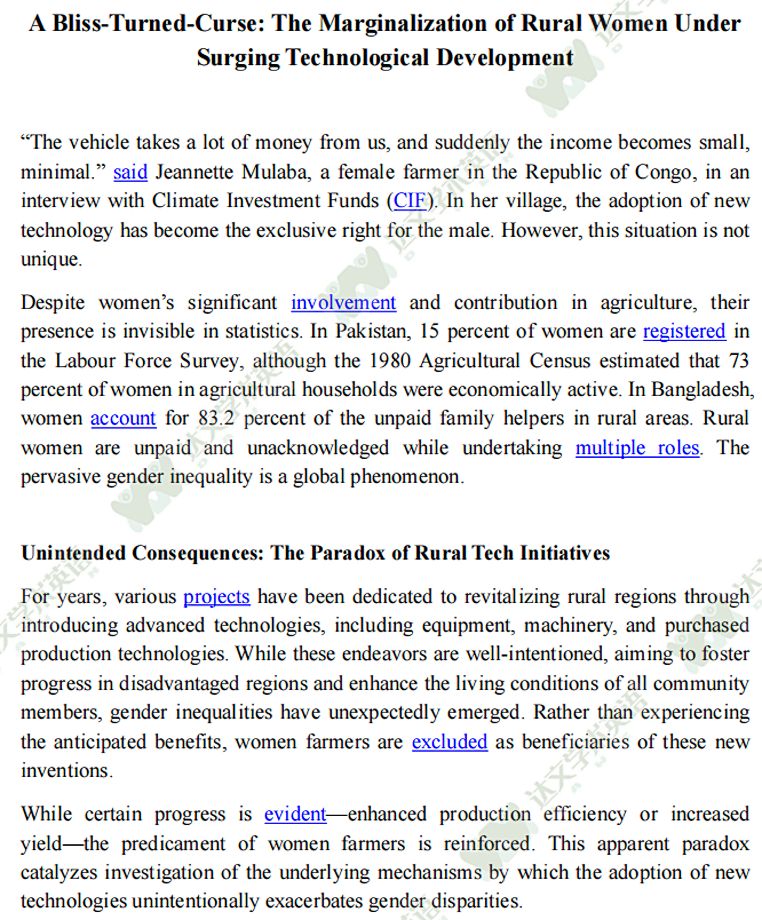
*想要瀏覽全文,歡迎聯系咨詢獲取
我要咨詢獲取
更多信息可咨詢顧問

HIR官方評分標準▼
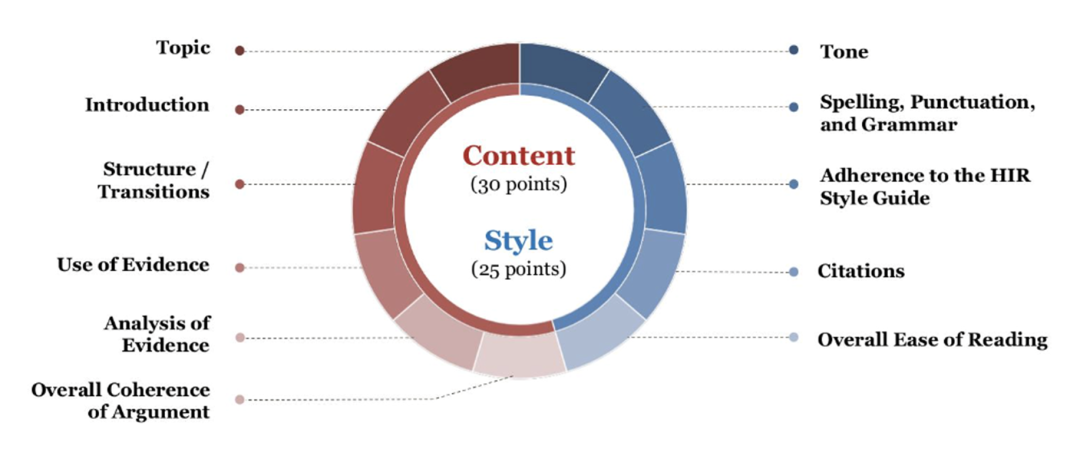
結合官方發布的評分標準,我們一起來解讀能夠摘得金獎的文章,究竟有哪些可取之處?
1、選題新穎,切入貼合

聯系去年的賽事主題“Technological Advancement and the World 科技進步與世界”,在這篇文章中,學生選擇了在主流媒體中低關注度但緊扣賽事主題的話題。
2、引用開頭法 + 數據性材料的運用
文章開頭直接引用了剛果女農民的采訪語錄,快速抓住讀者的注意力。
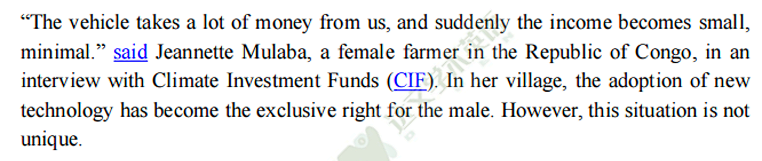
并利用統計數據佐證,說明了“技術迅猛發展下農村婦女邊緣化”的真實現象。點明主題,并為下文做了很好的鋪墊。
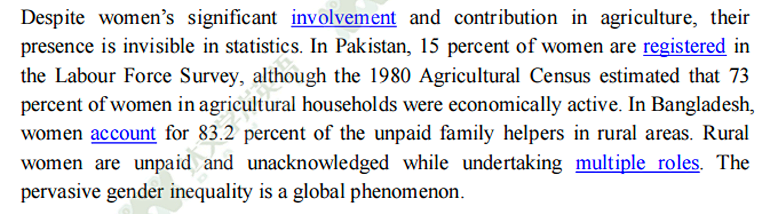
3、結構 / 過渡清晰明了
首先文章開頭部分不僅做了鋪墊,并在結構上起到了總領全文的作用。
而在下文的展開論述中,從聯合國相關倡議,到敘述目前真實存在的問題并分析其背后原因,最后提出了可能的解決方案,并做了方案的評估分析。
通篇圍繞著科技發展與幫扶對于女性的影響,拋出問題——分析國際、社會層面現象及背后原因——尋求解決之道,分為三個部分,層層遞進深入剖析話題,結構明了,邏輯清晰。
4、有深度的信息挖掘 & 透徹分析
整篇文章的證據分析做得很有深度,學生找到并舉證了非常多的有力論據,甚至用到了關于低收入群體走出經濟困境的理論框架,并以這個理論框架作為理論基礎展開了分析。全文的整體論證也做得有理有據。
5、行文流暢,緊扣文章中心
文章中心論點明確,通篇論述緊貼主題,沒有贅余,結合嚴謹的行文邏輯,整體連貫性很好。
6、引用得當,保持客觀,可讀性強
文章經過再三校對,沒有語法錯誤之外,每一個事實性的聲明和他人觀點都做到了規范引用。
保證了文章闡述清晰的同時,整體論述風格和分析都呈現出充滿人文關懷卻始終保持理性客觀的基調,使得文章易讀又客觀。
學習、研究獲獎作品,就相當于看一份標準寫作指南,能夠幫助大家更直觀、高效地學習到如何緊扣論文的主題,從各個角度進行深入分析,并最終將自己的觀點清晰、準確地闡述出來。
如果大家有機會瀏覽整篇文章,或者去HIR官網上瀏覽往年的一些獲獎范文,相信能夠對于自己如何展開將有很大啟發。
02、備賽提醒
HIR是一個自由度比較高的賽事,對于競賽本身以及參賽要求,我們需要明確知道。如果對于HIR這個比賽不甚了解,請大家一起了解一下這個賽事的背景與相關的競賽詳情~
關于HIR哈佛國際評論賽
Harvard International Review
全球頂級社科學術期刊《哈佛國際評論》旗下,國際問題研究領域學術競賽標桿。HIR《哈佛國際評論》,成立于 1979 年,致力于通過出色的寫作和編輯選擇在學術和政策之間架起橋梁。曾收錄了43 位總統和總理、4 位秘書長、4 位諾貝爾經濟學獎獲得者和 7 位諾貝爾和平獎獲得者的專題評論。

命題領域
自命題學術論文,主題不需要出現在文章題目或內容中,命題方向包含但不局限于:農業、科技、網絡安全等13個領域。
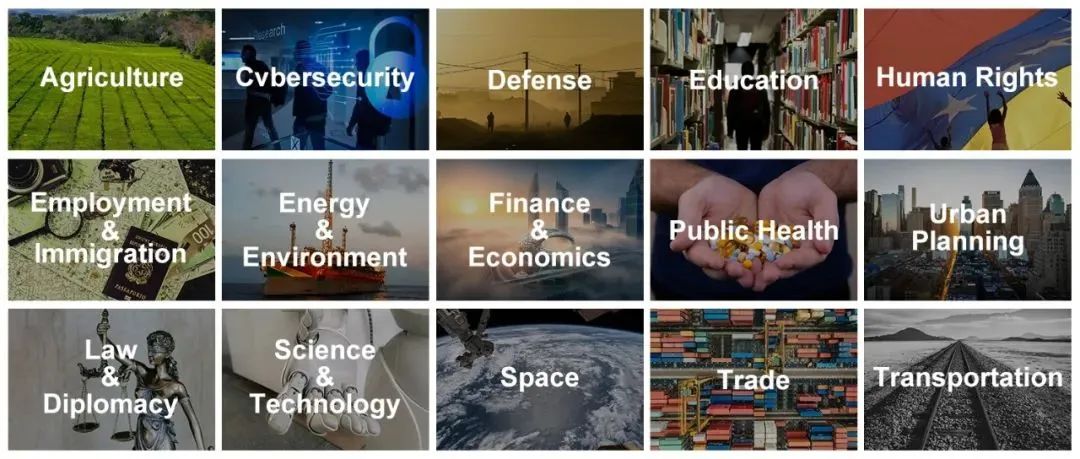
參賽詳情
【參賽資格】
全球9-12年級高中生
【參賽時間線】
夏季賽報名截止日:2024年7月25日
夏季賽提交截止日:2024年8月31日
夏季賽決賽答辯日:2024年10月5日
參賽要求
【字數限制】
字數800-1200(不包括圖表、數據表或作者聲明)
【內容議題】
提交的內容應針對某個不被關注的全球性主題,提出自己的觀點并進行充分的分析論證。
【寫作風格】
優秀的參賽作品需要具備全面性、批判性,遵循事實情況,進行合理地論證與分析。
- 標注對書籍和文獻的引用
- 文章必須是AP風格
【答辯環節】
公布入圍名單后,入圍參賽者即為決賽入圍者,需要在答辯日,向評委會進行 15 分鐘的演講和口頭答辯
● 注意賽事時間線與時差務必注意賽方時間是基于美東時間,各個節點日期當天的11:59 P.M. (EST)。同學們做賽事規劃務必考慮到時差,避免錯過時機哦~
● 賽事設有答辯環節在公布入圍名單后,入圍同學則自動進入“決賽圈”,需要籌備完成15分鐘左右的答辯,突圍沖獎!同學們需要有所準備哦!
我要咨詢/報名
更多信息可咨詢顧問
03、推薦閱讀
從HIR賽事官網,我們也選取了幾篇不同領域的范文,大家可以進行學習、參考。
01、Unhealthy Economy, Unhealthy Bodies: Egypt’s Obesity Epidemic
Finance & Economics
Law & Diplomacy
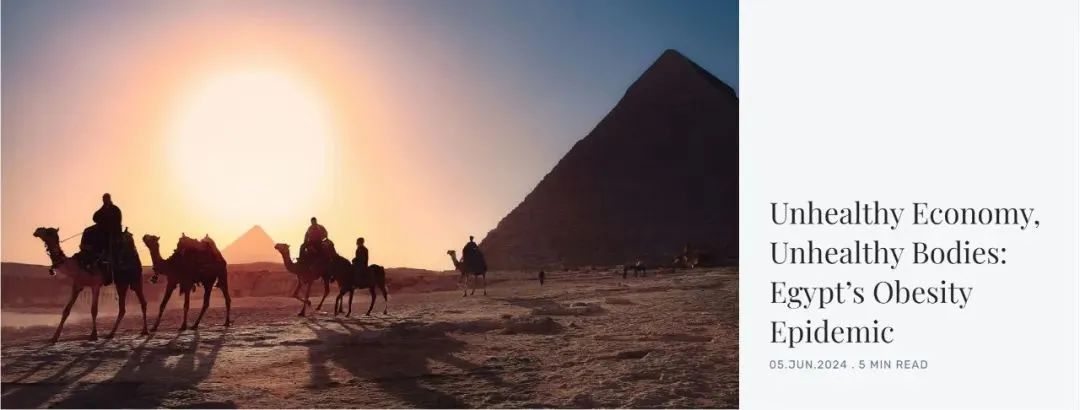
The obesity epidemic has become a global burden, and it is generally expected that the countries with the largest appetites have the most voracious economies. In the United States, it is estimated that around 41.9 percent of the adult population in 2020 was obese, and obesity has become the second-leading cause of preventable deaths. Obesity is strongly correlated with various debilitating diseases, leading to the death of four million people annually. Within 30 years, the global population of those suffering from obesity has quadrupled from four percent to 18 percent.
However, the conception that countries with the highest obesity rates are only the most developed is a fallacy, as more money is correlated with more access to healthy foods. In reality, a multitude of underdeveloped countries suffer to an equal or similar degree when it comes to confronting obesity, Egypt having been in the top ten.
Egypt currently battles hundreds of billions of US dollars in national debt and rising health complications as more Egyptians are diagnosed with obesity. How has a nation with a serious financial crisis developed an obesity issue?
A Medical Fallacy: Egypt’s Economic Quagmire
While Egypt has received praise for its 45th international ranking with a GDP of US$250.9 billion, this recognition is diminished by the ever-increasing national debt. In 2022, Egypt reached a high of US$422 billion in national debt. Yet, with a clear lack of funding for overall development, the nation has managed to suffer from a “developed” country issue: obesity.
Looking forward, the overall national debt is predicted to increase from US$276.11 billion in 2024 to US$316 billion in 2025, with debt as a percentage of GDP only expected to decrease from 96.37 percent in 2024 to 82.62 percent in 2025. GDP is only expected to grow an average of 5.4 percent in five years. Egyptians are concerned about continuous loans from the International Monetary Fund, the World Bank, as well as other countries. Particularly, Egypt will have to balance this difficult financial situation with the needs of a growing population.
Moreover, the economic crisis is exacerbated by vast inflation. The stark contrast between Egypt’s average monthly income, US$342 per capita, and that in the United States (US$6,398) is augmented by-product costs. When comparing the nations’ pricing, US goods are found to cost 76.3 percent less than Egypt’s—a single demonstration of the drastic inflation crisis the country is currently experiencing. Therefore, the gap in per capita purchasing power is even higher than the gap in per capita income.
With a currency that has been devalued by above 50 percent (in comparison to the US dollar) and food inflation that has breached 60 percent, one might fear starvation or malnutrition. However, the nation’s unfortunate confluence of low wealth, disproportionately high prices, and low quality of life has continued to coexist with a devastating obesity crisis.
In 2022, Egypt was ranked seventh among the most obese countries with 21,670,640 obese people. After screening around 49.7 million Egyptians, the Institute for Healthcare Improvement determined in 2019 that close to 39.8 percent of the adult population was obese—strongly correlated with the 62 percent of males with Type 2 Diabetes, 13 million people with sleep apnea, six million people with hypertension, and a plethora of other health complications related to obesity.
Contributing Factors: Obesity in Egypt
White sugar on a metal spoon. Photo by Alexander Grey / Unsplash.
Egypt is one example of the scientific phenomenon of “nutritional transition”: when economic, demographic, and other external factors cause a society to alter its traditional nutritional intake.
In Egypt, this dilemma affects all socioeconomic classes. Food inflation being over 60 percent has forced citizens to adjust accordingly. Families desperately prioritize the feeling of being full rather than meeting nutritional requirements. Focused on immediate survival, Egyptians opt for low-cost, high-calorie meals. Diets have transitioned from rice, vegetables, legumes, and spices to meats, carbohydrates, and sugar-heavy dishes. The Egyptian government has even recommended that people consume chicken feet instead of chicken meat.
Multiple political and economic factors have exacerbated this crisis. For instance, the Egyptian government subsidizes sugar and oil-based products rather than healthier alternatives, which is worsened by shops providing unhealthy snacks at lower costs. Many societal customs of Egypt are founded upon food; adding sugar to dishes or participating in grandiose meals is a cultural norm. Socioeconomic inequality also plays a role, for Egyptians with lower education (i.e., with a high school diploma or lower) and financial status are three times more likely to be obese.
Confoundingly, of these factors, the Egyptian government’s food subsidy program is the prominent cause of obesity in the population. Despite the economic disparity within the nation, obesity rates are fairly even across socioeconomic classes in Cairo. To combat the inflated food prices and prevent nationwide starvation, the subsidy program has focused on subsidizing bread, wheat flour, sugar, and cooking oil for the last 25 years. Those same items have been long recognized by health officials as fattening, with sugar supplanting the much-needed consumption of protein and fiber. This program is widely accessible to more than 80 percent of the population, so participation has led to these high-calorie items becoming common staples in the traditional kitchen.
These adverse effects of the government’s subsidy program are exacerbated by private sector practices. Egyptian restaurants that cater to late-night deliveries encourage consumption at all times of the day. The timing of this late-night dining not only deviates from the normal consumption hours but also the circadian rhythm that allows for digestion, causing the body to store the late-night meal into fat.
The Future of Fitness
Various proposed policies and health official opinions have sought to address this colossal dilemma threatening the health and survival of over a third of Egyptians. In 2018, the Ministry of Health and Population implemented the Egypt Multisectoral Action Plan For Noncommunicable Diseases Prevention (NCD) and Control 2018-2022. This initiative worked towards nine voluntary global NCD targets, including a five percent decrease in physical inactivity, a 20 percent decrease in salt consumption, and a 15 percent decrease in hypertension, diabetes, and obesity.
In addition to these sweeping measures, some medical professionals are recommending a more direct plan focusing on the youth. “Fighting this starts in schools…I know we’re not doing great economically right now, but nutrition classes and subsidizing one fruit or vegetable per day per child would give them something they don’t get at home,” states Egyptian dietician Dr. Sherine el Shimi. Similarly, Dr. Randa Abou el Naga of the Egypt World Health Organization (WHO) recommends government subsidies for more nutritionally rich products or ingredients that contribute to muscle development rather than the current options of sugar- and carbohydrate-intensive snacks. When the food most financially accessible is that of the greatest nutritional value, citizens will not be forced to sacrifice their savings for a healthy meal.
Ultimately, the coexistence of low economic growth and high obesity rates persists, as low- and middle-income nations are suffering most from high obesity rates, with Egypt previously ranking seventh with 32 percent of its youth population obese. Although Egypt is now 28th in the world for obesity prevalence, the overall obesity rate has actually increased from 31.3 percent in 2011-2012 to 35.7 percent in 2024. Egypt is one of many countries proving that obesity is far from a “developed country issue.”
鏈接:https://hir.harvard.edu/unhealthy-economy-unhealthy-bodies-egypts-obesity-epidemic-2/
02、Shifting Eurasian Energy Politics
Energy & Environment
Trade
Finance & Economics
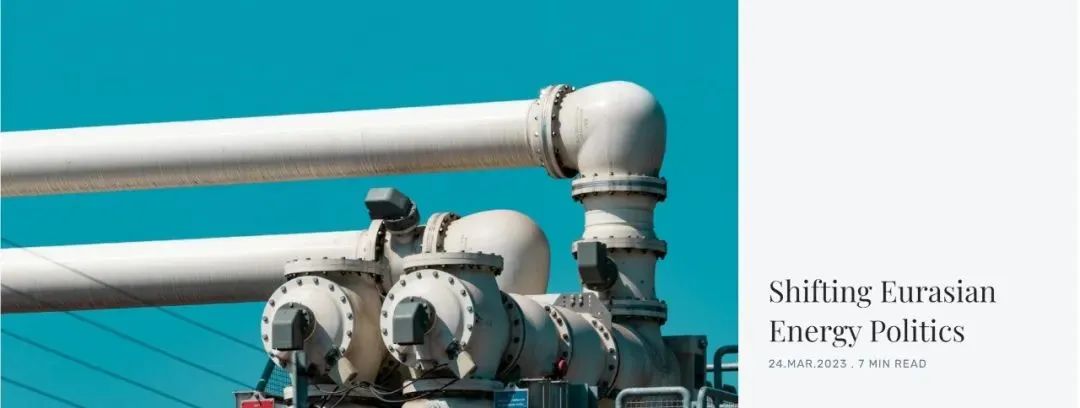
As the war in Ukraine surpasses the one-year mark, the effort to divorce Russia from its oil supplies is still going strong. But some are asking: Is it working? Trying to bring the Russian economy to its knees, the US and its allies haveescalated sanctionson the Russian economy. While many aspects of the sanctions packages have seenmixed results, it is clear that measures aimed at distancing the West from Russian energy supplies will form the crux of the attempt to punish Putin’s regime.
The Russian economy, and that of its predecessor the Soviet Union, have long relied on oil and gas revenues to prop up the country’s economic fortunes and to pay out the costs of geopolitical competition. The war in Ukraine requires increased Russian expenditures and therefore will cause the Russian government to look for other customers for its energy supplies. Though the full effects of the European decision to reduce Russian oil and gas have yet to be seen, it is clear that Russia is beginning to look towards growing Asian economies to fill the gap in its coffers.
How receptive Asian and Middle Eastern nations are to Russia’s overtures may signal the extent of Washington’s success in cordoning Russia off from world markets.
Tough Business
The importance of energy revenues to the Kremlin cannot be emphasized enough. In the early 2000s, a time in which Putin managed to consolidateone-party rulein the Russian Federation, major federal budgetsurpluseswere due in large part to high oil prices (pre-2008). Reorganizing the finances of the Russian Federation and ensuring the stability of the country’s pension system could be made possible by taking advantage of the country’s vast energy resources and potential. In writing an article on the importance of energy revenues to the country’s status as a great power in 1999, a younger Putin argued that thedistributionof the profits could ensure better living conditions for the Russian people. The added benefit, of course, is that it can also discourage protests against the reigning regime. Clearly, the growth and maintenance of Putin’s domestic control is incumbent on bringing in high profits and spreading the wealth from nationalized industries.
Even as political relations worsened, energy had previously remained a sphere of cooperation between Russia and Europe. Yet, on June 3rd, 2022, as part of the sixth package or round of sanctions on Russia for its invasion of Ukraine, the European Union adopted a partialembargoon Russian oil. Despite the rocky relationship that had existed between the EU and Russia after Russia’s seizure of Crimea in 2014, the supply chains from Russia to Europe, particularly the energy-hungry economies of Western Europeremained. Therefore, the decision to embargo Russian oil was a major step for the European Union in confronting Russia over its aggression in Ukraine. As a result of theunprecedented condemnationof Russia’s large-scale land war, policymakers across the European continent were able to come together and get the needed votes to agree on limiting Russian energy imports.
To reduce dependence on Russian energy but avoid complete chaos in world energy markets, transatlantic leadersdecidedthat the aforementioned energy embargo would only go into effect months later in December 2022. That delayed implementation gave European energy providers some time to find alternative energy sources. But that task hasn’t proven straightforward. Russia’s proximity and already-built infrastructure meant that Europe did not need to look farther afield, until very recently. As Europe scrambled to find new sellers, Russia has sought out new markets for its plentiful energy resources.
New Customers?
Europe’s decision to divest from Russian energy supplies has forced the Russian Federation to look for alternative buyers in order to fill rapidly depleting state funds. A recentreportfrom Forbes Ukraine pegged the total cost of the war at somewhere around US$82 billion. Given that estimating such a complex sum is difficult to make cumulative, and also that the war is showing no signs ofending, the need to come up with revenue is significant for the survival of the current Russian regime, and also to achieve the Kremlin’s war aims. Since international companies haveleftthe country in droves, less revenue is available from the financial and manufacturing sectors. Therefore, leveraging its vast resources has been and will continue to be a major focal point for the Russian government.
Therefore, the question is, if not Europe, where can Russia sell its oil and gas? The first (and perhaps most obvious) place where Russia will seek to increase its contracts is in China. Given thatenergy tiesbetween the two countries date back decades and China’s economy has been stablygrowingsince ending their covid-lockdowns. The Russian oil and gas fields in Siberia are ideally situated to cater to the large cities and industrial plants in Manchuria and even farther afield, Beijing. On the diplomatic front, China has notcompliedwith the price caps put in place by European leaders to stop Russia from earning energy revenues there and has come out against them.
In 2014, thecompletionof the ‘Power of Siberia’ pipeline connecting gas fields in Irkutsk and Yakutia to China proved a milestone in facilitating such trade. In the present, as Russian gas company Gazprom scrambles to find new markets, this pipeline has served as a medium for a new contract. Press reports from Gazprom late in 2022 indicate that after a call from the Chinese state gas company CNPC to increase supply from Russia, record daily gas flows wererecordedon December 9th, 2022. As ‘Power of Siberia’ ramps supply to hungry Chinese markets, a new pipeline is in the works: ‘Power of Siberia 2’. Taken together, the recent flurry of diplomatic overtures to China and the construction of a new pipeline to be operational in 2030 indicate that Moscow views the future of LNG and oil sales to lay in selling to Asian economies via the Russian Far East.
In aiming to sell in the East, Russia is not only looking to sell to China. Initially pressured by the West to break ties with Russia, India has remained interested in importing Russian energy supplies. India imported Russian oil inrecord quantitiesthroughout 2022, benefitting from the discounted prices. In an interview with Foreign Policy, Shivshankar Menon, former Indian national security advisor, underlined the deep energy ties between the two countries. He noted that Indian firms collectively have invested around US$16 billionin the Russian oil industry. Such deep investments indicate that even if the war drags on and the West continues to reduce consumption of Russian oil and gas, New Delhi will remain a key customer for Moscow. Besides China and India, other Asian nationsimportinglarge amounts of Russian oil and gas include South Korea and Japan.
An Unexpected Lifeline
As Russia hunts for new customers, it has already caught several breaks. The first is surprising cooperation from the Gulf countries, which are US allies but also participate in OPEC alongside Russia. The UAE and Saudi Arabia both embarrassed the United States when theymaintainedrobust relations with the Russian Federation after Western pressure to cut those ties following the brutal invasion of Ukraine. In the summer of 2022, Russia and India were able to use the UAE currency, the dirham, toconductan energy deal. A port in the Emirates, Fujairah, hasprocessedsome of this Russian oil heading to South Asia. Indeed, the Gulf has lent Russia an outlet for conducting energy geopolitics with a freer hand outside of Europe.
The decisions of the Gulf states to continue partnering with Russia in OPEC and in oil refining/storing operations did not go unnoticed in Washington. In late 2022, a diplomatic row between Riyadh and Washington caused President Biden to directlyaccusethe Saudi government of assisting the Russian war effort and mentioned that there could be ‘consequences.’ Further rifts between Saudi Arabia and the US could pave the war to even deeper ties between Russia and the Gulf region. That would force the US into an even more challenging position in severing Russia from global energy markets. This decision reinforces aperceptionby many third parties to the conflict that supporting the principle of national sovereignty and reinforcing the US opposition to the Russian invasion to the detriment of one’s own economy may not be a choice that some countries are willing to make.
A New Eurasian Energy Equilibrium?
Growing pressures on natural resources and rapid economic growth result in a desperate need for energy supplies not only in China and India but elsewhere on the Eurasian landmass. The eagerness displayed by these customers for greater supplies of oil and natural gas indicates that Russia will still be able to raise revenues for its ongoing invasion of Ukraine, even if the West cuts itself off completely of Russian oil and gas – a prospect that may not be out of the realm of possibility. This not only raises important questions for Western efforts to help Ukraine win the war, but also underscores the growing influence of countries like India and the UAE in geopolitics. Despite close ties to the US and European states, those nations have not adopted the Western positions on the Russo-Ukraine war. These conditions no doubt pose questions about the strength of US influence on Eurasian politics.
Russia’s ability to find new customers, to some extent, argues for the US to adopt nuanced approaches to crippling the ability of the Russian state to fund the war in Ukraine. US leaders have underscored the grotesque human cost and grave blow that this war strikes to international law. US President Joe Bidenarguedthat “This world should see these outrageous acts for what they are” before the UN at the 77th Session of the General Assembly. At a Quad summit earlier that year, he madespecial effortsto encourage Delhi and Tokyo to take harder stances against Russia. Given that Russia continues to sell copious amounts of gas, US leaders may look to offer sweeter energy deals to prospective partners in Africa and Eurasia as a more convincing path to divorce Russia from large oil and gas revenues. With interest in clean energy on the rise globally, the Biden administration may have more tools at its disposal than it thinks to combat the global energy crisis. Taking the lead on driving clean energy technologies at home may be a long-term but necessary strategy for Washington to counter Moscow’s influence in worldwide energy markets. What is clear, however, is that whoever provides the world’s most populous countries with energy will gain a great advantage in the coming years.
鏈接:https://hir.harvard.edu/shifting-eurasian-energy-politics/
HIR哈佛國際評論寫作賽的主題始終圍繞著人類命運共同體的相關話題展開,并且是自命題,可選擇領域也是非常廣泛~
對于國際文科競賽還不大熟悉的同學來說,不失為一個很好的新手選擇~
不論我們是想要檢驗自己寫作能力水平,或者是對時政話題感興趣,有自己的觀點想法想要表達,或者是看重哈佛背書這一背景,希望通過參賽借力,沖擊頂尖名校,HIR都是一個非常不錯的項目~
這個暑假,讓我們一同直面挑戰,收獲成長,蛻變成更好的自己!
我要咨詢/參加HIR夏季賽
更多信息可咨詢顧問









