CIE A Level Chemistry復習筆記3.1.12 Chirality

Chirality & Enantiomers
Chiral centres in non-cyclic molecules
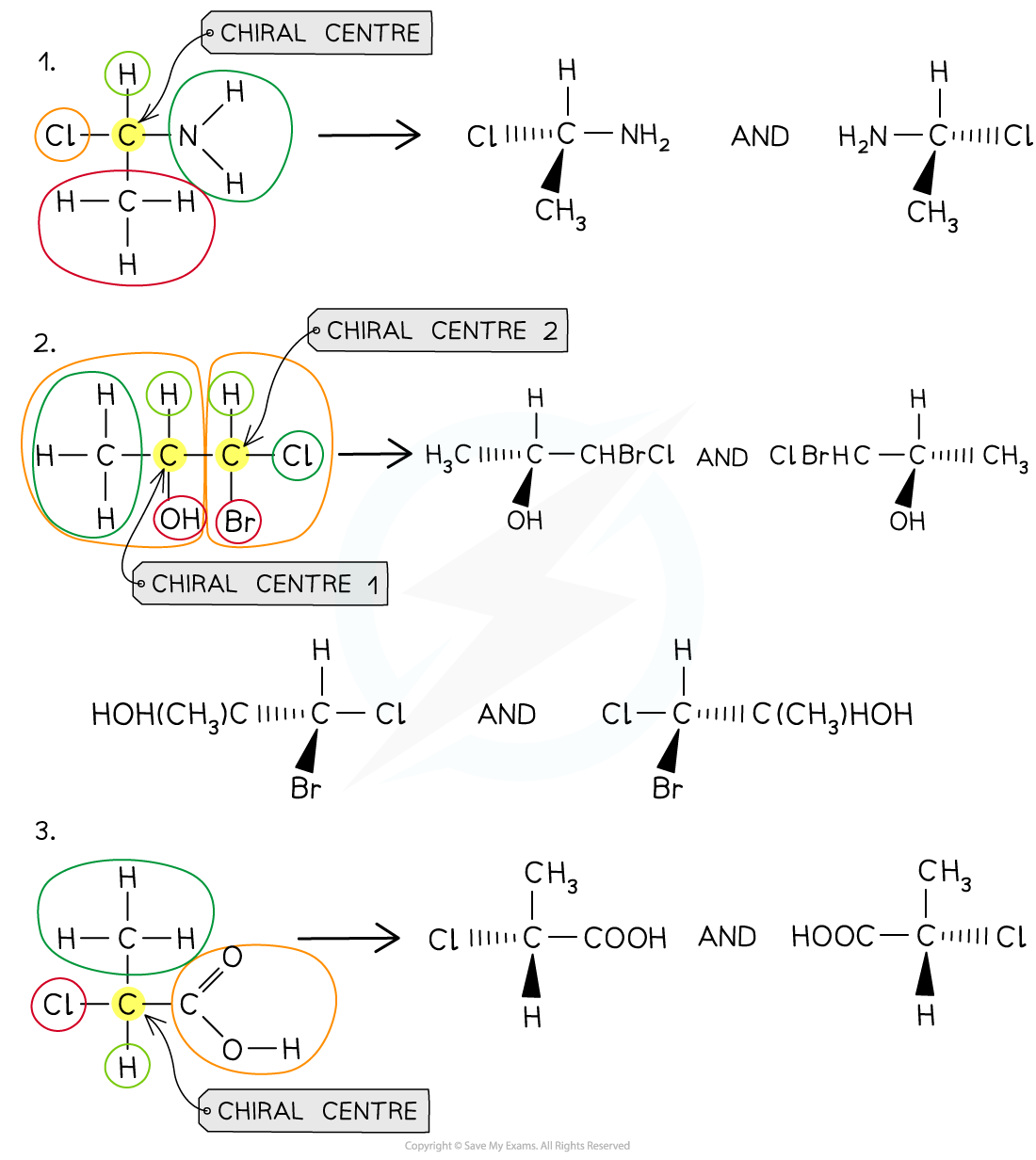
- A?chiral?centre?in a molecule is a carbon atom that has four different atoms or group of atoms attached
- This gives rise to two optical isomers which are also called?enantiomers
- The enantiomers are?mirror images?of each other and cannot be superimposed
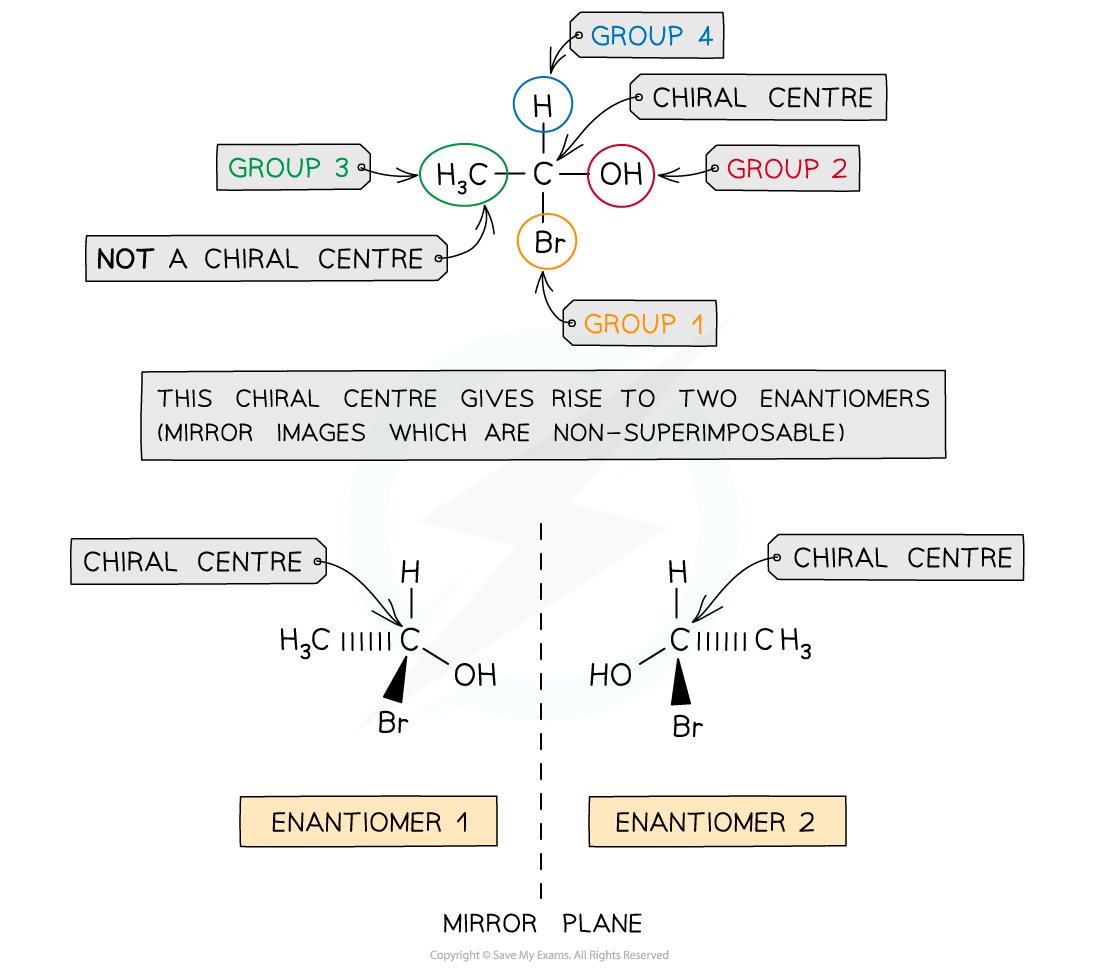 The presence of the chiral centre in the molecule allows two enantiomers to exist which are stereoisomers as the molecules have the same atoms bonded to each other, but they are differently arranged in space
- When the molecule contains more than one chiral centre (asymmetric carbon) more than two optical isomers will be formed
- If there are two chiral centres, each chiral centre will rotate the plane of polarised light clockwise and anticlockwise
- There are?four?possible optical isomers
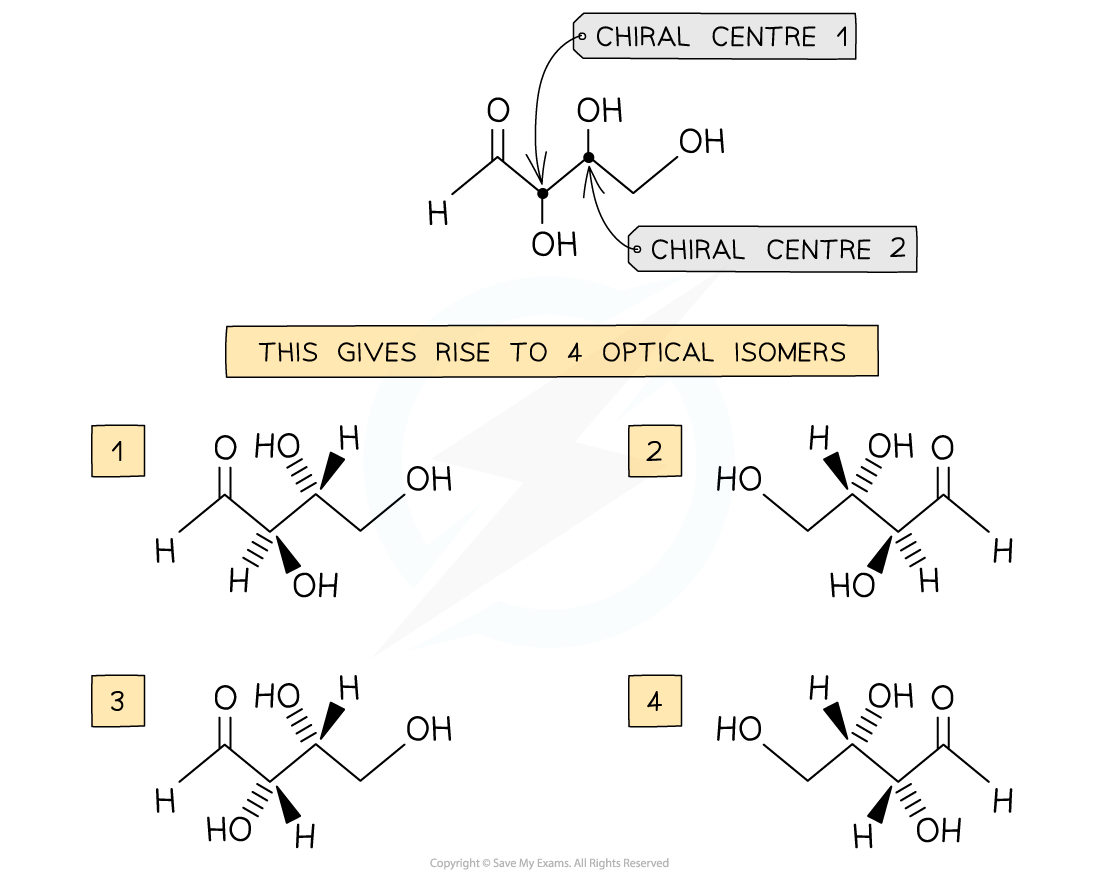 Each chiral centre gives rise to two optical isomers; therefore, the molecule has a total of four optical isomers
Chiral centres in cyclic molecules
- To determine the chiral centre in a cyclic molecule, the carbon bonded to four different atoms or groups of atoms should be found
- Eg. 1,2-aminocyclohexanol has two chiral centres so it can form four optical isomers
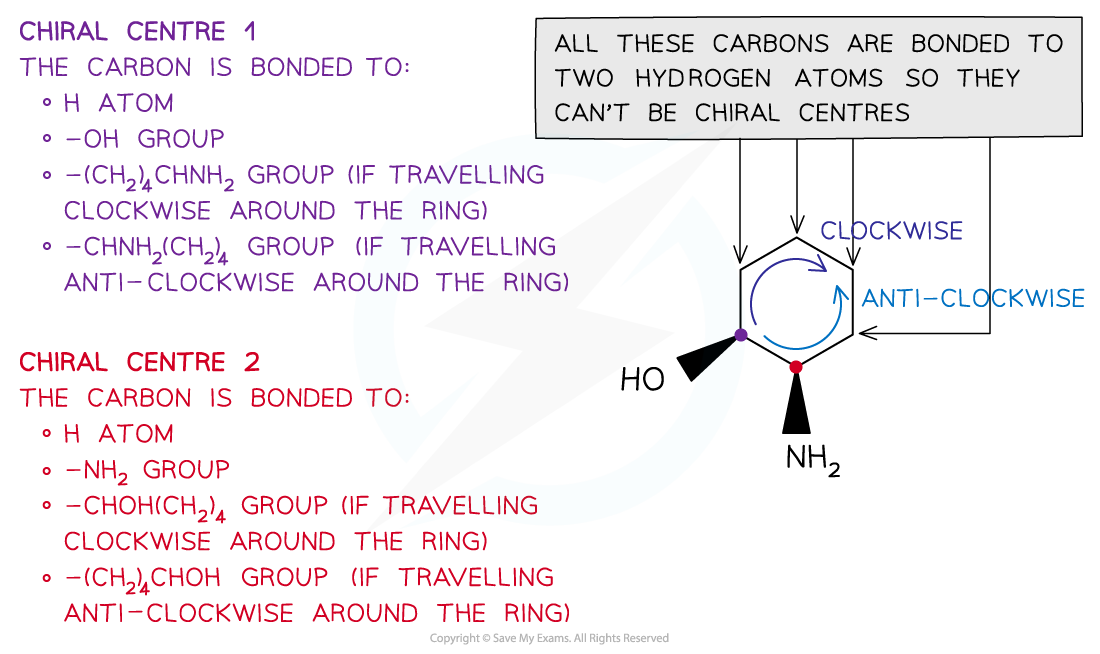 To decide where the chiral centres are in a cyclic molecule, the carbon atoms bonded to four different atoms or atom groups should be found
Exam Tip
Use a?molecular modelling kit?and make the models of enantiomers to help you understand that the two molecules are non-superimposable and therefore non-identical.
Identifying Chirality & Geometrical Isomerism
Identify chirality
- Identifying?chiral?centres?in cyclic and non-cyclic compounds is very straightforward as it is the carbon with four different atoms or atom groups in a molecule
- This gives rise to?two?optical isomers
- When more than two chiral centres are present, more than two optical isomers exist
- A molecule with?three?chiral centres will have?six?optical isomers
- A molecule containing chiral centres is called a?chiral molecule
Identifying geometrical isomers
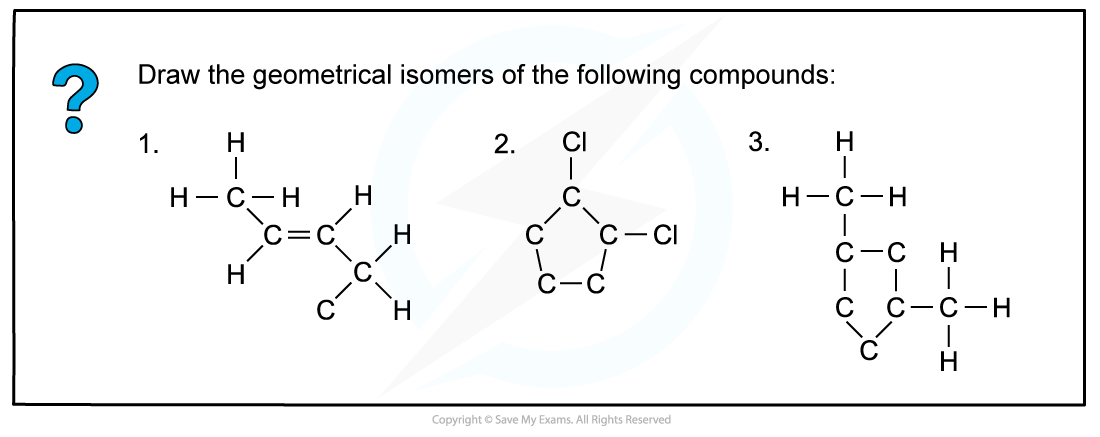
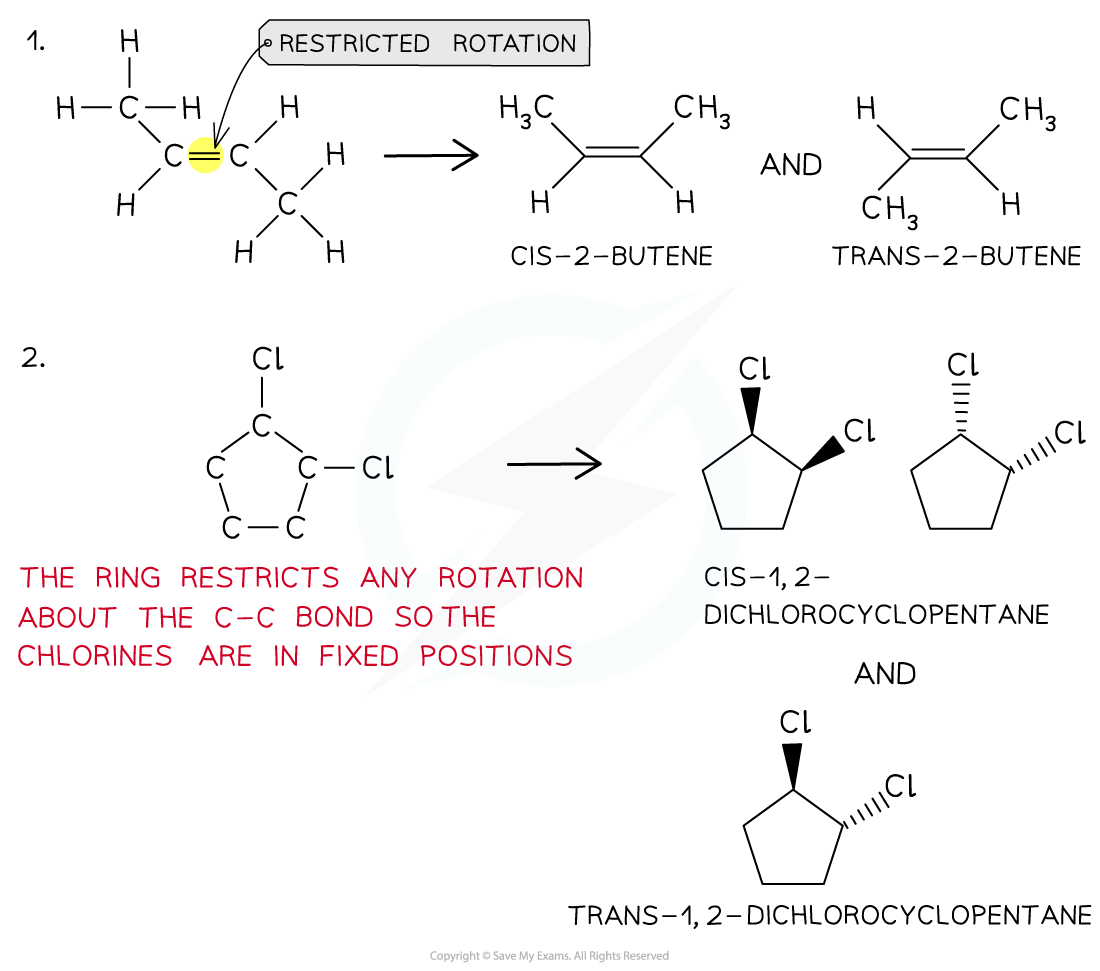
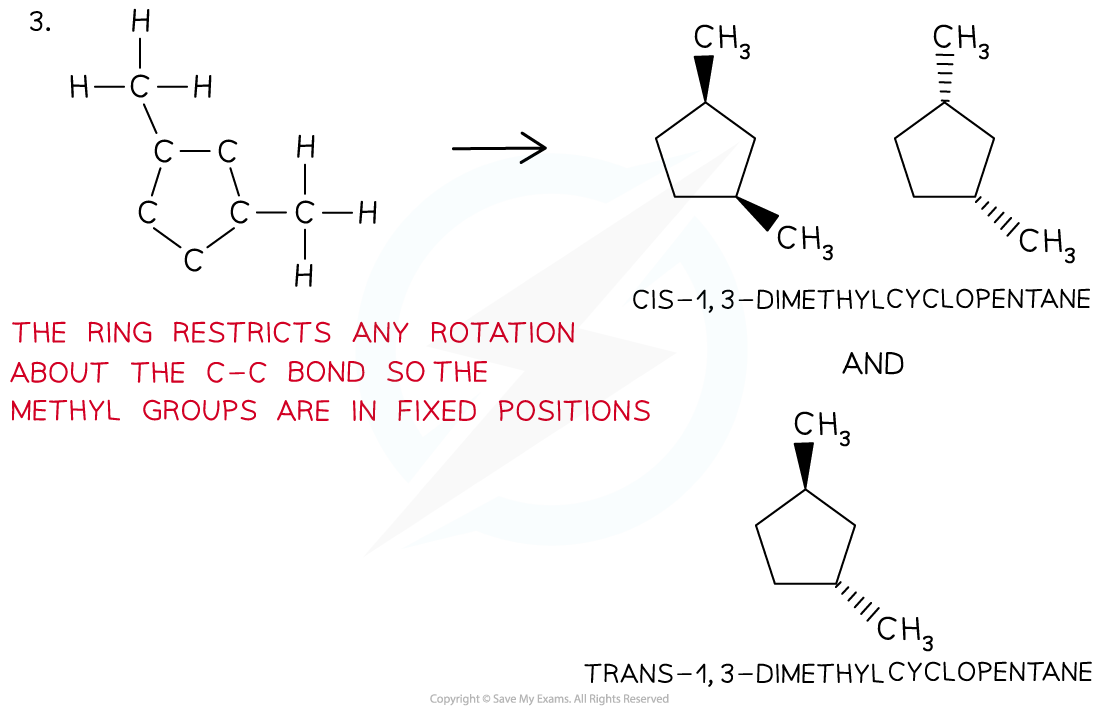
- Molecules with restricted rotation about the C-C bond can have geometrical isomers
- This includes unsaturated and cyclic compounds
- Eg. alkenes and cyclopentane
- When the groups are positioned on the same side of the C-C double bond, the compound is a?cis?isomer
- When the groups are positioned on opposite sides of the C-C double bond the compound is a?trans?isomer
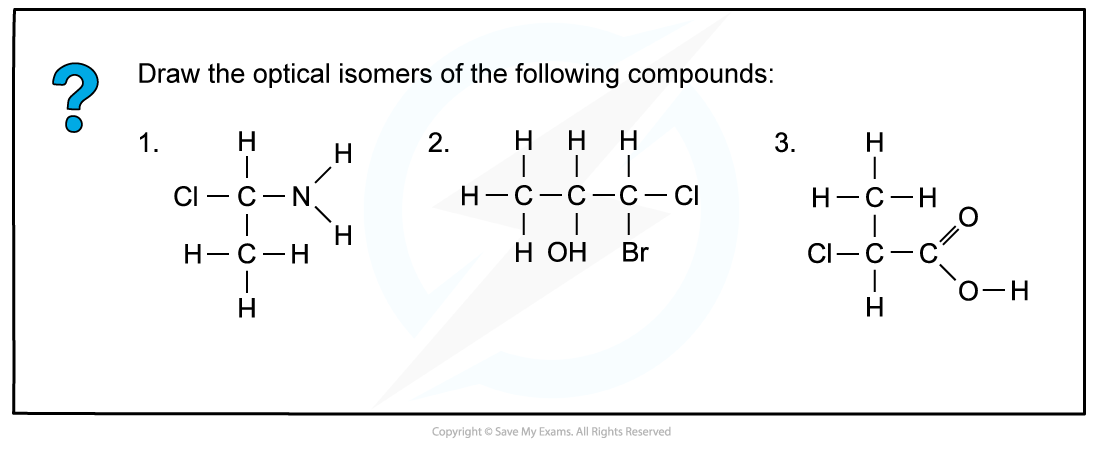
Worked example: Drawing optical isomers
Worked example: Drawing geometrical isomers
轉載自savemyexams
以上就是關于【CIE A Level Chemistry復習筆記3.1.12 Chirality】的解答,如需了解學校/賽事/課程動態(tài),可至翰林教育官網(wǎng)獲取更多信息。
往期文章閱讀推薦:
2026 ALEVEL 夏考A率出爐!愛德思vs牛津AQA,哪些科目真的“好出分”?
2026 AMC10/12美國數(shù)學競賽新賽季!【翰林教育 × 清華大學出版社】獨家教材全面發(fā)售!


翰林AMC8視頻課重磅上線!

國際競賽真題資源免費領取






