Edexcel IGCSE Chemistry 復(fù)習筆記 1.9.1 Explaining Conductivity

Edexcel IGCSE Chemistry 復(fù)習筆記 1.9.1 Explaining Conductivity
Conductivity of Covalent Compounds
- Electric current is the flow of?charged particles
- This usually refers to electrons, but it could also mean the flow of ions
- Collectively, they can be termed freely moving charged particles
- Most covalent compounds do not conduct electricity as they have no freely moving charged particles to carry the current
- They act as?insulators?and have many applications which rely on that property
- Covalent substances are used as electrical insulators in solid, liquid and gaseous form
- For example, sulfur hexafluoride is a dense gas used to insulate electrical transformers
- Silicone oils and liquid hydrocarbons are also used in electrical equipment
- Common insulators include the plastic coating around household electrical wiring:
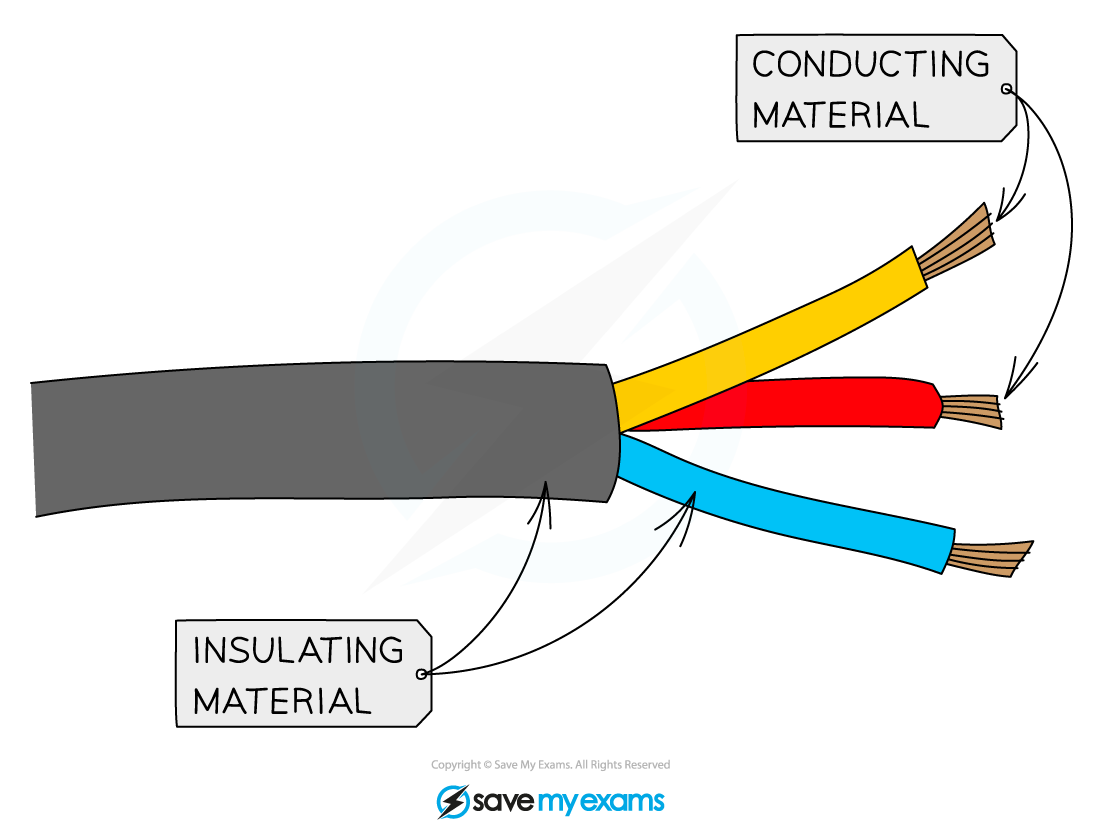
Covalent compounds are used as insulating materials
- There are some exceptions to conductivity in covalent compounds
- Organic polymers have been developed which have multiple adjacent double bonds that allow electrons to migrate along the length of the polymer chains
- These unusual materials have potential uses as electronic components and biomedical applications
Conductivity of Ionic Compounds
- Ionic compounds can conduct electricity in the?molten?state or in?solution?as they have ions that can move and carry charge
- They cannot conduct electricity in the solid state as the ions are in fixed positions within the lattice and are unable to move
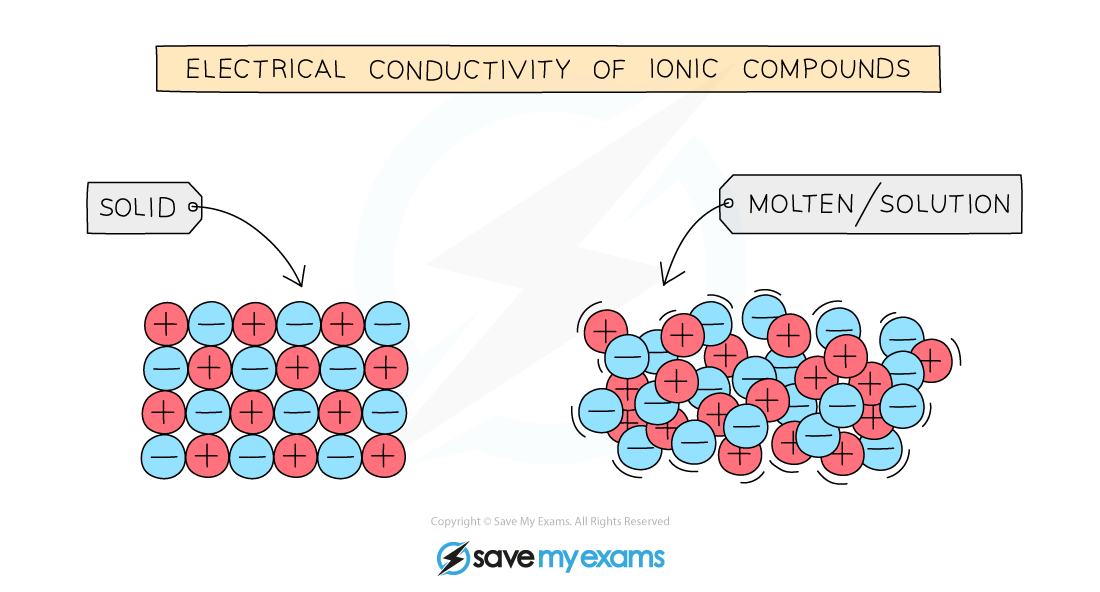
Molten or aqueous particles move and conduct electricity but cannot in solid form
Anions & Cations
- During electrolysis the electrons move from the power supply towards the?cathode
- Electron flow in electrochemistry thus occurs in?alphabetical?order as electrons flow from the?anode?to the?cathode
- Positive ions within the electrolyte migrate towards the?negatively?charged electrode which is the?cathode
- Negative ions within the electrolyte migrate towards the?positively?charged electrode which is the?anode
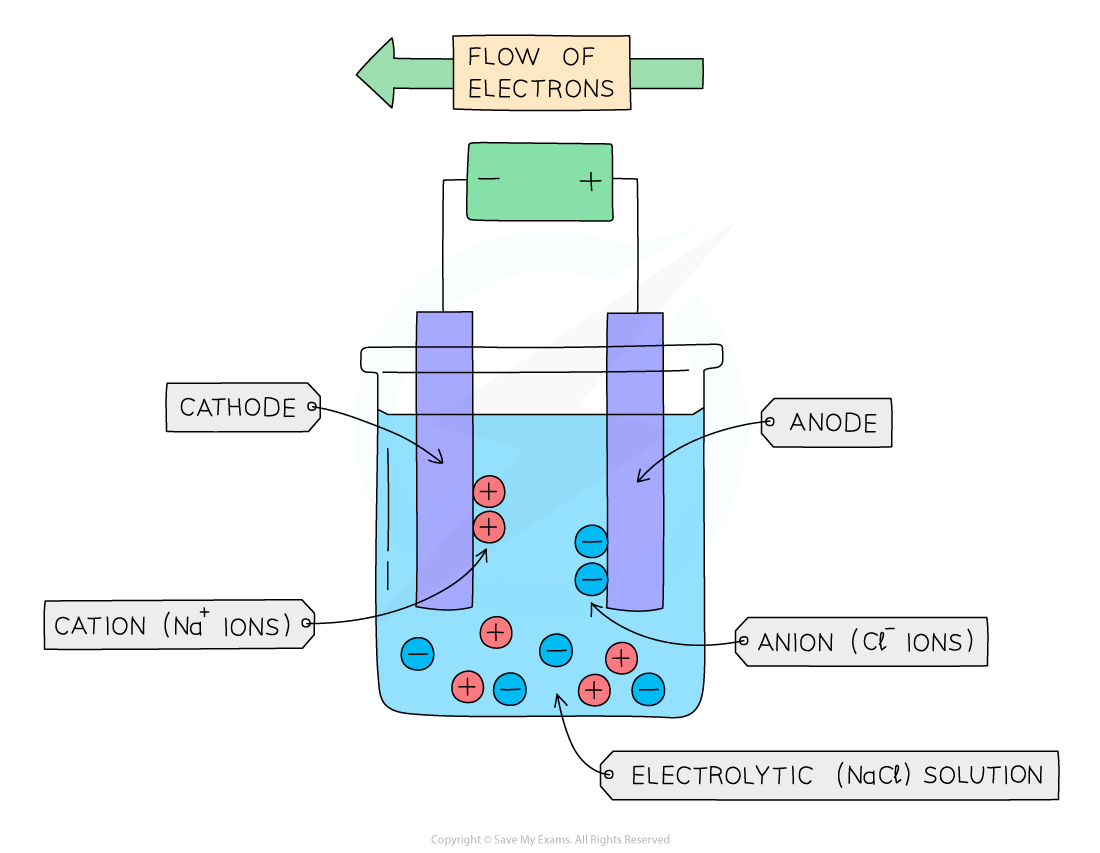
Diagram showing the direction of movement of electrons and ions in the electrolysis of NaCl
Exam Tip
When a metal conducts it is the?electrons?that are moving through the metal. When a salt solution conducts it is the?ions?in the solution that move towards the electrodes while carrying the electrons.
轉(zhuǎn)載自savemyexam
以上就是關(guān)于【Edexcel IGCSE Chemistry 復(fù)習筆記 1.9.1 Explaining Conductivity】的解答,如需了解學校/賽事/課程動態(tài),可至翰林教育官網(wǎng)獲取更多信息。
往期文章閱讀推薦:
MIT官方發(fā)布【2026年夏季推薦閱讀書單】!橫跨科學/人文/經(jīng)濟...


翰林AMC8視頻課重磅上線!

國際競賽真題資源免費領(lǐng)取






