AQA A Level Physics復習筆記4.5.4 Impulse on a Force-Time Graph

Impulse of a Force-Time Graph
- In real life, forces are often not constant and will vary over time
- If the force is plotted against time,?the impulse is equal to the area under the force-time graph
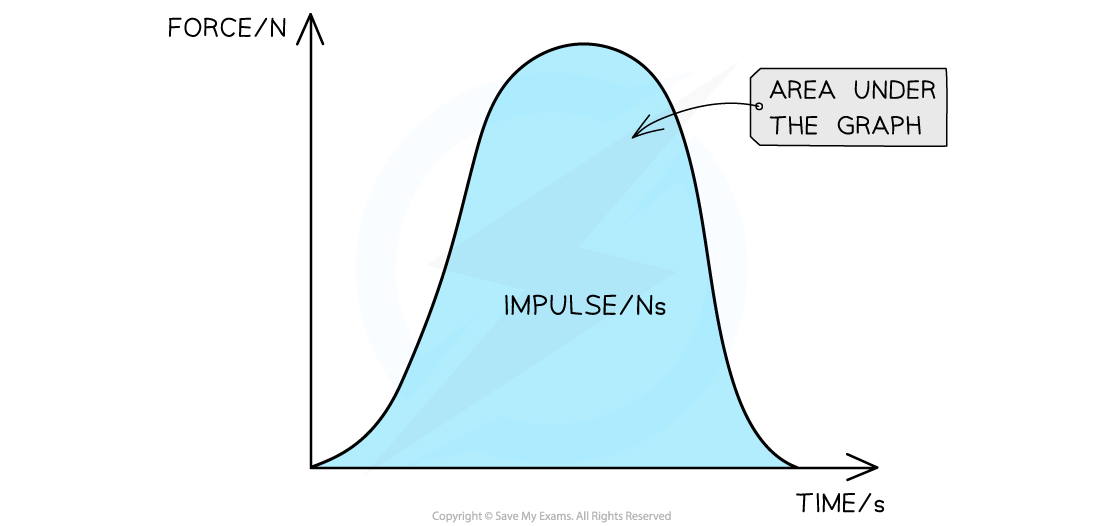
When the force is not constant, the impulse is the area under a force–time graph
- This is because
Impulse?=?Force?×?Change in time
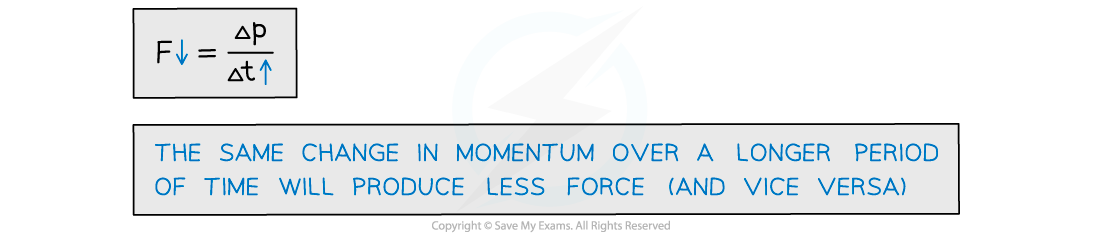
- The impulse is therefore equal whether there is a small force over a long period of time or a large force over a small period of time
- The force-time graph may be a?curve?or a?straight line
- If the graph is a curve, the area can be found by counting the squares underneath
- If the graph is made up of straight lines, split the graph into sections. The total area is the?sum of the areas?of each section
Worked Example
A ball of mass 3.0 kg, initially at rest, is acted on by a force F which varies with t as shown by the graph. Calculate the velocity of the ball after 16 s.
Step 1: List the known quantities
m = 3.0 kg
u = 0 m s-1?(since it is initially at rest)
Step 2: Calculate the impulse
The impulse is the area under the graph. The graph can be split up into two right-angled triangles with a base of 8 s and a height of 4 kN

Area = impulse = 32 × 103?Ns
Step 3: Write the equation for impulse
Impulse,?I = Δp = m(v – u)
Step 4: Substitute in the values
I = mv
32 × 103?= 3.0 × v
v = (32 × 103) ÷ 3.0
v = 10666 m s–1?= 11 km s-1
Exam Tip
Some maths tips for this section:Rate of Change
- ‘Rate of change’ describes how one variable changes with respect to another
- In maths, how fast something changes with?time?is represented as dividing by?Δt?(e.g. acceleration is the rate of change in velocity)
- More specifically,?Δt?is used for finite and quantifiable changes such as the difference in time between two events
Areas
- The area under a graph may be split up into different shapes, so make sure you’re comfortable with calculating the area of squares, rectangles, right-angled triangles and trapeziums!
Impact Forces
- Impact forces are reduced by increasing the contact time
- This fact is used in everyday life to lower the risk of injury
- Some example of where reducing impact force is important:
- In sport
- In packaging
In Sports
- For example, in cricket:
- When a cricket fielder relaxes their hands and pulls them back when catching a ball
- A cricket ball travels at very high speeds and therefore has a?high momentum
- When a fielder catches the ball, it exerts a force onto their hands
- Stopping a ball with high momentum at once will cause a large force onto their hands
- This is because a change in momentum (impulse) acts over a?short period of time?which creates a?large force?on the fielder's hands and could cause serious injury
- A fielder moves their hands back when they catch the ball, which?increases the time?for its change in momentum to reduce
- This means there will be?less force?exerted on the fielder's hands and therefore less chance of injury
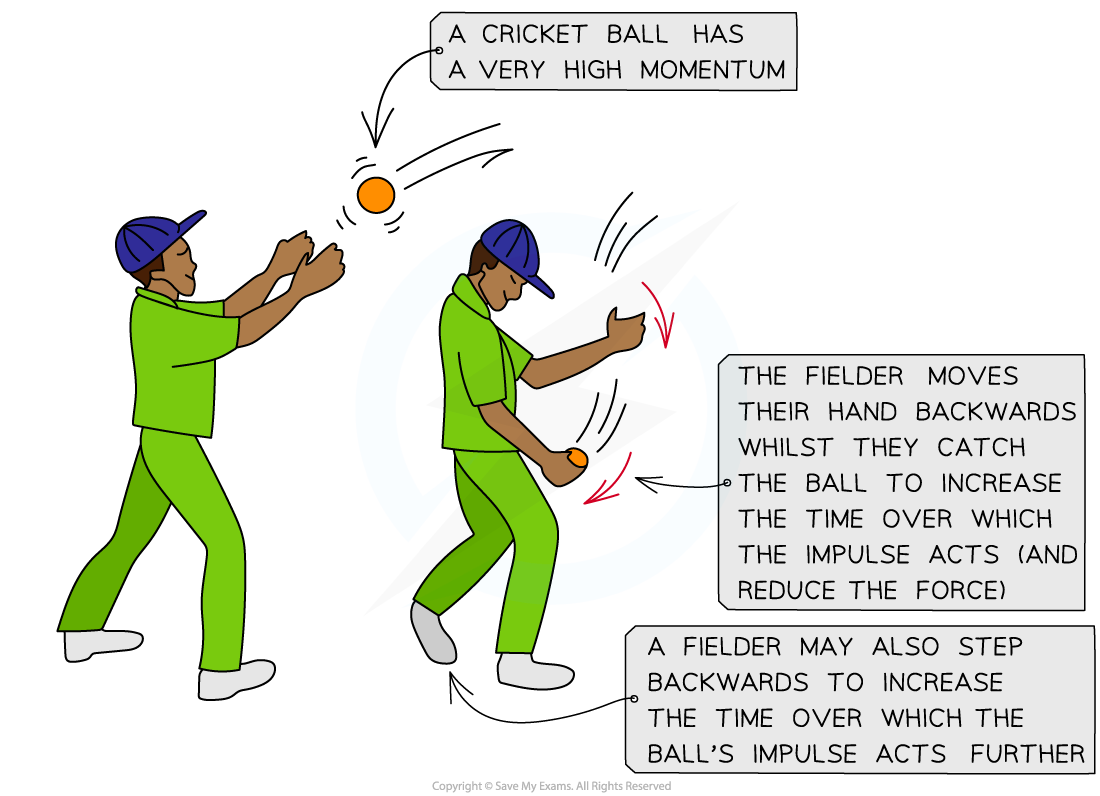
A cricket fielder moves their hands backwards when catching a cricket ball to reduce the force it will exert on their hands
- In football:
- Increasing the contact time is sometimes used to advantage, as the longer the contact time, the larger change in momentum
- When kicking a football, after a strong kick the motion is followed through
- The momentum from the foot is transferred to the ball
- This creates a?large impulse?and the ball then has a?higher velocity
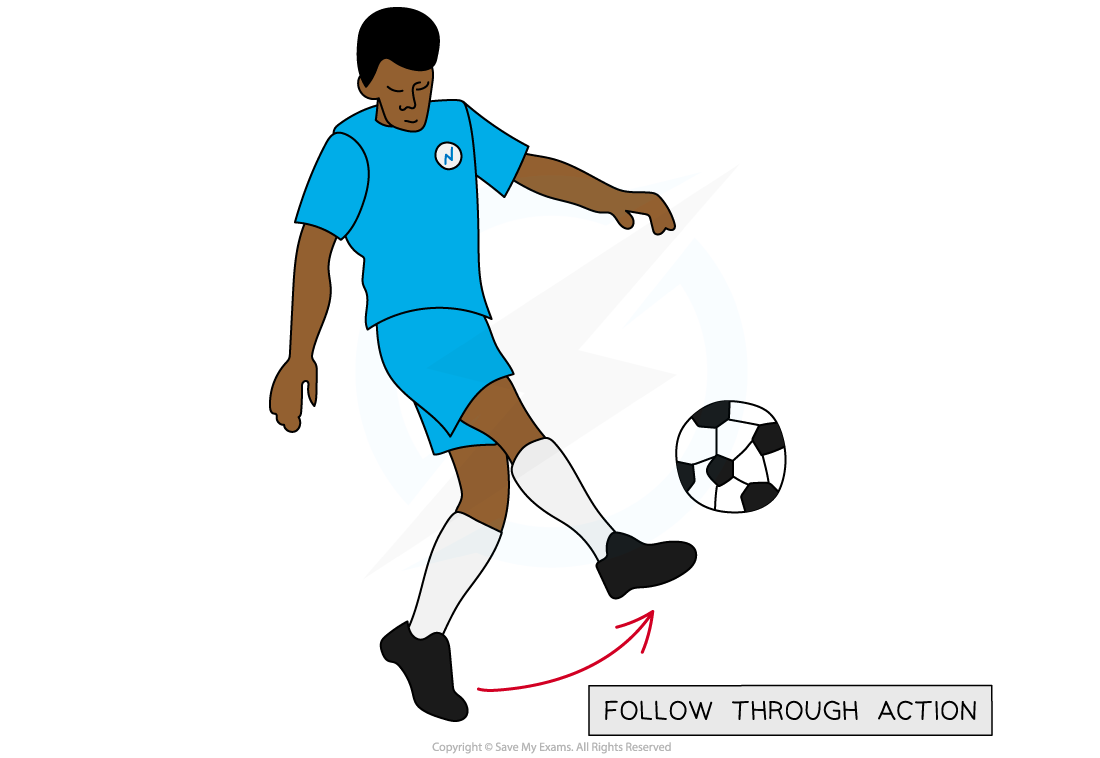
The follow through action of a football kick increases the change in momentum of the ball
In Packaging
- Packaging, especially for fragile items, uses bubble wrap or polyester packaging to reduce the impact forces that items experience in transit
- These help cushion the items by increasing the time over which they experience a force, which reduces the risk of damage
Worked Example
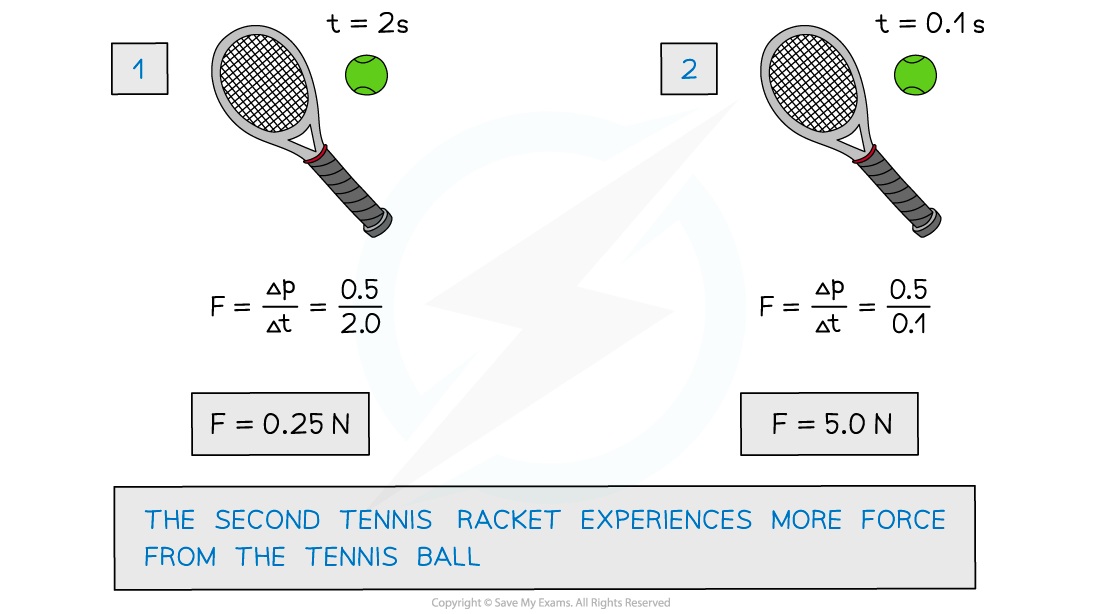
A tennis ball hits a racket with a change in momentum of 0.5 kg m s-1.For the different contact times, which tennis racket experiences more force from the tennis ball?
轉載自savemyexams
以上就是關于【AQA A Level Physics復習筆記4.5.4 Impulse on a Force-Time Graph】的解答,如需了解學校/賽事/課程動態,可至翰林教育官網獲取更多信息。
往期文章閱讀推薦:
MIT官方發布【2026年夏季推薦閱讀書單】!橫跨科學/人文/經濟...


翰林AMC8視頻課重磅上線!

國際競賽真題資源免費領取






