AQA A Level Biology復習筆記4.4.4 Directional & Stabilising Selection

Directional & Stabilising Selection
- Environmental factors that affect the chance of survival of an organism are?selection pressures
- For example, there could be high competition for food between lions if there is not plentiful prey available; this environmental factor ‘selects’ for faster, more powerful lions that are better hunters
- These selection pressures can have different effects on the?allele frequencies?of a population through?natural selection
- There are different types of selection:
- Stabilising
- Directional
Stabilising selection
- Stabilising?selection is natural selection that keeps allele frequencies relatively?constant?over generations
- This means things stay as they are unless there is a change in the environment
- A classic example of stabilising selection can be seen in human birth weights
- Very-low and very-high birth weights are selected against leading to the?maintenance of the intermediate?birth weights
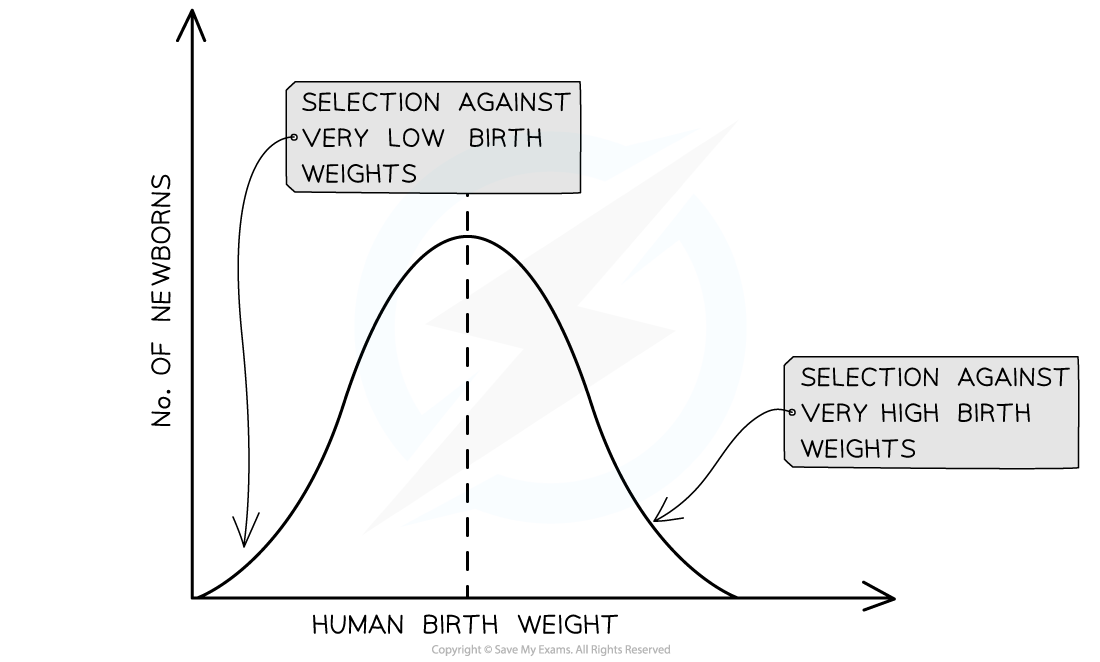
Stabilising selection selects against the extreme phenotypes (high and low birth weights) and selects for the intermediate phenotypes (medium birth weights)
Directional selection
- Directional?selection is natural selection that produces a?gradual change?in allele frequencies over several generations
- This usually happens when there is a?change in environment/selection?pressures or a?new allele?has appeared in the population that is advantageous
- For example, antibiotic-resistant bacteria strains are becoming more common due to the overuse of antibiotics
- The presence of antibiotics is a selection pressure
- Mutations are occurring in bacteria populations randomly
- A mutation arises that confers antibiotic resistance - it is a?beneficial allele
- Bacteria with this mutation are more likely to survive and reproduce
- Most bacteria without the resistance mutation die
- Over?generations,?this leads to an?increase?in the?frequency?of?beneficial allele?that produces antibiotic resistance
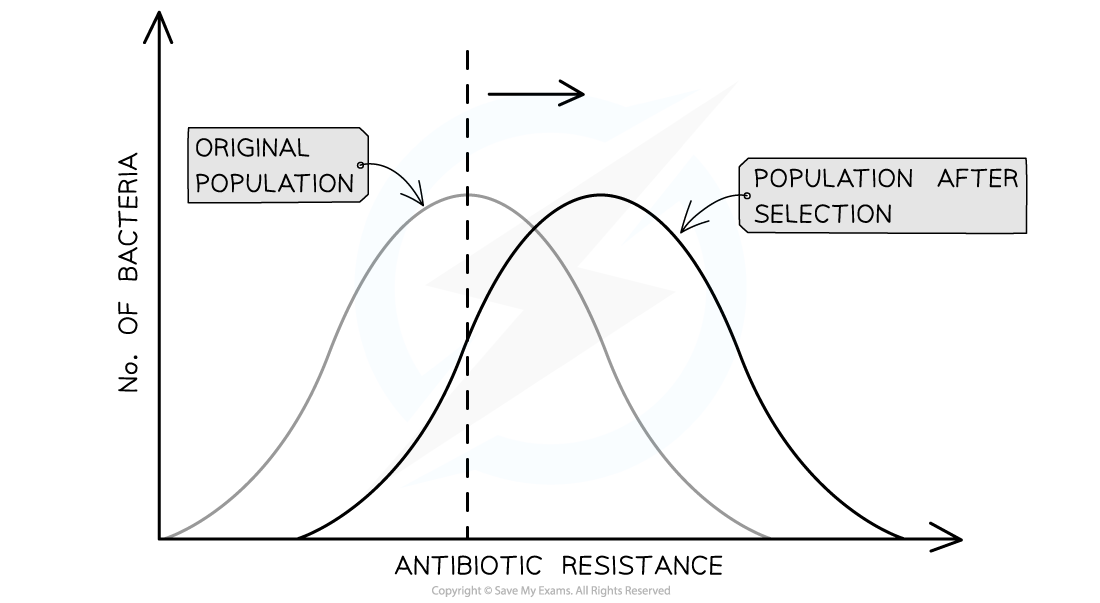
Directional selection favours one extreme phenotype. This causes the mean trait value (in the population) to change over time
Exam Tip
Become familiar with the shapes of the graphs above. They can help you answer questions about the type of selection that is occurring in a population.
轉載自savemyexams
以上就是關于【AQA A Level Biology復習筆記4.4.4 Directional & Stabilising Selection】的解答,如需了解學校/賽事/課程動態,可至翰林教育官網獲取更多信息。
往期文章閱讀推薦:
2026 AMC10/12美國數學競賽新賽季!【翰林教育 × 清華大學出版社】獨家教材全面發售!
CAIE A-Level分數線新鮮出爐!三大考試局查分攻略+出分急救指南速覽!


翰林AMC8視頻課重磅上線!

國際競賽真題資源免費領取






