2023HIMCM全球高中生數(shù)模賽A題

2023HiMCM全球高中生數(shù)模賽A題全文如下
Problem A:Dandelions: Friend? Foe? Both? Neither?
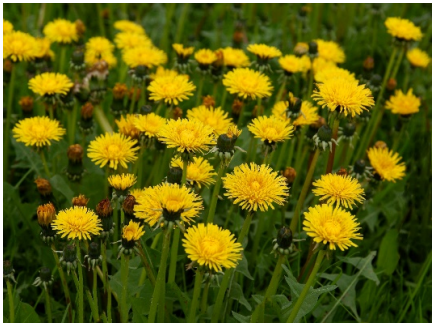
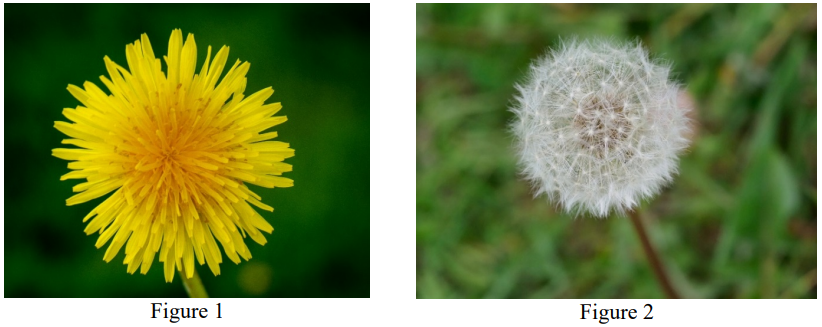
Taraxacum officinale, commonly referred to as the dandelion, is a plant native to Eurasia that can now be found worldwide[1]. This plant is easily identifiable by its bright yellow flowers (Figure 1) and its distinctive “puffball” seed head (Figure 2). Each seed from this head is attached to a parachute-like structure, known as a 'pappus', which facilitates wind dispersal[2].
1. If a single dandelion in its “puffball” stage is adjacent to an open one-hectare plot of land, create a mathematical model to predict the spread of dandelions over the course of 1, 2, 3, 6, and 12 months. Make sure your model incorporates the effects of various climatic conditions, such as temperate, arid, and tropical climates, on dandelion growth.
2. The relationship between dandelions, humans, and other flora is complicated. Because of the plant’s ability to thrive in diverse environments, some label it a pesky weed or as an invasive species. Conversely, every part of the dandelion is edible, and the plant has a rich history of medicinal and culinary use.
Formulate a mathematical model capable of determining an ‘impact factor’ for invasive species. This model should integrate multiple variables, including the plant's characteristics and the nature and extent of the harm it inflicts on its environment.
a. Test your model by using it to compute an impact factor for dandelions.
b. Apply your model to determine the impact factor for two other plant species of your choice that are often considered invasive. Make sure to identify the region for whom each of the plants you choose are invasive
Your PDF solution of no more than 25 total pages should include:
? One-page Summary Sheet.
? Table of Contents.
? Your complete solution.
? References list.
? AI Use Report (If used does not count toward the 25-page limit.)
Note: There is no specific required minimum page length for a complete HiMCM submission. You may use up to 25 total pages for all your solution work and any additional information you
want to include (for example: drawings, diagrams, calculations, tables). Partial solutions are accepted. We permit the careful use of AI such as ChatGPT, although it is not necessary to create a solution to this problem. If you choose to utilize a generative AI, you must follow the COMAP AI use policy. This will result in an additional AI use report that you must add to the end of your
PDF solution file and does not count toward the 25 total page limit for your solution.
Glossary
An “invasive species” is a species that is:
1) non-native (or alien) to the ecosystem under consideration and,
2) whose introduction causes or is likely to cause economic or environmental harm or harm to human health.
Non-native species are plants and animals living in areas where they do not naturally exist.
“Non-native species” and “invasive species” cannot be used interchangeably. Many commonly grown fruits and vegetables are not native to the U.S. For example, tomatoes and hot peppers originated from South America, while lettuce was first grown in Egypt. Domestic cows are nonnative to North America and were introduced as a food source, and considered to be a beneficial organism in an agricultural setting.
From USDA National Invasive Species Information Center[3]
References
[1] https://anpc.ab.ca/wp-content/uploads/2015/01/dandelion.pdf
[2] https://hort.extension.wisc.edu/articles/dandelion-taraxacum-officinale/
[3] https://www.invasivespeciesinfo.gov/what-are-invasive-species
Use of Large Language Models and Generative AI Tools in COMAP Contests
This policy is motivated by the rise of large language models (LLMs) and generative AI assisted technologies. The policy aims to provide greater transparency and guidance to teams, advisors, and judges. This policy applies to all aspects of student work, from research and development of models (including code creation) to the written report. Since these emerging technologies are quickly evolving, COMAP will refine this policy as appropriate.
Teams must be open and honest about all their uses of AI tools. The more transparent a team and its submission are, the more likely it is that their work can be fully trusted, appreciated, and correctly used by others. These disclosures aid in understanding the development of intellectual work and in the proper acknowledgement of contributions. Without open and clear citations and references of the role of AI tools, it is more likely that questionable passages and work could be identified as plagiarism and disqualified.
Solving the problems does not require the use of AI tools, although their responsible use is permitted. COMAP recognizes the value of LLMs and generative AI as productivity tools that can help teams in preparing their submission; to generate initial ideas for a structure, for example, or when summarizing, paraphrasing, language polishing etc. There are many tasks in model development where human creativity and teamwork is essential, and where a reliance on AI tools introduces risks. Therefore, we advise caution when using these technologies for tasks such as model selection and building, assisting in the creation of code, interpreting data and results of models, and drawing scientific conclusions.
It is important to note that LLMs and generative AI have limitations and are unable to replace human creativity and critical thinking. COMAP advises teams to be aware of these risks if they choose to use LLMs:
? Objectivity: Previously published content containing racist, sexist, or other biases can arise in LLM-generated text, and some important viewpoints may not be represented.
? Accuracy: LLMs can ‘hallucinate’ i.e. generate false content, especially when used outside of their domain or when dealing with complex or ambiguous topics. They can generate content that is linguistically but not scientifically plausible, they can get facts wrong, and they have been shown to generate citations that don’t exist. Some LLMs are only trained on content published before a particular date and therefore present an incomplete picture.
? Contextual understanding: LLMs cannot apply human understanding to the context of a piece of text, especially when dealing with idiomatic expressions, sarcasm, humor, or metaphorical language. This can lead to errors or misinterpretations in the generated content.
? Training data: LLMs require a large amount of high-quality training data to achieve optimal performance. In some domains or languages, however, such data may not be readily available, thus limiting the usefulness of any output.
Guidance for teams
Teams are required to:
1. Clearly indicate the use of LLMs or other AI tools in their report, including which model was used and for what purpose. Please use inline citations and the reference section. Also append the Report on Use of AI (described below) after your 25-page solution.
2. Verify the accuracy, validity, and appropriateness of the content and any citations generated by language models and correct any errors or inconsistencies.
3. Provide citation and references, following guidance provided here. Double-check citations to ensure they are accurate and are properly referenced.
4. Be conscious of the potential for plagiarism since LLMs may reproduce substantial text from other sources. Check the original sources to be sure you are not plagiarizing someone else’s work.
COMAP will take appropriate action when we identify submissions likely prepared with undisclosed use of such tools.
Citation and Referencing Directions
Think carefully about how to document and reference whatever tools the team may choose to use. A variety of style guides are beginning to incorporate policies for the citation and referencing of AI tools. Use inline citations and list all AI tools used in the reference section of your 25-page solution.
Whether or not a team chooses to use AI tools, the main solution report is still limited to 25 pages. If a team chooses to utilize AI, following the end of your report, add a new section titled Report on Use of AI. This new section has no page limit and will not be counted as part of the 25-page solution.
Examples (this is not exhaustive – adapt these examples to your situation):
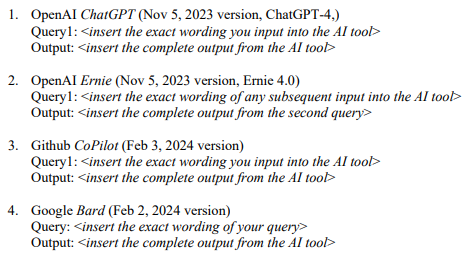
Report on Use of AI
以上就是關(guān)于【2023HIMCM全球高中生數(shù)模賽A題】的解答,如需了解學(xué)校/賽事/課程動(dòng)態(tài),可至翰林教育官網(wǎng)獲取更多信息。
往期文章閱讀推薦:
2026 HiMCM數(shù)模競(jìng)賽開賽時(shí)間定了!多支高配戰(zhàn)隊(duì)等你上車!


翰林AMC8視頻課重磅上線!

國(guó)際競(jìng)賽真題資源免費(fèi)領(lǐng)取






