2023紐約時報中學生社論競賽新賽季備賽開啟,評分標準了解一下!(附往屆獲獎作品賞析)

如果你積極探索世界,關注社會時事熱點,也期望能在學術活動中提升自己的寫作能力,來了解一下這個能讓文理科生“爬藤”的賽事。2023年新賽季備賽已開啟,抓緊時間準備作品吧!
NYT Students Editorial Contest?
紐約時報中學生社論學術活動
紐約時報的學與教專欄(The Learning Network: Teaching and Learning With The New York Times)?每天都會發布一個時事熱點話題,邀請中學生分享對話題的見解,中學生們通過這個平臺各抒己見,發表對美國經濟,政治,文化等社會現象和問題的評論。
為了幫助中學生寫出更加專業和有意義的評論,紐約時報發起了中學生社論寫作比賽Student Editorial Contest,挑戰紐約時報的社論寫作。比賽邀請學生將對各類社會話題的想法變成正式的、簡短的、以證據為基礎的說服性文章,就像紐約時報每天發表的社論一樣。比賽鼓勵學生通過使用多種消息來源來拓寬自己的新聞渠道,了解對所選問題提供各種觀點的消息來源。
適合對象
全球11-19歲對文學評論寫作感興趣的中學生們均可參加,可個人提交作品,也可以團隊名義提交作品(紐約時報工作人員子女不能參加)。
比賽時間
2023年3月15日 - 2023年4月12日
學術活動指南
1、選擇一個你關心的話題,并提出一個能說服讀者也關心這個話題的論點。
2、社論不能超過450字,所以要確保論點足夠集中。
3、研究并收集證據來支持你的論點。
獎項設置
冠軍Winners
亞軍Runnerup
榮譽提名獎Honorable mention
最后三輪入圍者(Round 3 Finalists)
獎項會在比賽結束后兩個月內公布。優秀的參賽作品將會被發表于紐約時報的“學與教”專欄(The Learning Network: Teaching and Learning With The New York Times),也有機會在《紐約時報》紙質報紙上發表。
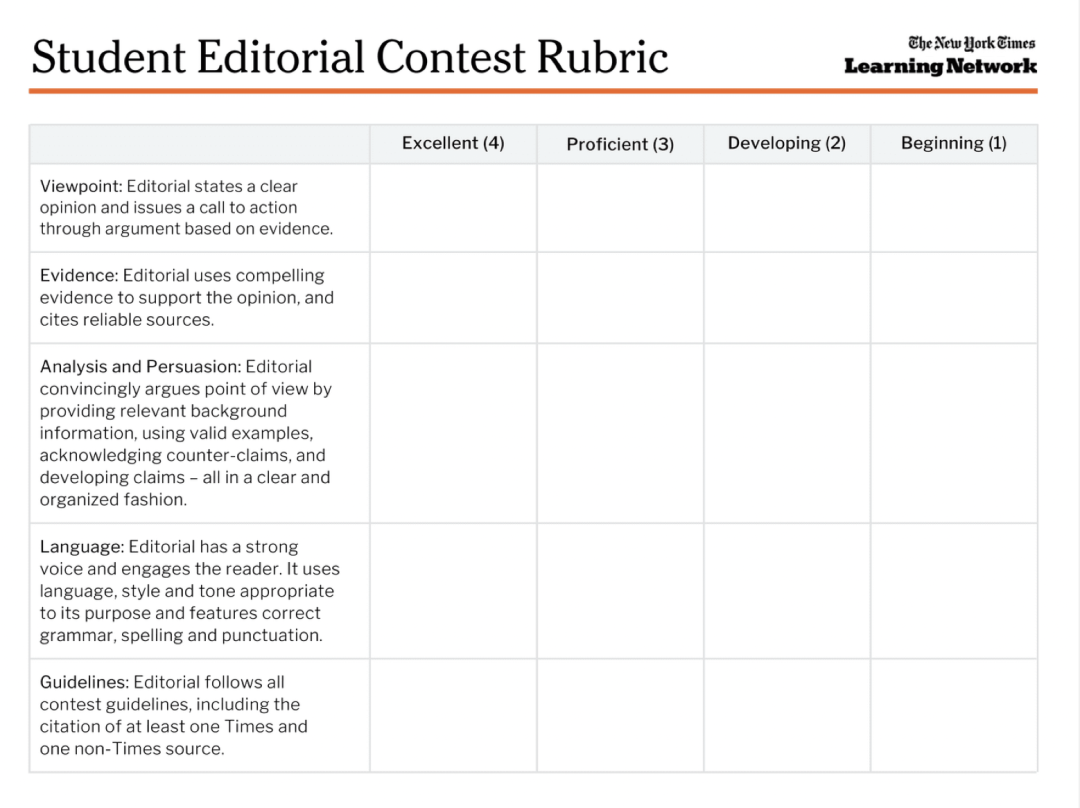
 紐約時報社論學術活動評分標準
掃碼添加翰林顧問老師咨詢更多紐約時報比賽信息
還能【免費領取】往屆獲獎作品哦!
往屆獲獎作品賞析
以下文章來自第九屆紐約時報社論學術活動
Winner獲獎者:
Evelyn Wang, 來自Naperville, IL.
How Fast Fashion Became Faster — and Worse for the Earth
The spring dance is in two weeks, and my friend needs help choosing a dress. She beckons me to her phone where an endless mosaic of elegant dresses, not one over $20, dances before my eyes. After much deliberation, she settles on a glamorous sapphire gown with pleated details lining the bodice. Another two weeks later, the dress carpets the bottom of a landfill, worn only once.
Welcome to the world of fast fashion.
Fast fashion is a relatively recent phenomenon. During the 1990s, retailers began to introduce trendy, cheaply-priced, poorly-made clothes on a weekly basis, intending to match the breakneck pace at which fashion trends move. Style became cheap, convenient and consumable.
Fast fashion, however, is ultimately a privilege. It is a privilege to buy clothes solely for their style, and it is a privilege to ignore the environmental consequences of doing so. In reality, the aggressive cycle of consumption perpetuated by fast fashion means that the clothes we wear are now more likely than ever to end up as part of the 92 million tons of textile waste produced annually.
During the pandemic, as stores closed, consumers ditched fast fashion staples such as H&M and Zara, instead opting to order from e-commerce social media sensations such as Shein and Asos. (Shein is now valued at $100 billion, more than H&M and Zara combined.) These brands represent an escalation of both fast fashion and its environmental toll.
These fast fashion newcomers thrived during the pandemic because of their unique business models. They exist entirely online, allowing them to ship the thousands of new styles they release daily to consumers directly from their warehouses, avoiding supply chain snags and U.S. import duties in the process. Meanwhile, a reliance on cheap overseas labor and synthetic textiles keeps prices irresistibly low.
These practices, however, are hurting the Earth more than ever before. Because these retailers rely solely on international shipping to move their products, they only exacerbate the annual billion tons of greenhouse gasses released by shipping. Virtually all of these brands sell clothes that contain petroleum-based, resource-intensive synthetic fibers such as polyester and nylon. During their lifetime, these fibers are responsible for 35 percent of the microplastics contaminating our oceans and can subsequently take centuries to decompose in landfills.
Though fast fashion represents an understandably alluring combination of style and savings, now, more than ever, we simply cannot quantify the true cost of our clothing with a price tag. When consumers want to update their wardrobe, they can do so sustainably by thrifting, reworking old garments or researching environmentally-conscious brands.
For now, I’ll be at my next school dance rocking the same dress I did last year.
范文總結
紐約時報官方給出的評分標準中包含:Viewpoint?觀點、Evidence?證據、Analysis and Persuasion?分析與說服力、Language?語言、以及Guidelines?比賽準則。
本文的結構十分清晰,完美滿足了各項評分標準中的要點,運用了個人的經歷在首尾進行了呼應。在論證方面,作者運用了數據,舉例,以及排比的寫作手法,深扣主題,使得整個文章保持連貫性。
其次,官方要求的文章話題是希望學生們深思熟慮過的,作者自身的故事是很好的切入點。加上所列的數據,以及快時尚中具體商家的例子也達到了官方要求的research研究的要求。最點睛的部分就是作者點出的解決方案,這巧妙地達到了官方rubric中a call to action的拿分點。
在寫這類文章時,很多同學會大篇幅地依賴research文章的信息,使得論點和論據達不到平衡。所以同學們要更加注意段落結構,以及多加審視所運用的數據或者例子的必要性。
以上就是關于【2023紐約時報中學生社論競賽新賽季備賽開啟,評分標準了解一下!(附往屆獲獎作品賞析)】的解答,如需了解學校/賽事/課程動態,可至翰林教育官網獲取更多信息。
往期文章閱讀推薦:
??2027年QS最佳留學城市排名發布!倫敦位列第三,北美竟無緣Top10 ?


翰林AMC8視頻課重磅上線!

國際競賽真題資源免費領取






