CIE IGCSE Biology: 復(fù)習(xí)筆記:13.1.2 The Kidney

CIE IGCSE Biology: 復(fù)習(xí)筆記:13.1.2 The Kidney
The Kidney & the Nephron: Extended
- The kidneys are located in the back of the abdomen and have two important functions in the body:
- They regulate the water content of the blood?(vital for maintaining blood pressure)
- They excrete the toxic waste products of metabolism?(such as urea) and substances in excess of requirements (such as salts)
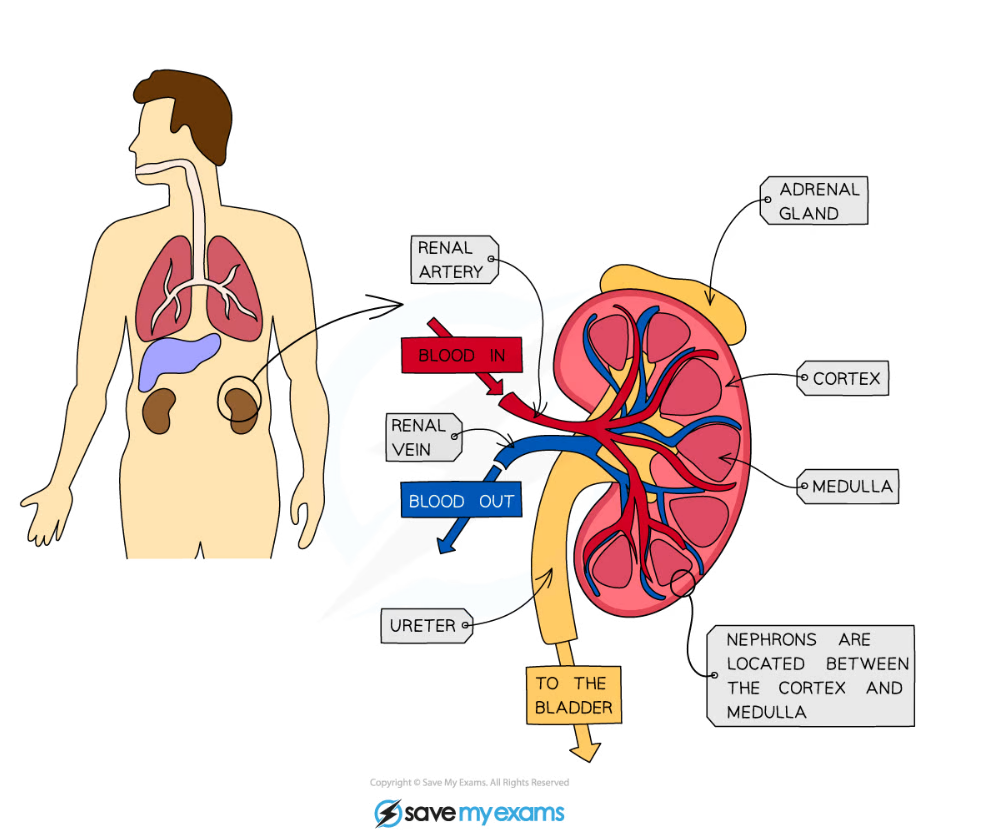
The structure of a human kidney
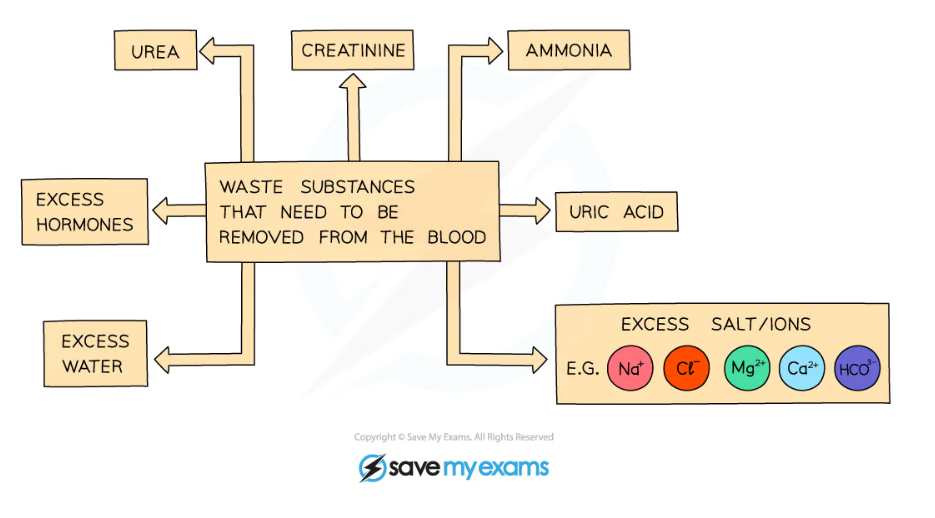
Waste substances
The Nephron
- Each kidney contains around a million tiny structures called?nephrons, also known as?kidney tubules?or?renal tubules
- The nephrons start in the?cortex?of the kidney, loop down into the?medulla?and back up to the cortex
- The contents of the nephrons drain into the innermost part of the kidney and the?urine collects?there before it flows into the?ureter?to be carried to the?bladder?for storage
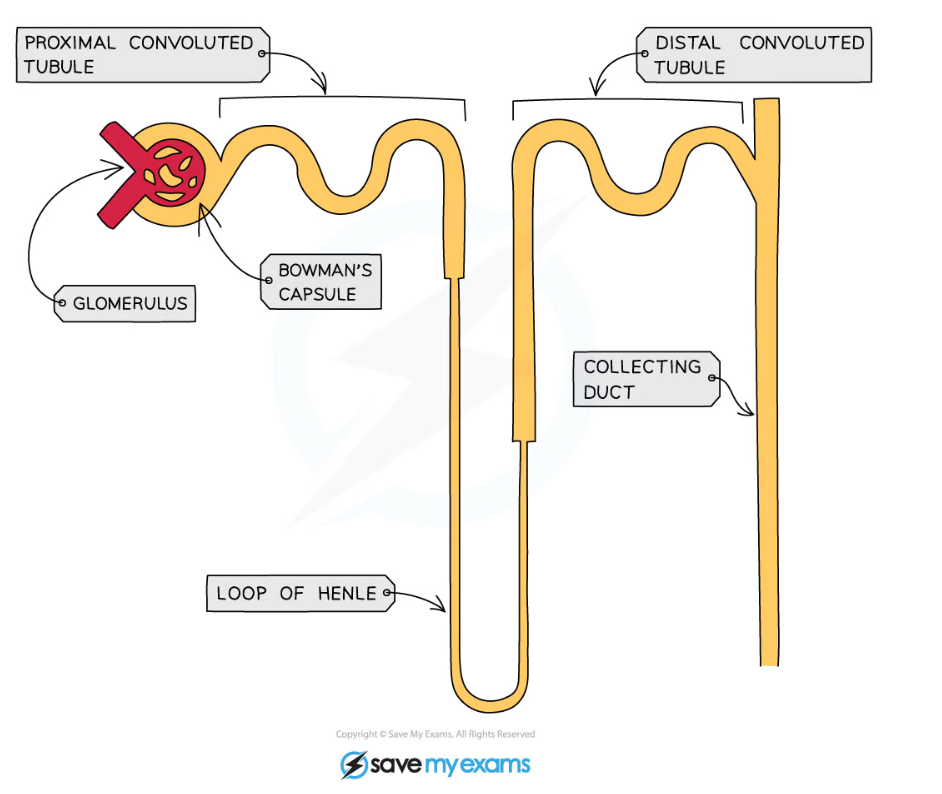
Structure of a nephron
1) Ultrafiltration
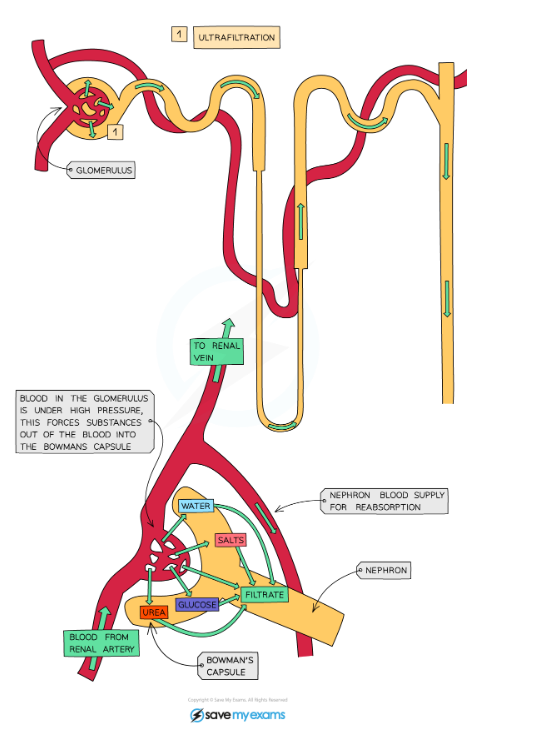 Diagram showing the process of ultrafiltration
- Arterioles branch off the?renal artery?and lead to each nephron, where they form a knot of capillaries (the?glomerulus) sitting inside the cup-shaped?Bowman’s capsule
- The capillaries get?narrower?as they get further into the glomerulus which?increases the pressure?on the blood moving through them (which is already at high pressure because it is coming directly from?the renal artery which is connected to the?aorta)
- This eventually causes the smaller molecules being carried in the blood to be?forced out of the capillaries and into the Bowman’s capsule, where they form what is known as the filtrate
- This process is known as?ultrafiltration
- The substances forced out of the capillaries are:?glucose, water, urea, salts
- Some of these are useful and will be?reabsorbed back into the blood?further down the nephron
Components of filtrate:
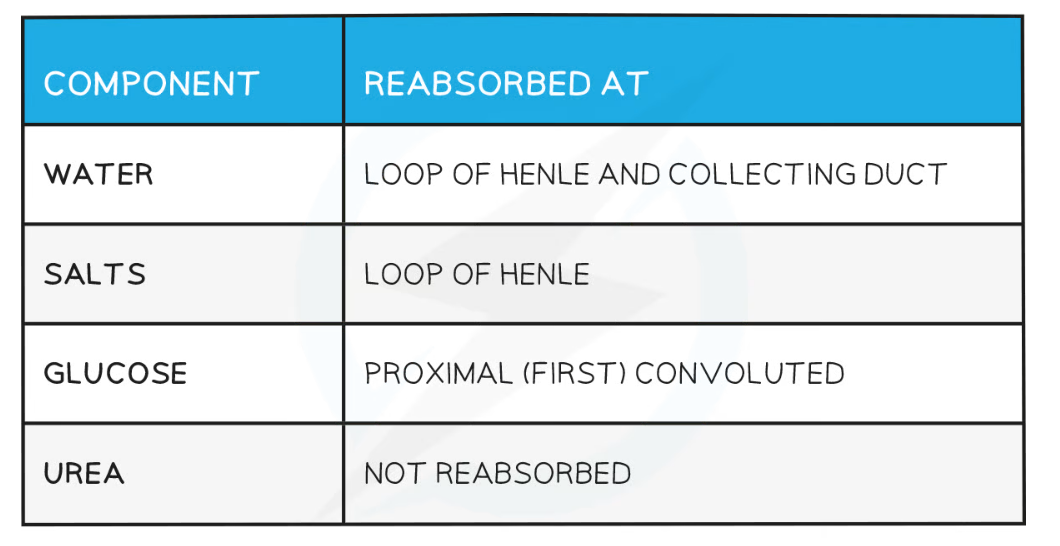
2) Selective Reabsorption
Reabsorption of Glucose
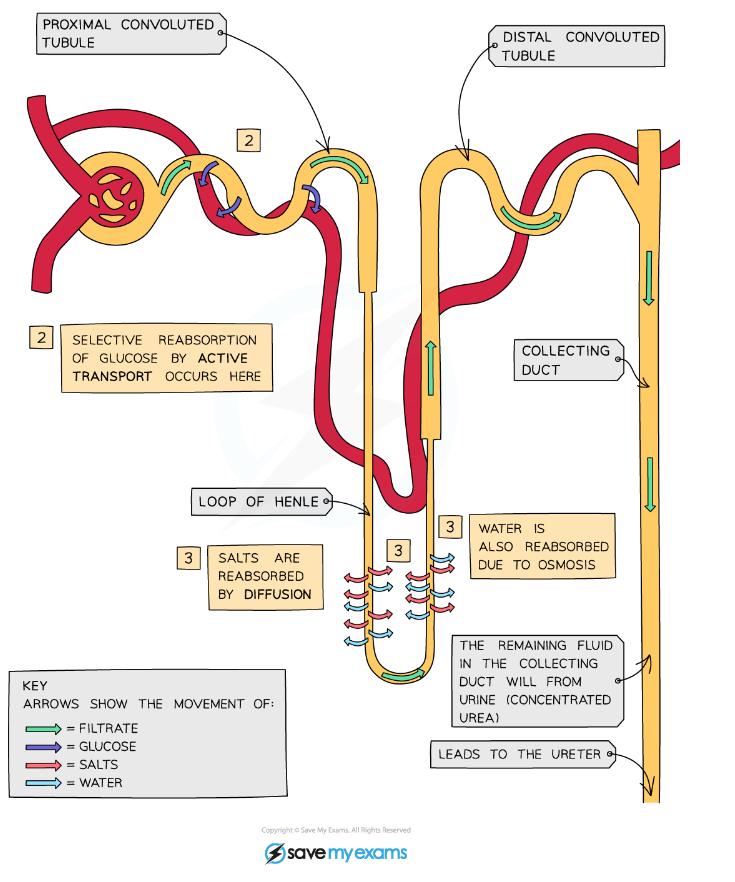 Diagram showing the reabsorption of glucose
- After the glomerular filtrate enters the Bowman’s Capsule,?glucose?is the first substance to be reabsorbed at the?proximal (first) convoluted tubule
- This takes place by?active transport
- The nephron is adapted for this by having?many mitochondria?to provide energy for the active transport of glucose molecules
- Reabsorption of glucose?cannot take place anywhere else in the nephron?as the gates that facilitate the active transport of glucose are only found in the proximal convoluted tubule
- In a person with a normal blood glucose level, there are enough gates present to remove all of the glucose from the filtrate back into the blood
- People with?diabetes?cannot control their blood glucose levels and they are often very high, meaning that not all of the glucose filtered out can be reabsorbed into the blood in the proximal convoluted tubule
- As there is nowhere else for the glucose to be reabsorbed, it continues in the filtrate and?ends up in urine
- This is why one of the first tests a doctor may do to check if someone is diabetic is to test their urine for the presence of glucose
Reabsorption of Water & Salts
- As the filtrate drips through the?Loop of Henle?necessary salts are reabsorbed back into the blood by?diffusion
- As salts are reabsorbed back into the blood,?water?follows by?osmosis
- Water is also reabsorbed from the collecting duct in different amounts depending on how much water the body needs at that time
以上就是關(guān)于【CIE IGCSE Biology: 復(fù)習(xí)筆記:13.1.2 The Kidney】的解答,如需了解學(xué)校/賽事/課程動態(tài),可至翰林教育官網(wǎng)獲取更多信息。
往期文章閱讀推薦:
斯坦福大學(xué)官方推薦書單!名校學(xué)霸們暑假都在讀什么?
MIT官方發(fā)布【2026年夏季推薦閱讀書單】!橫跨科學(xué)/人文/經(jīng)濟...


翰林AMC8視頻課重磅上線!

國際競賽真題資源免費領(lǐng)取






