OCR A Level Biology:復習筆記2.6.7 Specialised Cells

Specialised Cells
- In complex?multicellular?organisms,?eukaryotic?cells become?specialised?for?specific functions
- These specialised eukaryotic cells have?specific adaptations?to help them carry out their functions
- For example, the?structure of a cell?is adapted to help it carry out its function (this is why specialised eukaryotic cells can look extremely?different?from each other)
- Structural adaptations include:
- The?shape?of the cell
- The?organelles?the cell contains (or doesn’t contain)
- For example:
- Cells that make large amounts of?proteins?will be adapted for this function by containing?many ribosomes?(the organelle responsible for protein production)
Erythrocytes (Red blood cells)
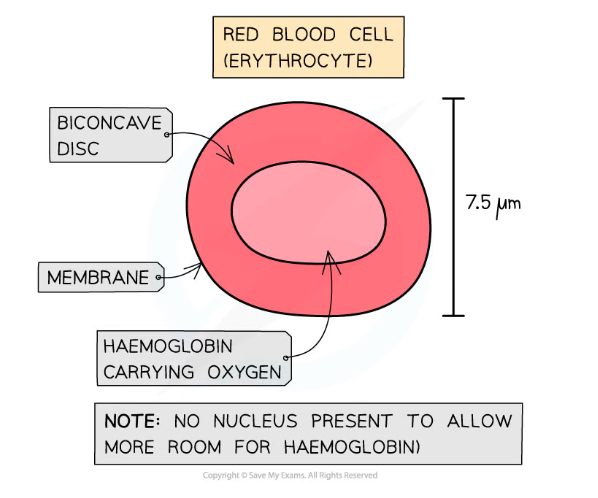
The biconcave shape of erythrocytes increases the surface area available for oxygen absorption.
- Function: transport oxygen around the body and carbon dioxide to the lungs
- Adaptations:
- They are?biconcave?in shape which increases the surface area over which oxygen can be absorbed
- The cytoplasm contains high amounts of the pigment?haemoglobin?which can readily bind to oxygen
- No nucleus is present?which makes?more space?inside the cell for haemoglobin molecules for maximum oxygen-carrying capacity
- Elastic membrane?allows the cell to be flexible and?change shape?as it squeezes through narrow capillaries
Neutrophils
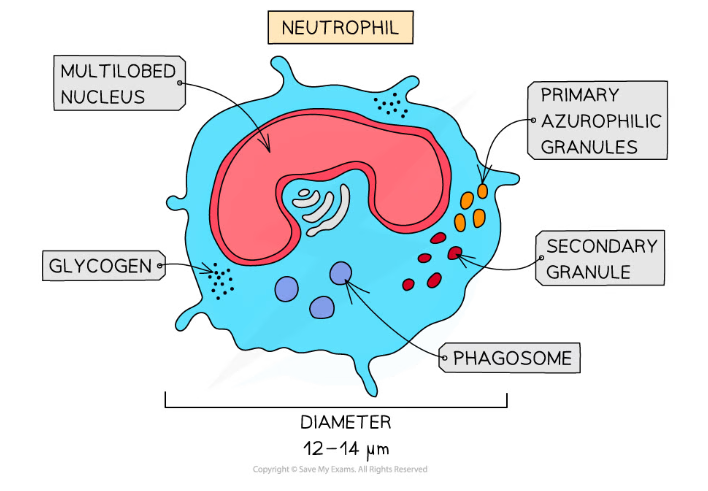
The flexible cell membrane and nuclear membrane allow neutrophils to exit capillaries and enter infected tissues.
- Function: destroy pathogens by phagocytosis and the secretion of enzymes
- Adaptations:
- Neutrophils have a very?flexible?shape that allows them to?squeeze through cell junctions?in the capillary wall
- Their flexibility also enables them to form pseudopodia (cytoplasmic projections) that engulf microorganisms
- There is a large number of lysosomes present in the cell. These digestive enzymes help to digest and destroy invading cells
- A?flexible nuclear membrane?further helps the cell to penetrate cell junctions. It is thought that this flexibility is what causes the characteristic?lobed nucleus
Sperm cells
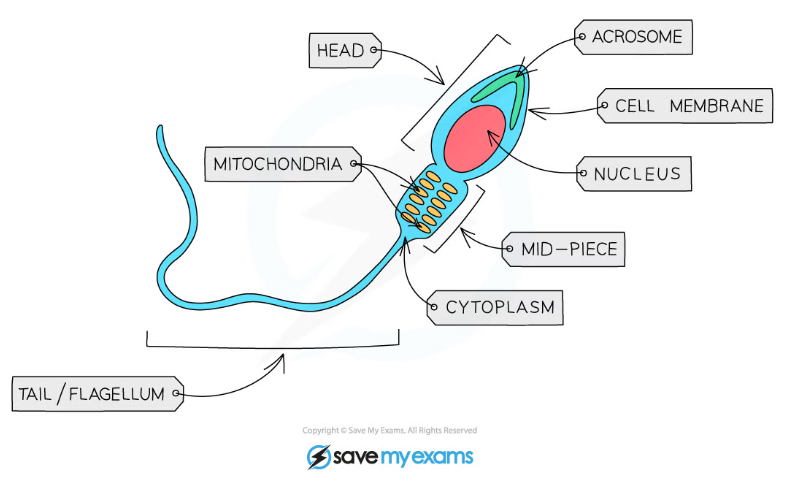
Sperm cells are motile – their tail helps propel them forward in search of an egg to fertilise.
- Function: reproduction - to fuse with an egg, initiate the development of an embryo and pass on fathers genes
- Adaptations:
- The head contains a?nucleus?that contains?half?the normal number of?chromosomes?(haploid, no chromosome pairs)
- The?acrosome?in the head contains?digestive enzymes?that can break down the outer layer of an egg cell so that the haploid nucleus can enter to fuse with the egg’s nucleus
- The mid-piece is packed with?mitochondria?to release?energy?(via respiration) for the tail movement
- The?tail?rotates, propelling the sperm cell forwards and allowing it to?move?towards the egg
Root hair cells
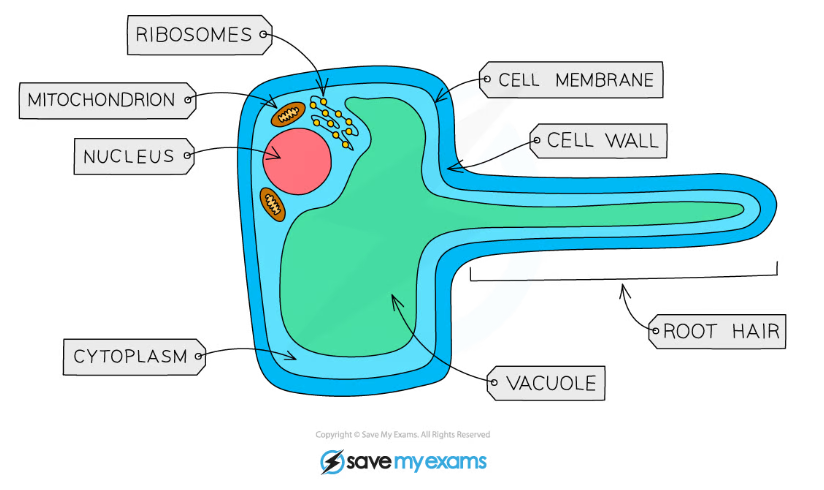
The root hair is an extension of the cytoplasm, increasing the surface area of the cell in contact with the soil to maximise absorption of water and minerals.
- Function: absorption of water and mineral ions from soil
- Adaptations:
- Root hair?to?increase surface area?(SA) so the rate of water uptake by osmosis is greater (can absorb more water and ions than if SA were lower)
- Thinner walls?than other plant cells so that water can move through easily (due to shorter diffusion distance)
- Permanent vacuole contains cell sap which is more?concentrated?than soil water, maintaining a?water potential gradient
- Mitochondria?for active transport of mineral ions
- Remember that chloroplasts are not found in these cells – there’s no light for photosynthesis underground!
Ciliated epithelium
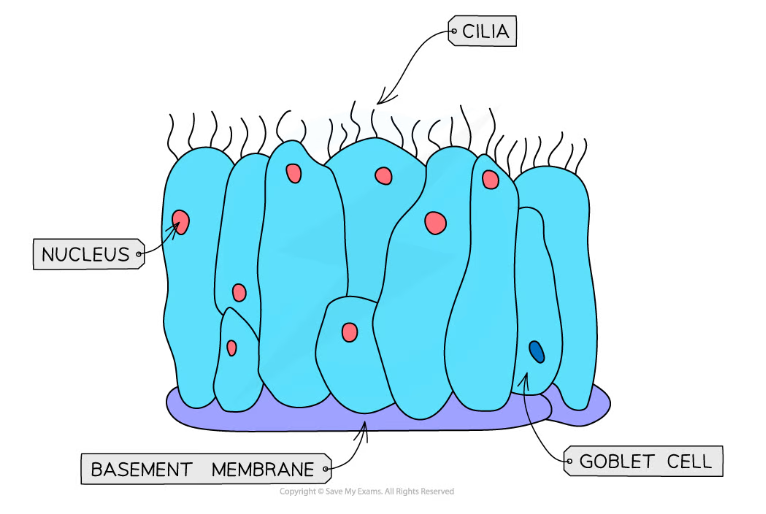
The cilia move in a coordinated way to push dirt and microbes away from the lungs
- Function: moving substances across the surface of a tissue
- Adaptations:
- Have?cilia?(hair-like structures), which beat in a coordinated way to shift material along the surface of the epithelium tissue
- Goblet cells secrete mucus?which helps to trap dust, dirt and microorganisms - preventing them from entering vital organs where they may cause infection
Squamous epithelium
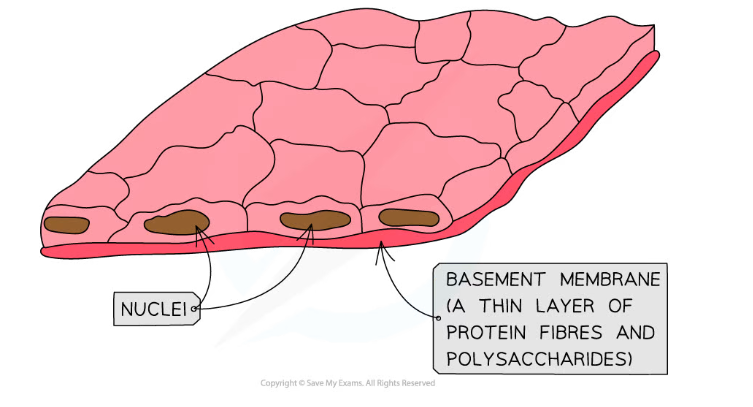
The structure of squamous epithelium
- Function: provide a surface covering or outer layer. Found on a variety of organs and structures e.g. blood vessels and alveoli
- Adaptations:
- Squamous epithelium consists of a single layer of?flattened cells?on a basement membrane
- The layer of cells forms a?thin cross-section?which reduces the distance that substances have to move to pass through - it?shortens the diffusion pathway
- It is?permeable,?allowing for the easy diffusion of gases
Palisade cells
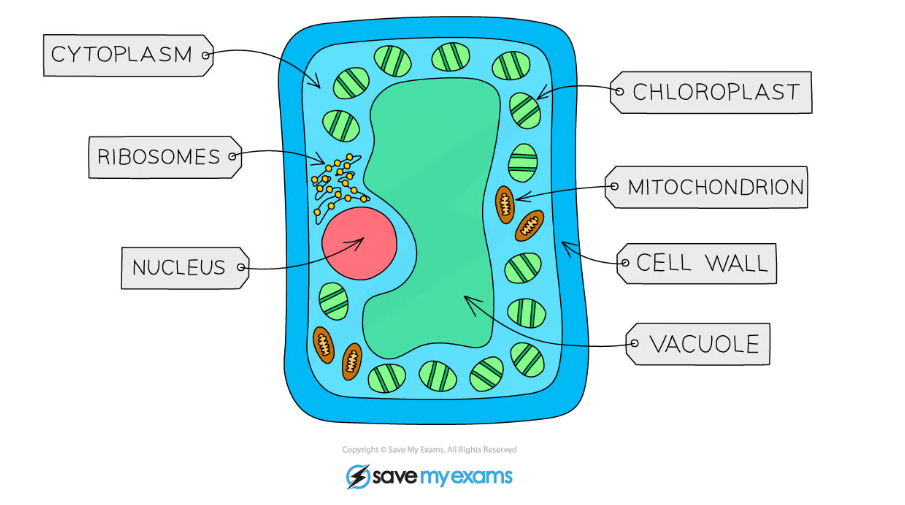
The tall and thin palisade cells are densely packed together for the maximum absorption of light.
- Function: carry out photosynthesis to produce glucose and oxygen
- Adaptations:
- A large number of?chloroplasts?(the site of photosynthesis) are present in the cytoplasm to?maximise the absorption of light?for photosynthesis
- The?tall and thin?shape of the cells allows?light to penetrate deeper?before encountering another cell wall (cell walls absorb/reflect light) and for many cells to be?densely packed?together
Guard cells
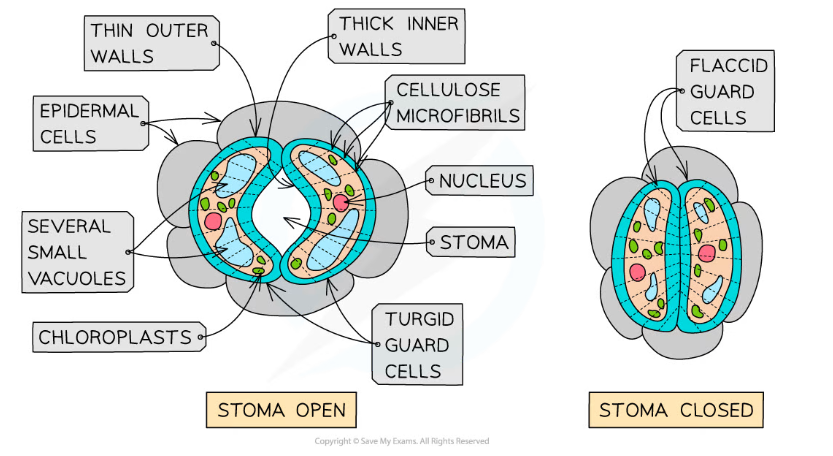
When the guard cells are turgid the stoma is open, when they are flaccid the stoma is closed.
- Function: control the opening of the stomata to regulate water loss and gas exchange
- Adaptations:
- Inner cell walls are thicker?(those facing the air outside the leaf) while the?outer cell walls are thinner?(those facing adjacent epidermal cells). The difference in the thickness of the cell walls allows the?cell to bend?when turgid
- The cytoplasm has a high density of?chloroplasts?and mitochondria. Scientists think that these organelles may play a role in the opening of the stomata
轉載自savemyexams
以上就是關于【OCR A Level Biology:復習筆記2.6.7 Specialised Cells】的解答,如需了解學校/賽事/課程動態,可至翰林教育官網獲取更多信息。
往期文章閱讀推薦:
MIT官方發布【2026年夏季推薦閱讀書單】!橫跨科學/人文/經濟...


翰林AMC8視頻課重磅上線!

國際競賽真題資源免費領取






