CIE IGCSE Biology: 復習筆記:6.1.6 Investigating the Rate of Photosynthesis

CIE IGCSE Biology: 復習筆記:6.1.6 Investigating the Rate of Photosynthesis
Investigating the Rate of Photosynthesis
- The plants usually used are?Elodea?or?Camboba?- types of pondweed
- As photosynthesis occurs, oxygen gas produced is released
- As the plant is in water, the oxygen released can be seen as?bubbles?leaving the cut end of the pondweed
- The number of?bubbles produced over a minute?can be counted to record the rate
- The more bubbles produced per minute, the faster the rate of photosynthesis
- A more accurate version of this experiment is to collect the oxygen released in a test tube inverted over the top of the pondweed over a longer period of time and then measure the?volume of oxygen?collected
- This practical can be used in the following ways:
Investigating the effect of changing light intensity
- This can be done by moving a lamp different distances away from the beaker containing the pondweed
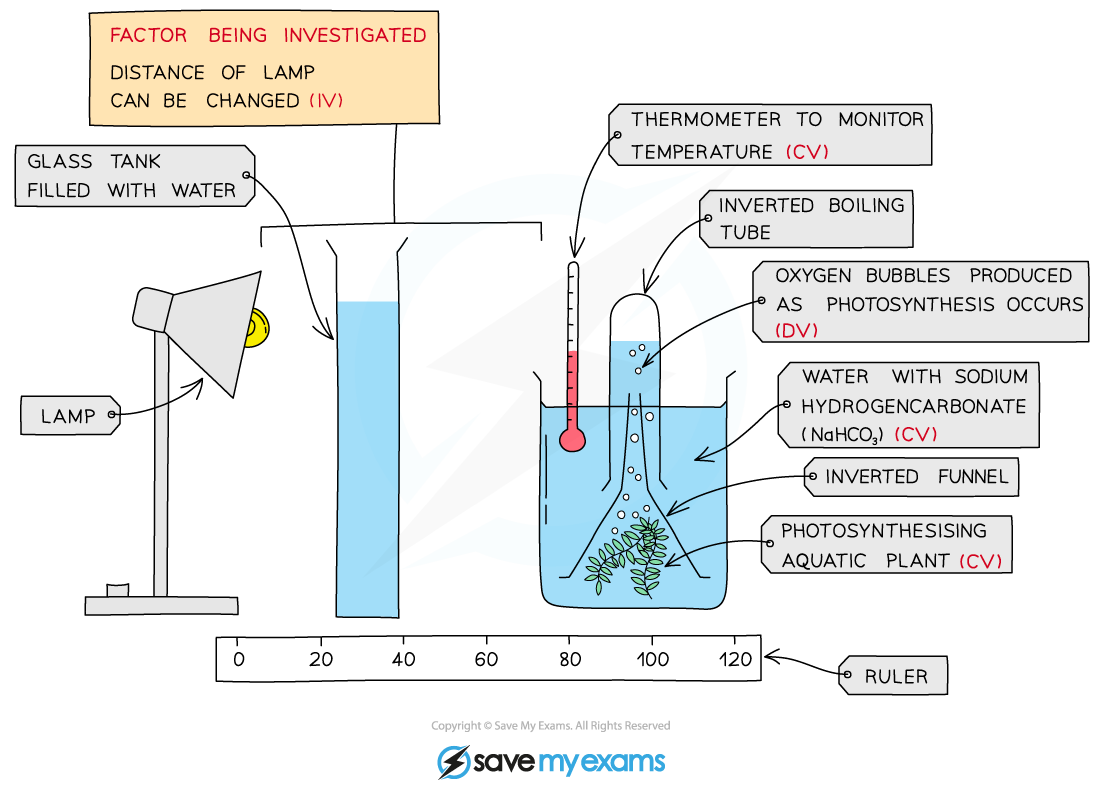
Investigating the effect of changing light intensity on the rate of photosynthesis
Investigating the effect of changing temperature
- This can be done by changing the temperature of the water in the beaker
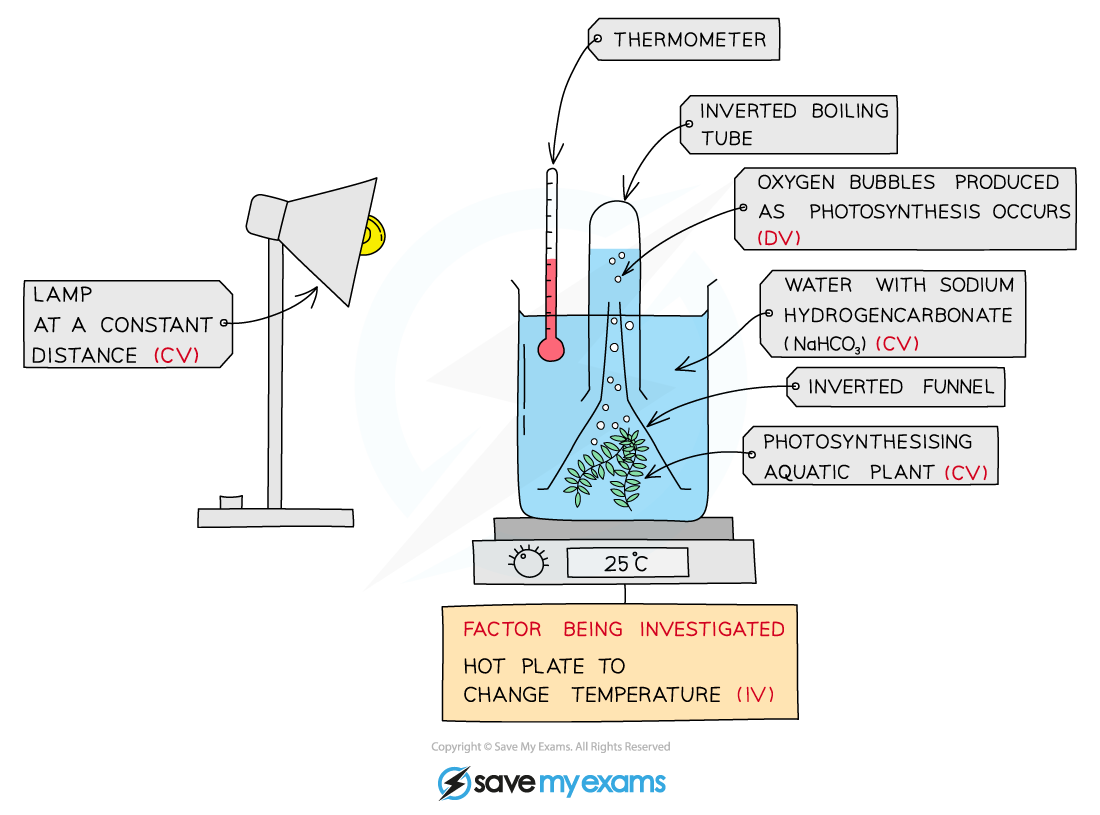
Investigating the effect of changing temperature on the rate of photosynthesis
Investigating the effect of changing carbon dioxide concentration
- This can be done by dissolving different amounts of sodium hydrogen carbonate in the water in the beaker
Investigating the effect of changing carbon dioxide concentration on the rate of photosynthesis
- Care must be taken when investigating a condition to?keep all other variables constant?in order to ensure a?fair test
- For example, when investigating changing light intensity, a?glass tank?should be placed in between the lamp and the beaker to?absorb heat?from the lamp and so avoid changing the temperature of the water as well as the light intensity
Exam Tip
Alternative ways of measuring the gas (oxygen) given off in these experiments would be to:
- measure the volume of gas produced using an inverted measuring cylinder with graduations filled with water that readings can be taken from as the water is displaced by the gas
- or by using a syringe attached by a delivery tube to the funnel
轉載自savemyexams
以上就是關于【CIE IGCSE Biology: 復習筆記:6.1.6 Investigating the Rate of Photosynthesis】的解答,如需了解學校/賽事/課程動態,可至翰林教育官網獲取更多信息。
往期文章閱讀推薦:
MIT官方發布【2026年夏季推薦閱讀書單】!橫跨科學/人文/經濟...


翰林AMC8視頻課重磅上線!

國際競賽真題資源免費領取






