Edexcel A (SNAB) A Level Biology:復習筆記3.3.1 Mammalian Gametes

Mammalian Gametes
Gametes
- Gametes are the?sex cells?of an organism
- For example, the?sperm?and?egg?(ovum) cells in humans
- Gametes fuse during fertilisation to form a?zygote
- Fertilisation is the?fusion of the nuclei?from a?male gamete?(sperm cell) and a?female gamete?(egg cell)
- These sex cells are formed during?meiosis?and only have?one copy of each chromosome, so they are?haploid?cells
- For humans, that means the sperm and egg cells contain 23 single chromosomes in their nucleus
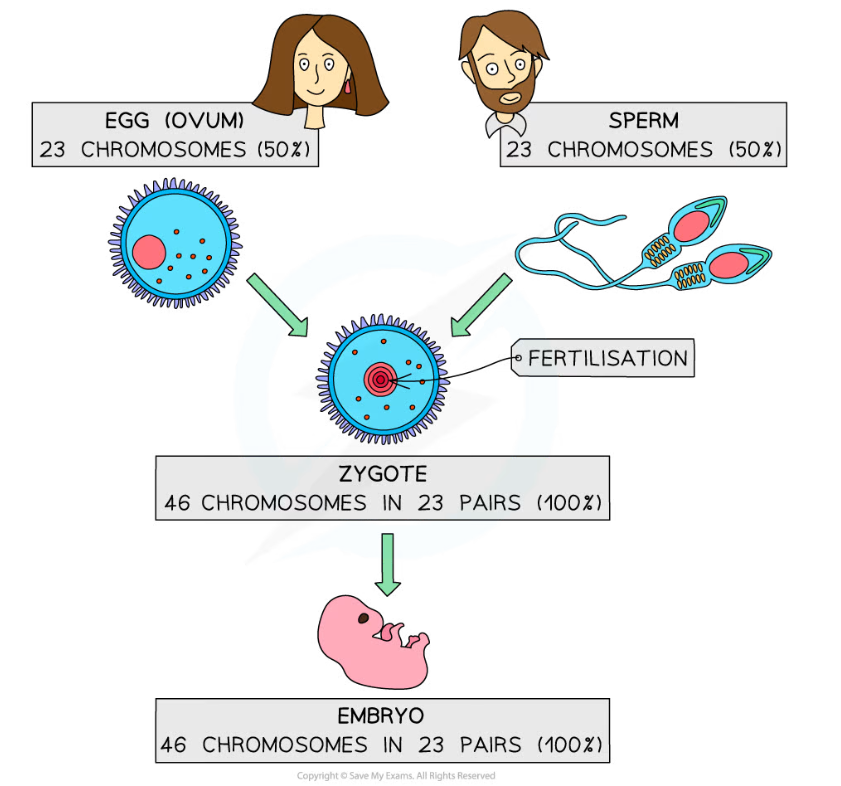
Sexual reproduction involves the fusing of two gametes to form a zygote that contains DNA from both parents
Mammalian gametes are specialised for their functions
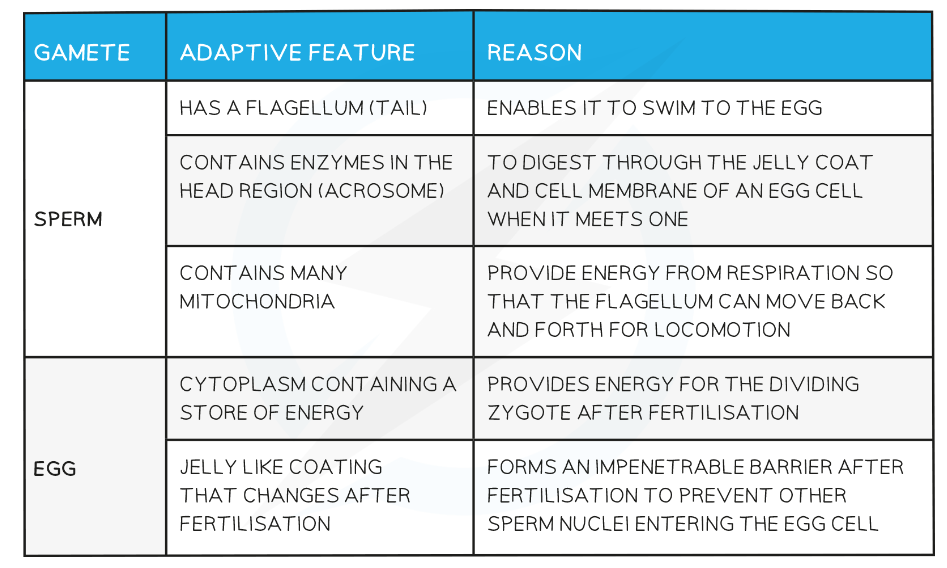
- Mammalian gametes have?adaptations?to?increase the chances of fertilisation?and?successful development of an embryo
- Sperm cells:
- Have a?flagellum?(tail) that allows them to?swim?towards the egg cell
- Contain?many mitochondria?that?provide energy for movement?of the flagellum (swimming)
- An?acrosome?that contains?digestive enzymes?to break down the protective glycoprotein layer (a jelly-like coating known as the?zona pellucida) surrounding the egg cell - sperm cells must penetrate this layer in order to fertilise the egg
- Egg cells:
- Are?much larger?than sperm cells as most of their internal space contains?food to nourish a growing embryo
- Have follicle cells that form a protective coating
- Have a jelly-like glycoprotein layer, known as the?zona pellucida, that?forms an impenetrable barrier after fertilisation?by a sperm cell has occurred, to?prevent other sperm nuclei from entering the egg
- These features are summarised in the diagrams and tables below
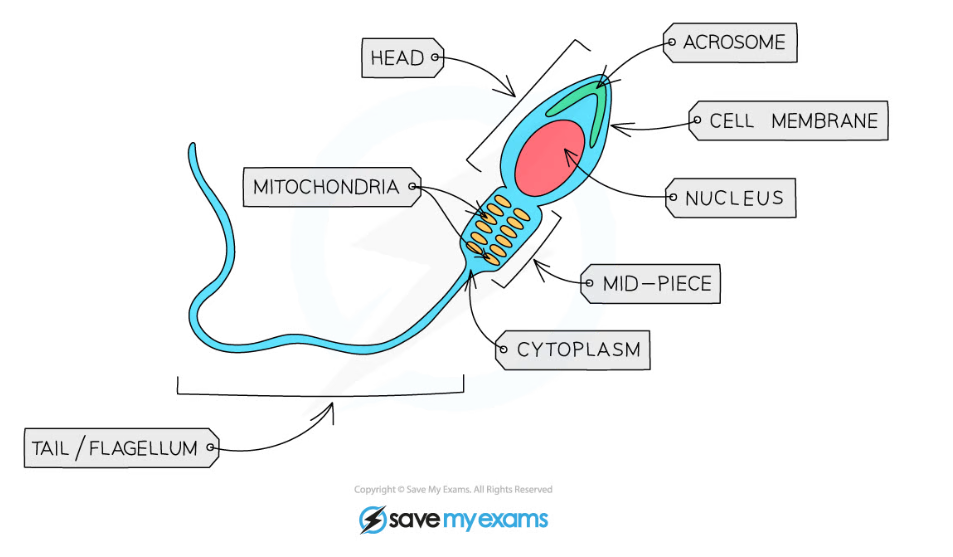
Structure of a mammalian sperm cell
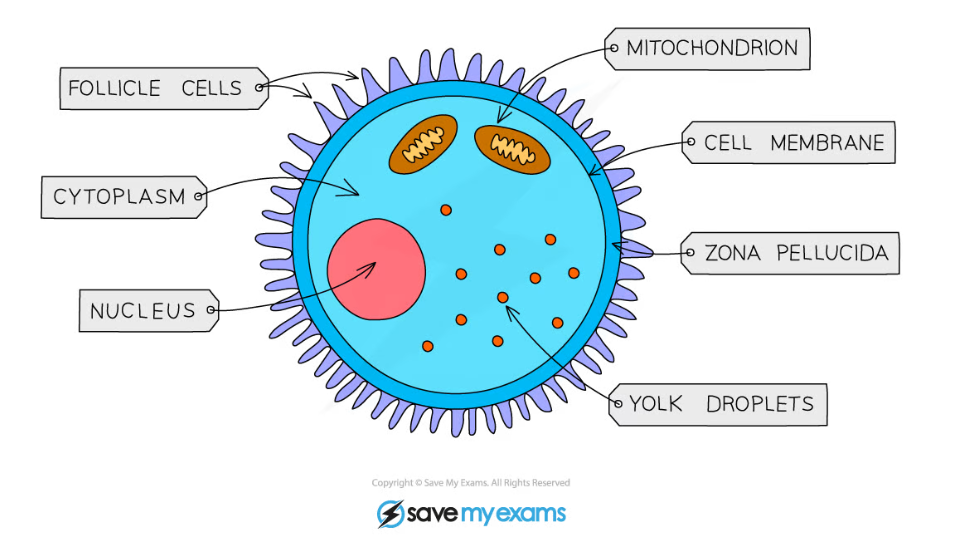
Structure of a mammalian egg cell
Adaptations of Mammalian Gametes Table
轉載自savemyexams
以上就是關于【Edexcel A (SNAB) A Level Biology:復習筆記3.3.1 Mammalian Gametes】的解答,如需了解學校/賽事/課程動態,可至翰林教育官網獲取更多信息。
往期文章閱讀推薦:
MIT官方發布【2026年夏季推薦閱讀書單】!橫跨科學/人文/經濟...


翰林AMC8視頻課重磅上線!

國際競賽真題資源免費領取






