Edexcel IGCSE Physics: Double Science 復習筆記:6.1.7 Fleming's Left-Hand Rule

Edexcel IGCSE Physics: Double Science 復習筆記:6.1.7 Fleming's Left-Hand Rule
Fleming's Left-Hand Rule
- The?direction?of the?force?(aka the?thrust) on a current carrying wire depends on the direction of the current and the direction of the magnetic field
- All three will be?perpendicular?to each other
- This means that sometimes the force could be into and out of the page (in 3D)
- The direction of the force (or thrust) can be worked out by using?Fleming's left-hand rule:
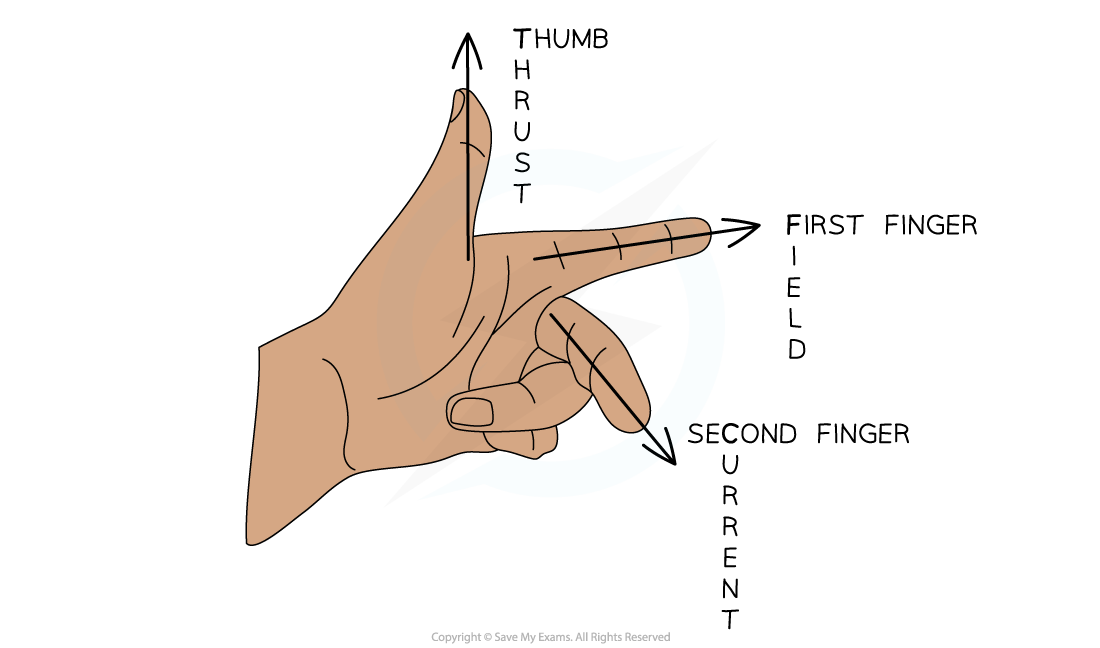
Fleming’s Left-Hand Rule can be used to determine directions of the force, magnetic field and current
Worked Example
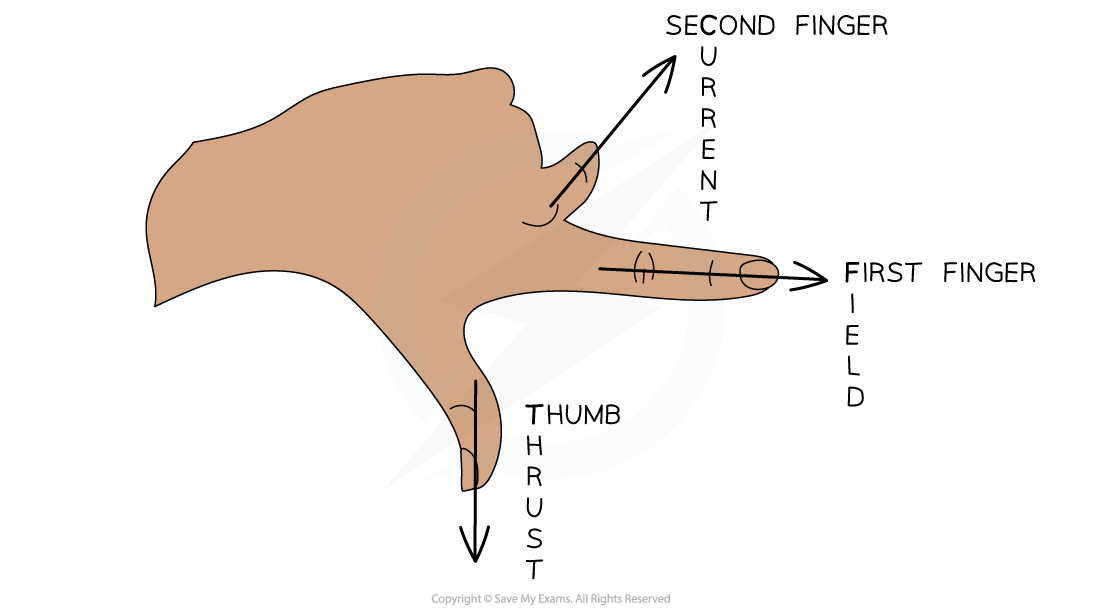
Use Fleming’s left-hand rule to show that if the current-carrying wire is placed into the magnetic field between the poles of the magnet, as shown below, there will be a downwards force acting on the wire.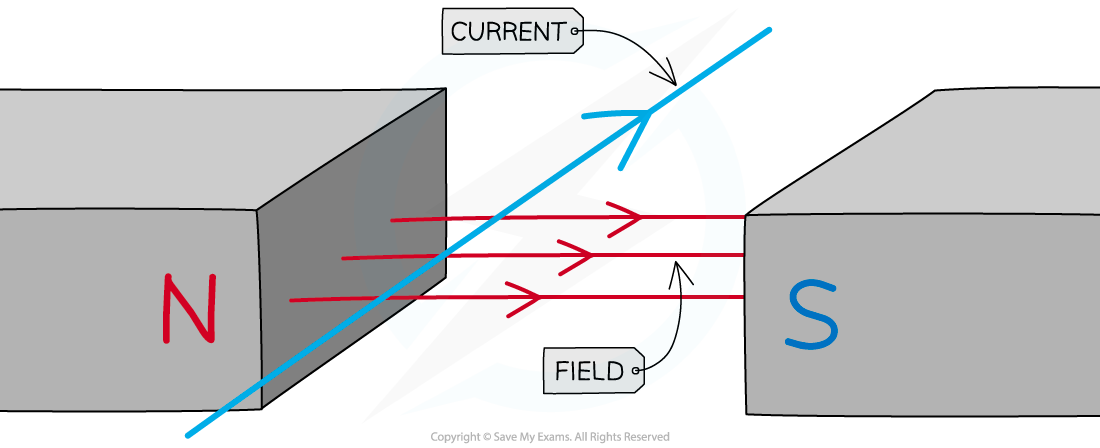
Step 1: Determine the direction of the magnetic field
-
- Start by pointing your?First?Finger in the direction of the (magnetic)?Field.
Step 2: Determine the direction of the current
-
- Now rotate your hand around the first finger so that the seCond finger points in the direction of the?Current
Step 3: Determine the direction of the force
-
- The?THumb will now be pointing in the direction of the?THrust (the force)
- Therefore, this will be the direction in which the wire will move
Exam Tip
Remember that the magnetic field is always in the direction from?North?to?South?and current is always in the direction of a?positive?terminal to a?negative?terminal.Feel free to use Fleming's left hand rule in your exam, just don't make it too obvious or distracting for other students!
轉載自savemyexams
以上就是關于【Edexcel IGCSE Physics: Double Science 復習筆記:6.1.7 Fleming's Left-Hand Rule】的解答,如需了解學校/賽事/課程動態,可至翰林教育官網獲取更多信息。
往期文章閱讀推薦:
MIT官方發布【2026年夏季推薦閱讀書單】!橫跨科學/人文/經濟...


翰林AMC8視頻課重磅上線!

國際競賽真題資源免費領取






