2018年AP物理1和AP物理2考前總結(jié)

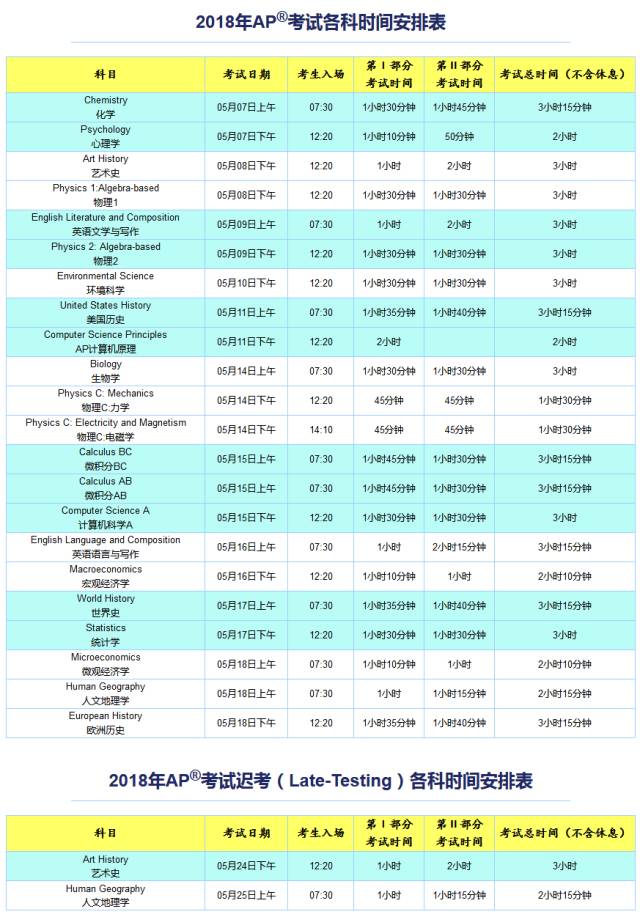
物理1&2考試的題型分為選擇題和解答題。
兩門考試選擇題的數(shù)目是一樣的,都是50道題,其中包括45道單選題和5道雙選題,要在90分鐘內(nèi)答完,占總分值的50%。
物理1的解答題共5道,明確將考察一道實(shí)驗(yàn)設(shè)計(jì)題,一道計(jì)算題,三道問答題,要求在90分鐘內(nèi)答完,占總分值的50%
| 題型 | 題目數(shù)量 | 考試時(shí)間 | 原始分計(jì)分原則 | ||
| AP物理1 | 選擇題 | 單選題 | 45 | 90 分鐘 | 50題*1分/題 =50分 |
| 多選題 | 5 | ||||
| 簡(jiǎn)答題 | 5 | 90 分鐘 | 每道題目分?jǐn)?shù)不等,總計(jì)45分 | ||
| 總答題時(shí)間180分種 | 原始分總分95分 | ||||
| AP物理2 | 選擇題 | 單選題 | 45 | 90分鐘 | 50題*1分/題 =50分 |
| 多選題 | 5 | ||||
| 簡(jiǎn)答題 | 4 | 90分鐘 | 每道題目分?jǐn)?shù)不等,總計(jì)45分 | ||
| 總答題時(shí)間180分種 | 原始分總分95分 | ||||
注:1.多選題有兩個(gè)正確答案
2.簡(jiǎn)答題考察1道實(shí)驗(yàn)設(shè)計(jì)題,1道計(jì)算題,其余為短問答題(其中一道需要學(xué)生進(jìn)行辯證分析和敘述)。
AP物理1和AP物理2單選題
例1:?jiǎn)芜x題(含有1個(gè)正確答案)
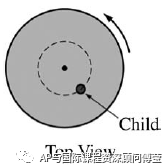
The diagram above shows a top view of achild of mass M on a circular platform of mass 2M that is rotatingcounterclockwise. Assume the platform rotates without friction. Which of thefollowing describes an action by the child that will increase the angular speedof the platform-child system and gives the correct reason why?
(A) The child moves toward the center ofthe platform, increasing the total angular momentum of the system.
(B) The child moves toward the center ofthe platform, decreasing the rotational inertia of the system.
(C) The child moves away from the centerof the platform, increasing the total angular momentum of the system.
(D) The child moves away from the centerof the platform, decreasing the rotational inertia of the system.
答案: B。本題考查的是轉(zhuǎn)動(dòng)部分的知識(shí):如果系統(tǒng)所受的合外力矩為0,那么系統(tǒng)的角動(dòng)量不變。本題中,當(dāng)小孩向中心移動(dòng)時(shí)減小了轉(zhuǎn)動(dòng)慣量,從而增大系統(tǒng)的角速度。
例2:多選題(含有2個(gè)正確答案)
In an experiment, three microscopiclatex spheres are sprayed into a chamber and become charged with +3e, +5e and-3e, respectively. Later, all three spheres collide simultaneously and thenseparate. Which of the following are possible values for the final charges onthe spheres? Select two answers.
X??????? Y???? ??Z
(A) ?+4e?????-4e????? +5e
(B) ?-4e?????+4.5e??? +4.5e
(C) ?+5e?????-8e????? +7e
(D) ?+6e?????+6e???? -7e
答案: A D。本題考查的是電荷的基本知識(shí):電荷守恒,系統(tǒng)的凈電荷等于所有物體所帶電荷的和;電荷的最小單位是元電荷e,物體帶電量必須是e的整數(shù)倍。
例3:簡(jiǎn)答題:這部分加大了實(shí)驗(yàn)題和文字論述題的比重。其中考察1道實(shí)驗(yàn)設(shè)計(jì)題,1道定量計(jì)算和定性論述題,其余為簡(jiǎn)短問答題。對(duì)于實(shí)驗(yàn)設(shè)計(jì)題,通常實(shí)驗(yàn)裝置和步驟不是唯一的,只要合理可行都可以得到相應(yīng)的分值。實(shí)驗(yàn)步驟不需要長(zhǎng)篇大論,一定要清晰、簡(jiǎn)潔明了。例如:
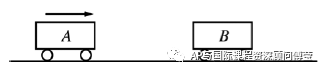
A groupof students has two carts, A and B, with wheels that turn with negligiblefriction. The carts can travel along a straight horizontal track. Cart A hasknown mass mA. The students are asked to use a one-dimensionalcollision between the carts to determine the mass of cart B. Before thecollision, cart A travels to the right and cart B is initially at rest, asshown above. After the collision, the carts stick together.
(a) Describean experimental procedure to determine the velocities of the carts before andafter a collision, including all the additional equipment you would need. Youmay include a labeled diagram of your setup to help in your description.Indicate what measurements you would take and how you would take them. Includeenough detail so that another student could carry out your procedure.
(b)There will be sources of error in the measurements taken in the experiment,both before and after the collision. For your experimental procedure, will theuncertainty in the calculated value of the mass of cart B be affected more bythe error in the measurements taken before the collision or by those takenafter the collision, or will it be equally affected by both sets ofmeasurements?
Justifyyour answer.
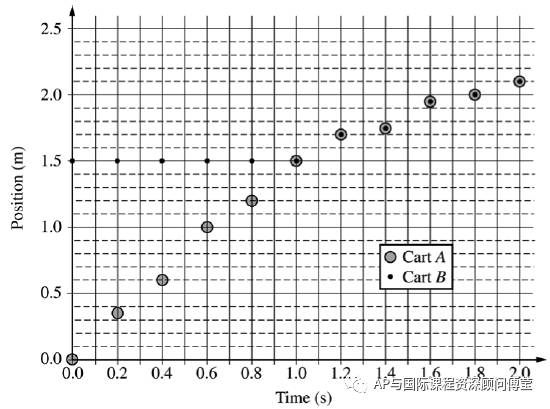
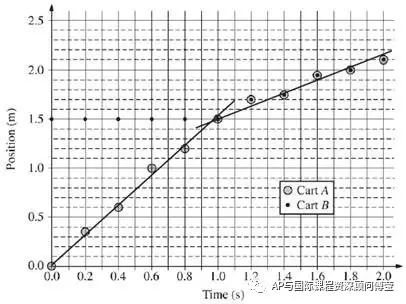
A group of students took measurementsfor one collision. A graph of the students’ data is shown below.
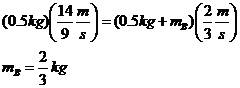
(c) Given mA=0.50kg, usethe graph to calculate the mass of cart B. Explicitly indicate the principlesused in your calculations.
(d) The students are now asked to consider thekinetic energy changes in an inelastic collision, specifically whether theinitial values of one of the physical quantities affect the fraction ofmechanical energy dissipated in the collision. How could you modify theexperiment to investigate this question? Be sure to explicitly describe thecalculations you would make, specifying all equations you would use (but do notactually do any algebra or arithmetic).
答案:
(a) 評(píng)分說明:實(shí)驗(yàn)設(shè)計(jì)題的答案不是唯一的,只要合理可行即可。本題中,須使用合理的實(shí)驗(yàn)裝置,并明確指出測(cè)量碰撞前與碰撞后的速度所需的所有實(shí)驗(yàn)步驟。初此之外,須沒有其他與實(shí)驗(yàn)無關(guān)的裝置和測(cè)量。
參考答案:
Place a motion detector at the left endof the track. Push cart A to give it an initial speed. Record position as afunction of time, first for cart A and then the combined cart A and B.
(b)評(píng)分說明:對(duì)碰撞前與碰撞后的測(cè)量誤差給出合理的假設(shè),并根據(jù)這些假設(shè)對(duì)比它們?cè)谟?jì)算物塊B的質(zhì)量時(shí)產(chǎn)生的影響而得出結(jié)論。
參考答案:
If the measurement errors are of the same magnitude,they will have a greater effect after the collision. The speed of the combinedcarts will be less than the initial speed of cart A, so errors of the samemagnitude will be a greater percentage of the actual value after the collision.So the values after the collision will have a greater effect on the value ofthe mass of cart B.
(c)
Conservation ofmomentum can be used to determine the mass of cart B:

The speed vibefore the collision is the slope of the best-fit line for the data from 0 to1s. The speed vfafter the collision is the slope of thebest-fit line for the data from 1 to 2s.
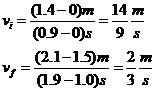
Applying conservation of momentum:
(d) 評(píng)分說明:須與(a)中的實(shí)驗(yàn)裝置和步驟一致,改變其中某個(gè)物理量進(jìn)行實(shí)驗(yàn),根據(jù)用測(cè)量數(shù)據(jù)計(jì)算碰撞前與碰撞后的動(dòng)能,通過比較損失的機(jī)械能得出結(jié)論。
參考答案:
You could vary the initial speed of cart A. From the data, calculatevalues of kinetic energy before and after the collision using

. Then analyze

to see if the changes in initial speedgive different values.
由此可見,解答題部分將不再局限于對(duì)學(xué)生計(jì)算能力的考察,而是更注重考察學(xué)生的理解能力,文字?jǐn)⑹龊蜁姹磉_(dá)能力。
AP物理1和AP物理2 是2015年AP考試起對(duì)物理B考試的改革,把物理B分成了兩門考試,它們涵蓋范圍除了物理B原有的內(nèi)容(牛頓力學(xué)、流體力學(xué)、熱學(xué)、電學(xué)、磁學(xué)、光學(xué)、機(jī)械波和原子物理等基本知識(shí))外,還增加了轉(zhuǎn)動(dòng)力學(xué)部分。考核知識(shí)在原來物理B的基礎(chǔ)上稍有加深,而且還增加了實(shí)驗(yàn)部分的比重。AP物理1和AP物理2所需數(shù)學(xué)知識(shí)淺顯,只涉及代數(shù)方程,我國(guó)高中數(shù)學(xué)足以解決AP物理1和AP物理2考試中的數(shù)學(xué)要求。由于AP物理1和AP物理2考試涵蓋范圍很寬,不管學(xué)生今后在大學(xué)選什么專業(yè)都有用。
1. 運(yùn)動(dòng)學(xué)&牛頓定律
2. 功&能&動(dòng)量
3. 圓周運(yùn)動(dòng)&轉(zhuǎn)動(dòng)力學(xué)
4. 振動(dòng)&波
5. 電場(chǎng)力&純電阻電路
物理1考點(diǎn)在簡(jiǎn)答題中的分布
樣題:
第一題:振動(dòng)和波
第二題:功、能和動(dòng)能
第三題:運(yùn)動(dòng)學(xué)和牛頓定律
2015年
第一題:運(yùn)動(dòng)學(xué)和牛頓定律
第二題:電路
第三題:功、能和動(dòng)能
第四題:運(yùn)動(dòng)學(xué)和牛頓定律
第五題:振動(dòng)和波
2016年:
第一題:振動(dòng)
第二題:功、能和動(dòng)能
第三題:運(yùn)動(dòng)學(xué)和牛頓定律
第四題:電路
第五題:振動(dòng)和波
詳細(xì)考點(diǎn)梳理:
1. 運(yùn)動(dòng)學(xué)&牛頓定律(kinetics,dynamics)
運(yùn)動(dòng)學(xué)和牛頓定律是力學(xué)的基礎(chǔ),往往跟力學(xué)的各個(gè)章節(jié)結(jié)合起來,也經(jīng)常跟電磁學(xué)結(jié)合起來考查,是考試的重點(diǎn)。
這一部分的主要考點(diǎn)包括
uniformly accelerated motion 勻加速運(yùn)動(dòng)
velocity-time diagram 速度-時(shí)間圖
projectile motion 拋體運(yùn)動(dòng)
Newton’s Law 牛頓定律
Free-body diagram 受力分析圖
2. 功&能&動(dòng)量
(work,energy, impulse)
功能這一部分是力學(xué)的核心,還特別容易和振動(dòng)、擺部分綜合出題。
其主要考點(diǎn)集中于:
work 功
energy conservation 能量守恒
kinetic and potential energy 動(dòng)能與勢(shì)能
the conservation of mechanical energy 機(jī)械能守恒
power 功率
impulse 沖量
conservation of linear momentum 動(dòng)量守恒
elasticand inelastic collision 彈性和非彈性碰撞。
3.圓周運(yùn)動(dòng)和轉(zhuǎn)動(dòng)
(circular motion, rotational motion)
轉(zhuǎn)動(dòng)原來是只有物理C才考的內(nèi)容,物理B改革后被加到來物理1的考點(diǎn)中,而且在國(guó)內(nèi)高中轉(zhuǎn)動(dòng)沒有涉獵過,所以這部分內(nèi)容對(duì)大多數(shù)學(xué)生來說是個(gè)難點(diǎn),但是物理1這部分不會(huì)考定量計(jì)算,只會(huì)考對(duì)概念定性的理解,難度并不是太大。
其考點(diǎn)主要有:
Uniformly Circular Motion 勻速圓周運(yùn)動(dòng)
Newton’s Law of Gravitation 牛頓萬有引力
Torque 力矩
Equilibrium 平衡
Rotational Kinematics 轉(zhuǎn)動(dòng)運(yùn)動(dòng)學(xué)
Rotational Dynamics 轉(zhuǎn)動(dòng)力學(xué)
4.振動(dòng)和波 (oscillation & wave)
振動(dòng)和波這部分在15和16年的考試中都出了大題,屬于考試的重點(diǎn),而這部分內(nèi)容又是高中物理所不太涉及到的地方,需要同學(xué)們著重復(fù)習(xí)一下。
主要的考點(diǎn)有:
Simple Harmonic Motion 簡(jiǎn)諧振動(dòng)
Pendulum 擺
Traveling waves 行波
Standing waves 駐波
Doppler effect 多普勒效應(yīng)
這其中駐波是重點(diǎn),一是在國(guó)內(nèi)高中不太被涉及的到,而且對(duì)于初學(xué)者理解起來比較抽象。
5.電場(chǎng)力和純電阻電路
(electrostatics and DC circuits)
這部分知識(shí)點(diǎn)在物理1、2的考試中都有涉及,主要是在物理2的考試中出現(xiàn),在物理1中相對(duì)比較簡(jiǎn)單。
主要涉及的考點(diǎn)有:
Electric Forces 電場(chǎng)力
Electric Fields 電場(chǎng)
Conductor 導(dǎo)體
Ohm’s Law 歐姆定律
Electric power 電功率
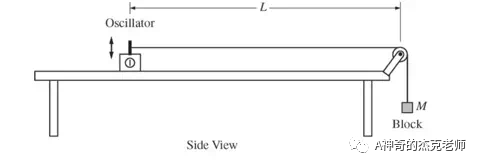
例題:
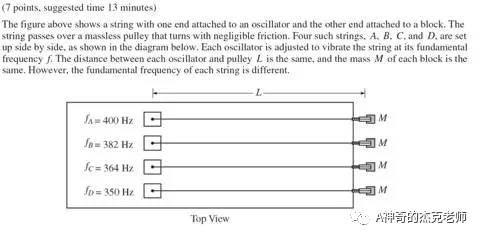
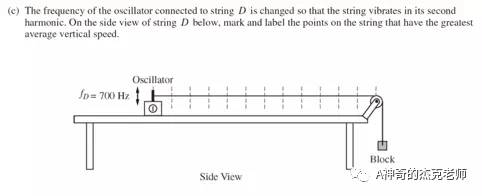
1.?流體力學(xué)
2.?熱學(xué)
3.?電場(chǎng)和電容
4.?直流電路
5. 磁學(xué)
6.?光學(xué)
7.?近現(xiàn)代物理
物理2考點(diǎn)在簡(jiǎn)答題中的分布
樣題:
第一題:化學(xué)+現(xiàn)代物理
第二題:熱學(xué)
第三題:電、磁
2015年
第一題:光學(xué)
第二題:電路
第三題:熱學(xué)
第四題:電學(xué)+磁學(xué)
2016年
第一題:熱學(xué)
第二題:光學(xué)
第三題:電場(chǎng)
第四題:電路
簡(jiǎn)單題中:光學(xué)、熱學(xué)和電學(xué)在簡(jiǎn)單題中頻率最高。
1. 流體力學(xué) fluid mechanics
物理改革后流體力學(xué)的題明顯減少,這減輕了同學(xué)們的學(xué)習(xí)負(fù)擔(dān)。
這一塊考點(diǎn)主要有:
Fluid pressure 流體壓強(qiáng)
Buoyancy 浮力
FlowRate Equation 徑流量方程
Bernoulli’s equation 伯努利定理
需要特別強(qiáng)調(diào)的一點(diǎn)是,流體仍然在CB的考察范圍內(nèi),大家可以少分配些時(shí)間在流體這部分內(nèi)容上,但不能完全忽視。
2. 熱學(xué) thermal physics
這部分的考點(diǎn)主要包括以下兩點(diǎn):
IdealGas 理想氣體及其狀態(tài)方程
ThermalDynamics 熱力學(xué)第一定律。
這兩部分內(nèi)容常常結(jié)合在一起出題,學(xué)習(xí)的過程中P-V圖的理解是關(guān)鍵,考前同學(xué)們要認(rèn)真復(fù)習(xí)一下。
3. 電場(chǎng)和電容 electrostatics
物理1中這部分出題頻率較原物理B要多,電學(xué)部分又喜歡和磁結(jié)合起來出大題,這兩年都是,一個(gè)電學(xué)大題的后一問或者兩問是磁學(xué)的題,另外需要注意的一點(diǎn)是這部分內(nèi)容經(jīng)常結(jié)合力學(xué)考察,所以物理1力學(xué)部分要先學(xué)好。
這部分的考點(diǎn)主要包括:
ElectricForce 電場(chǎng)力
ElectricField 電場(chǎng)強(qiáng)度
Conductor& Insulator 導(dǎo)體與絕緣體
ElectricPotential 電勢(shì)
Capacitance 電容
4.直流電路 Direct Circuits
物理1已經(jīng)涉及到了純電阻直流電路,物理2再繼續(xù)這部分知識(shí)時(shí),重點(diǎn)涉及到Resistor-Capacitor電阻-電容電路,也就是咱們常說的RC電路,純電阻直流電路是國(guó)內(nèi)高中考試的熱門考點(diǎn),相信每一個(gè)在國(guó)內(nèi)上過高中的孩子掌握起這部分來都還比較容易,RC電路的內(nèi)容也考的比較淺,在物理2考試的FR中,這部分的內(nèi)容應(yīng)該是比較容易得分的。
5.Magnetism磁學(xué)
磁學(xué)部分主要的考點(diǎn)是 Magnetic force 磁場(chǎng)力和 Electromagnetic Induction 電磁感應(yīng)。磁學(xué)是國(guó)內(nèi)高考和物理C考試中的熱門考點(diǎn),在原來物理B的考試中,磁學(xué)也一直是考試的重點(diǎn),在跟力學(xué)結(jié)合起來的時(shí)候能出非常難的題目。但是在物理2的考試中,磁學(xué)所占的比分大大減少,除了少數(shù)幾個(gè)選擇題,在大題中一般是跟電學(xué)部分結(jié)合起來出大題。
6.光學(xué) geometric and physical optics
光學(xué)的知識(shí)點(diǎn)比較多,主要包括:
Interference 干涉
Diffraction 衍射
Reflection 反射
Refraction 折射
Dispersion 色散
Spherical Mirrors 球面鏡
Lens 透鏡
這其中球面鏡在國(guó)內(nèi)高中很少能接觸到。
7.近現(xiàn)代物理 modern physics
這部分主要考點(diǎn)有:
Photoelectric effect 光電效應(yīng)
energy level 能級(jí)
Wave-particleduality 波粒二象性
nuclear reaction 核反應(yīng)
最后,祝大家在2018年SAT和AP考試中取得好成績(jī)!


以上就是關(guān)于【2018年AP物理1和AP物理2考前總結(jié)】的解答,如需了解學(xué)校/賽事/課程動(dòng)態(tài),可至翰林教育官網(wǎng)獲取更多信息。
往期文章閱讀推薦:
新賽季AP如何“彎道超車”?拒絕無效內(nèi)卷!AP科學(xué)選課指南來了!
CB官宣重磅新規(guī)!2027年AP考試開考時(shí)間新規(guī)解讀+大考日程發(fā)布!大陸報(bào)名搶位開啟行動(dòng),翰林3大考點(diǎn)幫你提前鎖位!


翰林AMC8視頻課重磅上線!

國(guó)際競(jìng)賽真題資源免費(fèi)領(lǐng)取






