Edexcel IGCSE Biology: Double Science 復(fù)習(xí)筆記 2.8.5 Human Transport Systems: White Blood Cells & Immunity

Edexcel IGCSE Biology: Double Science 復(fù)習(xí)筆記 2.8.5 Human Transport Systems: White Blood Cells & Immunity
White Blood Cells
- White blood cells are part of the body’s?immune system
- These specialised cells defend against pathogenic microorganisms
- There are two main types of white blood cell:
- Phagocytes
- Lymphocytes
Phagocytes
- Phagocytes carry out?phagocytosis?by?engulfing and digesting pathogens
- Phagocytes have a sensitive cell surface membrane that can detect chemicals produced by pathogenic cells
- Once they encounter the pathogenic cell, they will engulf it and?release digestive enzymes?to digest it
- This is a?non-specific?immune response
- Phagocytes can be easily recognised under the microscope by their?multi-lobed nucleus?and their?granular cytoplasm
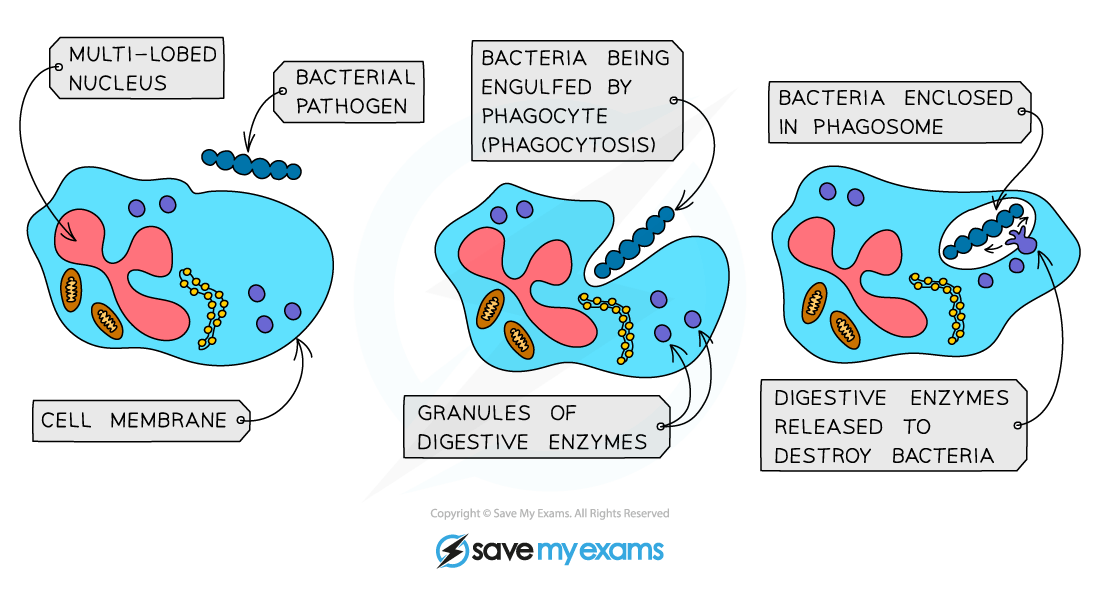
The process of phagocytosis
Lymphocytes
- Lymphocytes can easily be recognised under the microscope by their?large round nucleus?which takes up nearly the whole cell and their?clear, non-granular cytoplasm
- Lymphocytes?produce?antibodies
- Antibodies are Y-shaped proteins with a shape that is?specific?(complementary) to the?antigens?on the surface of the pathogen
- This is a?specific?type of immune response as the antibodies produced will only fit one type of antigen on a pathogen
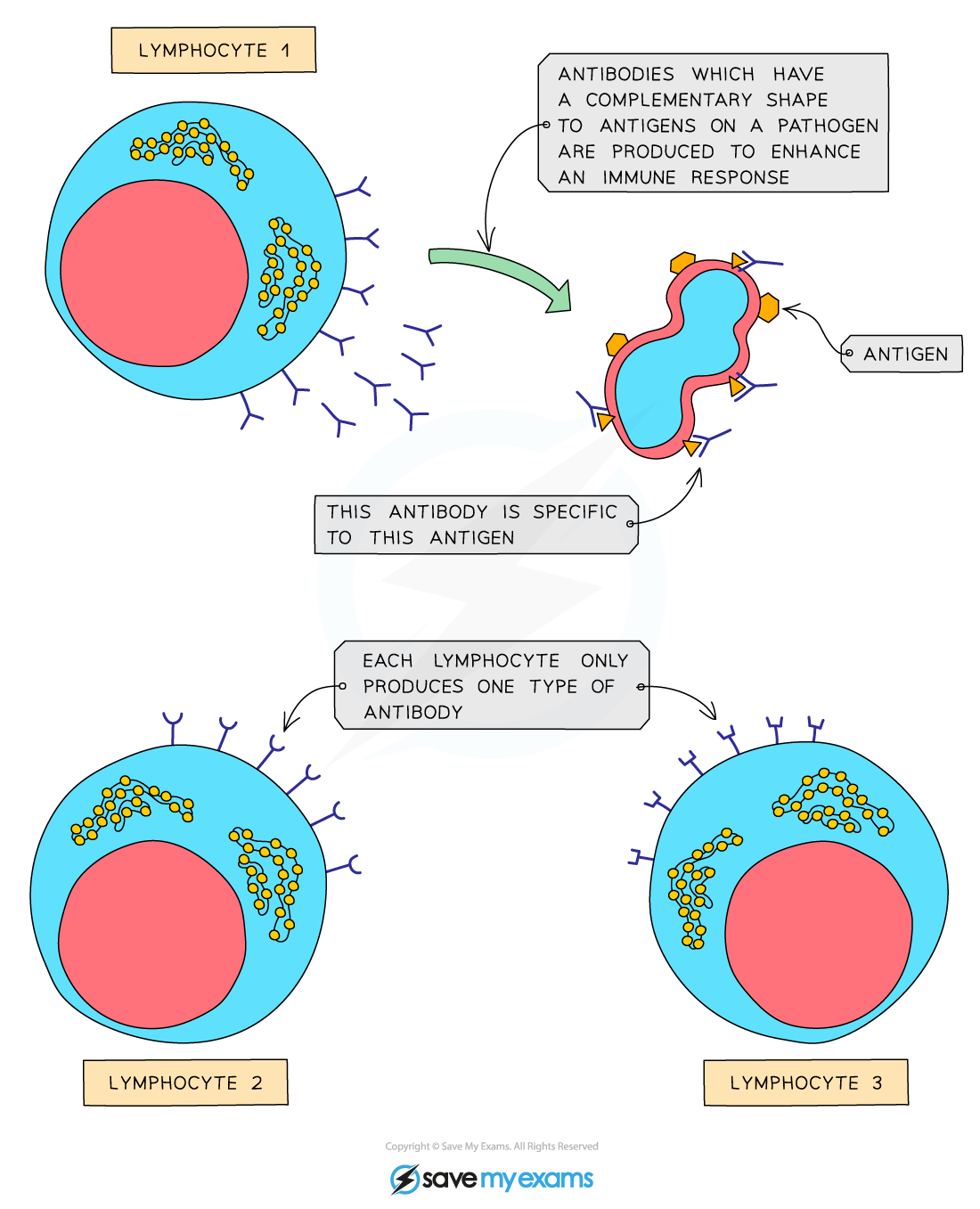
The lymphocytes produce antibodies that are specific to the antigen on the pathogen
- Antibodies attach to the antigens and cause?agglutination?(clumping together)
- This means the pathogenic cells cannot move very easily
- At the same time,?chemicals?are released that signal to?phagocytes?that there are cells present that need to be destroyed
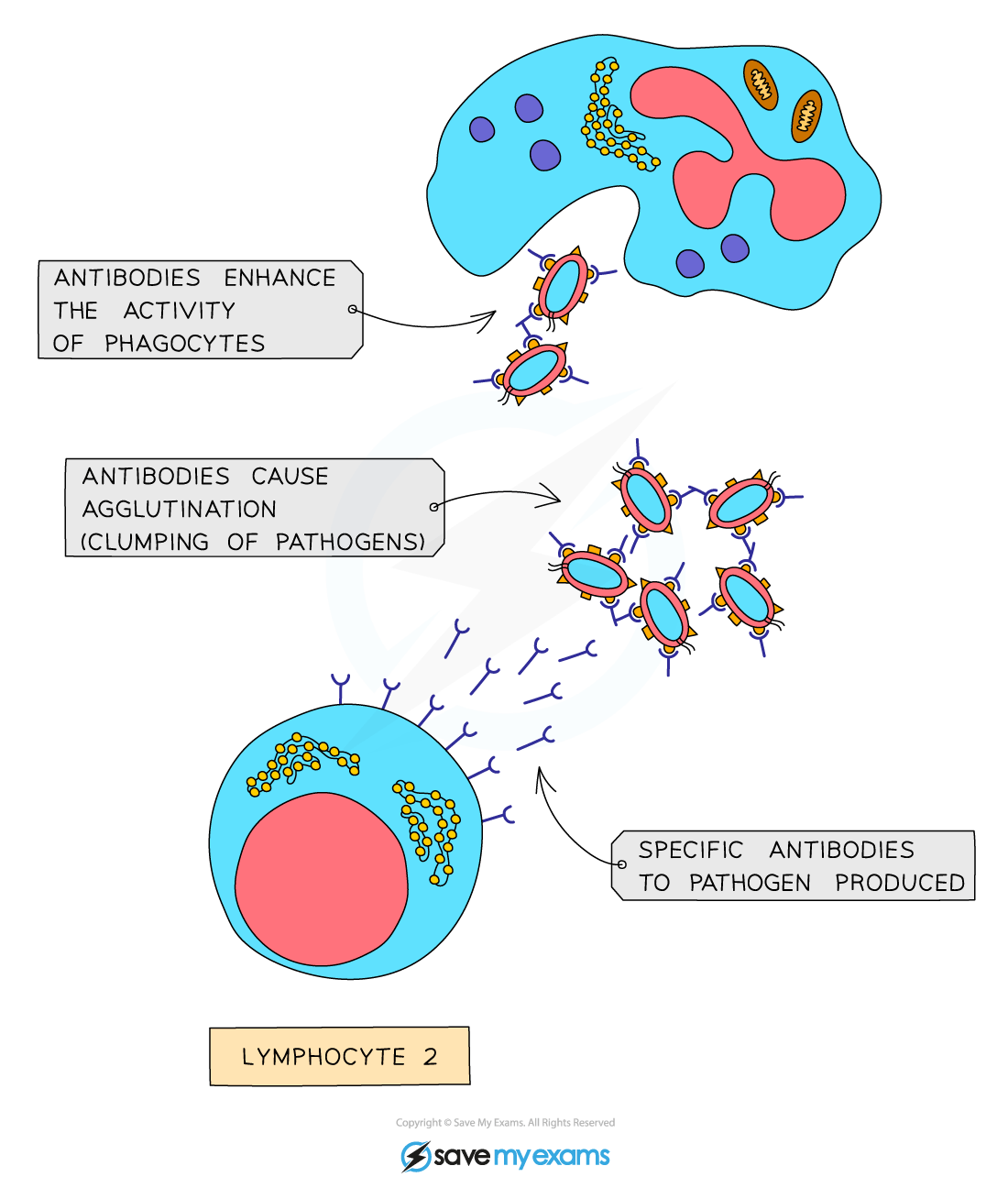
Agglutinated pathogens cannot move easily
- Lymphocytes?also produce?antitoxins?to neutralise toxins released by pathogens
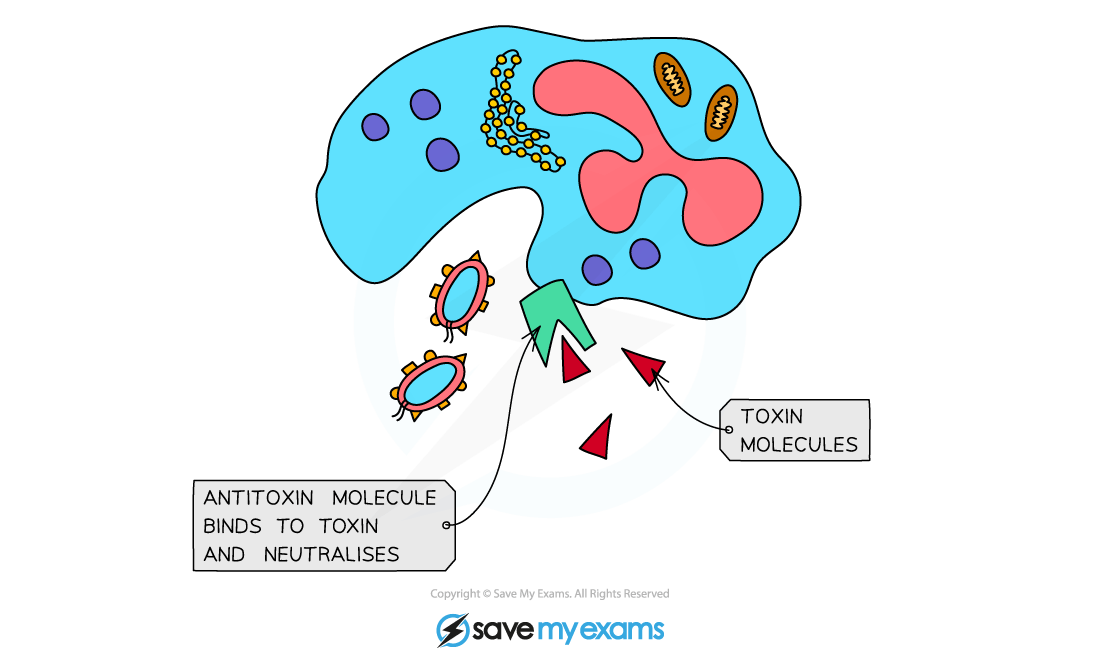
Lymphocytes produce specific antitoxins to specific pathogens
Immunity
- The body's?immune system?is highly complex, with white blood cells being the main component
- Once a pathogen has entered the body the role of the immune system is to prevent the infectious organism from reproducing and to destroy it
- An organism has immunity when they have?sufficient levels of antibodies?to protect it from a particular disease
- As a result, they do not suffer from the disease or its symptoms
Response to infection
- The stages of infection and the subsequent immune response are as follows:
- The pathogen enters the blood stream and?multiplies
- A release of?toxins?(in the case of bacteria) and?infection of body cells?causes?symptoms?in the patient
- Phagocytes?that encounter the pathogen recognise that it is an invading pathogen and?engulf and digest?(non-specific response)
- Eventually, the pathogen encounters a?lymphocyte?which recognises its?antigens
- The lymphocyte starts to produce?specific antibodies?to combat that particular pathogen
- The lymphocyte also?clones itself?to produce lots of lymphocytes (all producing the specific?antibody?required)
- Antibodies cause?agglutination?of pathogens
- Phagocytes?engulf and digest the agglutinated pathogens
- After the patient has recovered, they?retain antibodies?specific to the disease as well as?memory cells?(lymphocytes that recognise the pathogen)
- If the patient encounters the same pathogen again, it will trigger a secondary immune response
- Memory cells can produce much?larger quantities?of the required antibody in a much?shorter time?to fight off the pathogen before the patient suffers any symptoms
Exam Tip
Make sure you know the difference between antigen, antibody and antitoxin:
- An?antigen?is a molecule found on the surface of a cell
- An?antibody?is a protein made by lymphocytes that is complementary to an antigen and, when attached, clumps them together and signals the cells they are on for destruction
- An?antitoxin?is a protein that neutralises the toxins produced by bacteria
轉(zhuǎn)載自savemyexams
以上就是關(guān)于【Edexcel IGCSE Biology: Double Science 復(fù)習(xí)筆記 2.8.5 Human Transport Systems: White Blood Cells & Immunity】的解答,如需了解學(xué)校/賽事/課程動(dòng)態(tài),可至翰林教育官網(wǎng)獲取更多信息。
往期文章閱讀推薦:
斯坦福大學(xué)官方推薦書單!名校學(xué)霸們暑假都在讀什么?
MIT官方發(fā)布【2026年夏季推薦閱讀書單】!橫跨科學(xué)/人文/經(jīng)濟(jì)...


翰林AMC8視頻課重磅上線!

國(guó)際競(jìng)賽真題資源免費(fèi)領(lǐng)取






