Edexcel A Level Physics:復習筆記5.12 Equation for the Intensity of Radiation

Equation for the Intensity of Radiation
- Progressive waves transfer?energy
- The amount of energy passing through a unit area per unit time is the?intensity?of the wave
- Therefore, the?intensity?is defined as?power per unit area

Intensity is equal to the power per unit area
- The?area?the wave passes through is?perpendicular?to the direction of its?velocity
- The?intensity?of a progressive wave is also?proportional?to its?amplitude squared?and?frequency squared
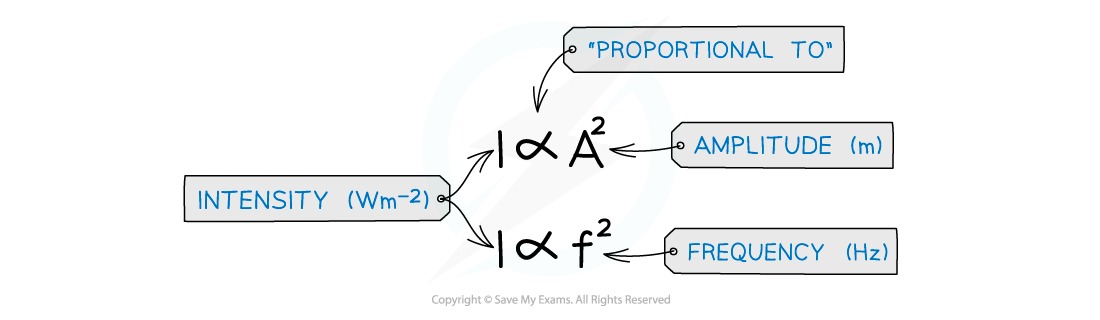
Intensity is proportional to the amplitude2?and frequency2
- This means, if the frequency or the amplitude is doubled, the intensity increases by a factor of 4 (22)
Spherical Waves
- A?spherical wave?is a wave from a point source that?spreads out equally?in all directions
- The area the wave passes through is the?surface area?of a sphere:?4πr2
- As the wave travels further from the source, the energy it carries passes through increasingly larger areas as shown in the diagram below:
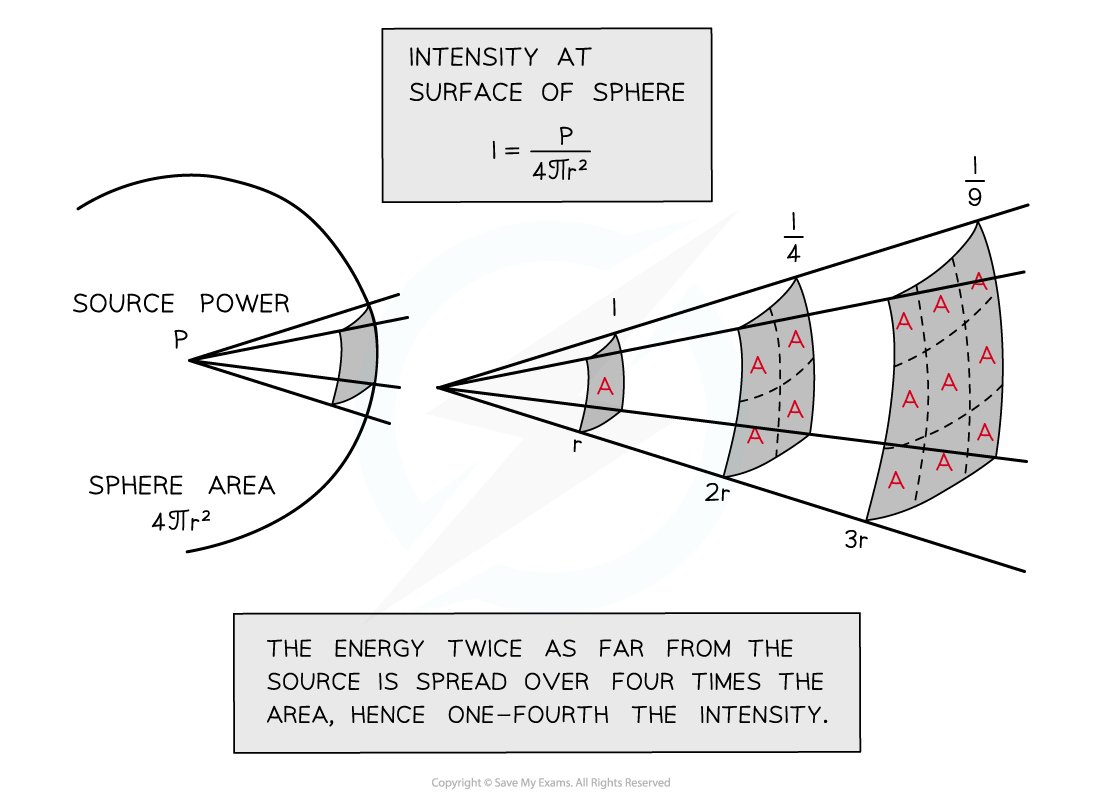
Intensity is proportional to the amplitude squared
- Assuming there’s no absorption of the wave energy, the?intensity?I?decreases?with?increasing distance?from the source
- Note the intensity is proportional to 1/r2
- This means when the source is twice as far away, the intensity is 4 times less
- The 1/r2?relationship is known in physics as the?inverse square law
Worked Example
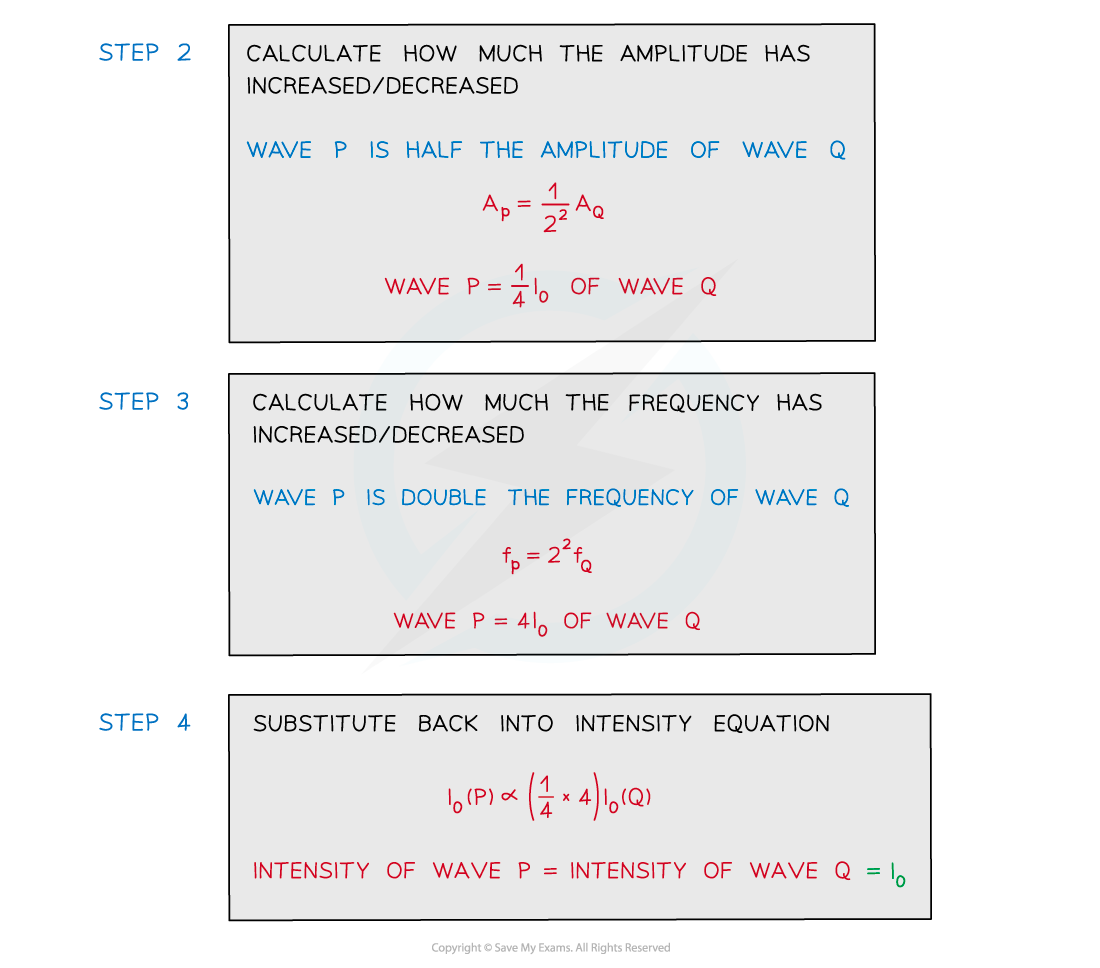
The intensity of a progressive wave is proportional to the square of the amplitude of the wave. It is also proportional to the square of the frequency. The variation with time t of displacement x of particles when two progressive waves Q and P pass separately through a medium are shown on the graphs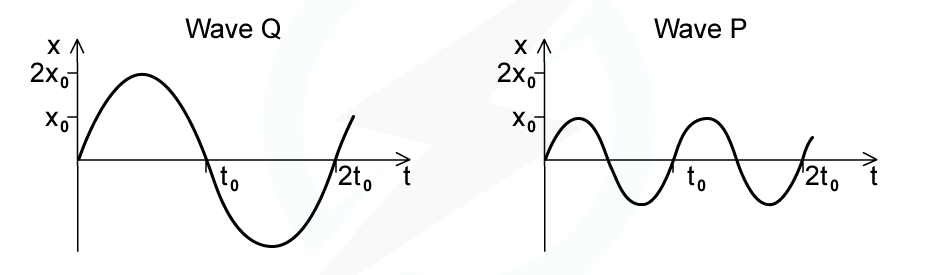 The intensity of wave Q is?I0. What is the intensity of wave P?

Exam Tip
The key concept with intensity is that it has an inverse square relationship with distance (not a linear one). This means the energy of a wave decreases very rapidly with increasing distance
轉載自savemyexams
以上就是關于【Edexcel A Level Physics:復習筆記5.12 Equation for the Intensity of Radiation】的解答,如需了解學校/賽事/課程動態,可至翰林教育官網獲取更多信息。
往期文章閱讀推薦:
2026 ALEVEL 夏考A率出爐!愛德思vs牛津AQA,哪些科目真的“好出分”?
2026 AMC10/12美國數學競賽新賽季!【翰林教育 × 清華大學出版社】獨家教材全面發售!


翰林AMC8視頻課重磅上線!

國際競賽真題資源免費領取






