Edexcel A Level Physics:復習筆記2.16 Centre of Gravity & The Principle of Moments

Centre of Gravity
- The centre of gravity (sometimes called the centre of mass) of an object is?the point through which all the weight can be considered to act
- The position of the centre of gravity of uniform regular solid is at its centre
- For example, for a person standing upright, their centre of gravity is roughly in the middle of the body behind the navel, and for a sphere, it is at the centre
- For symmetrical objects with uniform density, the centre of gravity is located at the?point of symmetry
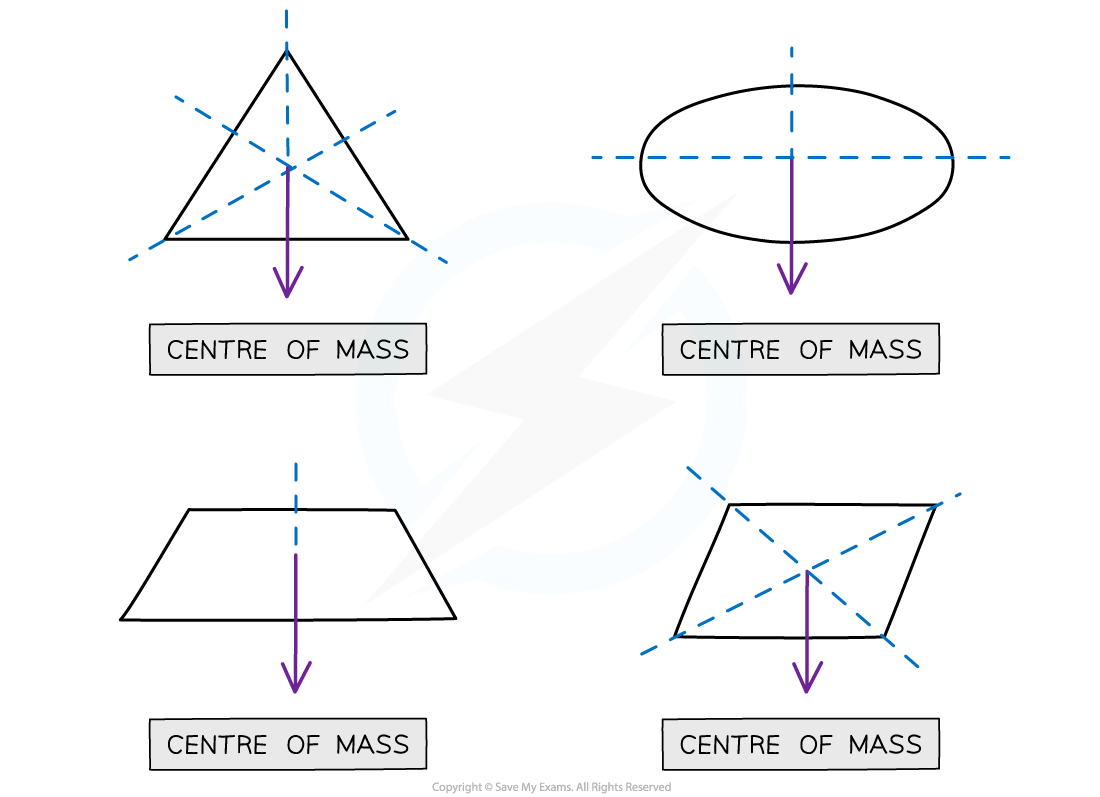
The centre of mass of a shape can be found by symmetry
Stability
- The position of the centre of gravity of an object affects its stability
- An object is stable when its centre of gravity lies above its base
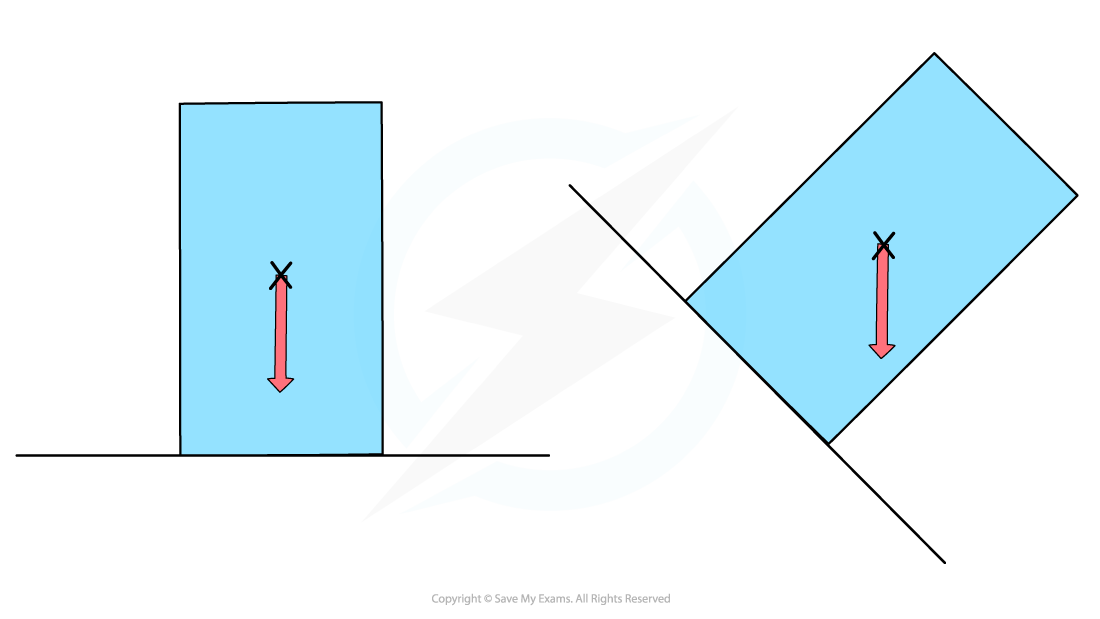
The object on the right will topple, as its centre of gravity is no longer over its base
- The?wider?base an object has, the?lower?its centre of gravity and it is more?stable
- The?narrower?base an object has, the?higher?its centre of gravity and the object is more likely to topple over if pushed
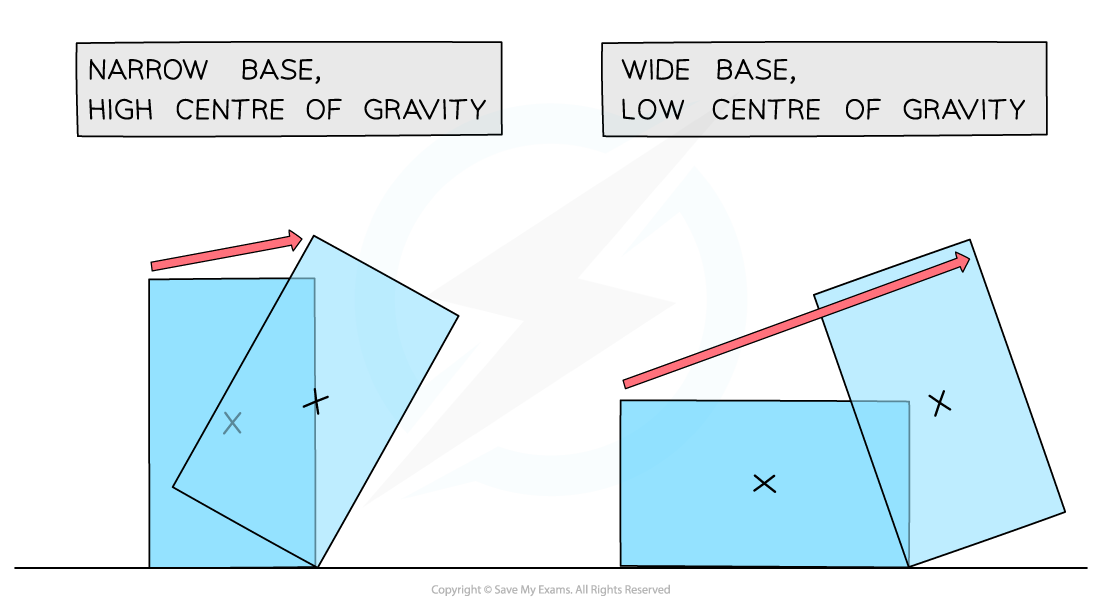
The most stable objects have wide bases and low centres of mass
The Principle of Moments
- The principle of moments states:
For a system to be in equilibrium, the sum of clockwise moments about a point must be equal to the sum of the anticlockwise moments (about the same point)
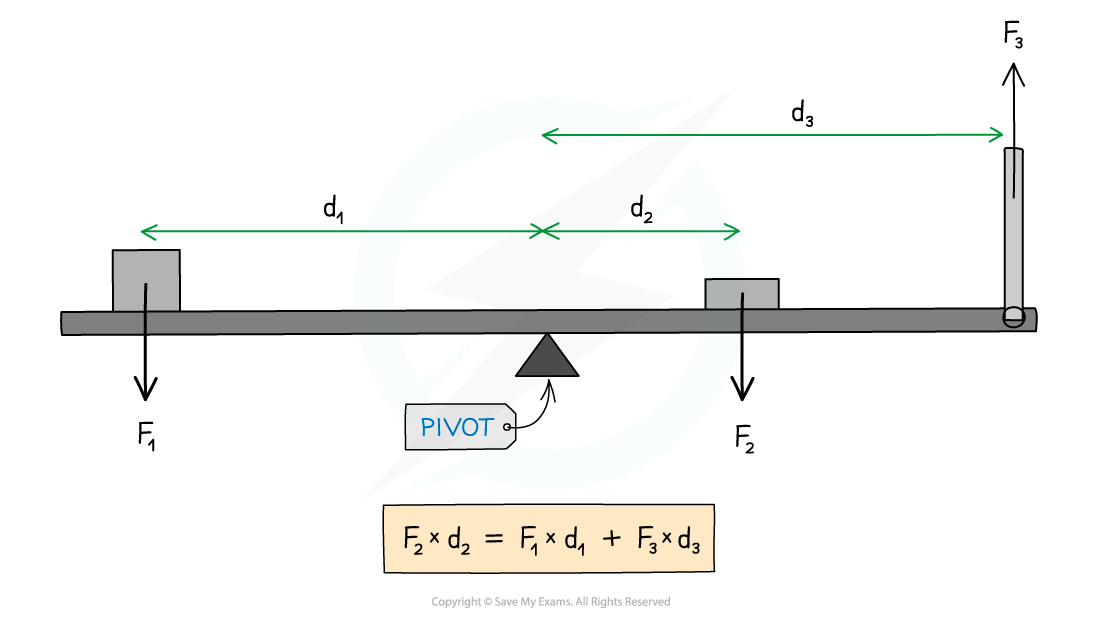
Diagram showing the moments acting on a balanced beam
- In the above diagram:
- Force?F2?is supplying a clockwise moment;
- Forces?F1?and?F3?are supplying anticlockwise moments
- Hence:?F2?×?d2?= (F1?×?d1) + (F3?×?d3)
Worked Example
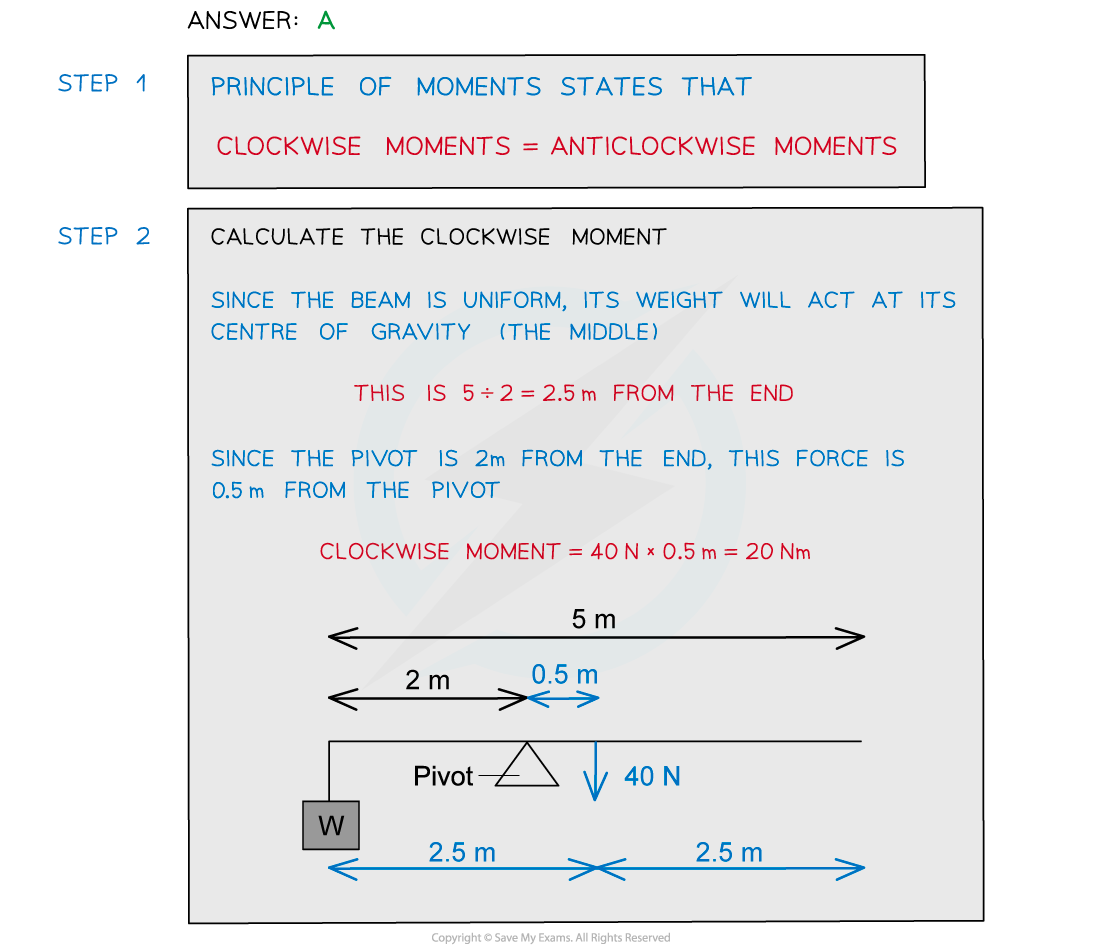
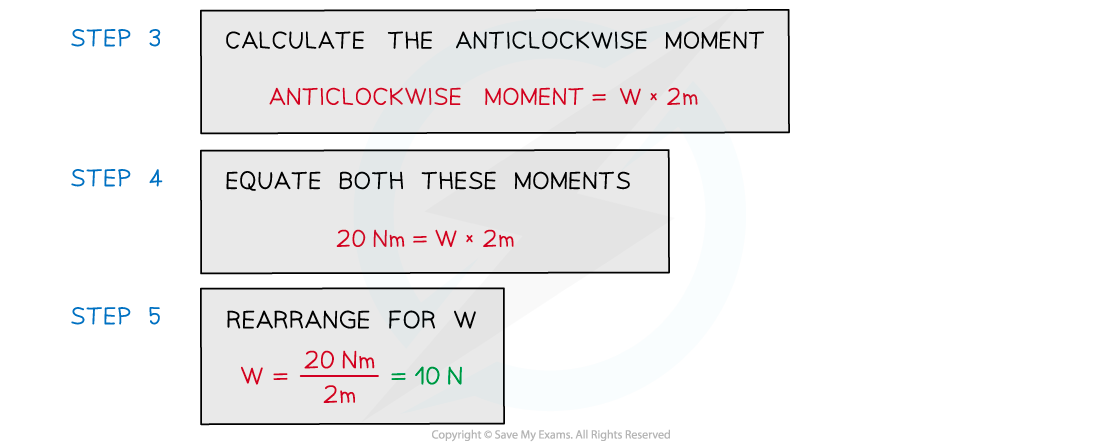
A uniform beam of weight 40 N is 5 m long and is supported by a pivot situated 2 m from one end.
When a load of weight W is hung from that end, the beam is in equilibrium, as shown in the diagram.

What is the value of W?
A? ? ?10 N? ? ? ? ? ? ? ?B? ???50 N? ? ? ? ? ? ? ?C? ???25 N? ? ? ? ? ? ? ?D? ? ?30 N
Exam Tip
Make sure that all the distances are in the same units and you’re considering the correct forces as clockwise or anticlockwise, as seen in the diagram below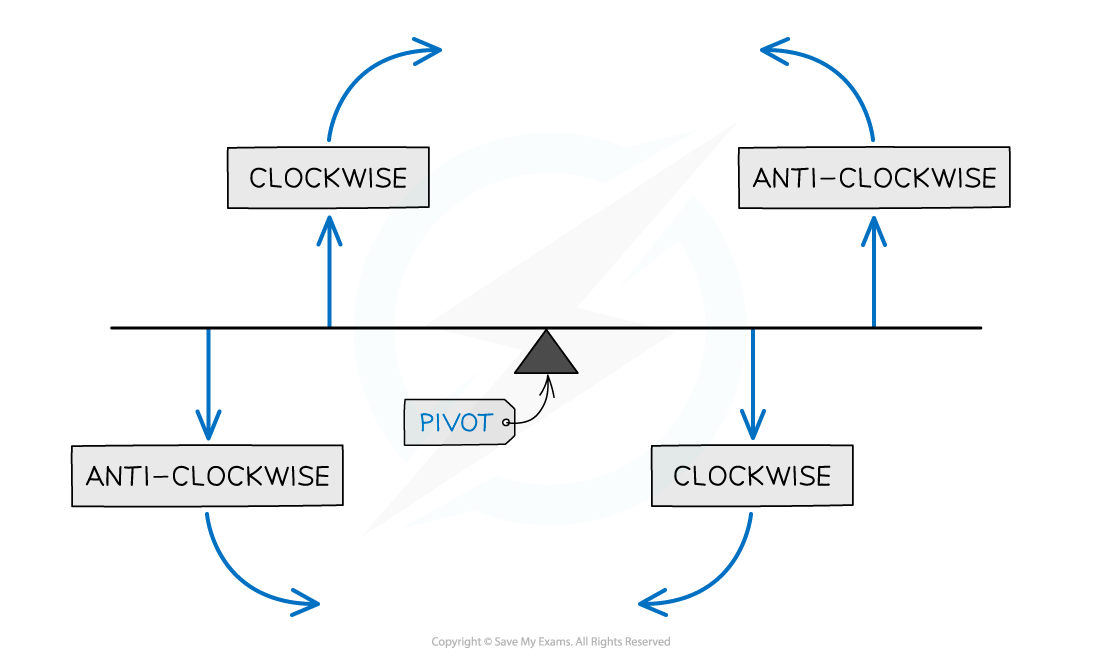
轉載自savemyexams
以上就是關于【Edexcel A Level Physics:復習筆記2.16 Centre of Gravity & The Principle of Moments】的解答,如需了解學校/賽事/課程動態,可至翰林教育官網獲取更多信息。
往期文章閱讀推薦:
MIT官方發布【2026年夏季推薦閱讀書單】!橫跨科學/人文/經濟...


翰林AMC8視頻課重磅上線!

國際競賽真題資源免費領取






