Edexcel A Level Chemistry:復習筆記1.5.3 Hydrogen Bonding

Hydrogen Bonding Interactions
Examples of compounds that can form hydrogen bonds are:
- Alcohols (contains an O-H bond)
- Ammonia (contains an N-H bond)
- Amines (contains an N-H bond)
- Carboxylic acids (contains an O-H bond)
- Hydrogen fluoride (contains an H-F bond)
- Proteins (contains an N-H bond)
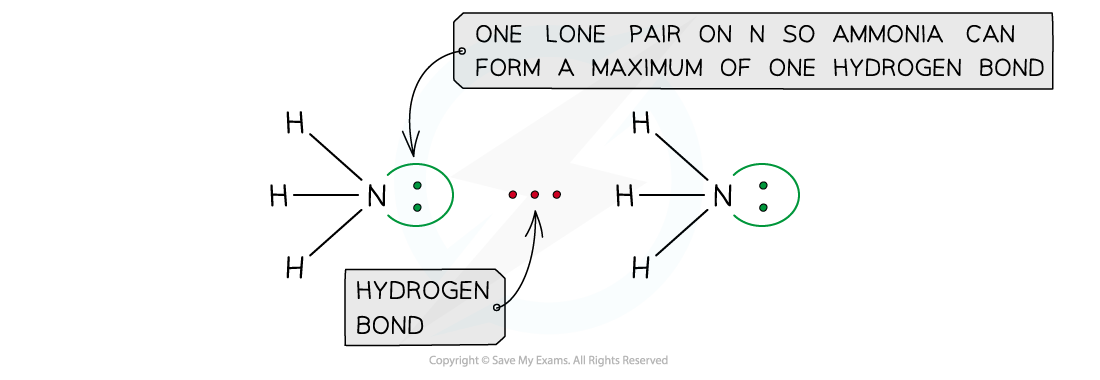
Ammonia can form a maximum of one hydrogen bond per molecule
Anomalous Properties of Water
Properties of water
- Hydrogen bonding in water, causes it to have?anomalous properties?such as high melting and boiling points, high surface tension and a higher density in the liquid than the solid
High melting & boiling points
- Water has high?melting?and?boiling points?due to the the?strong intermolecular forces?of hydrogen bonding between the molecules in both ice (solid H2O) and water (liquid H2O)
- A lot of energy is therefore required to separate the water molecules and melt or boil them
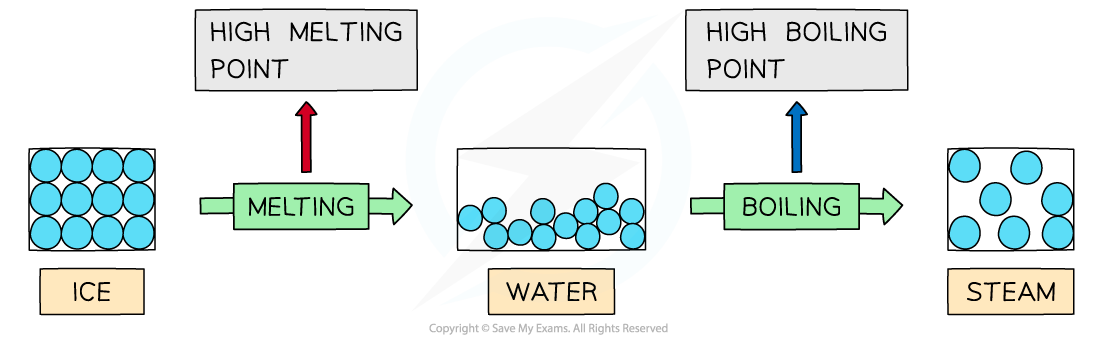
Hydrogen bonds are strong intermolecular forces which are harder to break causing water to have a higher melting and boiling point than would be expected for a molecule of such a small size
- The graph below compares the?enthalpy of vaporisation?(energy required to boil a substance) of different hydrides
- The enthalpy changes?increase?going from H2S to H2Te due to the increased number of electrons in the Group 16 elements
- This causes an increase in the?instantaneous dipole - induced dipole forces (dispersion forces)?as the molecules become larger
- Based on this, H2O should have a much lower enthalpy change (around 17 kJ mol-1)
- However, the enthalpy change of vaporisation is almost 3 times?larger?which is caused by the?hydrogen bonds?present in water but not in the other hydrides
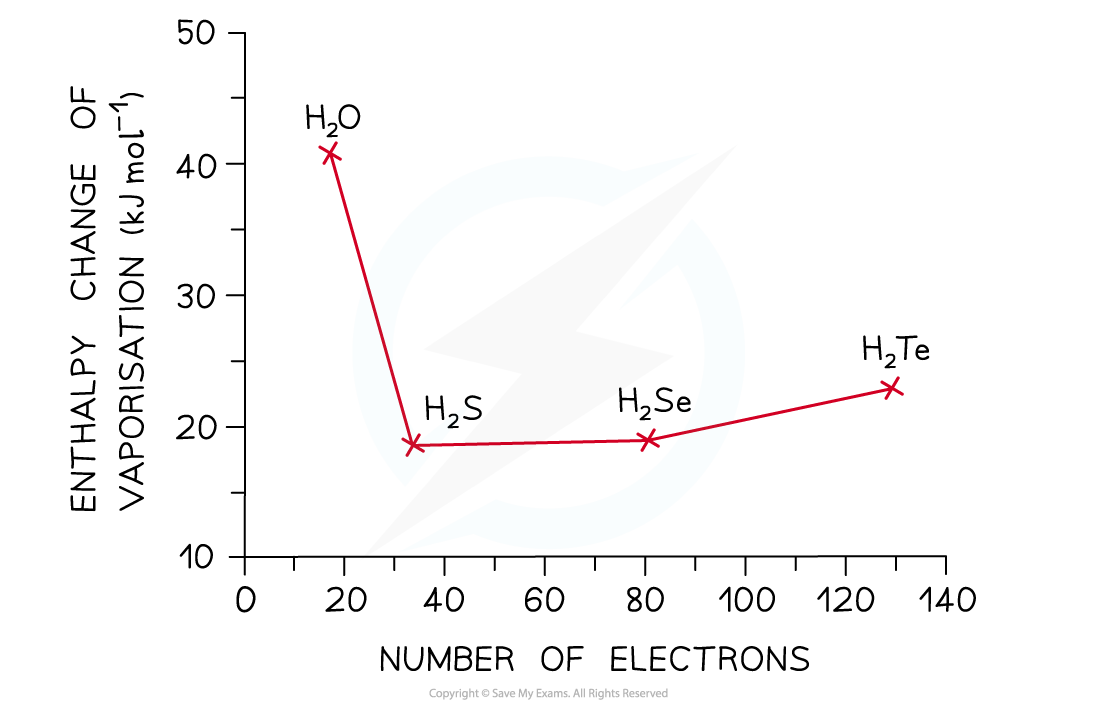
The high enthalpy change of evaporation of water suggests that instantaneous dipole-induced dipole forces are not the only forces present in the molecule – there are also strong hydrogen bonds, which cause the high boiling point
High surface tension
- Water has a?high surface tension
- Surface?tension?is the ability of a?liquid surface?to resist any?external forces?(i.e. to stay unaffected by forces acting on the surface)
- The water molecules at the?surface?of liquid are bonded to other water molecules through?hydrogen bonds
- These molecules?pull downwards?the?surface molecules?causing the surface of them to become compressed and more tightly together at the surface
- This increases water’s?surface?tension
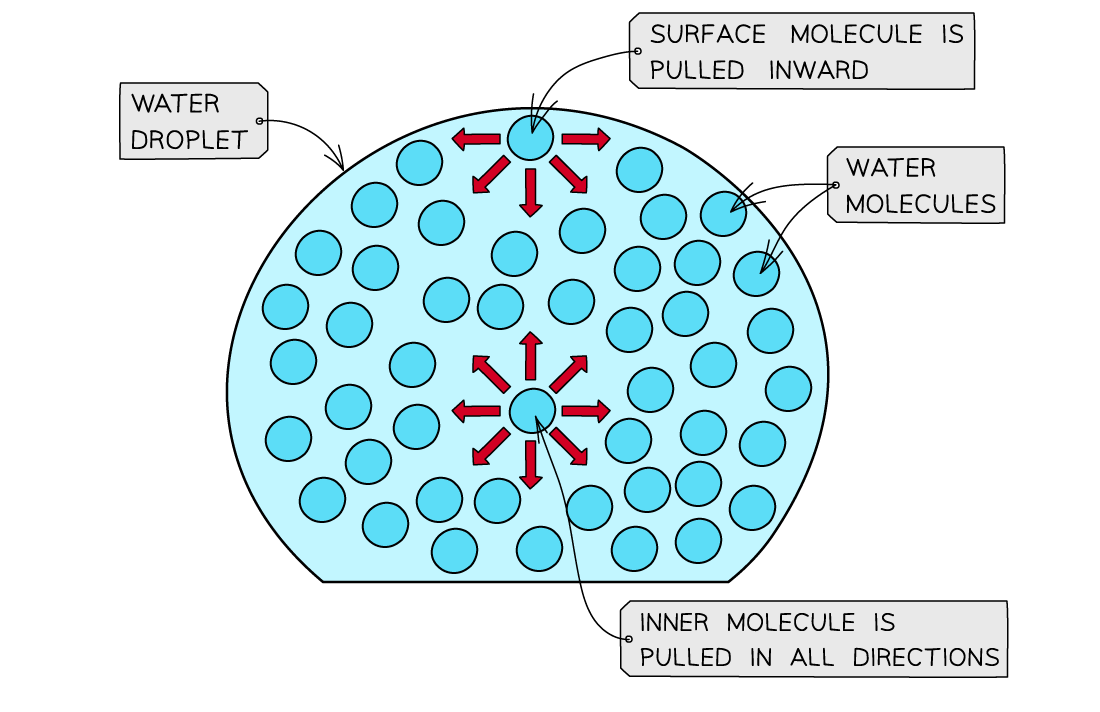
The surface molecules are pulled downwards due to the hydrogen bonds with other molecules, whereas the inner water molecules are pulled in all directions
Density
- Solids?are?denser?than their?liquids?as the particles in solids are more?closely packed?together than in their liquid state
- The water molecules are packed into an open lattice
- This way of packing the molecules and the relatively long?bond lengths?of the hydrogen bonds means that the water molecules are slightly further apart than in the liquid form
- Therefore, ice has a lower density than liquid water by about 9%
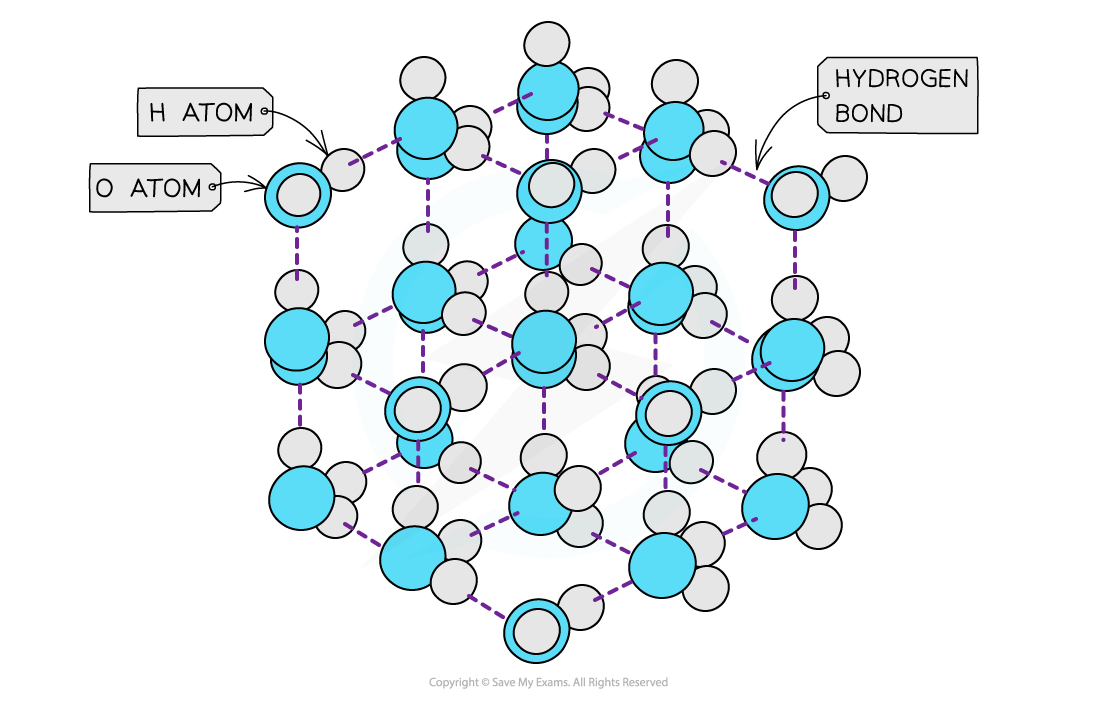
The ‘more open’ structure of molecules in ice causes it to have a lower density than liquid water
轉載自savemyexams
以上就是關于【Edexcel A Level Chemistry:復習筆記1.5.3 Hydrogen Bonding】的解答,如需了解學校/賽事/課程動態,可至翰林教育官網獲取更多信息。
往期文章閱讀推薦:
2026 ALEVEL 夏考A率出爐!愛德思vs牛津AQA,哪些科目真的“好出分”?
2026 AMC10/12美國數學競賽新賽季!【翰林教育 × 清華大學出版社】獨家教材全面發售!


翰林AMC8視頻課重磅上線!

國際競賽真題資源免費領取






