Edexcel A Level Chemistry:復習筆記1.5.1 Electronegativity

Defining Electronegativity
- Electronegativity?is the power of an atom to attract the pair of electrons in a covalent bond towards itself
- The electron distribution in a covalent bond between elements with different electronegativities will be unsymmetrical
- This phenomenon arises from the?positive?nucleus’s ability to attract the?negatively?charged electrons, in the outer shells, towards itself
- The?Pauling?scale?is used to assign a value of electronegativity for each atom
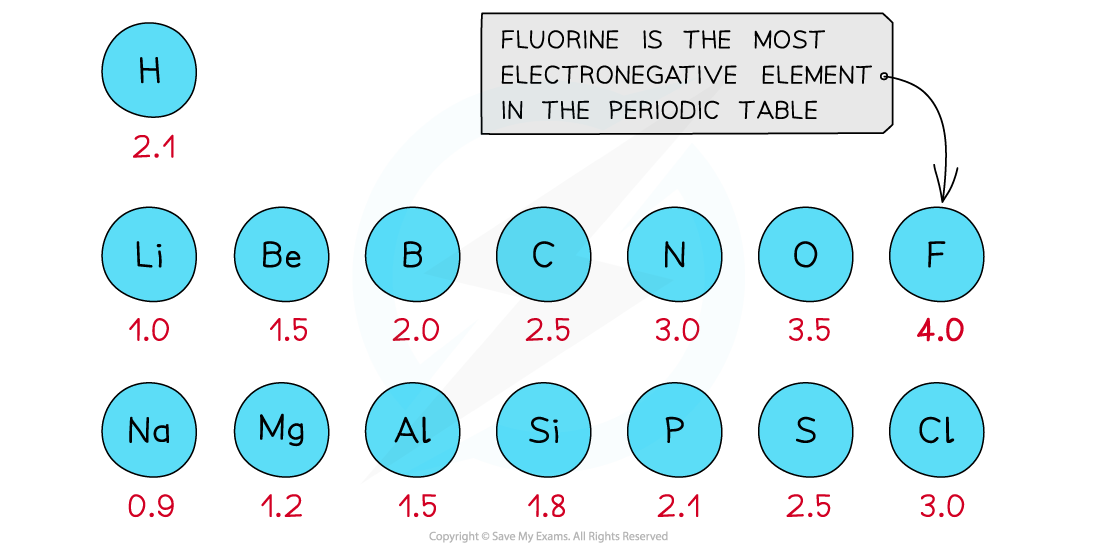
First three rows of the periodic table showing electronegativity values
- Fluorine is the most electronegative atom on the Periodic Table, with a value of 4.0 on the?Pauling Scale
- It is best at attracting electron density towards itself when covalently bonded to another atom
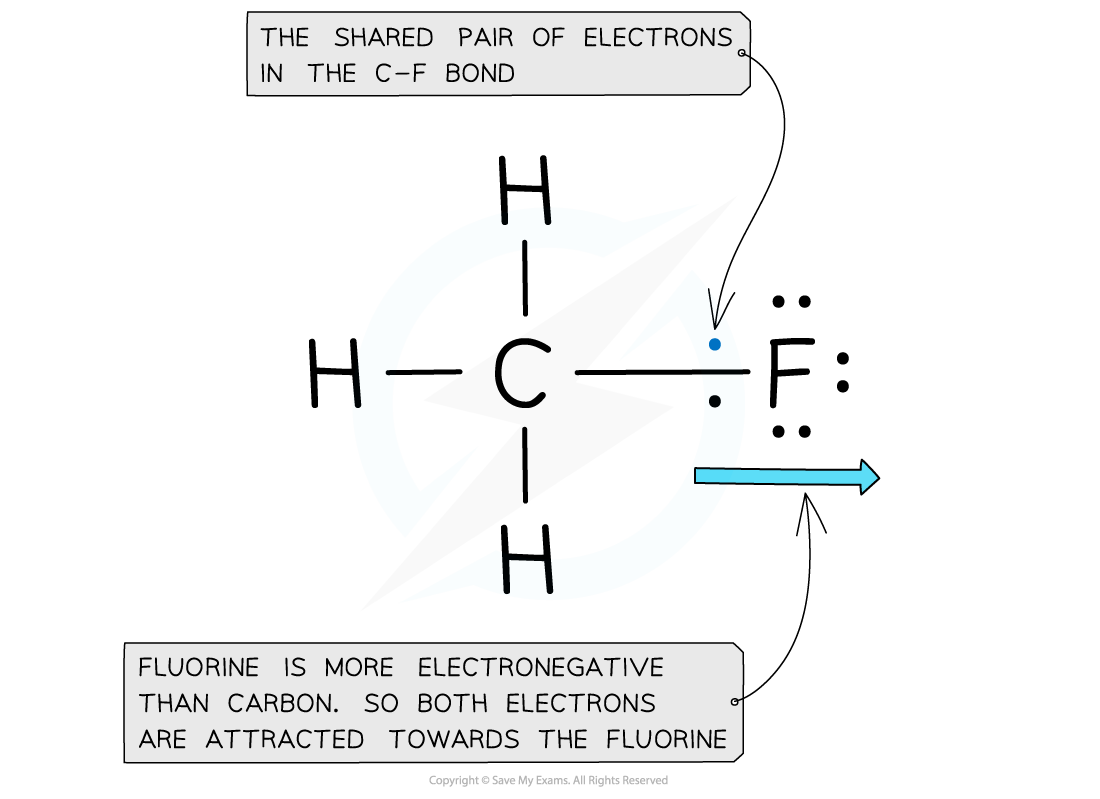
Electron distribution in the C-F bond of fluoromethane
Nuclear charge
- Attraction?exists between the positively charged?protons?in the nucleus and negatively charged?electrons?found in the energy levels of an atom
- An?increase?in the number of?protons?leads to an?increase?in?nuclear?attraction?for the electrons in the outer shells
- Therefore, an?increased nuclear charge?results in an?increased electronegativity
Atomic radius
- The?atomic?radius?is the distance between the nucleus and electrons in the?outermost shell
- Electrons?closer?to the nucleus are more?strongly?attracted towards its positive?nucleus
- Those electrons?further?away?from the nucleus are?less strongly?attracted towards the?nucleus
- Therefore, an?increased atomic radius?results in a?decreased electronegativity
Shielding
- Filled?energy levels can?shield?(mask) the effect of the nuclear charge causing the outer electrons to be?less attracted?to the nucleus
- Therefore, the addition of extra?shells and subshells?in an atom will cause the outer electrons to experience?less?of the attractive force of the nucleus
- Sodium (period 3, group 1) has higher?electronegativity?than caesium (period 6, group 1) as it has fewer shells and therefore the outer electrons experience less shielding than in caesium
- Thus, an increased number of?inner shells and subshells?will result in a?decreased electronegativity
Trends in electronegativity
- Electronegativity?varies across?periods?and down the groups of the periodic table
Down a group
- There is a?decrease?in?electronegativity?going down the group
- The?nuclear charge increases?as more protons are being added to the nucleus
- However, each element has an extra filled electron shell, which increases?shielding
- The addition of the extra shells increases the distance between the nucleus and the outer electrons resulting in?larger?atomic radii
- Overall, there is decrease in attraction between the nucleus and outer bonding electrons
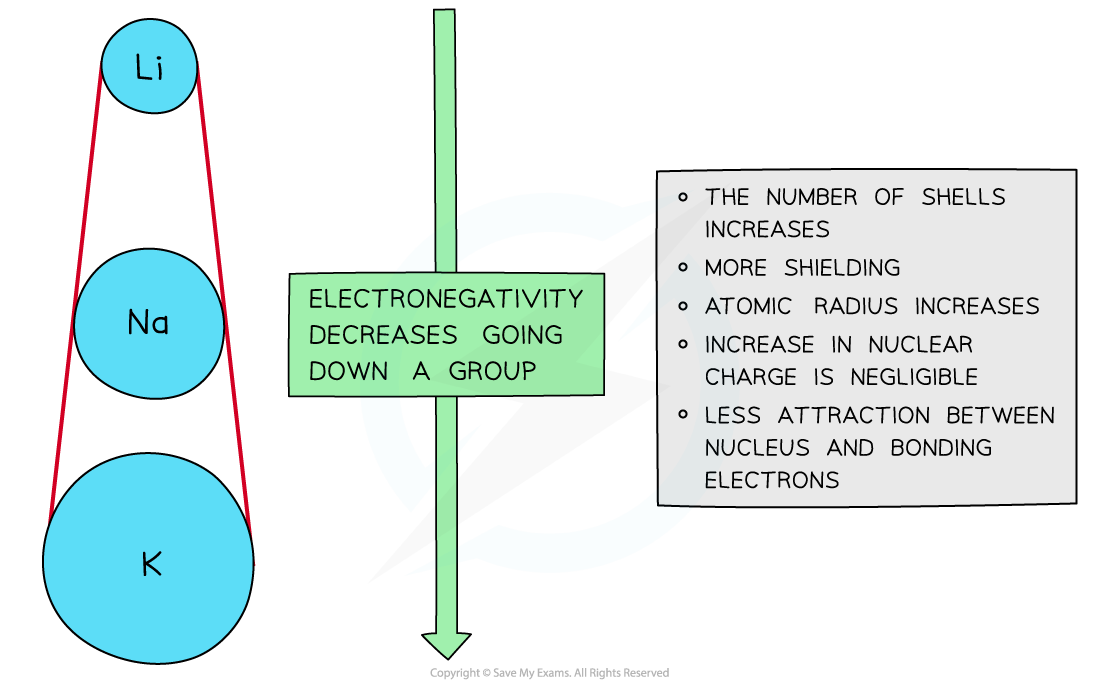
Electronegativity decreases going down the groups of the periodic table
Across a period
- Electronegativity?increases?across a period
- The?nuclear charge increases?with the addition of protons to the nucleus
- Shielding?remains relatively?constant?across the period as no new shells are being added to the atoms
- The nucleus has an increasingly strong attraction for the bonding pair of electrons of atoms across the period of the periodic table
- This results in?smaller atomic radii
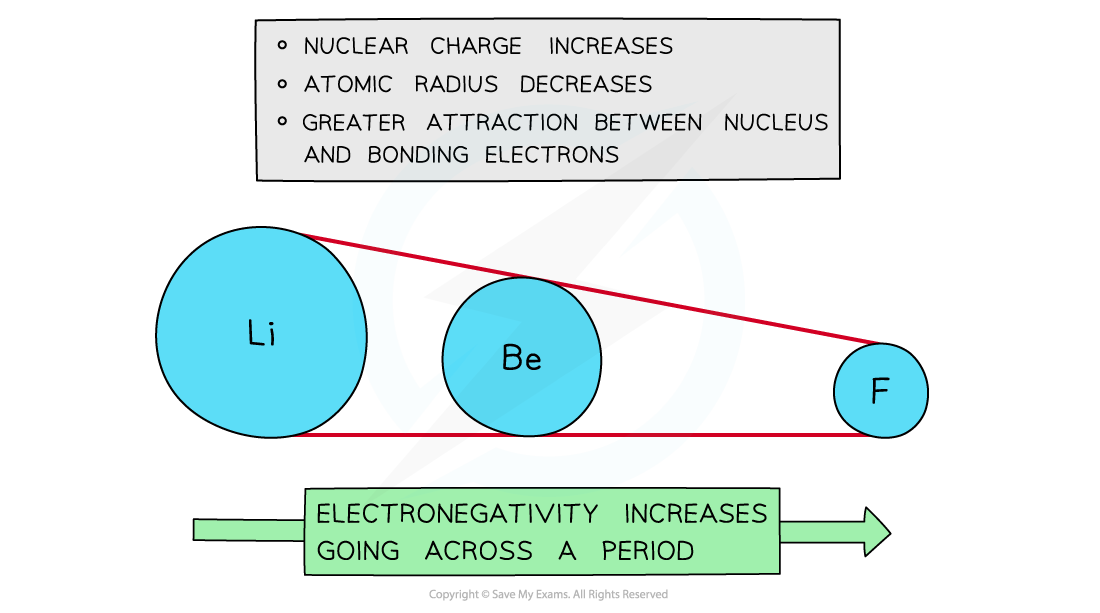
Electronegativity increases going across the periods of the Periodic Table
Bond Polarity
- When two atoms in a covalent bond have the?same?electronegativity?the covalent bond is?nonpolar

The two chlorine atoms have the same electronegativities so the bonding electrons are shared equally between the two atoms
- The difference in electronegativities will dictate the type of bond that is formed
- When the?electronegativities are very different (difference of more than 1.7) then ions will be formed and the bond will be ionic
- When two atoms in a covalent bond have a difference in electronegativities of 0.3 to 1.7 a covalent bond is formed and the?bond will be?polar
- The electrons will be drawn towards the more electronegative atom
- As a result of this:
- The negative charge centre and positive charge centre do not?coincide?with each other
- This means that the?electron distribution?is?asymmetric
- The?less?electronegative?atom gets a partial charge of δ+ (delta?positive)
- The?more?electronegative?atom gets a partial charge of δ- (delta?negative)
- The greater the difference in?electronegativity?the more polar the bond becomes
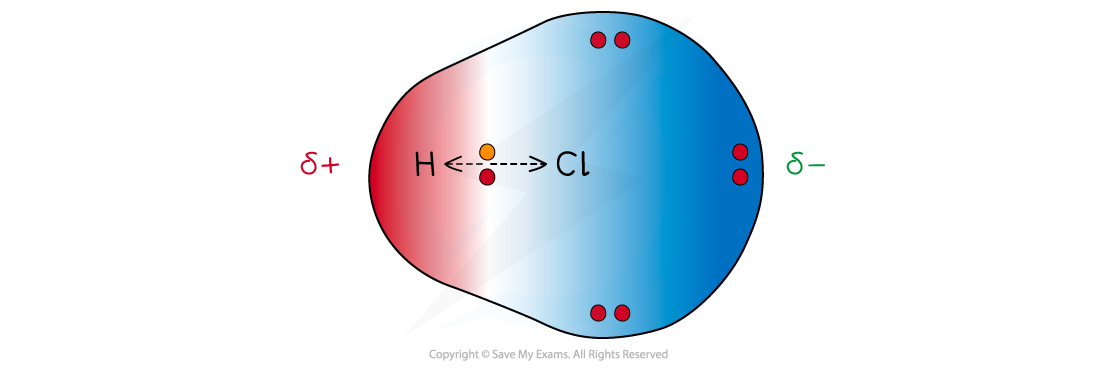
Cl has a greater electronegativity than H causing the electrons to be more attracted towards the Cl atom which becomes delta negative and the H delta positive
轉載自savemyexams
以上就是關于【Edexcel A Level Chemistry:復習筆記1.5.1 Electronegativity】的解答,如需了解學校/賽事/課程動態,可至翰林教育官網獲取更多信息。
往期文章閱讀推薦:
2026 ALEVEL 夏考A率出爐!愛德思vs牛津AQA,哪些科目真的“好出分”?
2026 AMC10/12美國數學競賽新賽季!【翰林教育 × 清華大學出版社】獨家教材全面發售!


翰林AMC8視頻課重磅上線!

國際競賽真題資源免費領取






