CIE A Level Maths: Mechanics復習筆記4.1.1 Work

Work
What does the term work mean in Mechanics?
- In Mechanics the word work refers to the?work done?by a force when it causes an object to move
- Mechanical work happens when both a?force?is applied and the object?moves
- A force that is holding an object stationary is not producing any mechanical work
- The object?gains?energy?due to the work done by forces acting in the?direction of motion
- The object?loses?energy?due to the work done?against resistive forces
- The?line of action?of a force refers to the?point of application?of the force and the?direction?the force was applied in
- Work is a?scalar quantity,?it has size without direction
How do we calculate work done by a force?
- If the?point of application?of a force of magnitude?F?N?moves an object a distance,?d?metres?in the same direction as the?line of action?of the force the?work done,?W??, by the force is
-
 If the line of action of the force is at an?angle?to the direction of motion, then the?component?of the force in the direction travelled is multiplied by the distance instead
- If the object moves?vertically upwards?then the work is done against gravity and this calculation becomes

- The units for the work done by a force are?Newton metres (N m), but it is more common to use?Joules
- 1 Joule = 1 N m
- 1 Joule is equal to the amount of work done by a force of 1 Newton moving an object 1 metre along the line of action of the force
- 1 Kilojoule?is equal to?1000 Joules?(1 kJ = 1000 J)
- If the line of action of the force is different to the direction of motion, start by?resolving?the force into components?parallel?and?perpendicular?to the direction of motion
 The?perpendicular?component of the force will produce no work
- The?net work done?on an object will be equal to the work done by the force that move the object forwards against any work done against resistive forces
How do we use work done with N2L (F = ma)?
- If the?work done by a force?is known it can often be used along with?N2L?to find one of the components in the formula
- Often the object will be moving at constant speed so the?acceleration?of the object will be zero so the forces acting on the object in the?direction of motion?will be in equilibrium
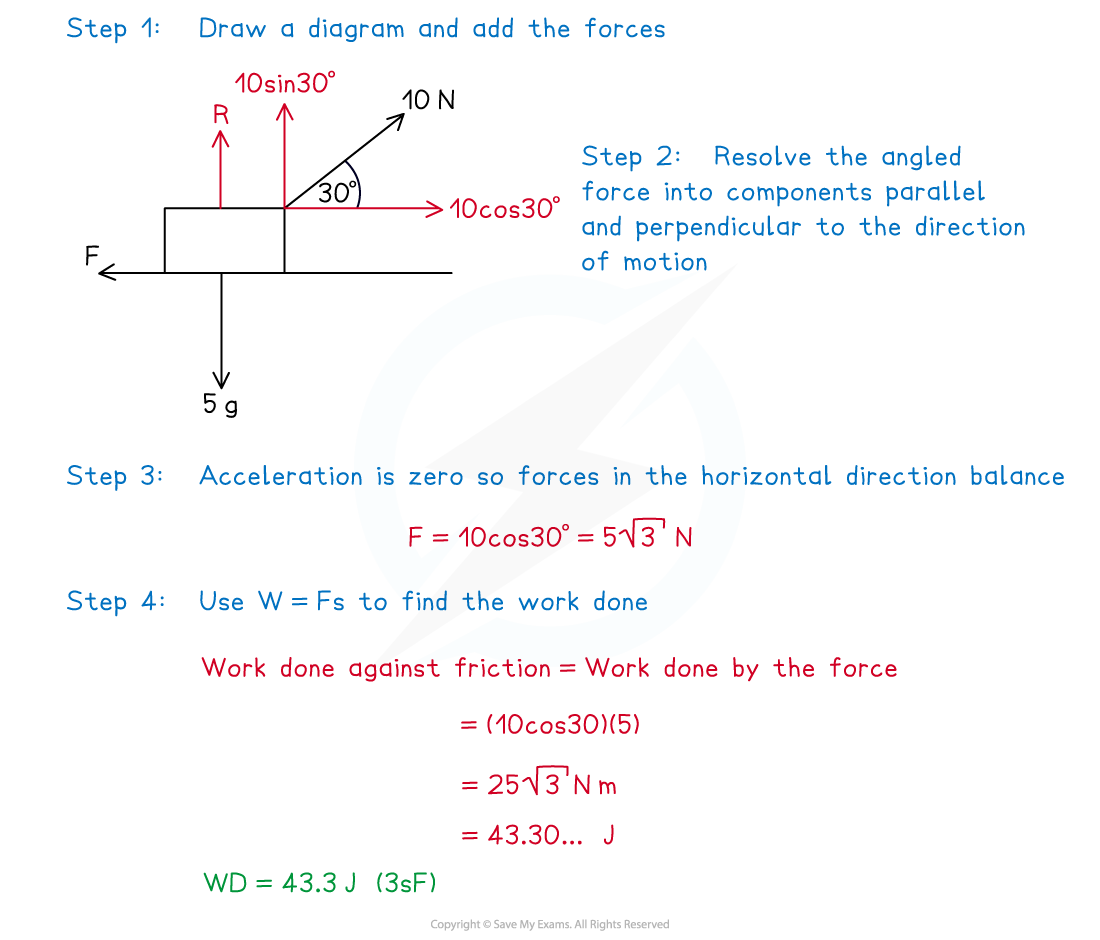
STEP 1:? Draw a diagram or add all the forces to the diagram given in the question
STEP 2:? If the line of action of the force is at an angle to the direction of motion, find the component of the force parallel to the direction of motion
STEP 3:? If necessary, resolve the forces acting in the direction of motion to find the magnitude of the force acting on the object
STEP 4:? Use?W = Fs??to find the work done by the force on the object
- If the problem involves?friction, you may have to resolve perpendicular to the plane to find the value of the?normal reaction force,?R
- If the force overcomes friction to cause an object to move, it is said to do?work done against friction
 Worked Example

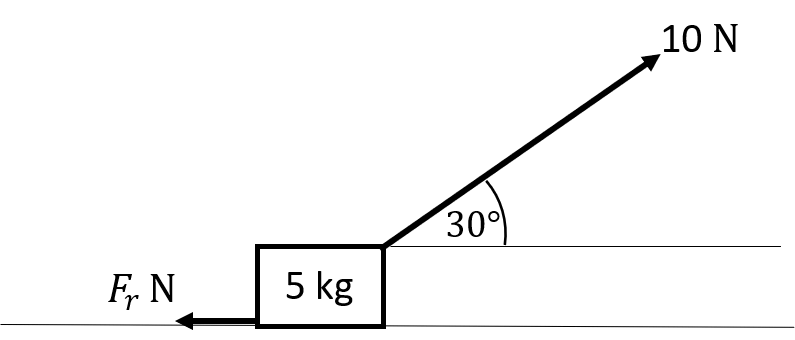
Calculate the work done against friction as the child pulls the box 5 metres along the floor.
How do we use work done on an inclined plane?
- The object will be said to travel up the?line of greatest slope?on an?inclined plane
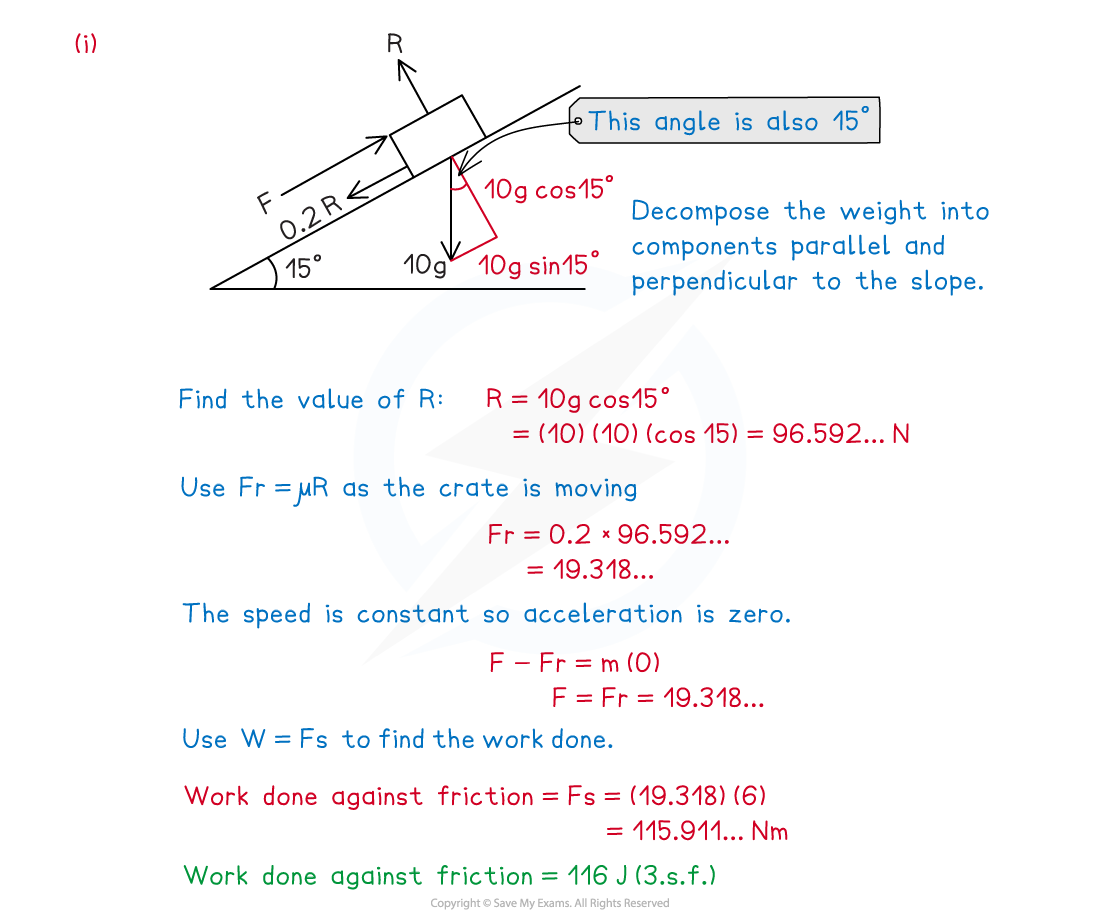
- If the?coefficient of friction?is involved then the weight will need to be resolved to find the value of the?normal reaction force,?R
- There is no work done by the normal reaction force as it acts perpendicular to the direction of motion
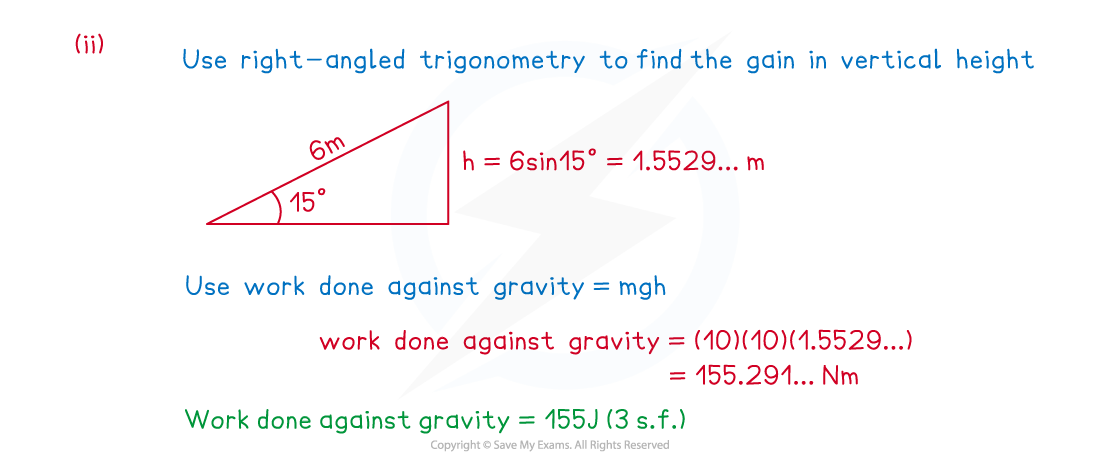
- The?work done against gravity?can be found by using right – angled trigonometry to find the change in vertical height of the object
Worked Example
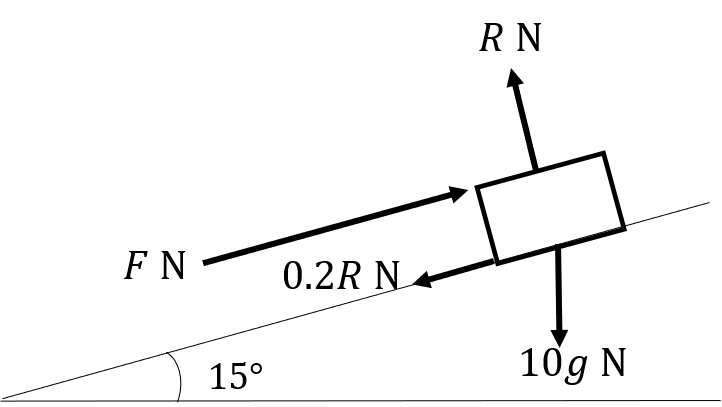
A crate of mass 10 kg is pushed 6 metres up a rough ramp inclined at 15° to the horizontal by a force?F?N.? The crate moves with constant speed along the line of greatest slope. The coefficient of friction between the container and the ramp is 0.2 as shown in the diagram below.
Exam Tip
Read the question carefully to decide if the point of application of the force is acting in the direction of motion. Always draw a diagram or add to the diagram given in the question. Check to see if there are any resisting forces.
轉載自savemyexams
以上就是關于【CIE A Level Maths: Mechanics復習筆記4.1.1 Work】的解答,如需了解學校/賽事/課程動態(tài),可至翰林教育官網(wǎng)獲取更多信息。
往期文章閱讀推薦:
2026 ALEVEL 夏考A率出爐!愛德思vs牛津AQA,哪些科目真的“好出分”?
2026 AMC10/12美國數(shù)學競賽新賽季!【翰林教育 × 清華大學出版社】獨家教材全面發(fā)售!


翰林AMC8視頻課重磅上線!

國際競賽真題資源免費領取






