CIE A Level Physics復習筆記4.2.5 Archimedes Principle

Archimedes' Principle
- Archimedes’ principle states that an object submerged in a fluid at rest has?an upward buoyancy force (upthrust) equal to the weight of the fluid displaced by the object
- The object sinks until the weight of the fluid displaced is equal to its own weight
- Therefore the object floats when the magnitude of the upthrust equals the weight of the object
- The magnitude of upthrust can be calculated by:
 Upthrust equation
- Since?m?=?ρV, upthrust is equal to?F?=?mg?which is the weight of the fluid displaced by the object
- Archimedes’ Principle explains how ships float:
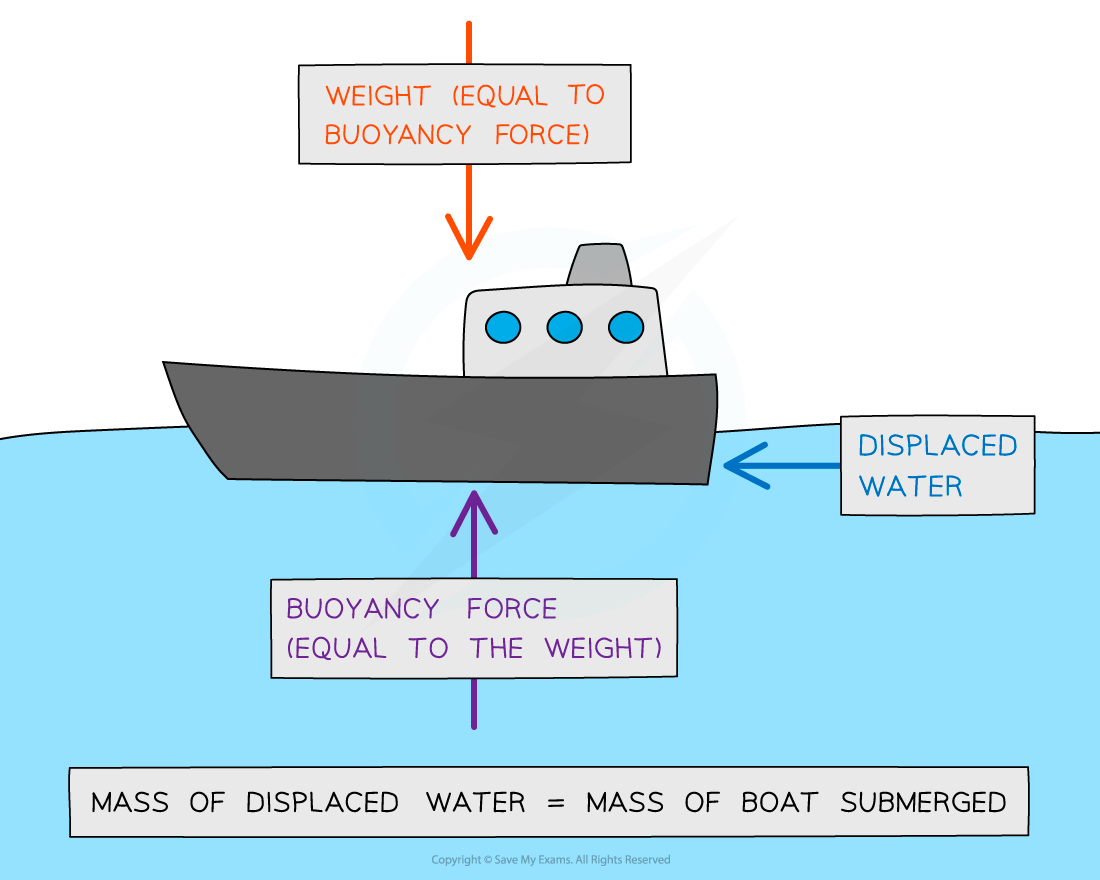 Boats float because they displace an amount of water that is equal to their weight
Worked Example
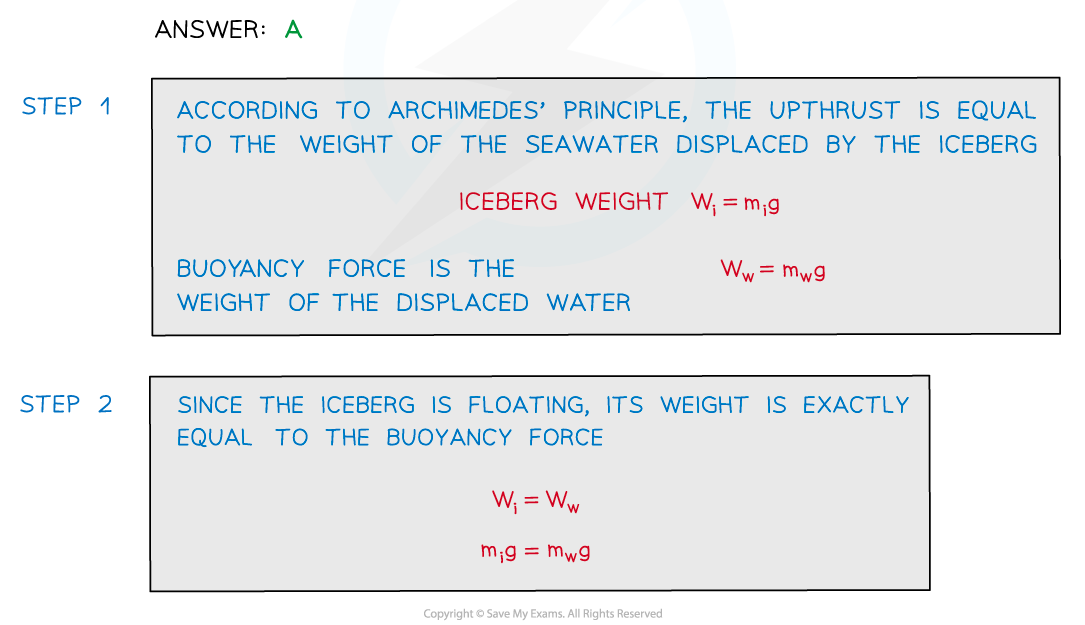
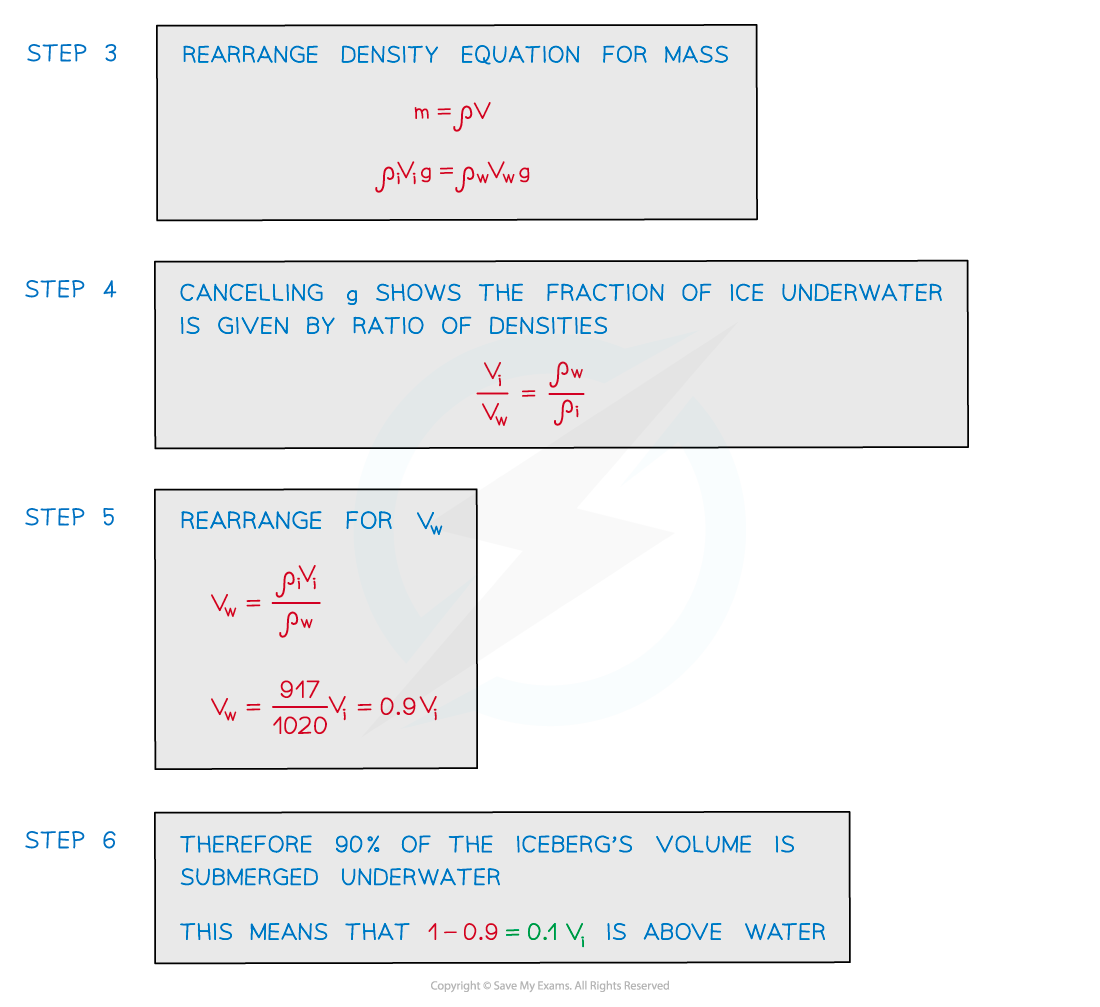
Icebergs typically float with a large volume of ice beneath the water. Ice has a density of 917 kg m-3?and a volume of Vi.The density of seawater is 1020 kg m-3.What fraction of the iceberg is above the water?
A.?0.10 Vi? ? ? ? ??B.?0.90 Vi? ? ? ? ??C.?0.97 Vi? ? ? ? ??D.?0.20 Vi
轉載自savemyexams
以上就是關于【CIE A Level Physics復習筆記4.2.5 Archimedes Principle】的解答,如需了解學校/賽事/課程動態,可至翰林教育官網獲取更多信息。
往期文章閱讀推薦:
MIT官方發布【2026年夏季推薦閱讀書單】!橫跨科學/人文/經濟...


翰林AMC8視頻課重磅上線!

國際競賽真題資源免費領取






