CIE A Level Chemistry復習筆記7.5.6 Production & Reactions of Acyl Chlorides

Production of Acyl Chlorides
- Due to the increased reactivity of acyl chlorides compared to carboxylic acids, they are often used as?starting compounds?in organic reactions
- Acyl chlorides are compounds that contain an -COCl functional group and can be prepared from the reaction of carboxylic acids with:
- Solid?phosphorus(V) chloride (PCl5)
- Liquid?phosphorus(III) chloride (PCl3) and heat
- Liquid?sulfur dichloride oxide (SOCl2)
- Propanoyl chloride can this way be prepared from propanoic acid using the reactions above
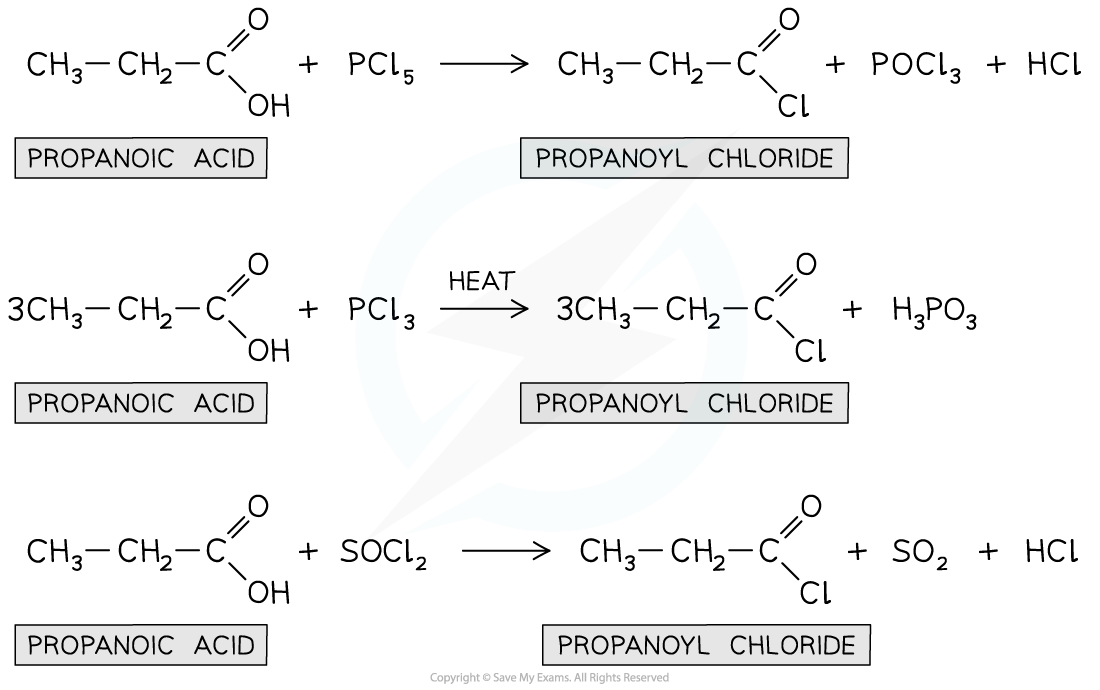
Formation of acyl chlorides from their corresponding carboxylic acids
Reactions of Acyl Chlorides
- Acyl chlorides?are?reactive?organic compounds that undergo many reactions such as?addition-elimination reactions
- In addition-elimination reactions, the?addition?of a small molecule across the C=O bond takes place followed by?elimination?of a small molecule
- Examples of these addition-elimination reactions include:
- Hydrolysis
- Reaction with alcohols and phenols to form?esters
- Reaction with ammonia and amines to form?amides
Hydrolysis
- The?hydrolysis?of acyl chlorides results in the formation of a?carboxylic acid?and?HCl?molecule
- This is an?addition-elimination?reaction
- A?water molecule?adds across the C=O bond
- A hydrochloric acid (HCl) molecule is?eliminated
- An example is the hydrolysis of propanoyl chloride to form propanoic acid and HCl
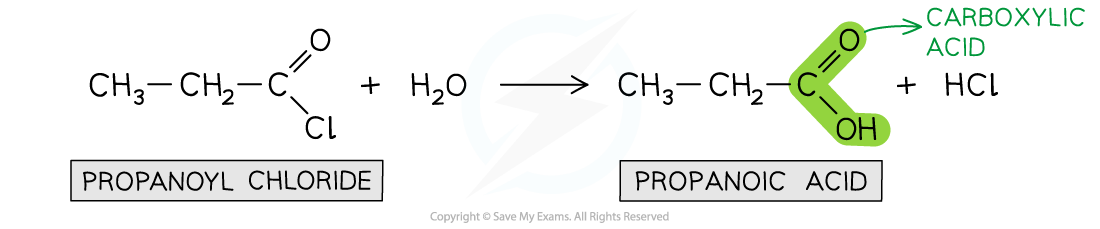
Acyl chlorides are hydrolysed to carboxylic acids
Formation of esters
- Acyl chlorides can react with?alcohols?and?phenols?to form esters
- The reaction with phenols requires?heat?and a?base
- Esters can also be formed from the reaction of?carboxylic acids?with phenol and alcohols however, this is a?slower?reaction as carboxylic acids are less reactive and the reaction does?not go to completion?(so less product is formed)
- Acyl chlorides are therefore more useful in the synthesis of esters
- The esterification of acyl chlorides is also an?addition-elimination?reaction
- The alcohol or phenol adds across the C=O bond
- A HCl molecule is eliminated
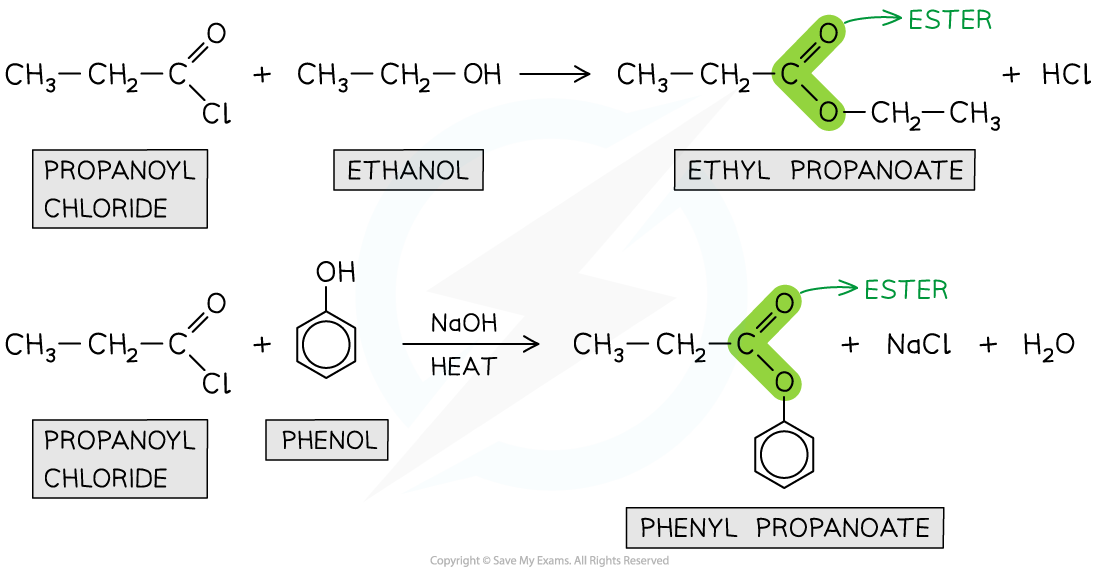
Acyl chlorides undergo esterification with alcohols and phenols to form esters
Formation of amides
- Acyl chlorides can form?amides?from their?condensation reaction?with?amines?and?ammonia
- The nitrogen atom in ammonia and amines has a lone pair of electrons which can be used to attack the carbonyl carbon atom in the acyl chlorides
- The product is a?non-substituted?amide (when reacted with ammonia) or?substituted?amide (when reacted with primary and secondary amines)
- This is also an example of an?addition-elimination?reaction as
- The amine or ammonia molecule adds across the C=O bond
- A HCl molecule is eliminated
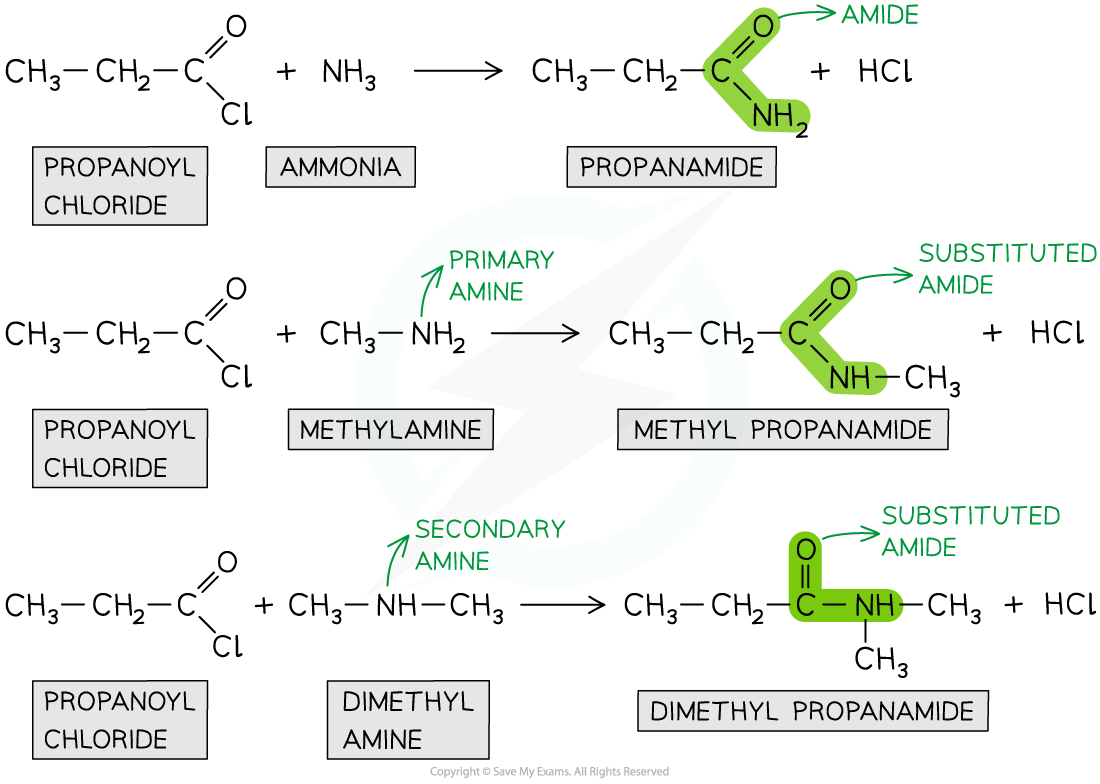
Acyl chlorides undergo condensation reactions with ammonia and amines to form amides
轉載自savemyexams
以上就是關于【CIE A Level Chemistry復習筆記7.5.6 Production & Reactions of Acyl Chlorides】的解答,如需了解學校/賽事/課程動態,可至翰林教育官網獲取更多信息。
往期文章閱讀推薦:
2026 ALEVEL 夏考A率出爐!愛德思vs牛津AQA,哪些科目真的“好出分”?
2026 AMC10/12美國數學競賽新賽季!【翰林教育 × 清華大學出版社】獨家教材全面發售!


翰林AMC8視頻課重磅上線!

國際競賽真題資源免費領取






