CIE A Level Chemistry復習筆記2.4.2 Nitrogen Oxides

Oxides of Nitrogen
Natural occurrence of nitrogen oxides
- Due to its lack of reactivity, only under extreme conditions will nitrogen react with oxygen to form?gaseous nitrogen oxides
- An example of these extreme conditions is?lightning?which can trigger the formation of nitrogen(II) and nitrogen(IV) oxides (NO and NO2?respectively)
- The chemical equations for these reactions are:
N2(g) + O2(g) → 2NO(g)
N2(g) + 2O2(g) → 2NO2(g)
Man-made occurrence of nitrogen oxides
- In the engine of a car, a mixture of air and fuel is compressed and ignited by a spark
- Air consists of 78% of nitrogen and 21% of oxygen
- Under the high pressure and temperature inside a car engine, nitrogen can react with oxygen to form nitrogen oxides
- These nitrogen oxides are released into the?atmosphere?through the car’s?exhaust?fumes
Catalytic removal of nitrogen oxides
- The nitrogen oxides released through cars’ exhaust fumes?pollute?the atmosphere
- Many car exhaust systems are therefore fitted with?catalytic converters?to reduce the?pollutants?from motor vehicles
- The nitrogen oxides are?reduced?on the surface of the?hot catalyst?(e.g. platinum) to form the unreactive and harmless nitrogen gas which is then released from the vehicle’s exhaust pipe into the atmosphere
- The chemical reaction for the reduction of nitrogen oxide to nitrogen gas by the catalyst is as follows:
2CO(g) + 2NO(g) → 2CO2(g) + N2(g)
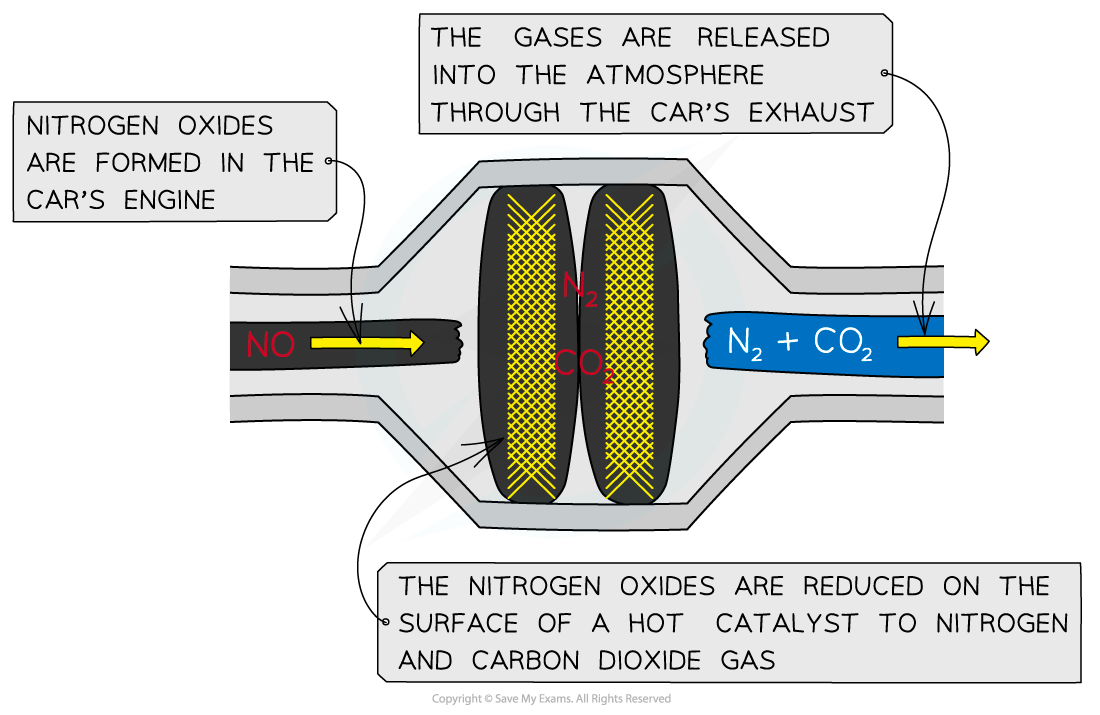
A catalytic converter helps reduce the pollutants from motor vehicles
Oxides of Nitrogen & Photochemical Smog
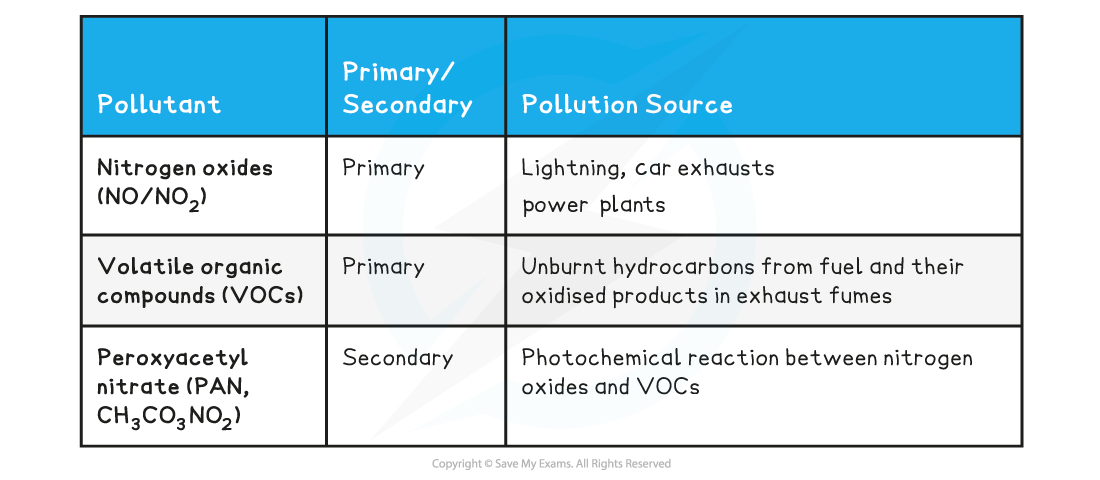
- Nitrogen oxides are examples of?primary pollutants?because they are given off?directly?into the air from the source of pollution
- Examples of pollution sources are car exhausts and power plants
- Nitrogen oxides are extra dangerous as they can react with substances in the air to make?secondary pollutants
- These are pollutants that are not given off directly into the air from human activity
- Exhaust fumes contain another primary pollutant called?volatile organic compound?(VOCs)
- These are unburnt hydrocarbons from fuel and their oxidised products
- VOCs react with nitrogen oxides in air to form?peroxyacetyl?nitrate?(PAN, CH3CO3NO2)
- Sunlight provides the energy needed to start off the reactions of VOCs and nitrogen oxides in air, so they are also called?photochemical reactions
- PAN is one of the harmful pollutants found in?photochemical smog
- ‘Smog’ is derived from ‘smoke’ and ‘fog’
- PAN affects the lungs and eyes and in high concentrations plant-life
Primary & secondary pollutant types & their pollution source table
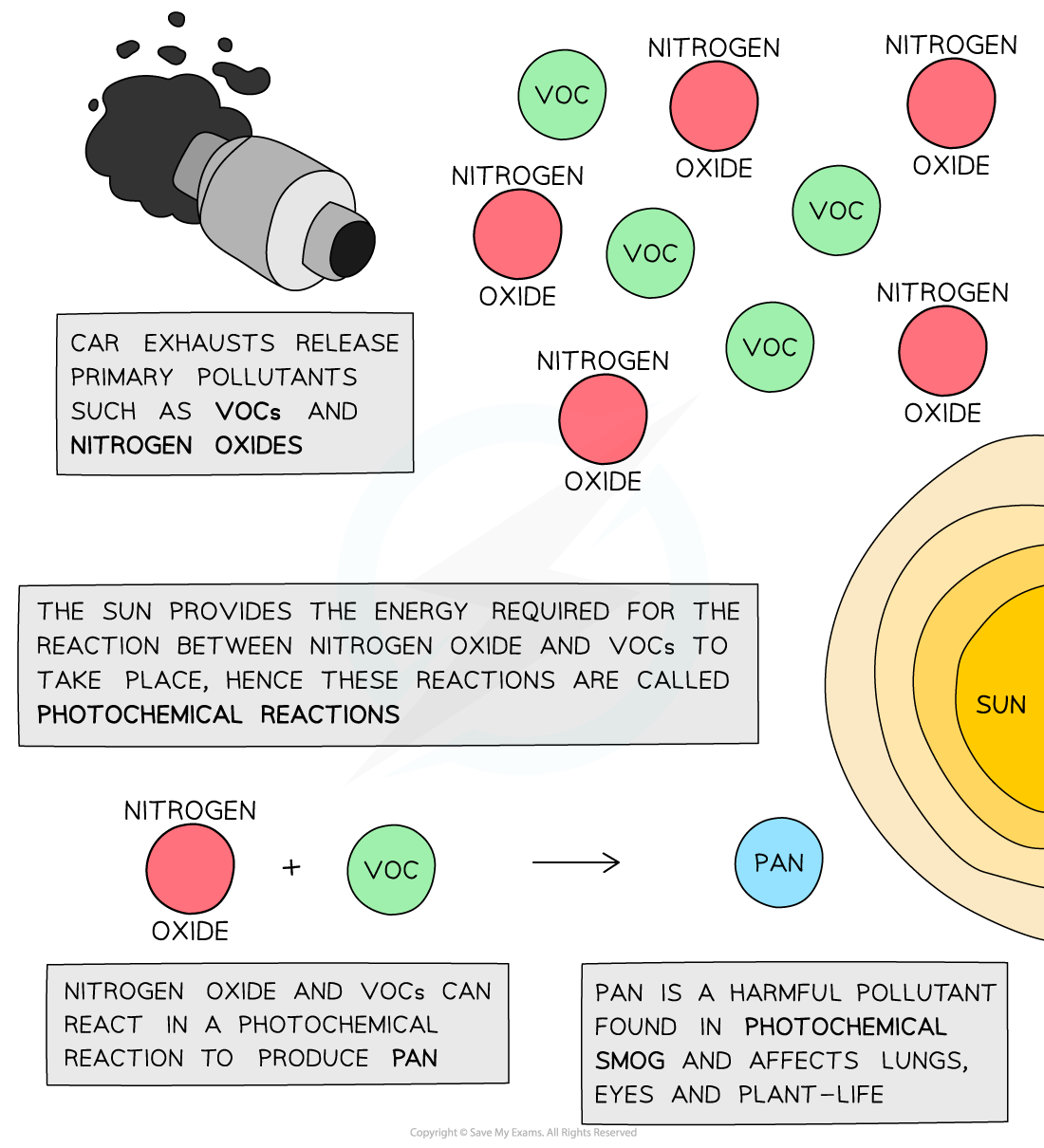
The diagram shows the formation of PAN from the photochemical reaction between VOCs and nitrogen oxide
Oxides of Nitrogen & Acid Rain
Formation of acid rain by nitrogen oxides
- As mentioned earlier, lightning strikes trigger the formation of nitrogen(II) and nitrogen (IV) oxides in air:
2NO(g) + O2(g) ? 2NO2(g)
- The air also contains oxygen and tiny droplets of water that make up clouds
- The nitrogen(IV) oxide (NO2) dissolves and reacts in water with oxygen as follows:
NO2(aq) + H2O(l) + 1?O2(g) → 2HNO3(aq)
- When the clouds rise, the temperature decreases, and the droplets get larger
- When the droplet containing dilute nitric acid are heavy enough, they will fall down as?acid rain
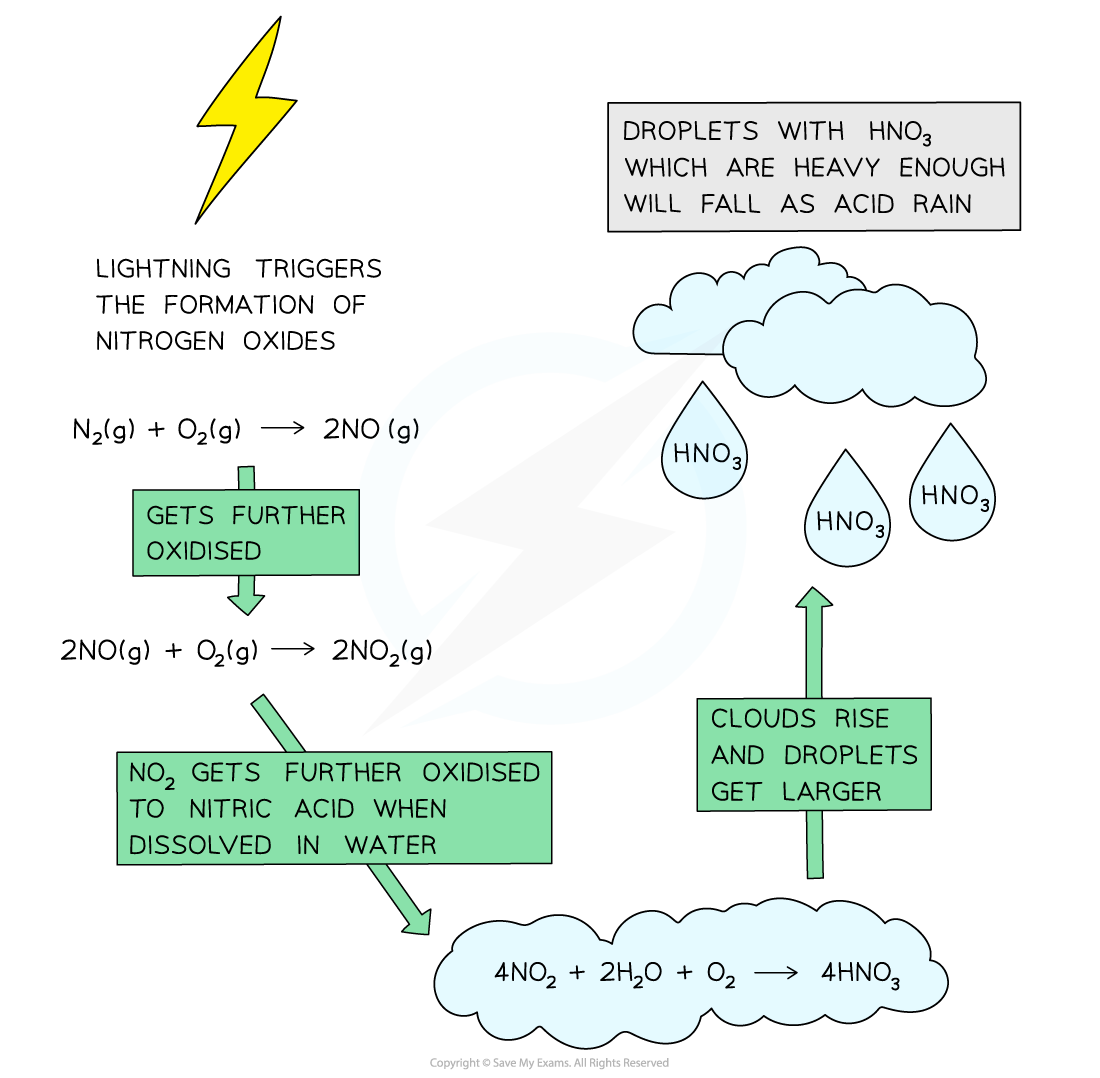
The diagram shows the formation of acid rain by the oxidation of nitrogen(IV) oxide
Nitrogen oxide as a catalyst
- Acid rain also contains?dilute sulfuric acid?(H2SO4)
- Sulfur(IV) oxide (SO2) is another pollutant found in the atmosphere
- When SO2?is oxidised, it forms SO3?which reacts with rainwater to form dilute sulfuric acid as follows:
SO3(g) + H2O(l) → H2SO4(aq)
- Nitrogen oxides can?directly?cause acid rain but can also act as?catalysts?in the formation of acid rain
- NO2?catalyses the oxidation of SO2to SO3:
NO2(g) + SO2(g) → SO3(g) + NO(g)
-
- The formed NO gets oxidised to regenerate NO2:
NO(g) + ? O2(g) → NO2(g)
- The regenerated NO2?molecule can get again oxidise another SO2?molecule to SO3?which will react with rainwater to form H2SO4
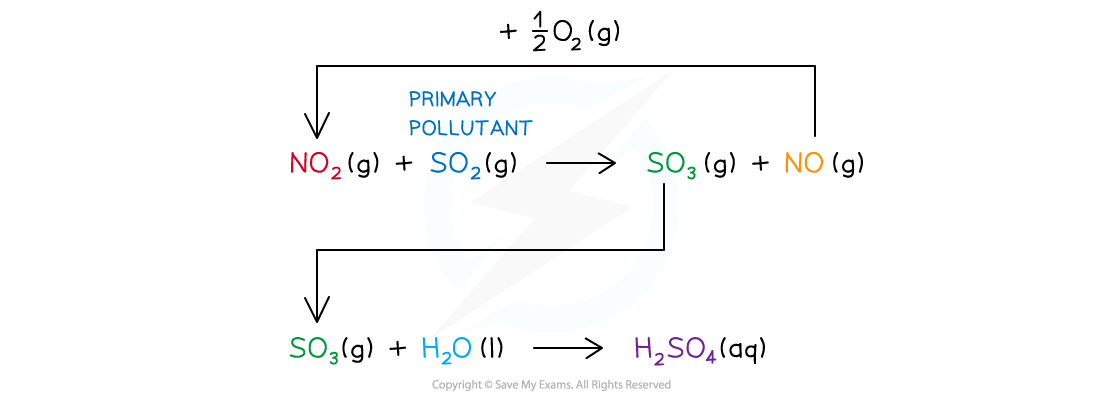
The formation of dilute sulfuric acid is catalysed by the nitrogen oxides
轉載自savemyexams
以上就是關于【CIE A Level Chemistry復習筆記2.4.2 Nitrogen Oxides】的解答,如需了解學校/賽事/課程動態,可至翰林教育官網獲取更多信息。
往期文章閱讀推薦:
2026 ALEVEL 夏考A率出爐!愛德思vs牛津AQA,哪些科目真的“好出分”?
2026 AMC10/12美國數學競賽新賽季!【翰林教育 × 清華大學出版社】獨家教材全面發售!


翰林AMC8視頻課重磅上線!

國際競賽真題資源免費領取






