CIE A Level Chemistry復習筆記1.3.2 Electronegativity Trends

Electronegativity: Trends
- Electronegativity?varies across?Periods?and down the Groups of the Periodic Table
Down a group
- There is a?decrease?in?electronegativity?going down the Group
- The?nuclear charge increases?as more protons are being added to the nucleus
- However, each element has an extra filled electron shell, which increases?shielding
- The addition of the extra shells increases the distance between the nucleus and the outer electrons resulting in?larger?atomic radii
- Overall, there is decrease in attraction between the nucleus and outer bonding electrons
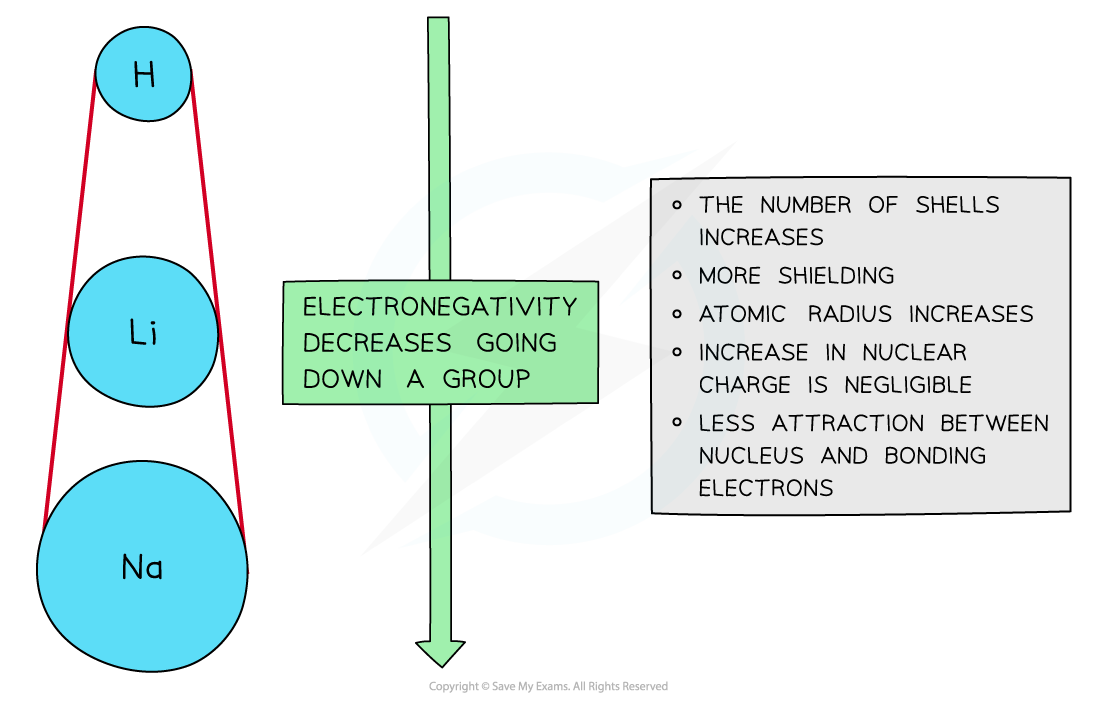
Electronegativity decreases going down the groups of the periodic table
Across a period
- Electronegativity?increases?across a Period
- The?nuclear charge increases?with the addition of protons to the nucleus
- Shielding?remains reasonably the?same?across the Period as no new shells are being added to the atoms
- The nucleus has an increasingly strong attraction for the bonding pair of electrons of atoms across the Period of the Periodic Table
- This results in?smaller atomic radii
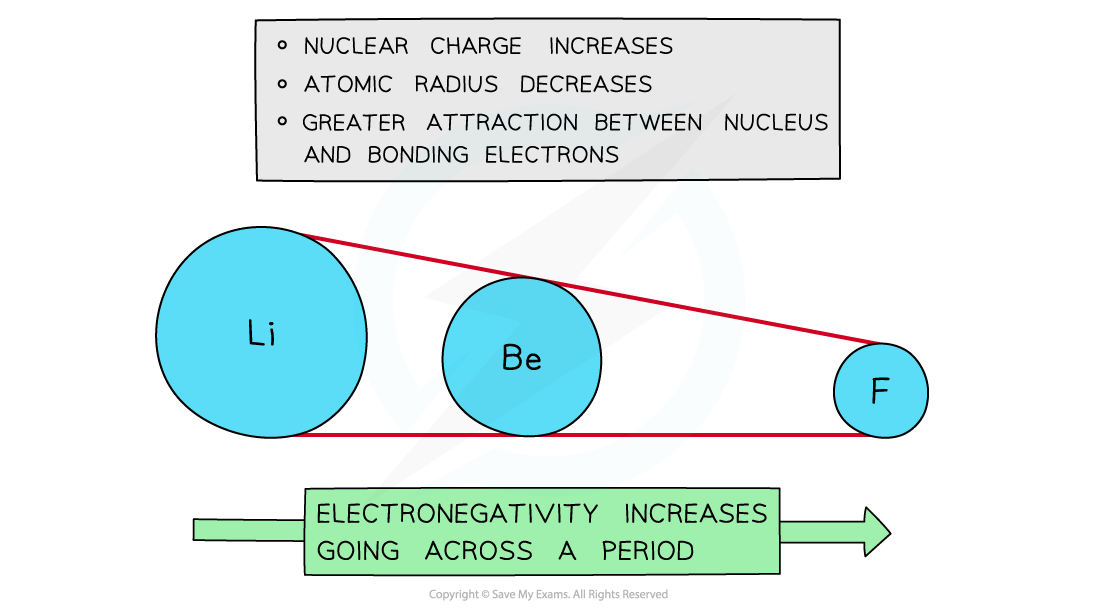
Electronegativity increases going across the periods of the Periodic Table
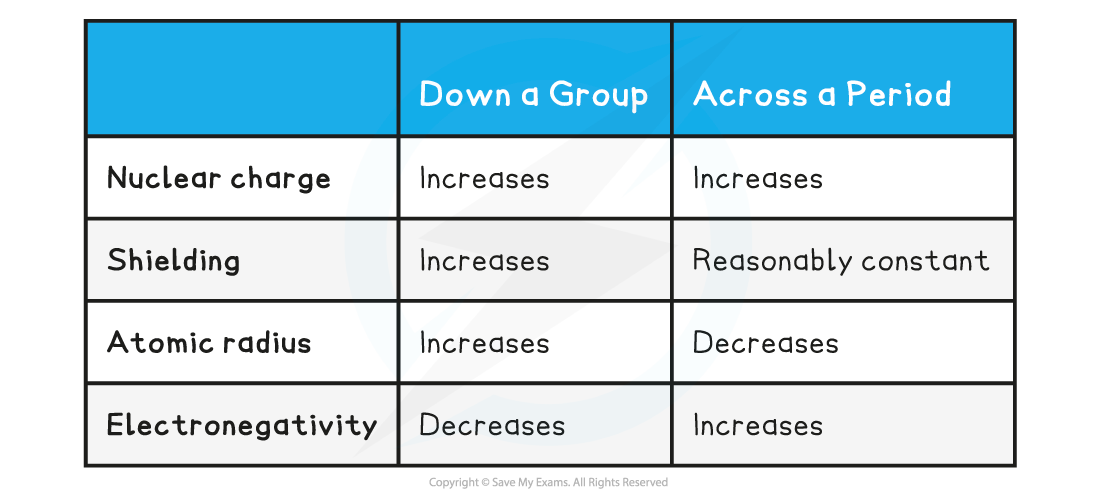
Trends down a group & across a period table
Exam Tip
Remember the general trend is an?increase?in electronegativity towards the top right of the Periodic Table.Fluorine is the most electronegative element in the periodic table.
轉載自savemyexams
以上就是關于【CIE A Level Chemistry復習筆記1.3.2 Electronegativity Trends】的解答,如需了解學校/賽事/課程動態,可至翰林教育官網獲取更多信息。
往期文章閱讀推薦:
MIT官方發布【2026年夏季推薦閱讀書單】!橫跨科學/人文/經濟...


翰林AMC8視頻課重磅上線!

國際競賽真題資源免費領取






