CIE A Level Biology復(fù)習(xí)筆記15.1.3 Neurones

Neurones
- Neurones have a?long fibre?known as an?axon
- The axon is?insulated?by a?fatty sheath?with small uninsulated sections along its length (called?nodes of Ranvier)
- The sheath is made of?myelin, a substance made by specialised cells known as?Schwann cells
- Myelin is made when Schwann cells wrap themselves around the axon along its length
- This means that the electrical impulse does not travel down the whole axon, but jumps from one node to the next
- This means that less time is wasted transferring the impulse from one cell to another
- Their?cell bodies?contain many extensions called?dendrites
- This means they can?connect?to?many other neurones?and receive?impulses?from them, forming a?network?for easy?communication
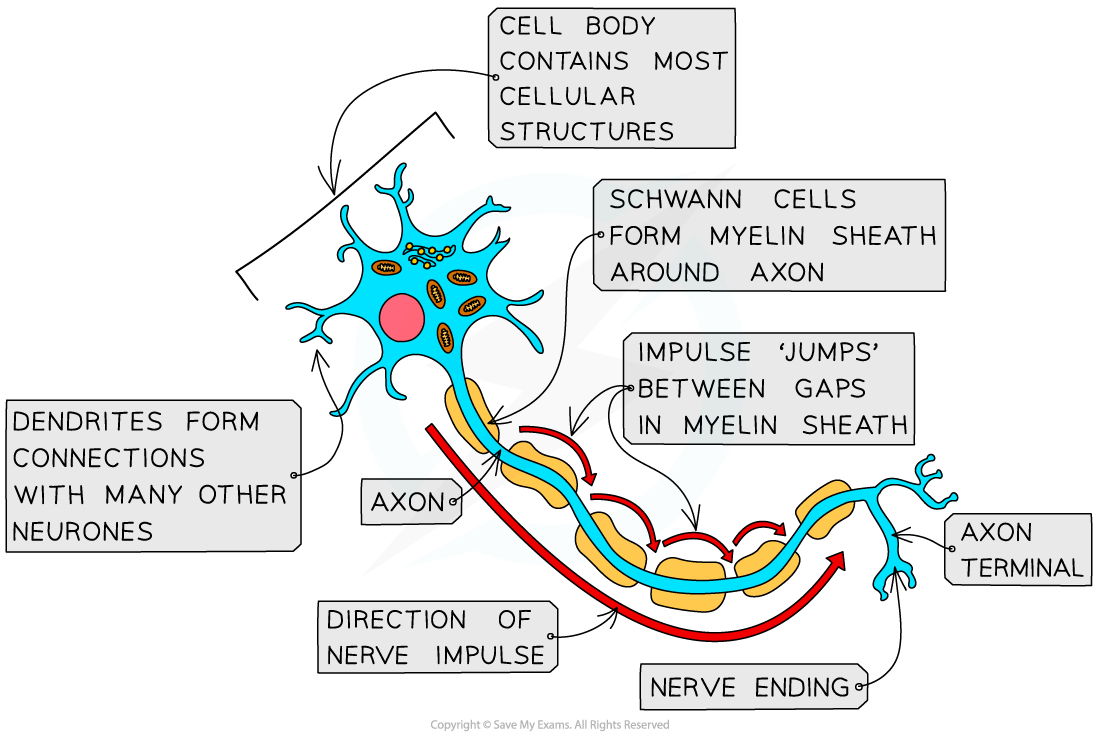
An example of a neurone
- There are?three main types?of neurone:?sensory, relay and motor
- Sensory?neurones carry impulses from?receptors?to the?CNS?(brain or spinal cord)
- Relay?(intermediate) neurones are found entirely within the CNS and?connect?sensory?and?motor?neurones
- Motor?neurones carry impulses from the?CNS?to?effectors?(muscles or glands)
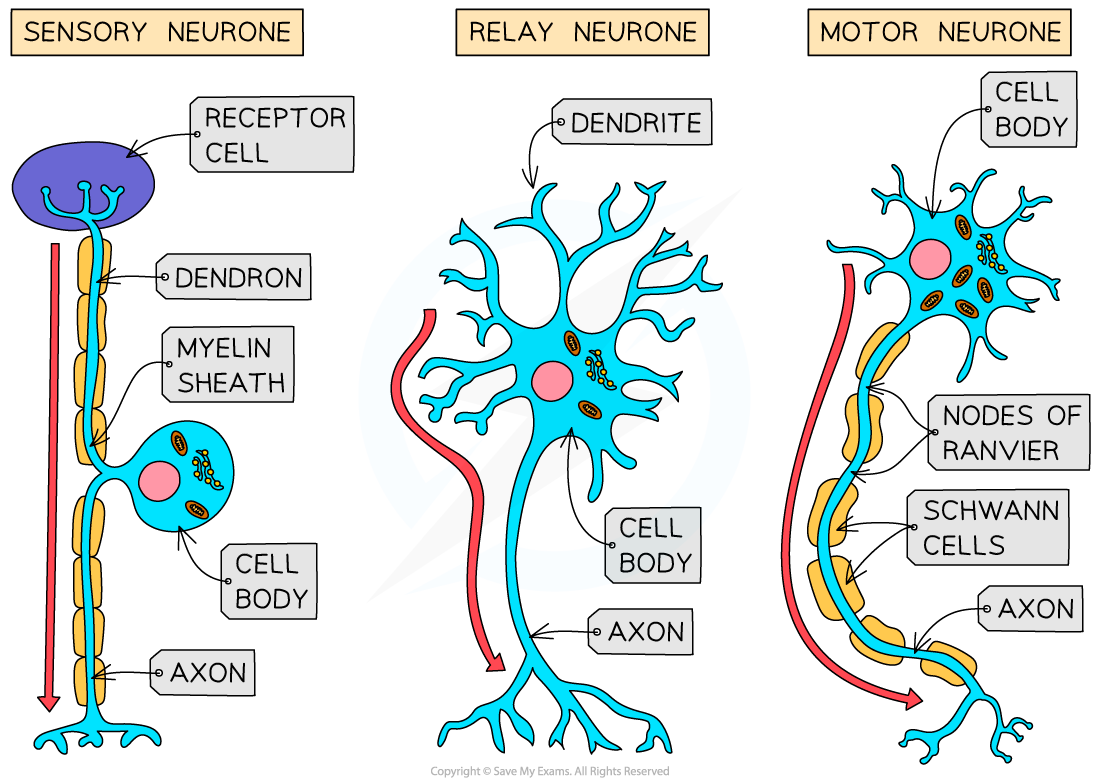
The three types of neurone – the red line shows the direction of impulses. Note that axons always carry nerve impulses away from the cell body
- Each type of neurone has a?slightly different structure
- Motor neurones?have:
- A large cell body at one end, that lies within the spinal cord or brain
- A nucleus that is always in its cell body
- Many highly-branched dendrites that extend from the cell body, providing a large surface area for the axon terminals of other neurones
- Sensory neurones?have the same basic structure as motor neurones, but have:
- A cell body that branches off in the middle of the cell - it may be near the source of stimuli or in a swelling of a spinal nerve known as a ganglion
Reflex arc
- Sensory?neurones,?relay?(intermediate) neurones and?motor?neurones work together to bring about a?response?to a?stimulus
- A?reflex arc?is a?pathway?along which impulses are transmitted from a receptor to an effector?without involving ‘conscious’ regions of the brain
- As it does not involve the brain, a reflex response is?quicker?than any other type of nervous response
- Examples of simple reflex actions that are coordinated by these pathways are:
- Removing the hand rapidly from a sharp or hot object
- Blinking
- Focusing of the eye on an object
- Controlling how much light enters the eye
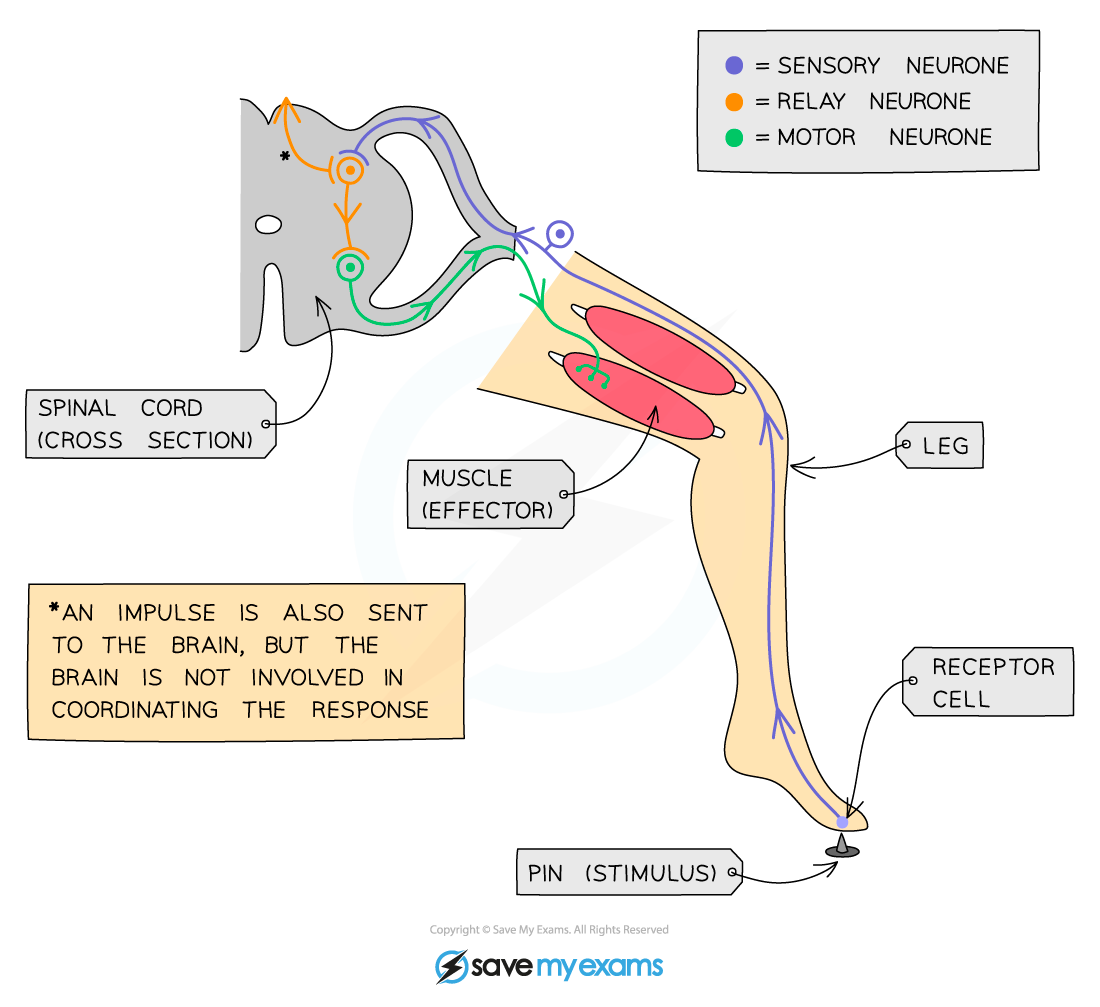
How sensory neurones, intermediate (relay) neurones and motor neurones work together to carry out a reflex action
- In the example above:
- A pin (the?stimulus) is detected by a pain?receptor?in the skin
- The?sensory?neurone?sends electrical?impulses?to the spinal cord (the?coordinator)
- Electrical impulses are passed on to?relay?neurone?in the spinal cord
- The relay neurone connects to the?motor neurone?and passes the impulses on
- The motor neurone carries the impulses to the muscle in the leg (the?effector)
- The impulses cause the muscle to contract and pull the leg up and away from the sharp object (the?response)
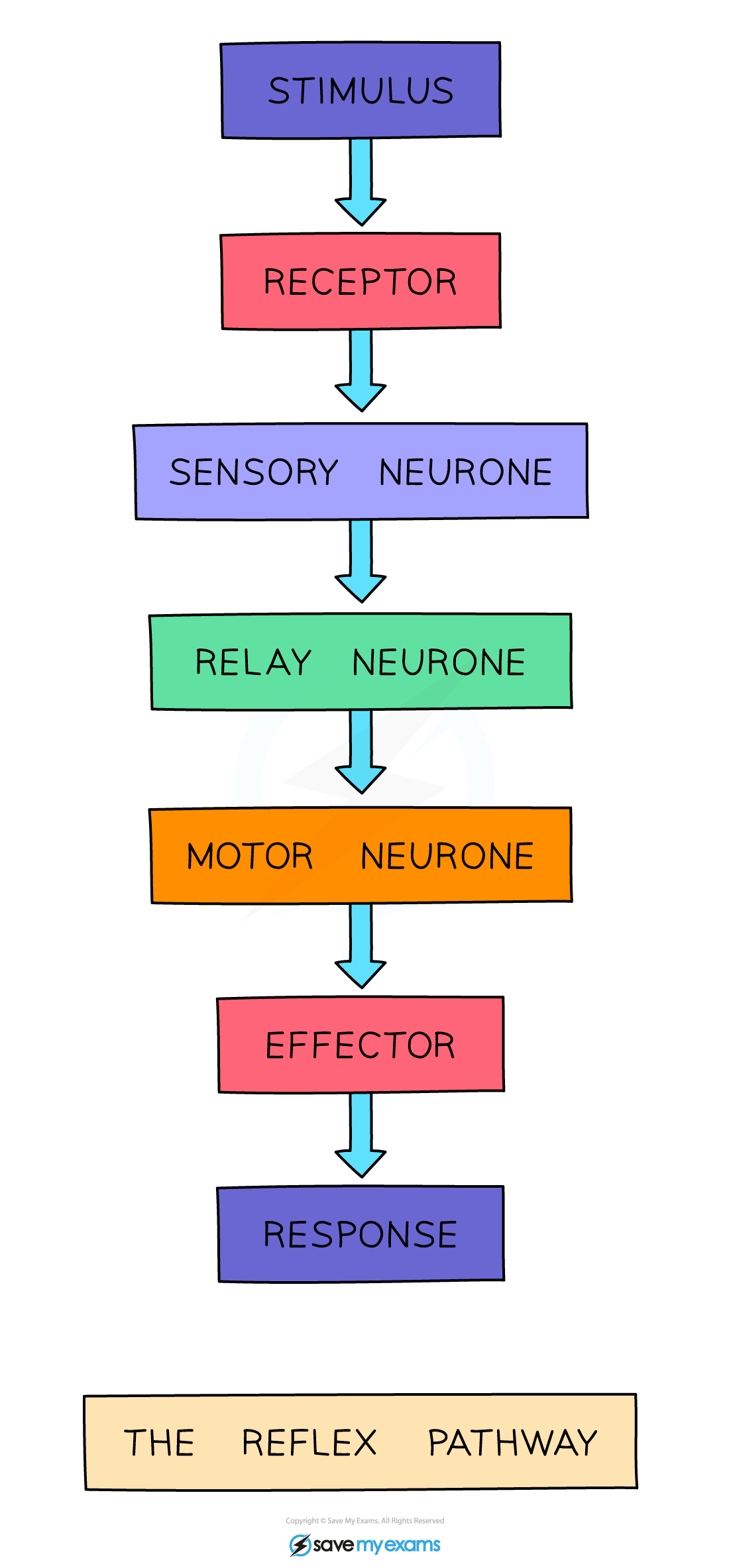
The pathway of a reflex arc
Exam Tip
You may be asked to identify the different types of neurones in a diagram. It can be helpful to memorise the key differences between them – such as the location and size of the cell body.
轉(zhuǎn)載自savemyexams
以上就是關(guān)于【CIE A Level Biology復(fù)習(xí)筆記15.1.3 Neurones】的解答,如需了解學(xué)校/賽事/課程動(dòng)態(tài),可至翰林教育官網(wǎng)獲取更多信息。
往期文章閱讀推薦:
斯坦福大學(xué)官方推薦書(shū)單!名校學(xué)霸們暑假都在讀什么?
MIT官方發(fā)布【2026年夏季推薦閱讀書(shū)單】!橫跨科學(xué)/人文/經(jīng)濟(jì)...


翰林AMC8視頻課重磅上線!

國(guó)際競(jìng)賽真題資源免費(fèi)領(lǐng)取






