CIE A Level Biology復習筆記6.1.1 Nucleotides

Nucleotide Structure
- Nucleic acids?such as?DNA?(deoxyribonucleic acid) and?RNA?(ribonucleic acid) are?macromolecules?(giant molecules)
- Like proteins (polypeptides) and carbohydrates (polysaccharides), these nucleic acids are?polymers?(‘poly’ meaning ‘many’)
- This means they are made up of many similar, smaller molecules (known as?subunits?or?monomers) joined into a long chain
- The subunits that make up DNA and RNA are known as?nucleotides
- Therefore DNA and RNA can also be known as?polynucleotides
Nucleotides
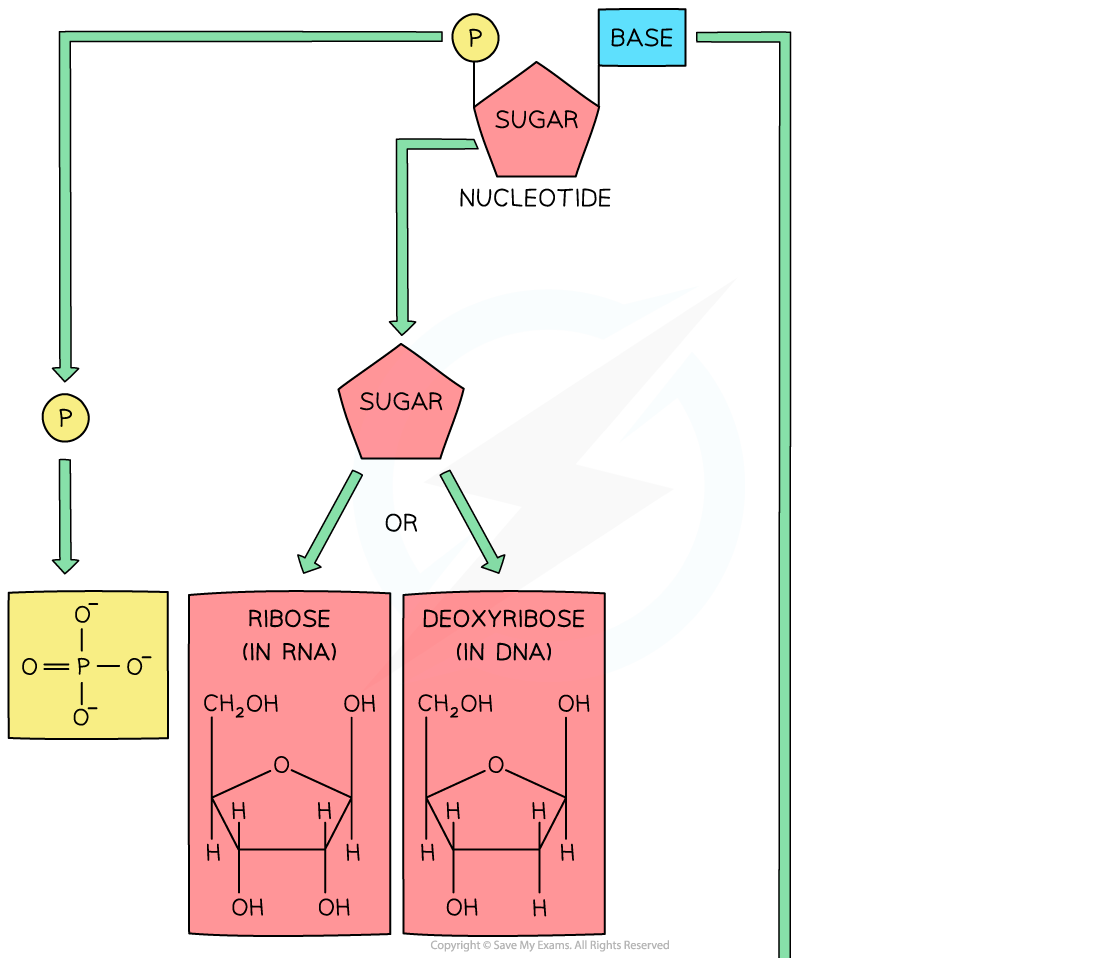
- Nucleotides are made up of three components:
- A?nitrogen-containing base?(also known as a nitrogenous base)
- A?pentose sugar?(containing 5 carbon atoms)
- A?phosphate group
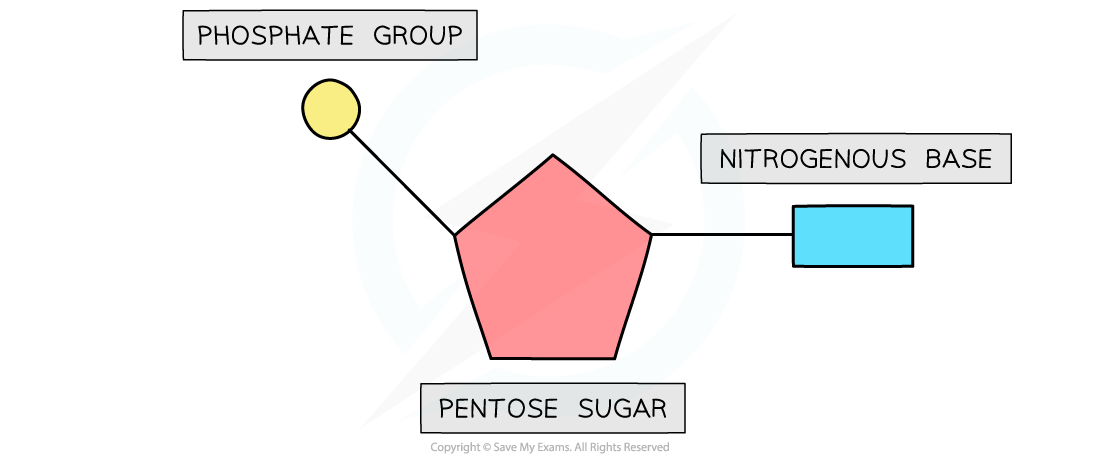
The basic structure of a nucleotide
Nucleotide structure table
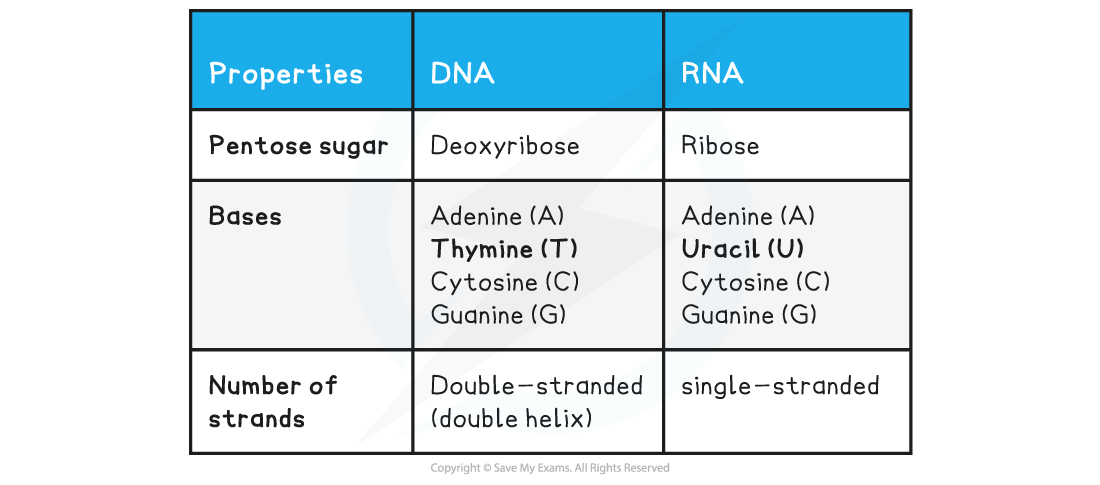
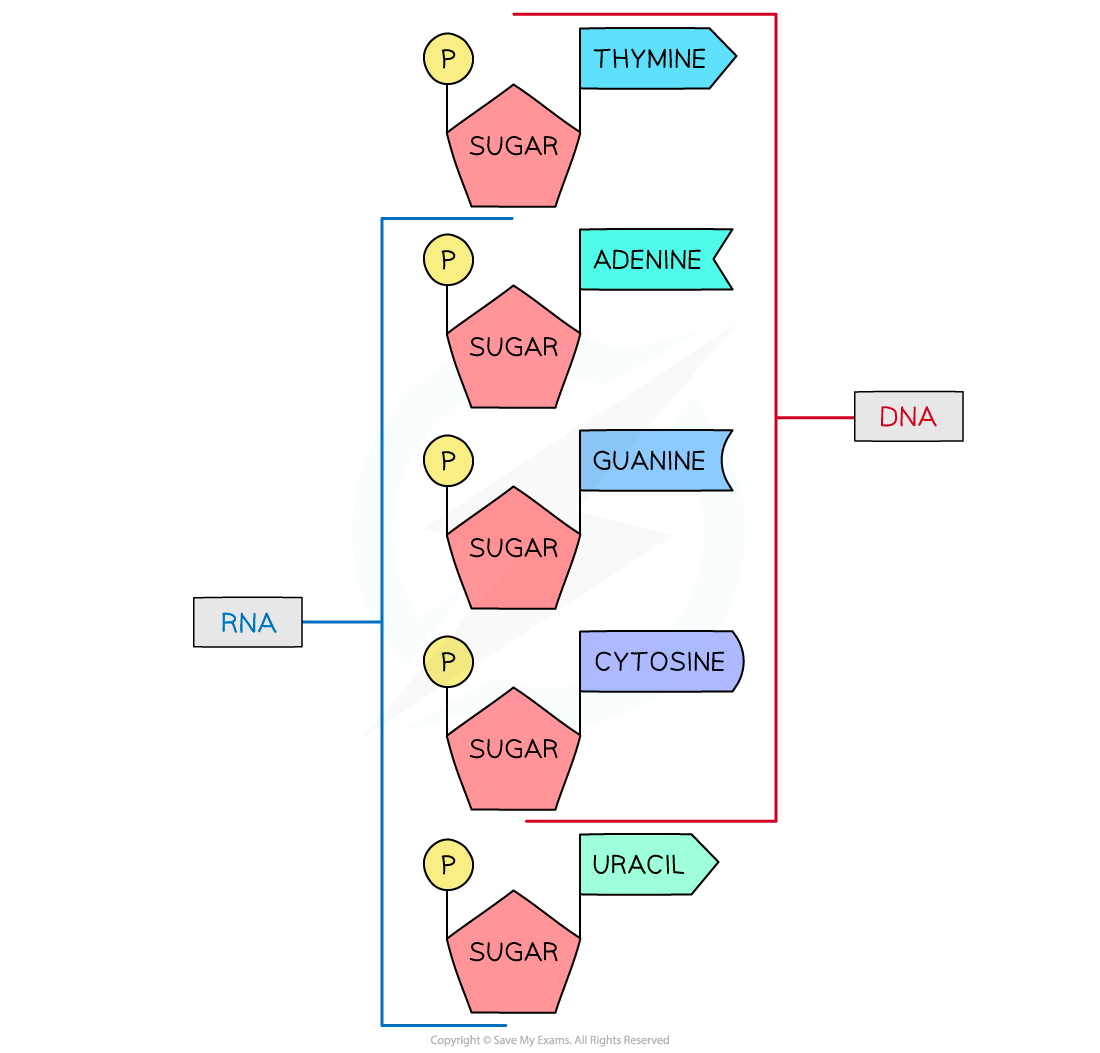
The nucleotides found in DNA and RNA
ATP
- Adenosine triphosphate?(ATP) is the energy-carrying molecule that provides the energy to drive many processes inside living cells
- ATP is?another type of nucleic acid?and hence it is structurally very similar to the nucleotides that make up DNA and RNA
- It is a?phosphorylated?nucleotide
- Adenosine (a nucleoside) can be combined with one, two or three phosphate groups
- One phosphate group =?adenosine monophosphate?(AMP)
- Two phosphate groups =?adenosine diphosphate?(ADP)
- Three phosphate groups =?adenosine triphosphate?(ATP)
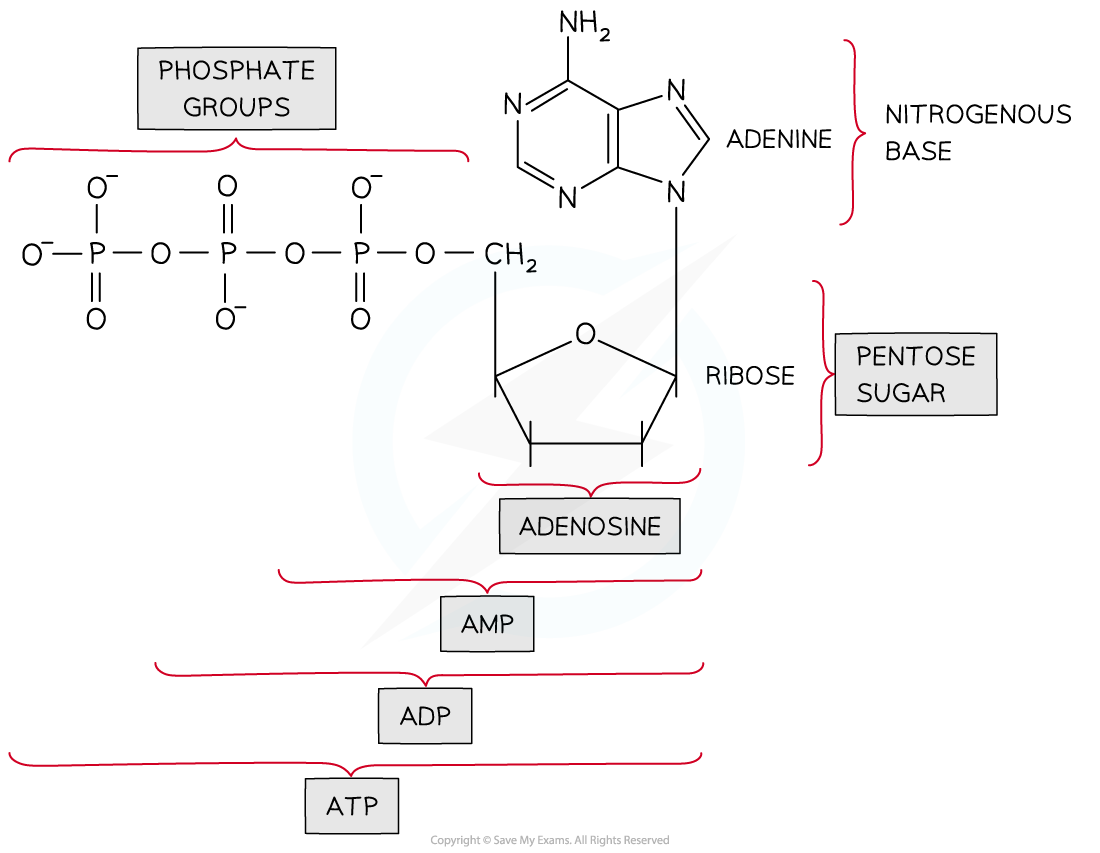
The structure of AMP, ADP and ATP
Exam Tip
Don’t worry – you are not expected to know the structural formulae for the nucleotides that make up DNA and RNA or AMP, ADP and ATP (as in the diagram above)! You just need to learn the different groups that they are made up of (phosphate groups, pentose sugars and nitrogenous bases).Remember that?adenine?is a?nitrogenous base?whereas?adenosine?is a?nucleoside?(a base – adenine, attached to a pentose sugar).
Purines & Pyrimidines
- The?nitrogenous base?molecules that are found in the nucleotides of DNA (A, T, C, G) and RNA (A, U, C, G) occur in?two structural forms:?purines?and?pyrimidines
- The bases?adenine?and?guanine?are?purines?– they have a?double ring structure
- The bases?cytosine,?thymine?and?uracil?are?pyrimidines?– they have a?single ring structure
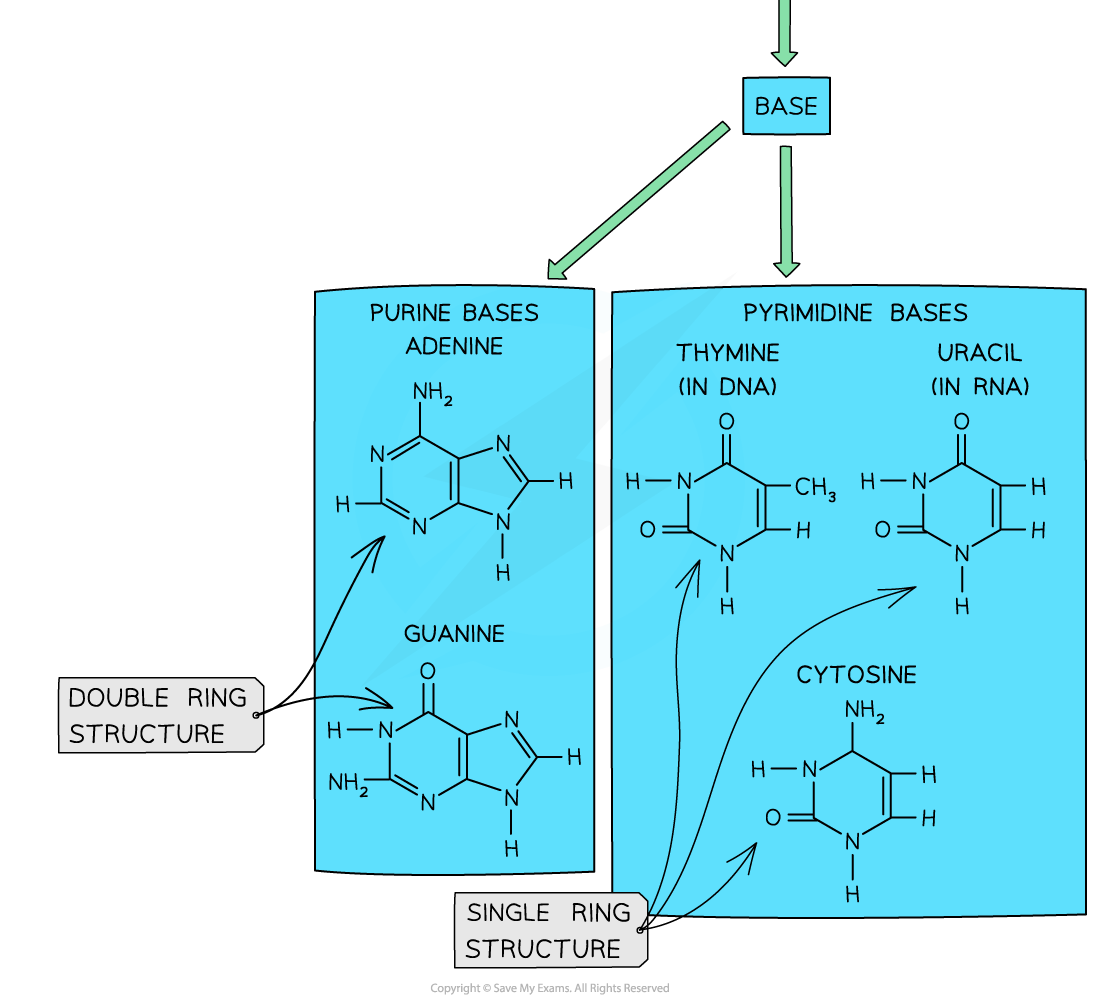
The molecular structures of purines and pyrimidines are slightly different
Exam Tip
You don’t need to know the structural formulae of these bases, just which are purines and which are pyrimidines.
轉載自savemyexams
以上就是關于【CIE A Level Biology復習筆記6.1.1 Nucleotides】的解答,如需了解學校/賽事/課程動態,可至翰林教育官網獲取更多信息。
往期文章閱讀推薦:
2026 ALEVEL 夏考A率出爐!愛德思vs牛津AQA,哪些科目真的“好出分”?
2026 AMC10/12美國數學競賽新賽季!【翰林教育 × 清華大學出版社】獨家教材全面發售!


翰林AMC8視頻課重磅上線!

國際競賽真題資源免費領取






