哈佛錄取率逐年降低,2022年最新錄取哈佛優(yōu)秀文書(shū)展示

近日,很多大學(xué)都陸續(xù)公布了2022年的新生錄取數(shù)據(jù),哈佛大學(xué)也不例外。與往年數(shù)據(jù)一對(duì)比,簡(jiǎn)直不敢相信自己的眼睛。一起來(lái)看看吧~
| 哈佛大學(xué)2026屆申請(qǐng)數(shù)據(jù) | |||
| 申請(qǐng)批次 | 申請(qǐng)數(shù)量 | 錄取學(xué)生 | 錄取率 |
| 常規(guī)申請(qǐng) | 51814 | 1214 | 2.3% |
| 早申 | 9406 | 740 | 7.9% |
| 合計(jì) | 61220 | 1954 | 3.2% |
| 哈佛大學(xué)近三年整體錄取率 | |||
| 年份 | 申請(qǐng)數(shù)量 | 錄取學(xué)生 | 錄取率 |
| 2026 | 61220 | 1954 | 3.19% |
| 2025 | 57435 | 1968 | 3.43% |
| 2024 | 40248 | 1980 | 4.92% |
2022年一共有61,220人申請(qǐng)了哈佛大學(xué),2021年申請(qǐng)人數(shù)為57435人,和去年相比增長(zhǎng)了7%。其中,早申人數(shù)9406人,錄取740人,錄取率為7.9%;常規(guī)申請(qǐng)51814人,錄取1214人,錄取率2.3%;waitlist轉(zhuǎn)正人數(shù)暫未公布。
雖然錄取人數(shù)一漲再漲,但是錄取率卻降低了。
2022年最終的錄取人數(shù)為1954人,錄取率為3.19%,相比于去年的錄取率為3.43%,也就是說(shuō)今年的3.19%是哈佛史上最低的錄取率。
近幾年哈佛大學(xué)錄取人數(shù)基本維持在1900人左右,今年錄取率降低主要是因?yàn)樯暾?qǐng)人激增導(dǎo)致的。
近三年哈佛大學(xué)整體錄取率,都低于5%,算是前十美國(guó)大學(xué)中,錄取率最低的學(xué)校之一了。其實(shí)錄取率暴跌幾乎都是疫情后發(fā)生的,原本哈佛大學(xué)的錄取率都有回升趨勢(shì)了,疫情發(fā)生后就直接全軍覆沒(méi)。
下圖是近20年,哈佛大學(xué)申請(qǐng)人數(shù)和錄取率走勢(shì):
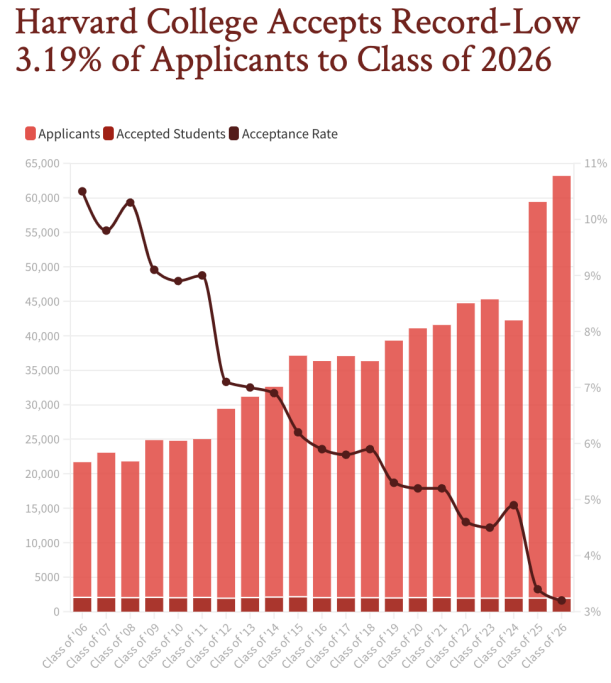
在這樣的大環(huán)境下,頂尖學(xué)霸們標(biāo)化、課外活動(dòng)履歷其實(shí)都已經(jīng)相差無(wú)幾了,優(yōu)秀的文書(shū)可能會(huì)幫助他們?nèi)〉靡庀氩坏降某煽?jī)。
2022錄取哈佛優(yōu)秀文書(shū)
哈佛也在近期公布了最新錄取哈佛的十篇優(yōu)秀文書(shū),申請(qǐng)2023年秋季入學(xué)的同學(xué)可以看一下。認(rèn)真體會(huì)下優(yōu)秀文書(shū)的語(yǔ)言風(fēng)格,寫(xiě)作邏輯,以及如何講好自己的故事。
通過(guò)這些文書(shū)的閱讀,大家可以看下招生官喜歡什么樣的學(xué)生,如何通過(guò)自己的經(jīng)歷,把這些特質(zhì)展示給招生官,優(yōu)秀的文書(shū)需要很長(zhǎng)時(shí)間的打磨和修改,因此,今年的申請(qǐng)者,可以提前著手文書(shū)的創(chuàng)作,還是那句話,申請(qǐng)名校,語(yǔ)言成績(jī)只是敲門(mén)磚,真正贏得招生官青睞的還是要看文書(shū)是否打動(dòng)他,活動(dòng)是否有足夠的含金量。
好文書(shū)的四個(gè)標(biāo)準(zhǔn)是:Correctness(準(zhǔn)確),Content(有料),Clarity (清晰),Creativity(新穎)。
準(zhǔn)確:用詞準(zhǔn)確,時(shí)態(tài)、拼寫(xiě)和標(biāo)點(diǎn)沒(méi)有錯(cuò)誤。這一標(biāo)準(zhǔn)用來(lái)評(píng)判學(xué)生是否具備基本英文寫(xiě)作能力。
有料:檢查文章是否圍繞學(xué)生自身來(lái)寫(xiě),是否真實(shí),是否展現(xiàn)學(xué)生個(gè)性、才能以及思想深度,能否引起反思。
清晰:文章簡(jiǎn)潔,觀點(diǎn)清晰明確;運(yùn)用恰當(dāng)?shù)拇朕o、詞匯、語(yǔ)法以及多樣精致的句式結(jié)構(gòu),這是即將步入大學(xué)的高中生應(yīng)該必備的。
新穎:能否吸引讀者的注意力?主題表達(dá)是否新穎?
一起來(lái)體會(huì)下:
范文1:Eda's Essay:十三年無(wú)家可歸
誠(chéng)實(shí)的、令人心碎、強(qiáng)大的,這是閱讀Eda的文章后首先想到的三個(gè)詞。Eda通過(guò)文書(shū)不僅僅是告訴招生官關(guān)于她的旅程,更強(qiáng)調(diào)了她的旅程是多么不典型。招生官被她能夠克服任何苦難的決心所吸引,這樣的品質(zhì)將會(huì)讓Eda成為一名強(qiáng)大申請(qǐng)者。
文書(shū)內(nèi)容展示
I sat on my parents’ bed weeping with my head resting on my knees. “Why did you have to do that to me? Why did you have to show me the house and then take it away from me?” Hopelessly, I found myself praying to God realizing it was my last resort.
For years, my family and I found ourselves moving from country to country in hopes of a better future. Factors, such as war and lack of academic opportunities, led my parents to pack their bags and embark on a new journey for our family around the world. Our arduous journey first began in Ku?ov?, Albania, then Athens, Greece, and then eventually, Boston, Massachusetts. Throughout those years, although my family always had a roof over our heads, I never had a place I could call “home.”
That night that I prayed to God, my mind raced back to the night I was clicking the delete button on my e-mails, but suddenly stopped when I came upon a listing of the house. It was September 22, 2007 —eight years exactly to the day that my family and I had moved to the United States. Instantly, I knew that it was fate that was bringing this house to me. I remembered visiting that yellow house the next day with my parents and falling in love with it. However, I also remembered the heartbreaking phone call I received later on that week saying that the owners had chosen another family’s offer.
A week after I had prayed to God, I had given up any hopes of my family buying the house. One day after school, I unlocked the door to our one-bedroom apartment and walked over to the telephone only to see it flashing a red light. I clicked PLAY and unexpectedly heard the voice of our real estate agent. “Eda!” she said joyfully. “The deal fell through with the other family—the house is yours! Call me back immediately to get started on the papers.” For a moment, I stood agape and kept replaying the words in my head. Was this really happening to me? Was my dream of owning a home finally coming true?
Over the month of November, I spent my days going to school and immediately rushing home to make phone calls. Although my parents were not fluent enough in English to communicate with the bank and real estate agent, I knew that I was not going to allow this obstacle to hinder my dream of helping to purchase a home for my family. Thus, unlike a typical thirteen-year-old girl’s conversations, my phone calls did not involve the mention of makeup, shoes, or boys. Instead, my conversations were composed of terms, such as “fixed-rate mortgages,” “preapprovals,” and “down payments.” Nevertheless, I was determined to help purchase this home after thirteen years of feeling embarrassed from living in a one-bedroom apartment. No longer was I going to experience feelings of humiliation from not being able to host sleepovers with my friends or from not being able to gossip with girls in school about who had the prettiest room color.
I had been homeless for the first thirteen years of my life. Although I will never be able to fully repay my parents for all of their sacrifices, the least I could do was to help find them a home that they could call their own—and that year, I did. To me, a home means more than the general conception of “four walls and a roof.” A home is a place filled with memories and laughter from my family. No matter where my future may lead me, I know that if at times I feel alone, I will always have a yellow home with my family inside waiting for me.
文書(shū)點(diǎn)評(píng)
誠(chéng)實(shí)、動(dòng)人、有力,這是閱讀 Eda 的文章后首先想到的三個(gè)詞。
通過(guò)誠(chéng)實(shí)的表達(dá)方式,Eda展示了她隨著時(shí)間的推移而真正的成長(zhǎng)和成熟。我們喜歡 Eda 的文章的地方在于它把個(gè)人脆弱性表達(dá)得令人耳目一新。例如,她以她在父母床上哭泣的場(chǎng)景開(kāi)始整篇文章,并將自己的不幸歸咎于他們。
在整篇文章中,她的個(gè)人聲音也很強(qiáng)烈。當(dāng)她談到愛(ài)上“那棟黃色的房子”時(shí),我們腦海中會(huì)自動(dòng)浮現(xiàn)出這棟房子的形象。當(dāng)她談到得知“黃色房子”被賣給另一個(gè)家庭時(shí)所經(jīng)歷的心碎時(shí),我們也感到心痛。她有意描寫(xiě)“播放”她收到的語(yǔ)音郵件,以及她隨后的內(nèi)心想法,進(jìn)一步促使我們與她一起重溫她的心路歷程。
然而,作者不僅僅是告訴我們她的歷程。她強(qiáng)調(diào)了她的歷程是多么不一樣。她沒(méi)有享受關(guān)于化妝品或鞋子的電話交談,而是與代理商談?wù)摴潭ɡ实盅嘿J款和首付……所有這些都是在 13 歲時(shí)她要做的。盡管她沒(méi)有明確說(shuō)明這一點(diǎn),但很明顯,她必須盡快成長(zhǎng),成為一個(gè)更強(qiáng)大的人。
作者對(duì)“家”這個(gè)詞的理解從普通的屋頂演變?yōu)楦橄蟮奈蓓敗<揖褪撬摹盎貞浐蜌g笑”所在的地方。最后,她接受了父母做出的犧牲,并學(xué)會(huì)為自己的成長(zhǎng)感到自豪。
由于篇幅原因,剩下幾篇文書(shū)和點(diǎn)評(píng)內(nèi)容就不展示了。
我們已為大家全部打包整理好
需要的同學(xué)可以掃碼領(lǐng)取哦站組-1-14.png?x-oss-process=image%2Fquality,q_91%2Fresize,m_fill,w_150,h_150)
以上就是關(guān)于【哈佛錄取率逐年降低,2022年最新錄取哈佛優(yōu)秀文書(shū)展示】的解答,如需了解學(xué)校/賽事/課程動(dòng)態(tài),可至翰林教育官網(wǎng)獲取更多信息。
往期文章閱讀推薦:
范德堡大學(xué)2029Fall恢復(fù)標(biāo)化!黃仁勛豪捐5億,卻沒(méi)投給AI?
??2027年QS最佳留學(xué)城市排名發(fā)布!倫敦位列第三,北美竟無(wú)緣Top10 ?


翰林AMC8視頻課重磅上線!

國(guó)際競(jìng)賽真題資源免費(fèi)領(lǐng)取






