IB DP Chemistry: HL復習筆記3.1.1 The Periodic Table

Structure of the Periodic Table
- The?periodic table?is a list of all known elements arranged in order of?increasing atomic number,?from 1 to 118.
- In addition to this, the elements are arranged in such a way that atoms with the same number of shells are placed together, and atoms with similar electronic configurations in the outer shell are also placed together. This is achieved as follows:
- The elements are arranged in rows and columns.
- Elements with?one?shell are placed in the?first row?(i.e. H and He)
- Elements with?two?shells are placed in the?second row?(Li to Ne) and so on.
- A row of elements thus arranged is called a?period. The period number,?n, is the outer energy level that is occupied by electrons.
- In addition, the elements are aligned vertically (in columns) with other elements in different rows, if they share a similar outer-shell electronic configuration
- The outer electrons are known as the?valence?electrons.
- A column of elements thus arranged is called a?group
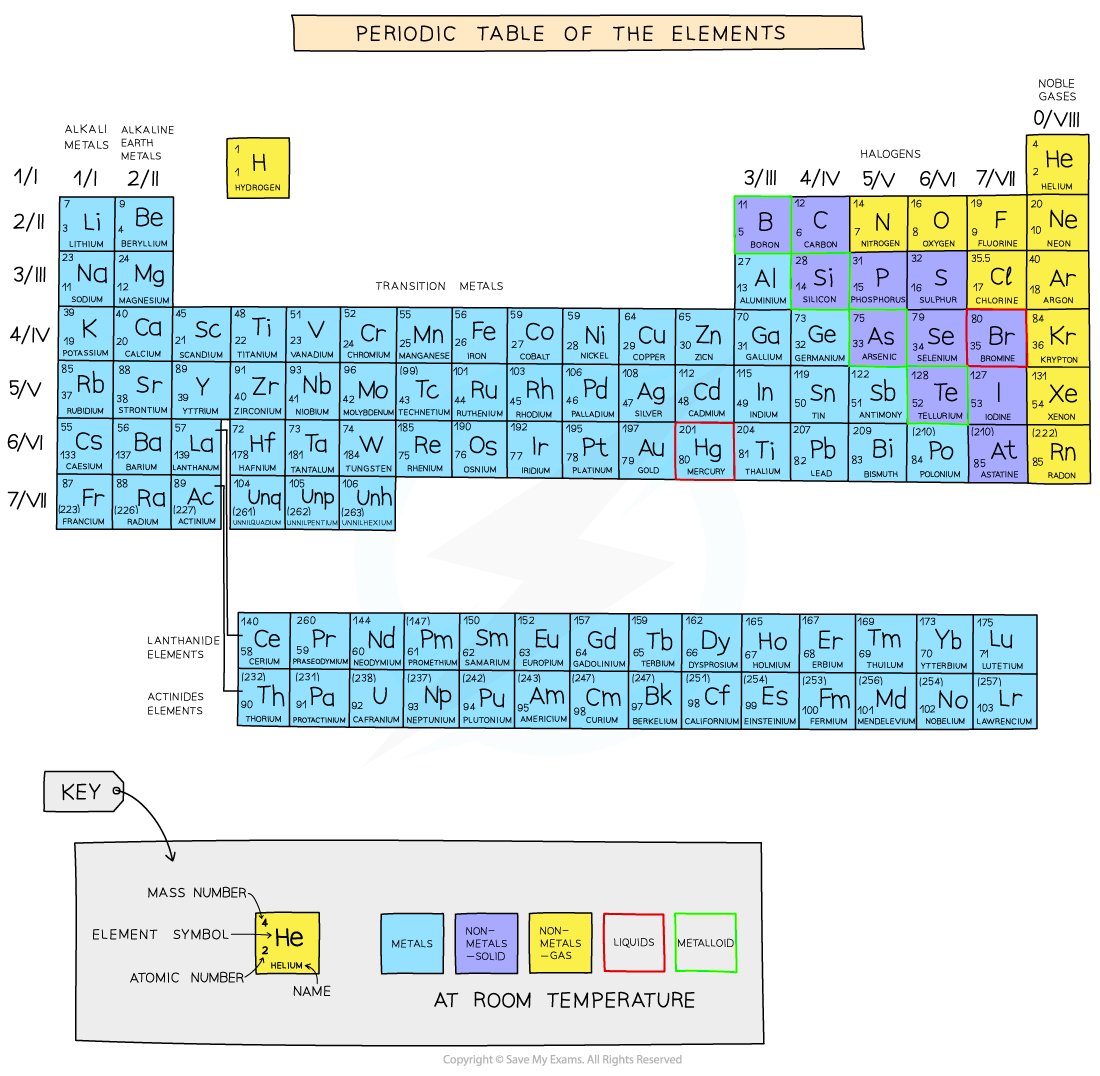
- Since the electronic configurations of?H?and?He?are unusual, they do not fit comfortably into any group. They are thus allocated a group based on similarities in physical and chemical properties with other members of the group
- He?is placed in?group 0?on this basis, but hydrogen does not behave like any other element and so is placed in a group of its own
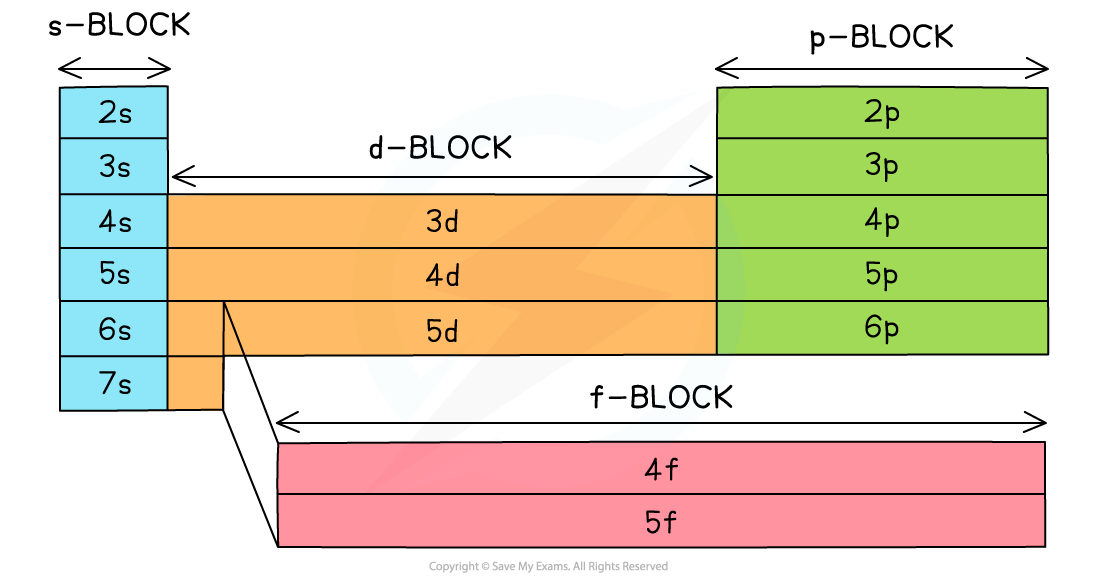
The blocks of the periodic table
- All elements belong to one of?four?main blocks: the s-block, the p-block, the d-block and the f-block
- The s-block elements are all those with only s electrons in the outer shell
- The p-block elements are all those with at least one p-electron in the outer shell
- The d-block elements are all those with at least one d-electron and at least one s-electron but no f or p electrons in the outer shell (up to 5d)
- The f-block elements are all those with at least one f-electron and at least one s-electron but no d or p electrons in the outer shell
- The physical and chemical properties of elements in the periodic table show clear patterns related to the position of each element in the table
- Elements in the same group show similar properties, and properties change gradually as you go across a period
- As atomic number increases, the properties of the elements show trends which repeat themselves in each period of the periodic table
- These trends are known as?periodic trends?and the study of these trends in known as?periodicity
Deducing Electron Configurations
- The electron configuration of any element can be deduced from its position in the periodic table
- It is like an 'address' that tells you exactly where an element is found
- Using the element germanium as an example to illustrate how it works:
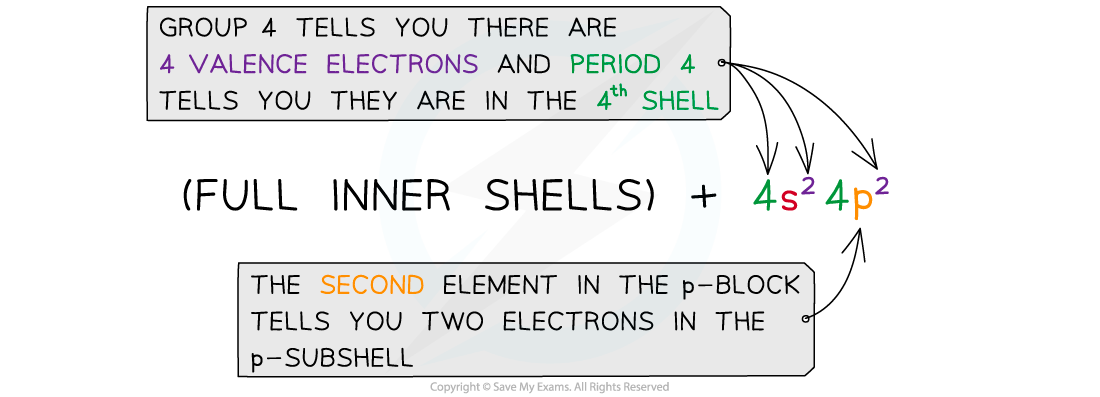
Deducing the electron configuration of germanium
- Germanium is in?p block, in?group 4?(using the simplify numbering system) and the?second?element across in?period 4
- Group 4 tells you there are?four valence electrons?and period 4 tells you the?valence electrons?are in the?fourth shell
- The?second?position in?p block?tell you that two electrons are in the?p subshell
- Similarly, you can deduce the position of an element in the periodic table from its electron configuration:
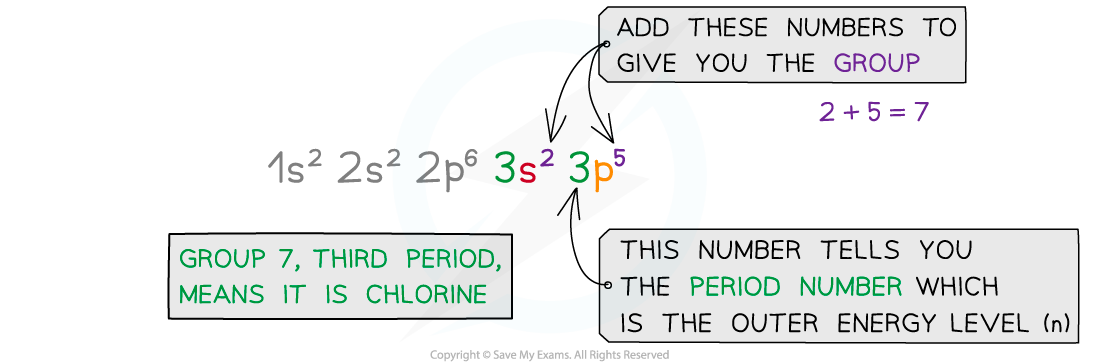
Deducing information from the electron configuration of chlorine
- Test your understanding in the following example:
Worked Example
Element Z is in?period 4?and?group 5 of the periodic table. Which statement is correct?
? ?A.? Z has 5 occupied energy levels.
B.? Z can form ions with 3– charge.
?C.? Z is a transition element.
D.? Z has 4 valence electrons.
Answer:
-
- The correct option is?B. A group 5 element could form a 3- ion
- It cannot be?A?because 5 occupied energy levels would place it in period 5
- Transition elements would not be found in group 5, so?C?is also incorrect
- 4 valence electrons would match an element in group 4, so?D?must be wrong
轉載自savemyexams
以上就是關于【IB DP Chemistry: HL復習筆記3.1.1 The Periodic Table】的解答,如需了解學校/賽事/課程動態,可至翰林教育官網獲取更多信息。
往期文章閱讀推薦:
MIT官方發布【2026年夏季推薦閱讀書單】!橫跨科學/人文/經濟...


翰林AMC8視頻課重磅上線!

國際競賽真題資源免費領取






