IB DP Chemistry: HL復習筆記1.1.3 State Changes

State Changes
- Changes of state are?physical changes?that are reversible
- These changes do not change the chemical properties or chemical makeup of the substances involved
- Vaporization?includes?evaporation?and?boiling
- Evaporation?involves the change of liquid to gas, but unlike boiling,?evaporation?occurs only at the surface and takes place at temperatures below the?boiling point
- Boiling?occurs at a specific temperature and takes place when the?vapour pressure?reaches the external atmospheric pressure
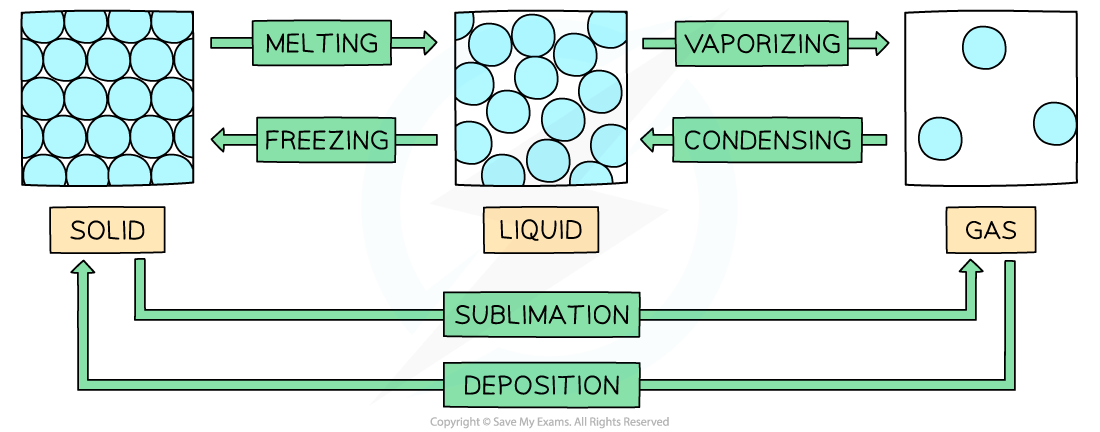
State Changes
- The relationship between temperature and energy during state changes can be represented graphically
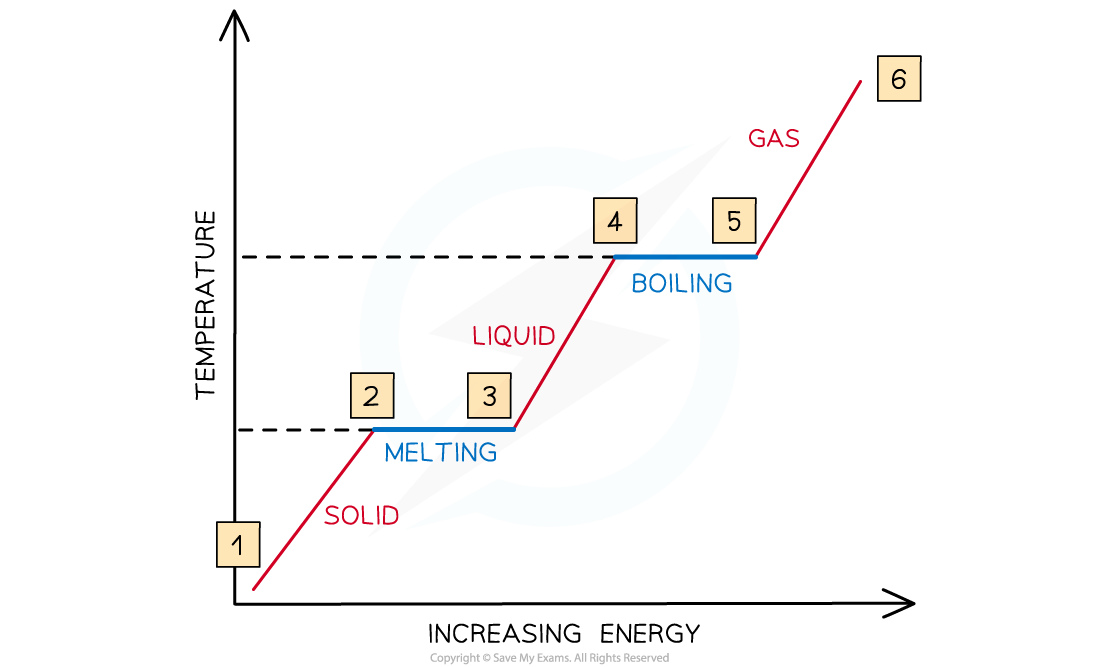
The relationship between temperature and energy during state changes
- Between 1 & 2, the particles are vibrating and gaining?kinetic energy?and?the temperature rises
- Between 2 & 3, all the energy goes into breaking bonds – there is?no?increase in?kinetic energy?or?temperature
- Between 3 & 4, the particles are moving around and gaining in?kinetic energy
- Between 4 & 5, the substance is boiling, so bonds are breaking and there is?no?increase in?kinetic energy?or?temperature
- From 5 & 6, the particles are moving around rapidly and increasing in?kinetic energy
Exam Tip
Be careful to match the bond breaking or making processes to the flow of energy during state changes. Remember that to?break?bonds, energy is always?needed?to overcome the?forces of attraction?between the particles
轉載自savemyexams
以上就是關于【IB DP Chemistry: HL復習筆記1.1.3 State Changes】的解答,如需了解學校/賽事/課程動態,可至翰林教育官網獲取更多信息。
往期文章閱讀推薦:
MIT官方發布【2026年夏季推薦閱讀書單】!橫跨科學/人文/經濟...


翰林AMC8視頻課重磅上線!

國際競賽真題資源免費領取






