IB DP Biology: HL復(fù)習(xí)筆記11.1.3 Antibodies, Vaccines & Immunity

Antibodies: Function
- The function of?antibodies?produced by B-cells is to?destroy pathogens?within the body
- This can be done either?directly, or by?recruiting other immune cells
- Antibodies aid the destruction of pathogens in several ways:
- Agglutination
- Antibodies act as?agglutinins?causing pathogens carrying?antigen-antibody complexes to clump together?(agglutination)
- This?reduces the chance that the pathogens will spread?through the body or taken into cells, instead the?clumps are removed by the lymphatic system?and digested by?phagocytes
- Opsonisation
- Antibodies attach to bacteria making them readily?identifiable to phagocytes, this is called opsonisation
- Once identified, the phagocyte has?receptor proteins?for the heavy polypeptide chains of the antibodies, which enables?phagocytosis?to occur
- Neutralisation?of viruses and bacteria
- Antibodies can?combine with viruses and toxins of pathogens?(e.g. bacteria) to?block them?from entering or damaging cells
- Activity reduction
- Antibodies can?attach to the flagella of bacteria?making them?less active, which makes it easier for phagocytes to do phagocytosis
- Neutralisation of toxins
- Antibodies can act as?anti-toxins?by binding to toxins produced by pathogens (e.g. the bacteria that cause diphtheria and tetanus) which neutralises them making them harmless
- Complement activation
- Antibodies can?trigger proteins, called complement proteins, which?create holes in the cell walls of pathogens?causing them to?burst?(cell lysis) when ions are absorbed and water moves in by osmosis
- Agglutination
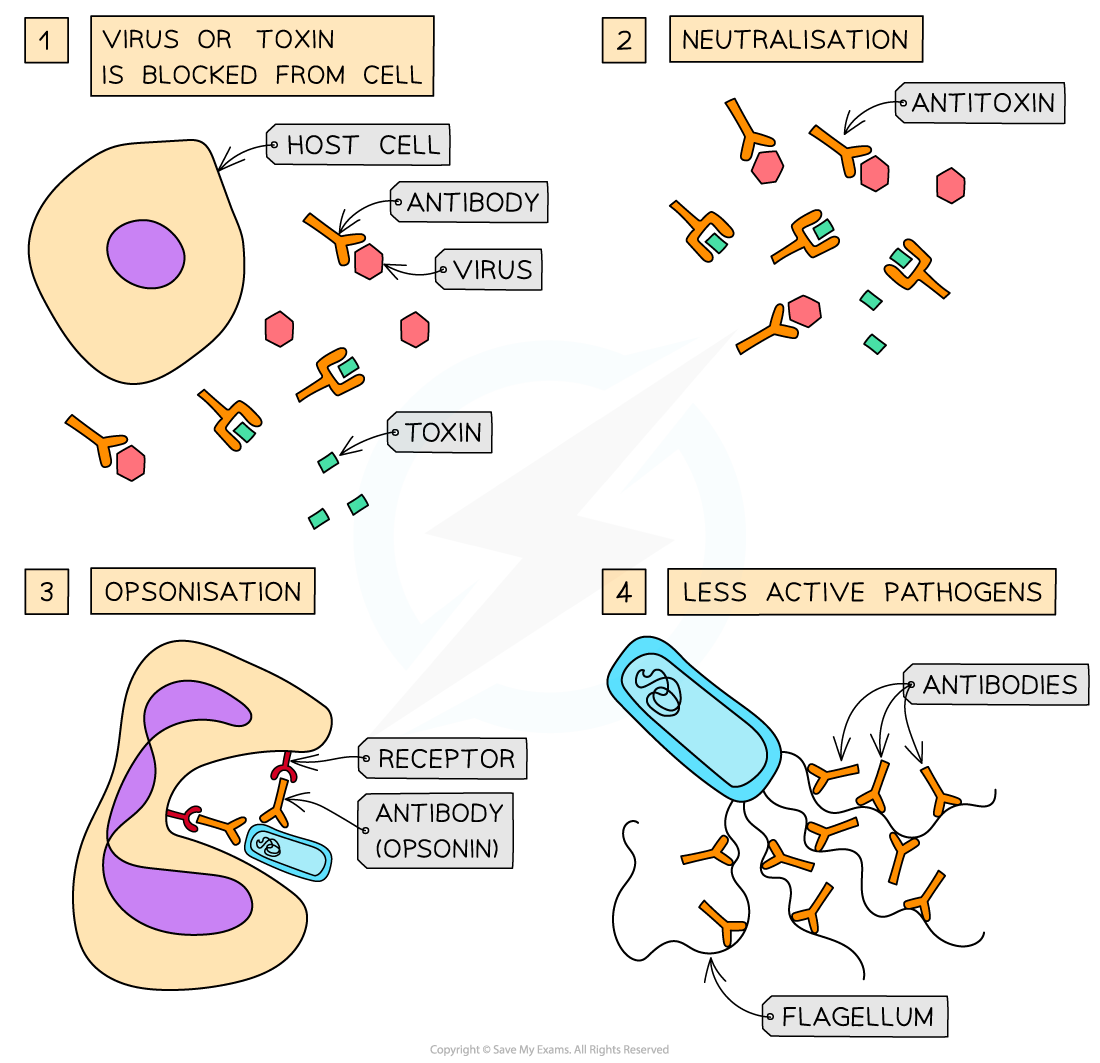
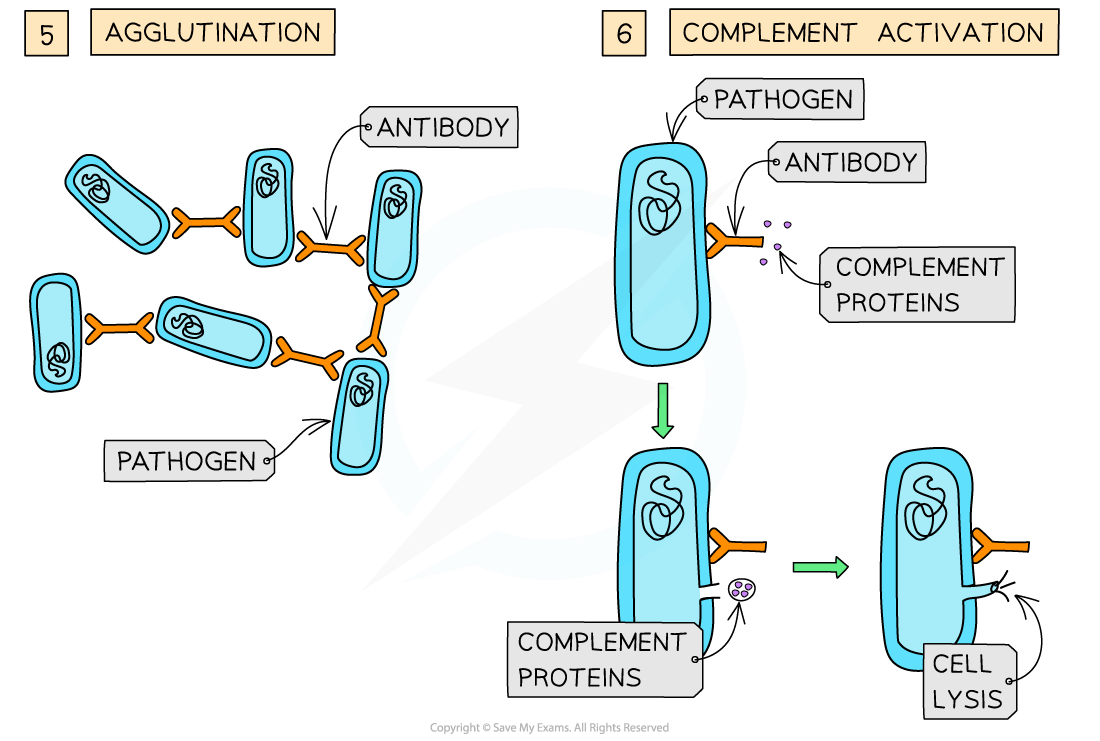
The functions of antibodies vary according to which type of antigen they act on
Immunity
- Immunity is initiated when?exposure to a specific antigen?results in the production of?complementary antibodies?and?memory cells
- This first exposure to an antigen?triggers the primary immune response
- The?primary immune response?leads to the?development of immunity?if memory cells and antibodies which persist in the bloodstream after the pathogen has been eliminated
- The?secondary immune response?occurs when the?same antigen is found in the body a second time
- The?memory cells recognise the antigen, divide very quickly?and differentiate into antibody-producing plasma cells and more memory cells
- The response to a previously encountered pathogen is, relative to the primary immune response,?extremely fast
- This means that the?infection can be destroyed and removed before the pathogen population increases?too much and symptoms of the disease develop
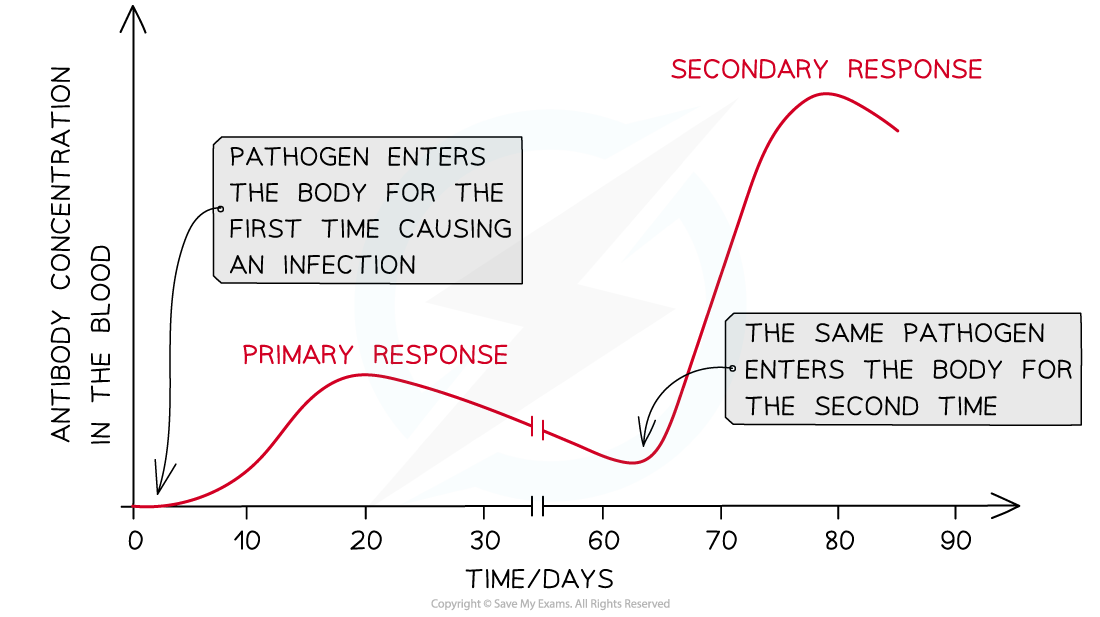
The secondary response is much larger and more rapid than the primary response
Exam Tip
Immunological memory (made possible by memory cells) is the reason why catching certain diseases twice is so unlikely. For example, there is only one strain of the virus that causes measles, and each time someone is re-infected with this virus, there is a very fast secondary immune response so they?do not get ill.
However, some infections such as the common cold and influenza are caused by viruses that are constantly developing into?new strains. As each strain has different antigens, the primary immune response (during which we often become ill) must be carried out each time before immunity can be achieved.
Vaccines & Immunity
- A vaccine is a source of?antigens?that are intentionally put into the body to?induce immunity
- Vaccines cause a?specific immune response?where antibodies are released by plasma cells
- There are different types of vaccine, including
- Live attenuated?- these are?weakened versions of the pathogen
- Inactivated?- these are?killed, non-living components of pathogens?or even just the?antigens?alone
- Vaccines are administered either by?injection?or?orally?(by mouth)
- The vaccinations given by injection can be into a vein or muscle
- Vaccinations produce?long-term immunity?as they cause memory cells to be created
- The memory cells recognise the antigen when re-encountered and produces antibodies, in what is a?faster, stronger, secondary response
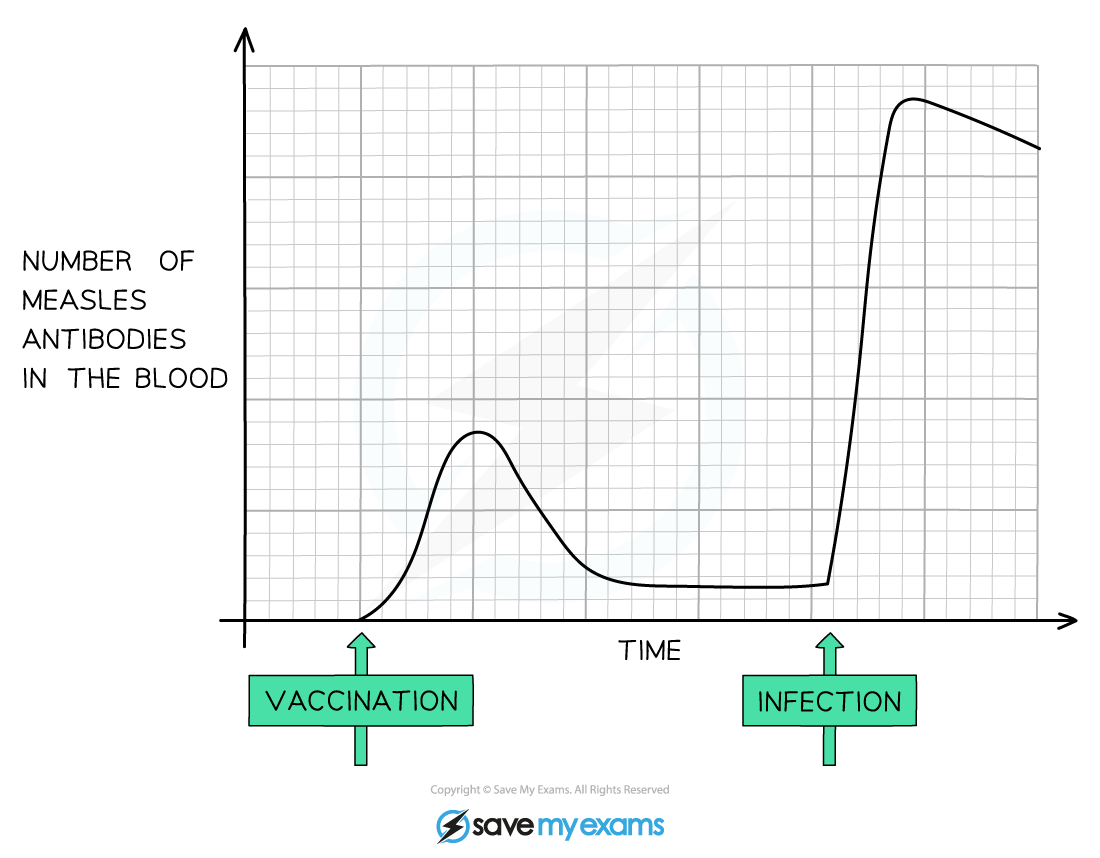
Exam Tip
Remember vaccines trigger the primary immune response (T helper cells trigger B plasma cells to secrete specific antibodies) which leads to the production of memory cells which will give a faster and larger (higher concentration of antibodies) secondary response.
轉(zhuǎn)載自savemyexams
以上就是關(guān)于【IB DP Biology: HL復(fù)習(xí)筆記11.1.3 Antibodies, Vaccines & Immunity】的解答,如需了解學(xué)校/賽事/課程動(dòng)態(tài),可至翰林教育官網(wǎng)獲取更多信息。
往期文章閱讀推薦:
斯坦福大學(xué)官方推薦書單!名校學(xué)霸們暑假都在讀什么?
MIT官方發(fā)布【2026年夏季推薦閱讀書單】!橫跨科學(xué)/人文/經(jīng)濟(jì)...


翰林AMC8視頻課重磅上線!

國(guó)際競(jìng)賽真題資源免費(fèi)領(lǐng)取






