IB DP Biology: HL復習筆記2.1.3 Hydrogen Bonds

Hydrogen Bonds
- Hydrogen bonding plays an important role between many biological molecules
- Some key functions include:
- Dissolving of solutes?in water
- The?cohesion?and?adhesion?of water molecules
- These properties allow water to move up the trunks of really tall trees
Base-pairing?between the two strands of DNA
- Structure:
- Hydrogen bonds help to form part of the?secondary?and?tertiary?levels of structure in proteins
- The hydrogen bonds found between strands of?cellulose?and?collagen?give those molecules their?tensile strength
Interactions between mRNA?and?tRNA?during?protein synthesis
- Surface effects?on membranes between?polar phosphate groups?and?water
Hydrogen bonding in water
- Hydrogen bonding is a fundamental property of?water
- Water is of the?utmost biological importance
- It is the?medium?in which all metabolic reactions take place in cells
- Between 70% to 95% of the mass of a cell is water
- Water is?so fundamental to life?that astronomers look for?signs of water?on other planets and moons, as indicators of possible extra-terrestrial life
- As 71% of the Earth’s surface is covered in water it is a?major habitat?for organisms
Water is composed of atoms of hydrogen and oxygen
- One atom of oxygen combines with two atoms of hydrogen by sharing electrons (covalent bonding)
Although water as a whole is electrically neutral, the sharing?of the?electrons?is?uneven?between the oxygen and hydrogen atoms
- The oxygen atom attracts the electrons more strongly than the hydrogen atoms, resulting in a?weak negatively charged region?on the oxygen atom (δ-) and a?weak positively charged region?on the hydrogen atoms(δ+), this also results in the molecule's asymmetrical shape
This separation of charge due to the electrons in the covalent bonds being unevenly shared is called a dipole
- When a molecule has?one?end that is negatively charged and?one?end that is positively charged it is also a?polar molecule
- Water is therefore a?polar molecule
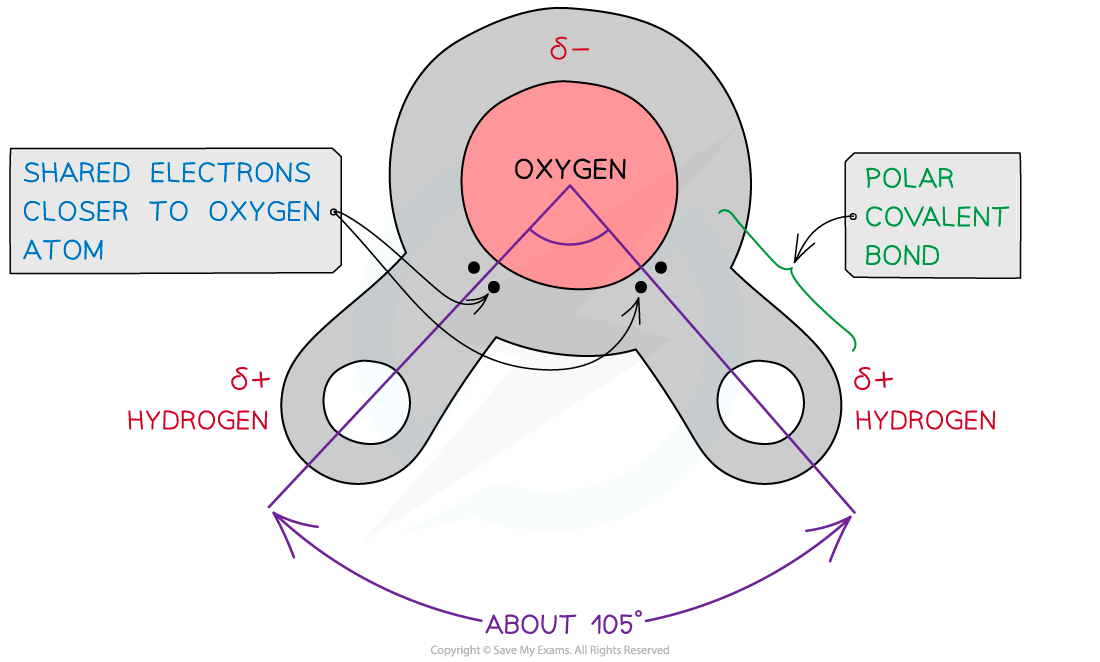
The covalent bonds of water make it a polar molecule
- Hydrogen bonds?form between water molecules
- As a result of the polarity of water,?hydrogen bonds form?between the positive and negatively charged regions of adjacent water molecules
Hydrogen bonds are weak, when there are few, so they are constantly breaking and reforming
- However, when there are large numbers present they form a strong structure
- Hydrogen bonds?cause many of the properties of water molecules, that make them so important to living organisms:
- Excellent?solvent?– many polar substances can dissolve in water
- A relatively?high specific heat capacity
- A relatively?high latent heat of vaporisation
- Water is less dense when a solid (ice floats, allowing aquatic life to flourish beneath)
- Water has?high surface tension?and cohesion
- It acts as a?reagent
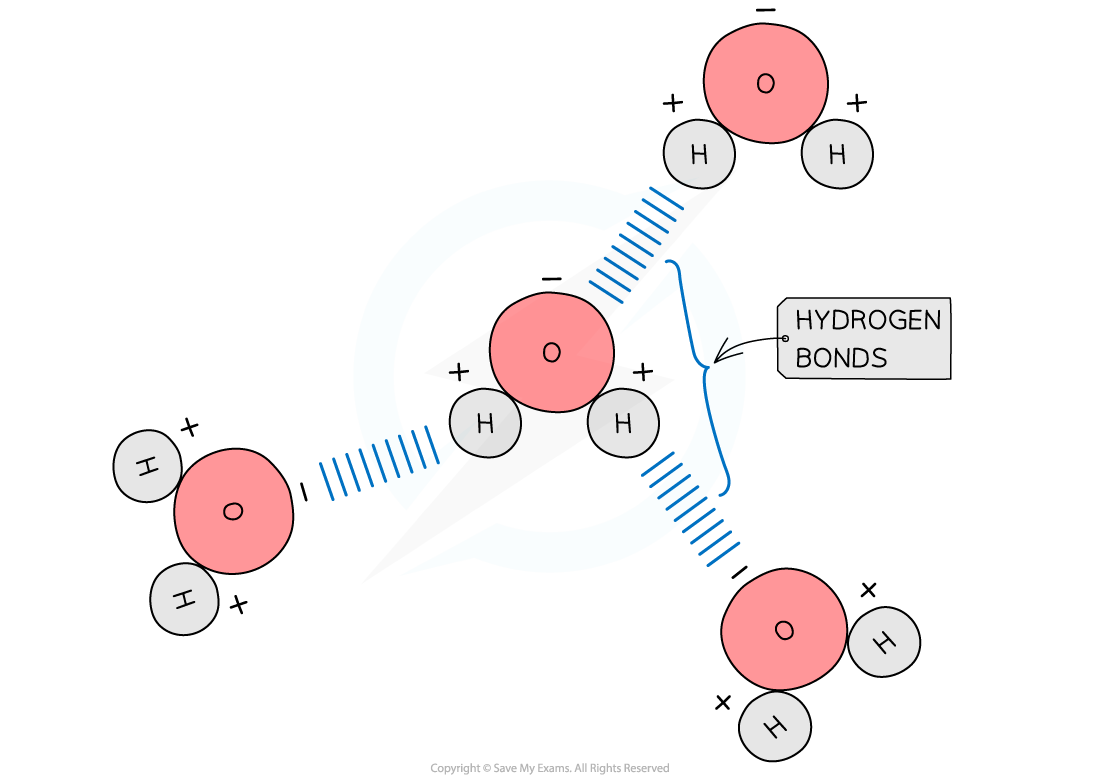
The polarity of water molecules allows hydrogen bonds to form between adjacent water molecules
Comparison: Water & Methane
- Both?methane?(CH4) and?water?(H2O) are?small, covalently-bonded molecules
- Methane is the?simplest organic compound
- They have similar molecular weights, 16 and 18 respectively
- But?water is polar and so forms hydrogen bonds, whereas methane is?not polar?and so does not form hydrogen bonds
- Water is liquid?at room temperature, whereas?methane is a gas
- Other compounds, with a small molecular weight, such as ammonia (NH3) and carbon dioxide (CO2) are gases at room temperature
- These compounds also?do not form hydrogen bonds
This shows how water molecules are held together by hydrogen bonds, whereas the other gas molecules are free to move around in the gaseous state
- Methane is a?fuel?with a?high energy content?in its bonds, whereas water is a?final product?of combustion and respiration
Understanding the molecular properties of methane underlines the significance of hydrogen bonding in water
- Other compounds, with a small molecular weight, such as ammonia (NH3) and carbon dioxide (CO2) are gases at room temperature
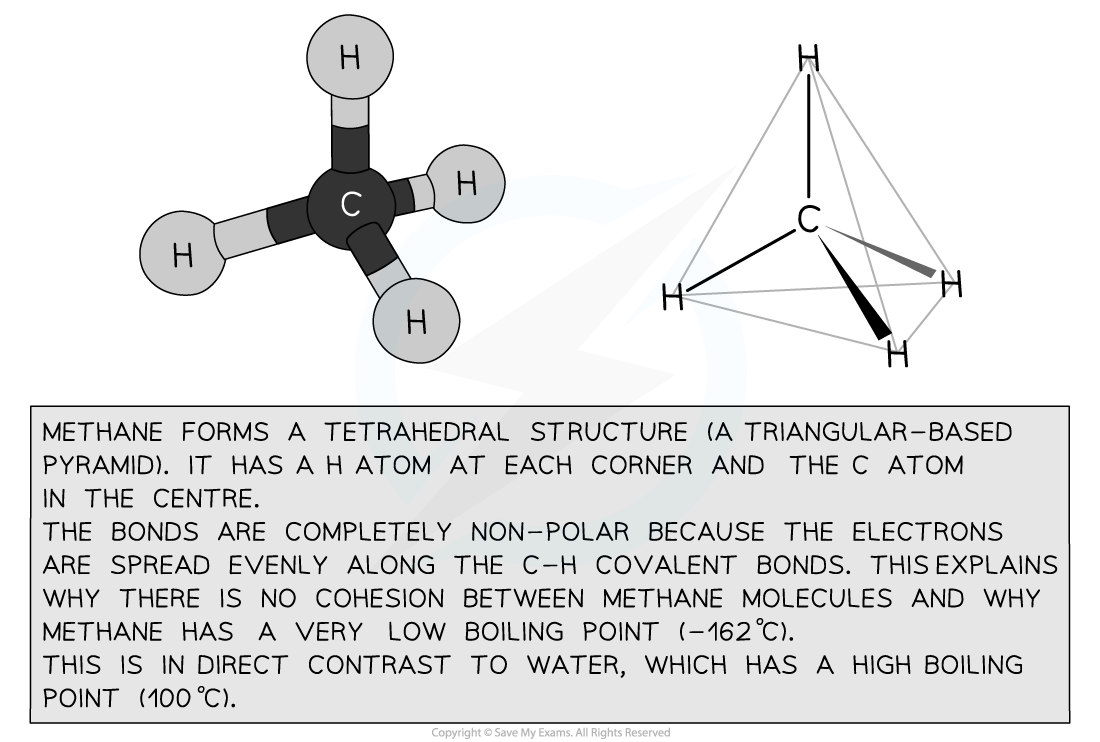
Methane’s structure determines its properties
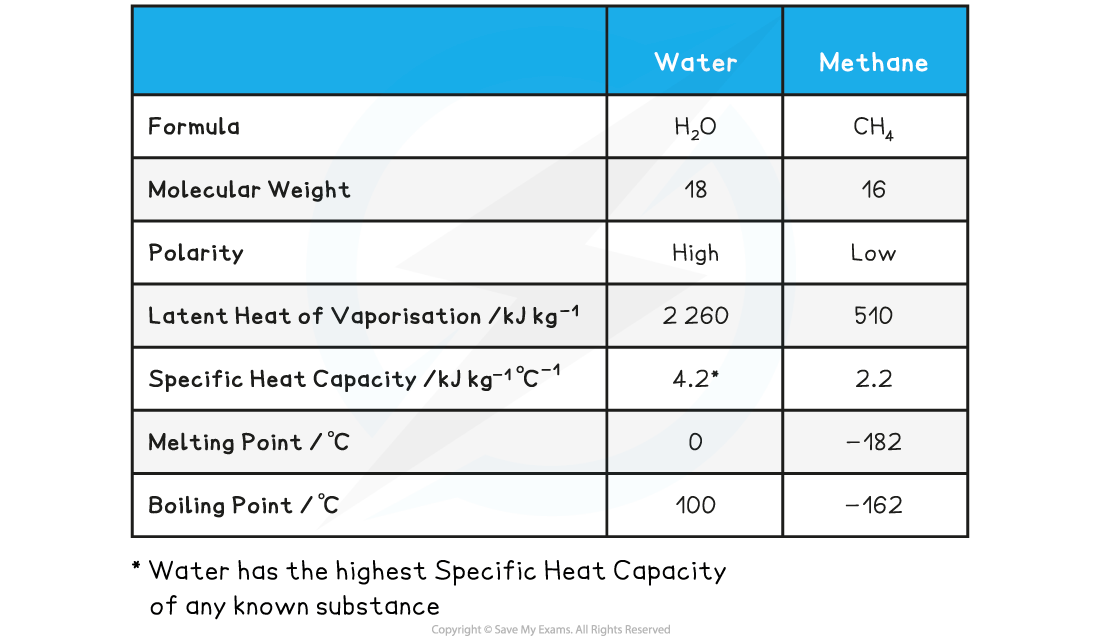
Comparison of the Properties of Water and Methane Table
Exam Tip
It is important to know where the hydrogen bonds form between water molecules (oxygen of one water molecule to the hydrogen atom of another).
轉載自savemyexams
以上就是關于【IB DP Biology: HL復習筆記2.1.3 Hydrogen Bonds】的解答,如需了解學校/賽事/課程動態(tài),可至翰林教育官網獲取更多信息。
往期文章閱讀推薦:
MIT官方發(fā)布【2026年夏季推薦閱讀書單】!橫跨科學/人文/經濟...


翰林AMC8視頻課重磅上線!

國際競賽真題資源免費領取






