IB DP Biology: HL復習筆記1.2.3 Prokaryotic Cell Structure

Prokaryotic Cell Structure
- The cell structure of organisms determines whether they are?prokaryotic?or?eukaryotic
- Prokaryotes have the?simplest cell structure, being the first organisms to evolve on Earth and have been classified into two?domains:
- Bacteria?or Eubacteria - 'true' bacteria, includes commonly known bacteria such as?E.coli?and?Helicobacter
- Archaebacteria?or Archaea - typically found in extreme environments such as high temperatures and salt concentrations and include methanogens (organisms that exist in anaerobic conditions and produce methane gas)
- Prokaryotic cells are?small, ranging from 0.1μm to 5.0μm
- Prokaryotes have cells that?lack a nucleus?(the greek roots of prokaryote are 'pro' = before and 'karuon' = nut or kernel, relating to 'before the nucleus')
Cell structure
- The cytoplasm of prokaryotic cells is?not divided?into?compartments, it?lacks membrane-bound organelles?(except for?ribosomes)
- Prokaryotic?ribosomes?are structurally smaller (70 S) in comparison to those found in eukaryotic cells (80 S)
- Prokaryotes do not have a nucleus, but they?do have genetic material.?This is generally in the form of a?single circular DNA molecule?(not associated with?proteins) located in the?nucleoid?and in smaller loops called?plasmids
- Prokaryotes have a?cell wall?containing?murein/peptidoglycan?(a glycoprotein)
- The cell wall acts as?protection, maintains the?shape?of the cell and prevents the cell from?bursting
- In addition, many prokaryotic cells have a few other structures that differentiate the species from others and act as a selective advantage, examples of these are:
- Plasmids
- Capsules
- Flagellum
- Pili
- Plasmids are small?loops of DNA?that are separate from the main circular DNA molecule
- Plasmids contain?genes?that can be passed between prokaryotes (e.g. genes for?antibiotic resistance)
- Some prokaryotes (e.g. bacteria) are surrounded by a final outer layer known as a?capsule. This is sometimes called the?slime?capsule
- It helps to?protect?bacteria?from drying out and from attack by cells of the immune system of the host organism
- Flagellum (plural = flagella) are?long, tail-like structures?that?rotate, enabling the prokaryote to?move?(a bit like a propeller)
- Some prokaryotes have?more than one
- Pili are shorter and thinner structures than flagella
- They assist with movement, avoidance of attack by white blood cells,?conjugation?(the sexual mode for bacteria) and are commonly used to allow bacteria to?adhere to cell surfaces
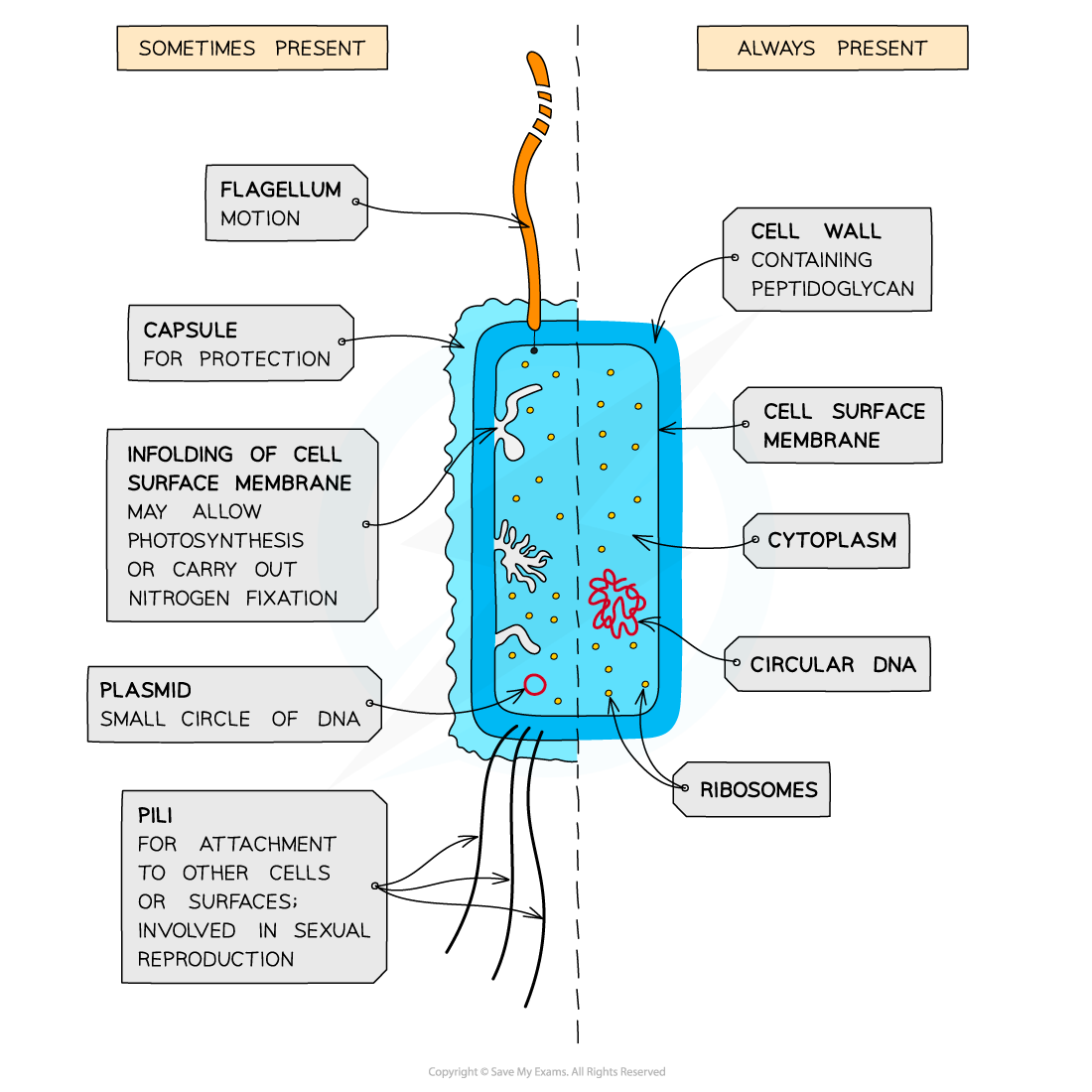 Prokaryotic cells are often described as being ‘simpler’ than eukaryotic cells, and they are believed to have emerged as the first living organisms on Earth
Exam Tip
Make sure you learn the typical?structures?and?organelles?found in prokaryotic cells, as well as their?functions.
Binary Fission
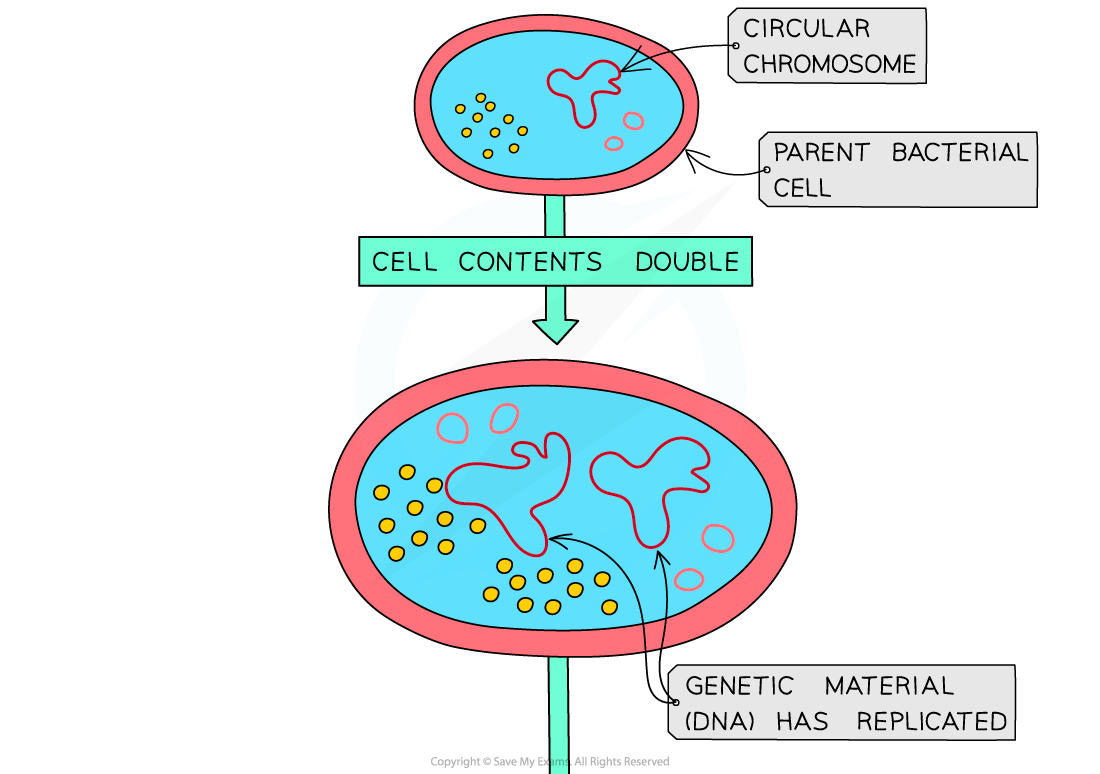
Prokaryotes divide by binary fission
- Binary fission is a type of?asexual?reproduction where the parent cell splits into two daughter cells, roughly equal in size
-
- The single circular chromosome?replicates?when signalled
- The cell?elongates?resulting in the chromosome copies separating
- A?cross wall?(septum) forms in the middle of the cell dividing the cytoplasm (cytokinesis)
- Two daughter cells?are formedDuring the binary fission process in prokaryotes:
- As each daughter cell contains an exact copy of the parental circular chromosome they are?clones
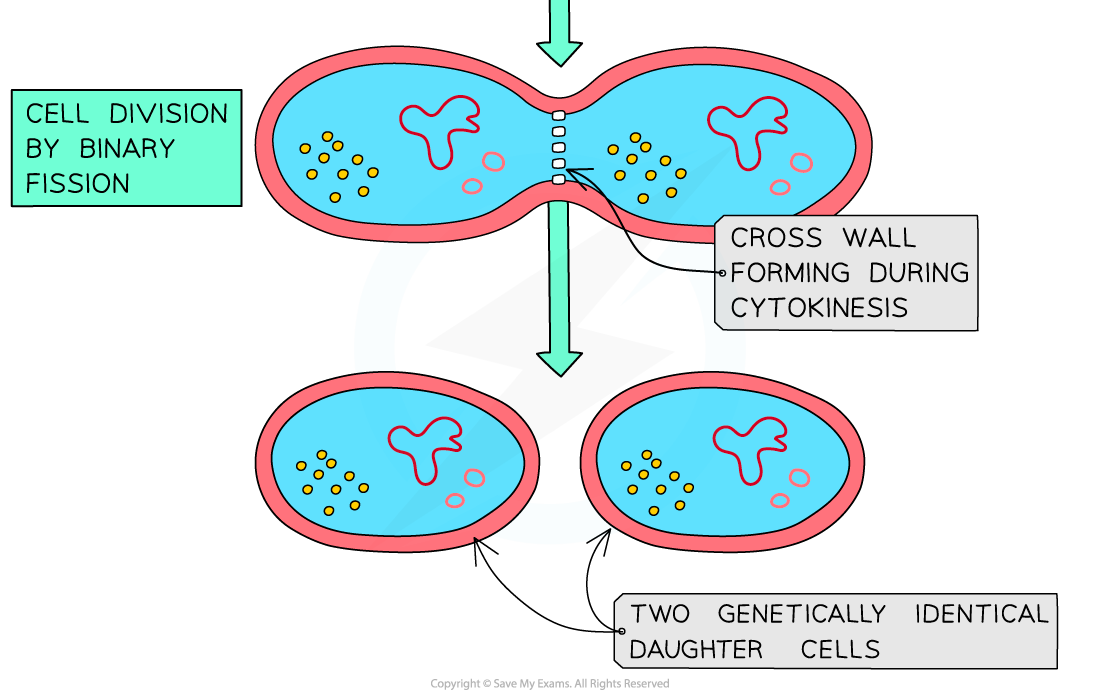
Prokaryotes divide by binary fission
轉載自savemyexams
以上就是關于【IB DP Biology: HL復習筆記1.2.3 Prokaryotic Cell Structure】的解答,如需了解學校/賽事/課程動態,可至翰林教育官網獲取更多信息。
往期文章閱讀推薦:
MIT官方發布【2026年夏季推薦閱讀書單】!橫跨科學/人文/經濟...


翰林AMC8視頻課重磅上線!

國際競賽真題資源免費領取






