AQA A Level Physics復習筆記2.1.4 Alpha & Beta Decay

α & β Decay Equations
Alpha Decay
- Alpha decay is common in large, unstable nuclei with too many protons
- The decay involves a nucleus emitting an alpha particle and decaying into a different nucleus
- An alpha particle consists of?2 protons and 2 neutrons?(the nucleus of a Helium atom)
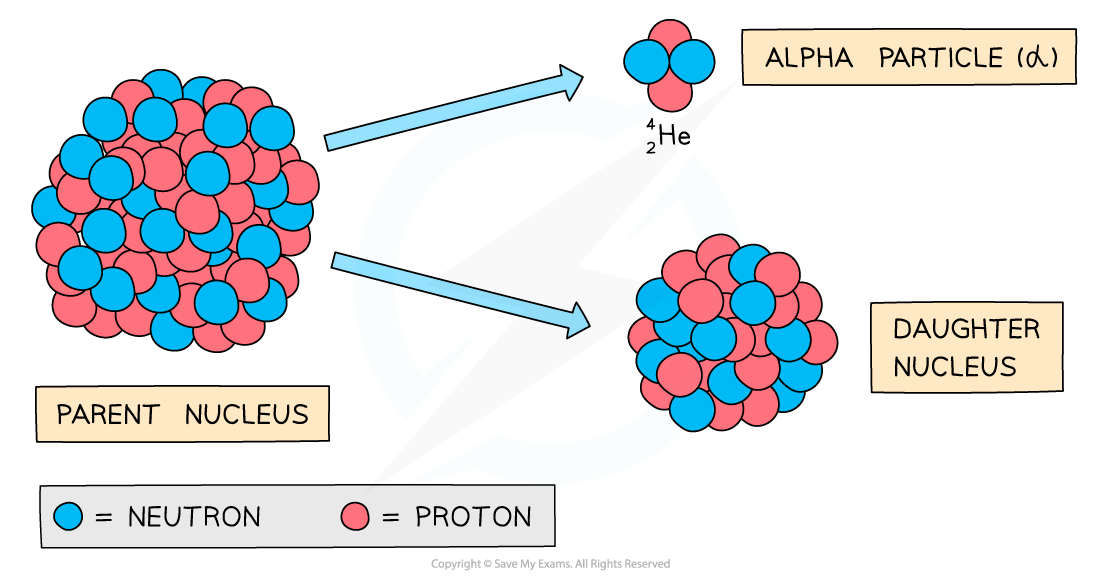
Alpha decay produces a daughter nucleus and an alpha particle (helium nucleus)
- When an unstable nucleus (the parent nucleus) emits radiation, the constitution of its nucleus changes
- As a result, the isotope will change into a different element (the daughter nucleus)
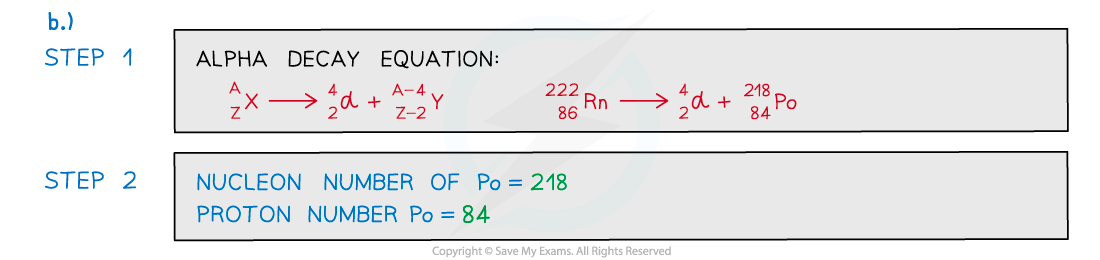
- Alpha decay can be represented by the following radioactive decay equation:

Alpha decay equation
- When an alpha particle is emitted from a nucleus:
- The nucleus loses 2 protons:?proton number decreases by 2
- The nucleus loses 4 nucleons:?nucleon number decreases by 4
Worked Example
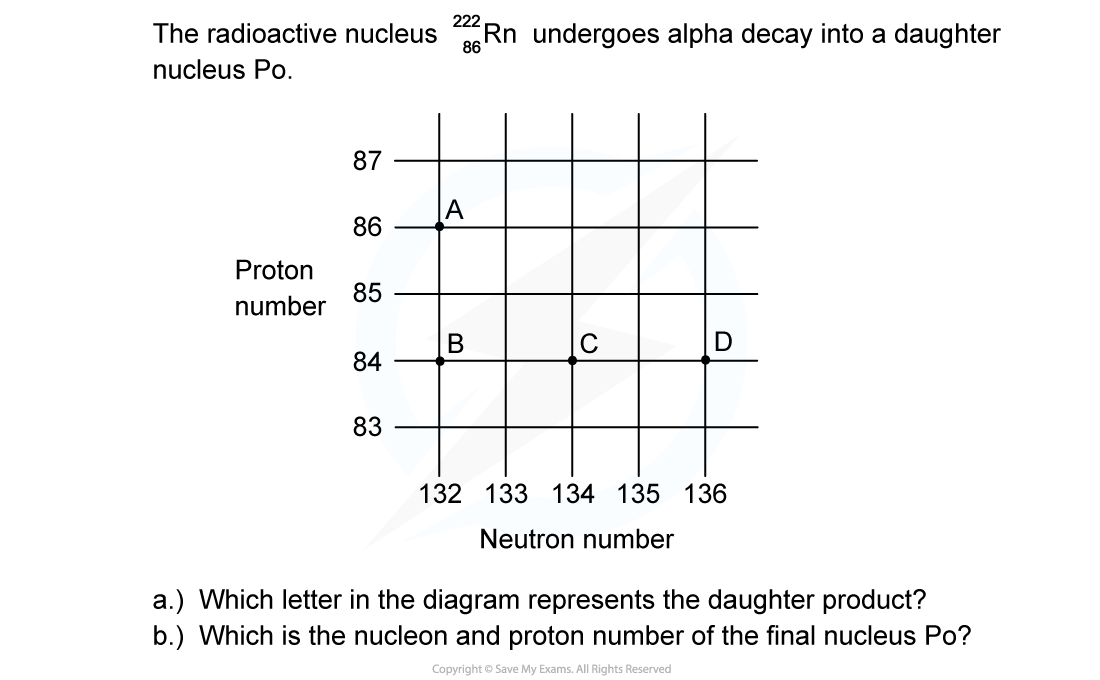
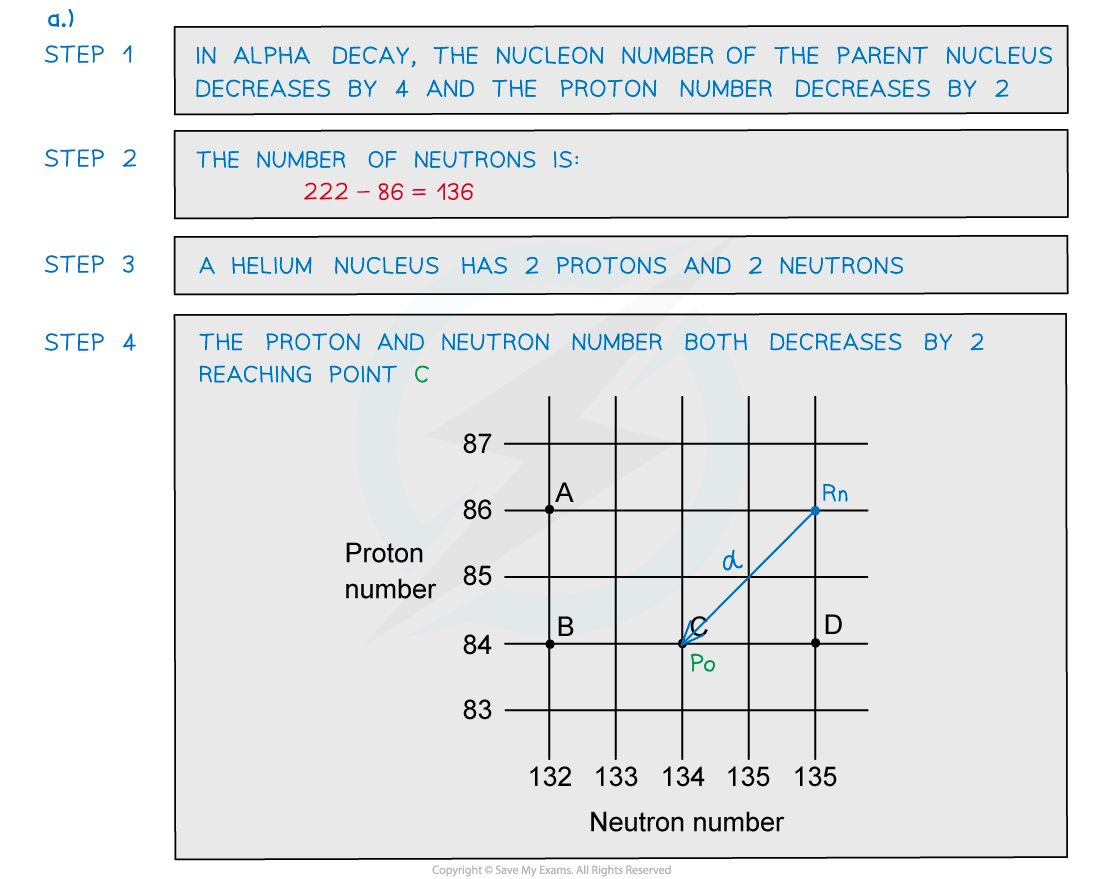
ANSWER:?C
Beta-Minus Decay
- A beta-minus, β-, particle is a high energy electron emitted from the nucleus
- β-?decay is when a?neutron turns into a proton emitting an electron and an anti-electron neutrino
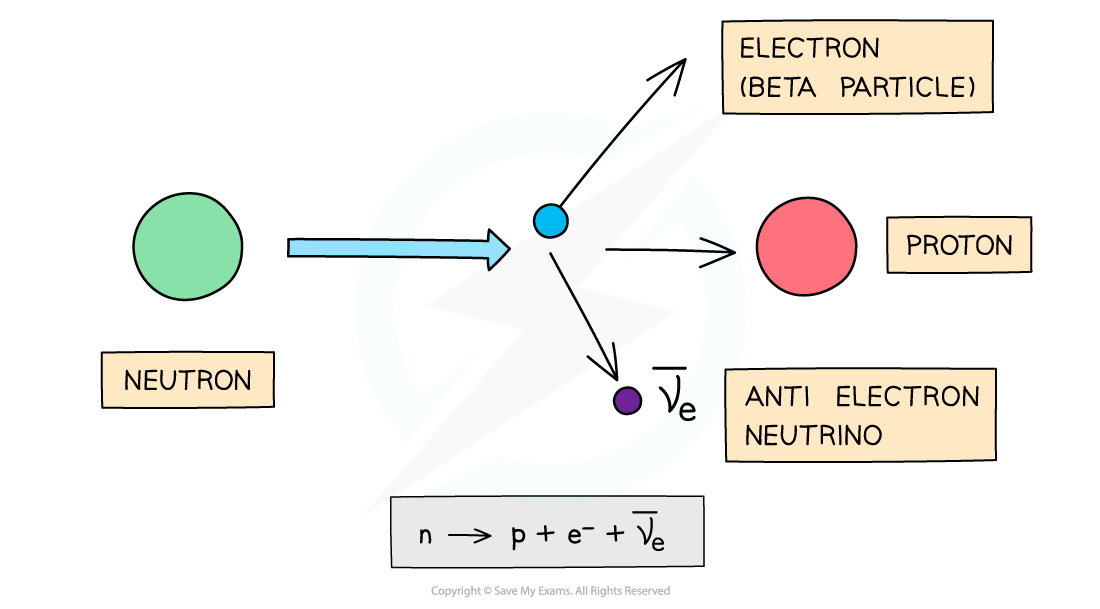
- When a β-?particle is emitted from a nucleus:
- The number of protons increases by 1:?proton number increases by 1
- The total number of nucleons stays the same:?nucleon number remains the same

Equation for beta minus emission
- The new nucleus formed from the decay is called the “daughter” nucleus (nitrogen in the example above)
Beta-Plus Decay
- A beta-plus, β+, particle is a high energy positron emitted from the nucleus
- β+?decay is when a?proton turns into a neutron emitting a positron (anti-electron) and an electron neutrino
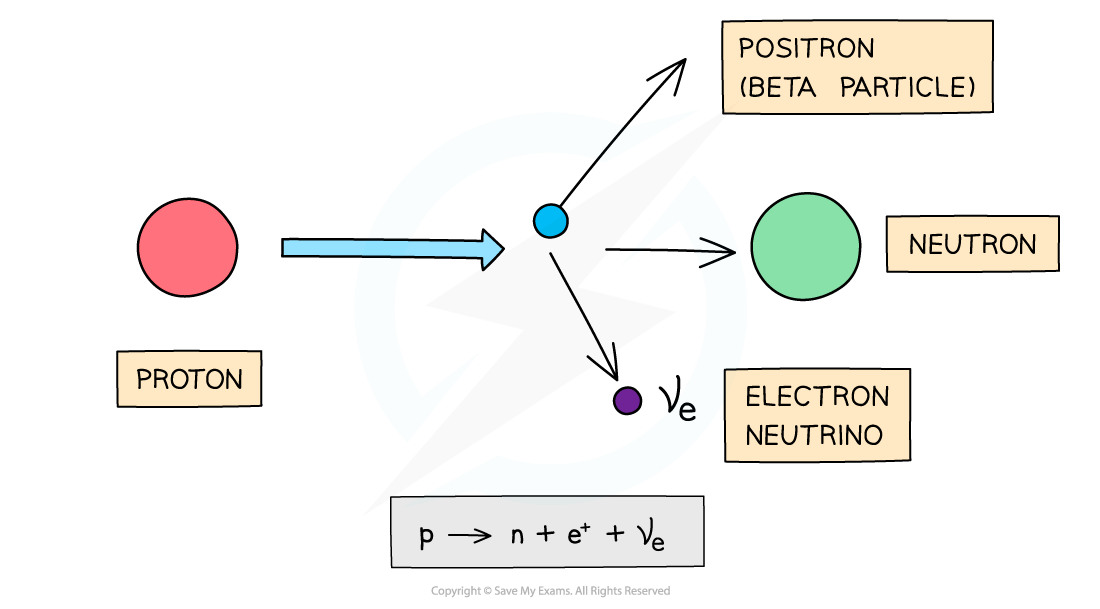
- When a β+?particle is emitted from a nucleus:
- The number of protons decreases by 1:?proton number decreases by 1
- The total number of nucleons stays the same:?nucleon number remains the same

Equation for beta plus emission
Worked Example
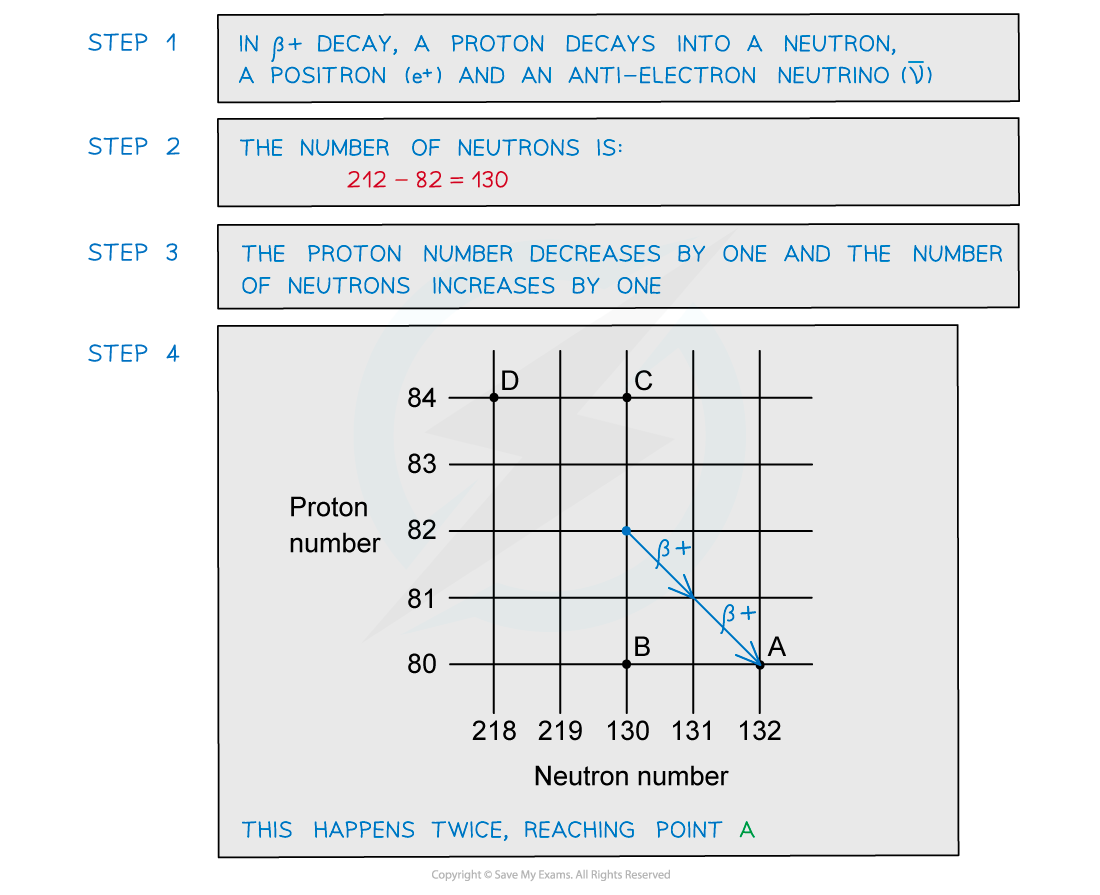
A radioactive substance with a nucleon number of 212 and a proton number of 82 decays by β-plus emission into a daughter product which in turn decays by further β-plus emission into a granddaughter product.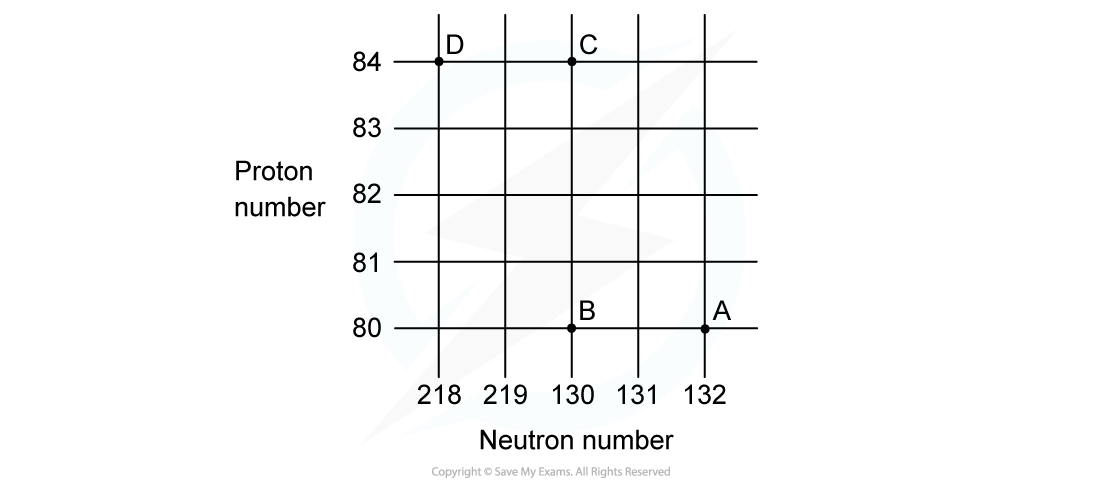 Which letter in the diagram represents the granddaughter product?
ANSWER:?A
Exam Tip
Remember to avoid the common mistake of confusing the number of neutrons with the nucleon number. In alpha decay, the nucleon (protons and neutrons) number decreases by 4 but the number of neutrons only decreases by 2.
Neutrino Emission
- An electron neutrino is a type of subatomic particle with no charge and negligible mass which is also emitted from the nucleus
- The anti-neutrino is the antiparticle of a neutrino
- Electron anti-neutrinos are produced during β– decay
- Electron neutrinos are produced during β+ decay
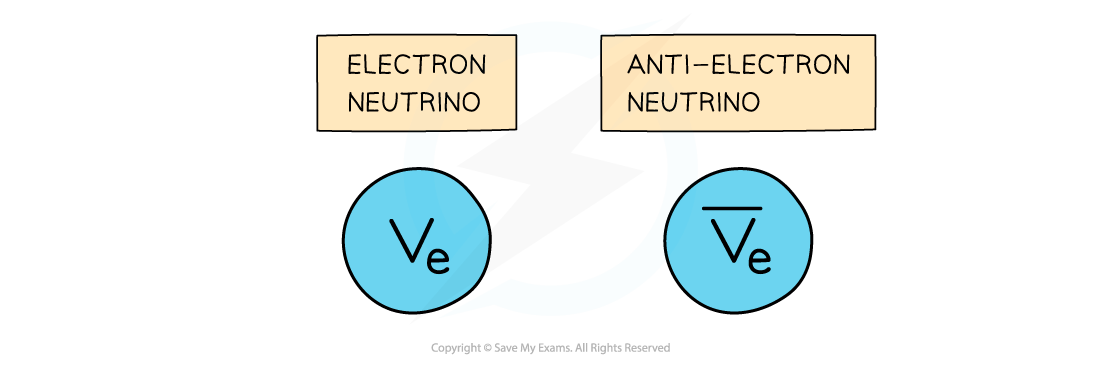
- Although the neutrino has no charge and negligible mass, its existence was hypothesised to account for the conservation of?energy?in beta decay
Exam Tip
One way to remember which particle decays into which depends on the type of beta emission, think of beta ‘plus’ as the ‘proton’ that turns into the neutron (plus an electron neutrino)
轉載自savemyexams
以上就是關于【AQA A Level Physics復習筆記2.1.4 Alpha & Beta Decay】的解答,如需了解學校/賽事/課程動態,可至翰林教育官網獲取更多信息。
往期文章閱讀推薦:
2026 ALEVEL 夏考A率出爐!愛德思vs牛津AQA,哪些科目真的“好出分”?
2026 AMC10/12美國數學競賽新賽季!【翰林教育 × 清華大學出版社】獨家教材全面發售!


翰林AMC8視頻課重磅上線!

國際競賽真題資源免費領取






