AQA A Level Chemistry復習筆記7.11.2 Thin Layer Chromatography

Thin Layer Chromatography
- Thin-layer chromatography (TLC) is a technique used to analyse small samples via separation
- For example, we could separate a dye out to determine the mixture of dyes in a forensic sample
- There are 2 phases involved in TLC:
- Stationary phase
- This phase is commonly thin metal sheet coated in alumina (Al2O3) or silica (SiO2)
- The solute molecules?adsorb?onto the surface
- Depending on the strength of interactions with the stationary phase, the separated components will travel particular distances through the plate
- The more they interact with the stationary phase, the more they will 'stick' to it
- Mobile phase
- Flows over the stationary phase
- It is a polar or non-polar liquid (solvent) that carries components of the compound being investigated
- Polar solvents - water or alcohol
- Non-polar solvents - alkanes
- Stationary phase
- If the sample components are coloured, their spots are easily identifiable on the chromatogram
- If the sample components are not coloured, then we can?locate?the spots on the chromatogram and draw around them in pencil
- To?locate?the spots we can use:
- UV light
- Ninhydrin (carcinogenic)
- Iodine vapour
- To?locate?the spots we can use:
Conducting a TLC analysis
- Step 1:Prepare a beaker with a small quantity of solvent
- Step 2:On a TLC plate, draw a horizontal line at the bottom edge (in pencil)This is called the?baseline
- Step 3:Place a spot of pure reference compound on the left of this line, then a spot of the sample to be analysed to the right of the baseline and allow to air dryThe reference compounds will allow identification of the mixture of compounds in the sample
- Step 4:Place the TLC plate inside the beaker with solvent - making sure that the solvent does not cover the spot - and place a lid to cover the beakerThe solvent will begin to travel up the plate, dissolving the compounds as it does
- Step 5:As solvent reaches the top, remove the plate and draw another pencil line where the solvent has reached, indicating the?solvent frontThe sample’s components will have separated and travelled up towards this solvent front
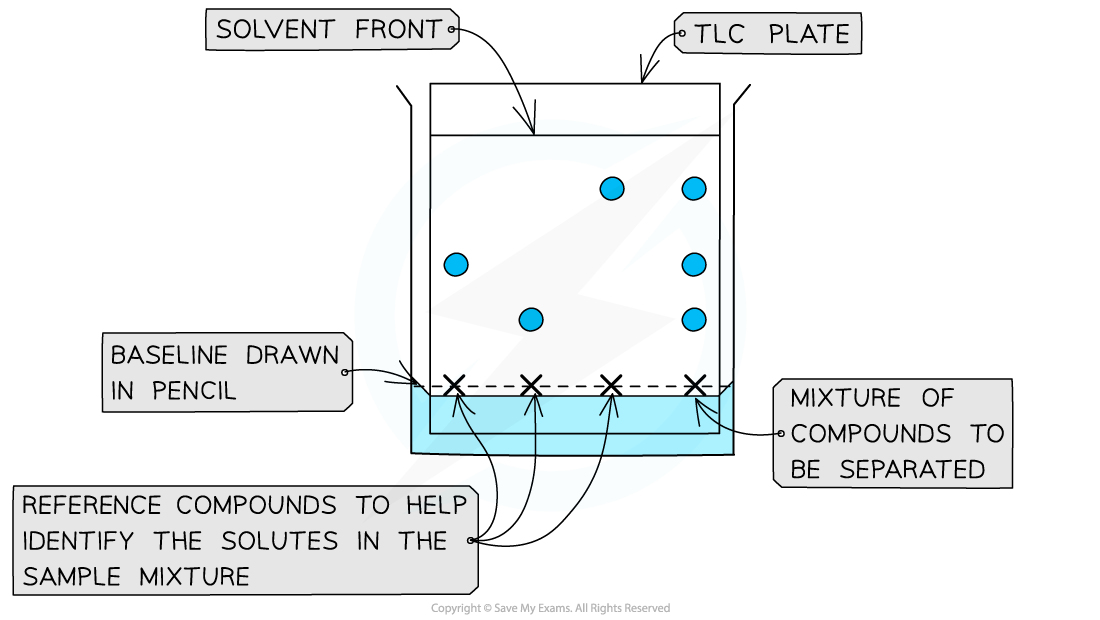
A dot of the sample is placed on the baseline and allowed to separate as the mobile phase flows through the stationary phase; The reference compound/s will also move with the solvent
Rf?values
- A TLC plate can be used to calculate Rf?values for compounds

- These values can be used alongside other analytical data to deduce composition of mixtures
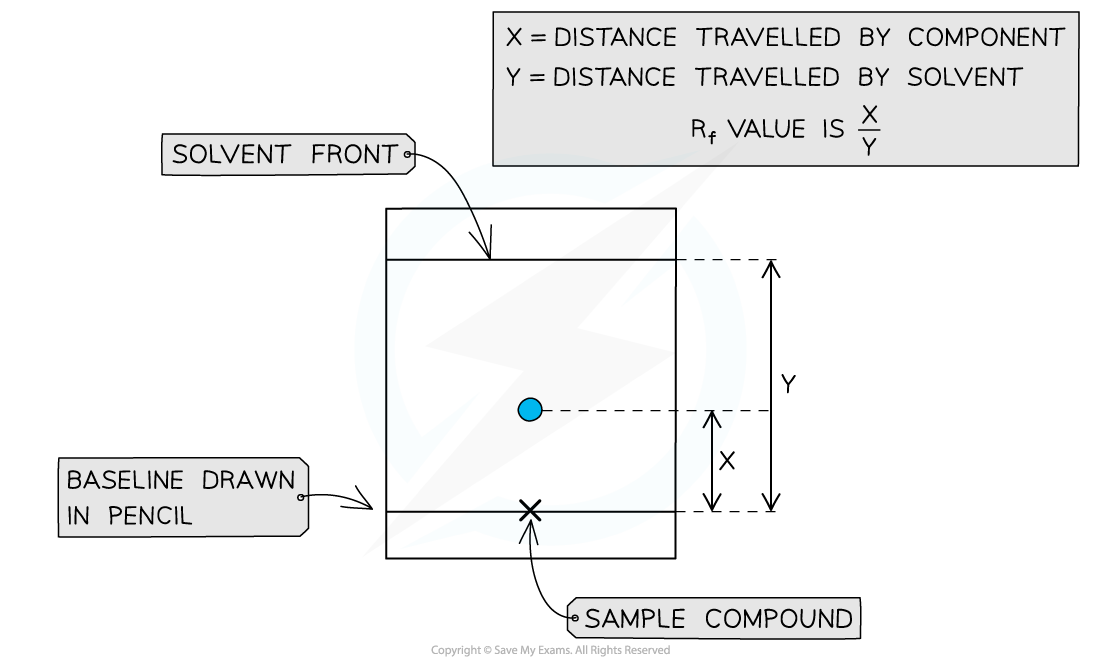
Rf?values can be calculated by taking 2 measurements from the TLC plate
Exam Tip
The baseline on a TLC plate must be drawn in pencil. Any other medium would interact with the sample component and solvents used in the analysis process.
轉載自savemyexams
以上就是關于【AQA A Level Chemistry復習筆記7.11.2 Thin Layer Chromatography】的解答,如需了解學校/賽事/課程動態,可至翰林教育官網獲取更多信息。
往期文章閱讀推薦:
2026 ALEVEL 夏考A率出爐!愛德思vs牛津AQA,哪些科目真的“好出分”?
2026 AMC10/12美國數學競賽新賽季!【翰林教育 × 清華大學出版社】獨家教材全面發售!


翰林AMC8視頻課重磅上線!

國際競賽真題資源免費領取






