AQA A Level Chemistry復(fù)習(xí)筆記3.7.2 Chlorination of Alkanes

Mechanism: Free Radical Substitution
Chain reactions
- A?free radical?is a species with one (or more than one) unpaired electrons
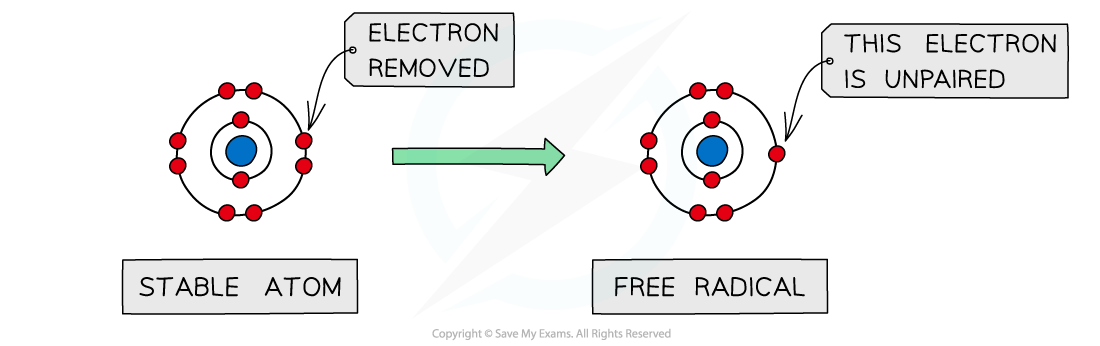
The diagram shows a free radical which has one unpaired electron
- A?free radical reaction?is a reaction involving free radicals and is a three-step reaction:
- Initiation?is the first step and involves breaking a covalent bond using energy from ultraviolet (UV) light from the sun to form two free radicals
- The?propagation?step is the second step in which the free radical can attack reactant molecules to form even more radicals
- These in turn can again attack other molecules to form more free radicals and so on
- In the?termination?step, two free radicals react together to form a product molecule
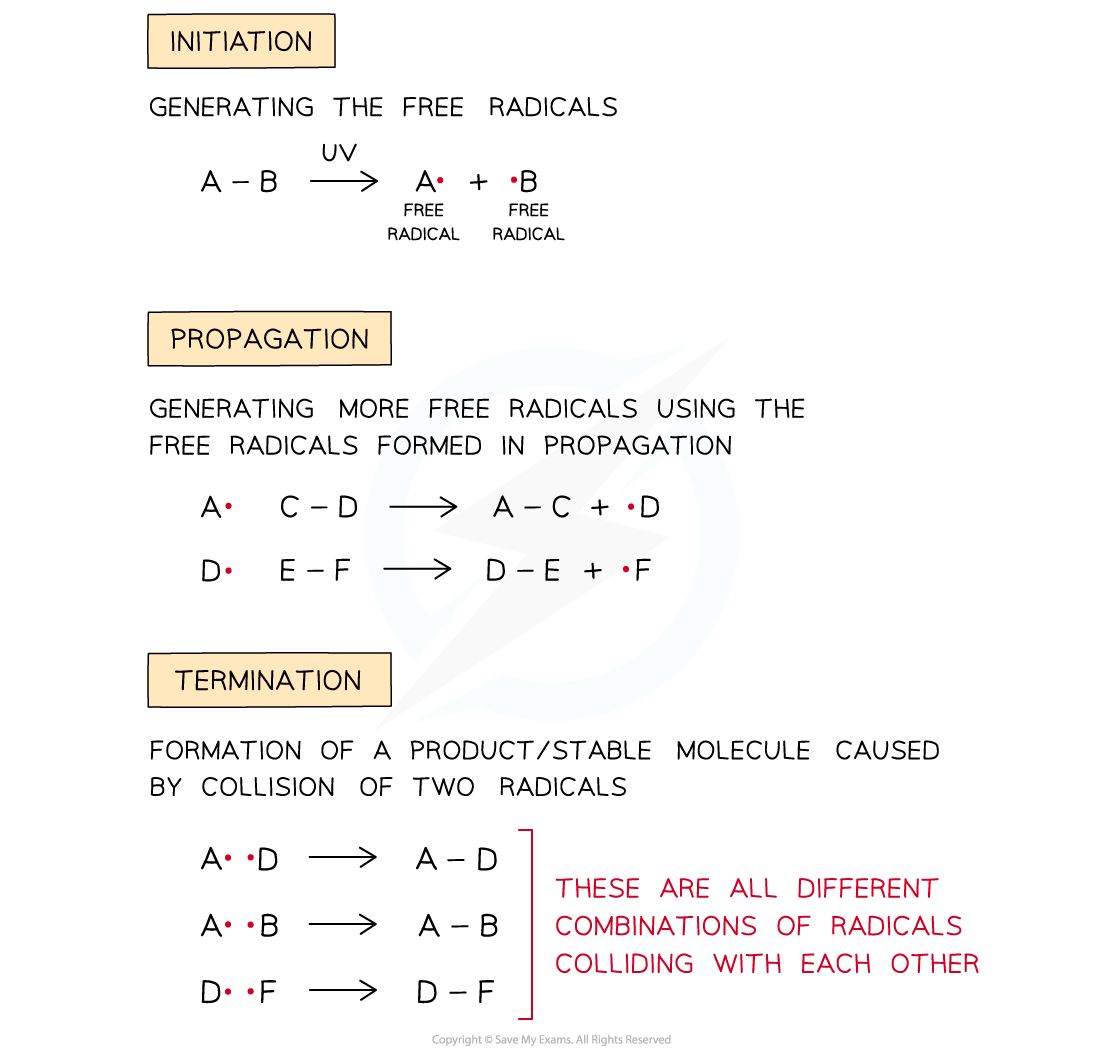
The diagram shows the different stages of a general radical chain reaction
- In an exam, the type of reaction will be a specific alkane and halogen
- For example, ethane and chlorine
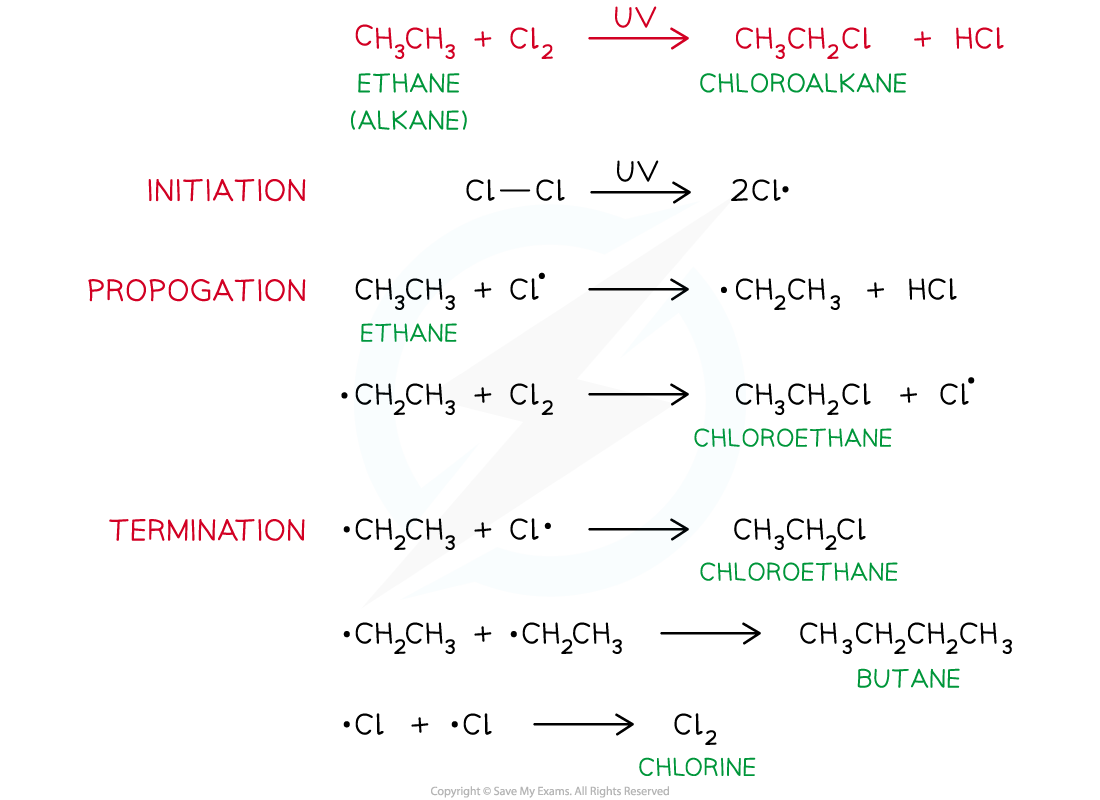
The Free Radical Substitution Reaction of Ethane and Chlorine
Exam Tip
Remember:Initiation?= a molecule forming two radicalsPropagation?= always two steps, a molecule and a radical reacting to form a different molecule and radical combinationTermination?= two radicals reacting to form a moleculeRead the question carefully - sometimes they specify which termination step you should include.
轉(zhuǎn)載自savemyexams
以上就是關(guān)于【AQA A Level Chemistry復(fù)習(xí)筆記3.7.2 Chlorination of Alkanes】的解答,如需了解學(xué)校/賽事/課程動態(tài),可至翰林教育官網(wǎng)獲取更多信息。
往期文章閱讀推薦:
2026 ALEVEL 夏考A率出爐!愛德思vs牛津AQA,哪些科目真的“好出分”?
2026 AMC10/12美國數(shù)學(xué)競賽新賽季!【翰林教育 × 清華大學(xué)出版社】獨家教材全面發(fā)售!


翰林AMC8視頻課重磅上線!

國際競賽真題資源免費領(lǐng)取






