AQA A Level Biology復(fù)習(xí)筆記3.3.2 Enzymes in Digestion

Enzymes in Digestion
- Enzymes are?substrate specific, meaning different enzymes digest and breakdown the different biological molecules contained in food
- Digestive enzymes are?extracellular?enzymes, they work outside of cells
- There are three main types of digestive enzymes –?carbohydrases, proteases?and?lipases
- If a molecule's name ends in 'ase' it is an enzyme (not all enzymes have this suffix but many do)
Digestion of Carbohydrates by Amylases and Membrane-bound Disaccharidases
- The digestion of carbohydrates takes place in the?mouth?and the?small intestine
- Amylase?is a carbohydrase that?hydrolyses?(breaks down)?starch into maltose
- Maltose is then hydrolysed into?glucose?by the enzyme?maltase
- Amylase is made in the salivary glands, the pancreas and the small intestine
- Maltase?is disaccharidase which if found in cell-surface membranes of the epithelial cells lining the small intestine
- There are also other disaccharidases in the cell-surface membrane of the epithelial cells in the small intestine: sucrase and lactase that hydrolysed sucrose and lactose respectively
- This allows the absorption of monosaccharides into epithelial cells of the small intestine which pass them into the blood stream
- Note that the lining of the small intestine is folded and there are?microvilli?present. This increases the surface area substantially allowing more membrane-bound disaccharases to fit and more absorption to take place
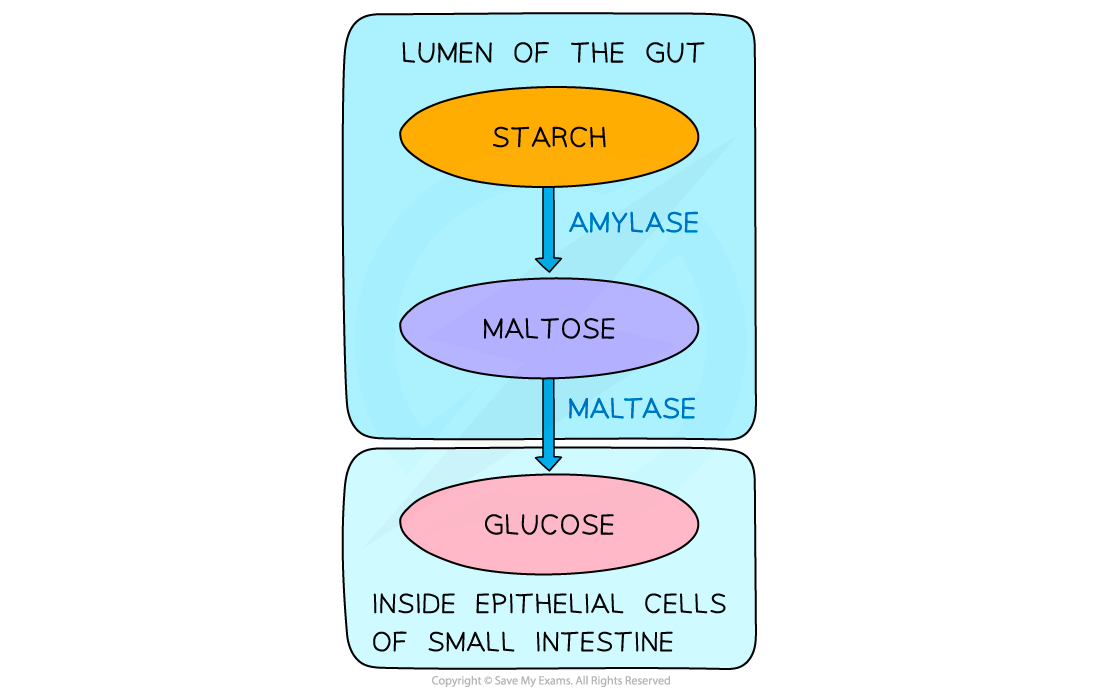
Image showing the digestion of starch by enzymes. Amylase is a carbohydrase enzyme while maltase is a disaccharidase enzyme.
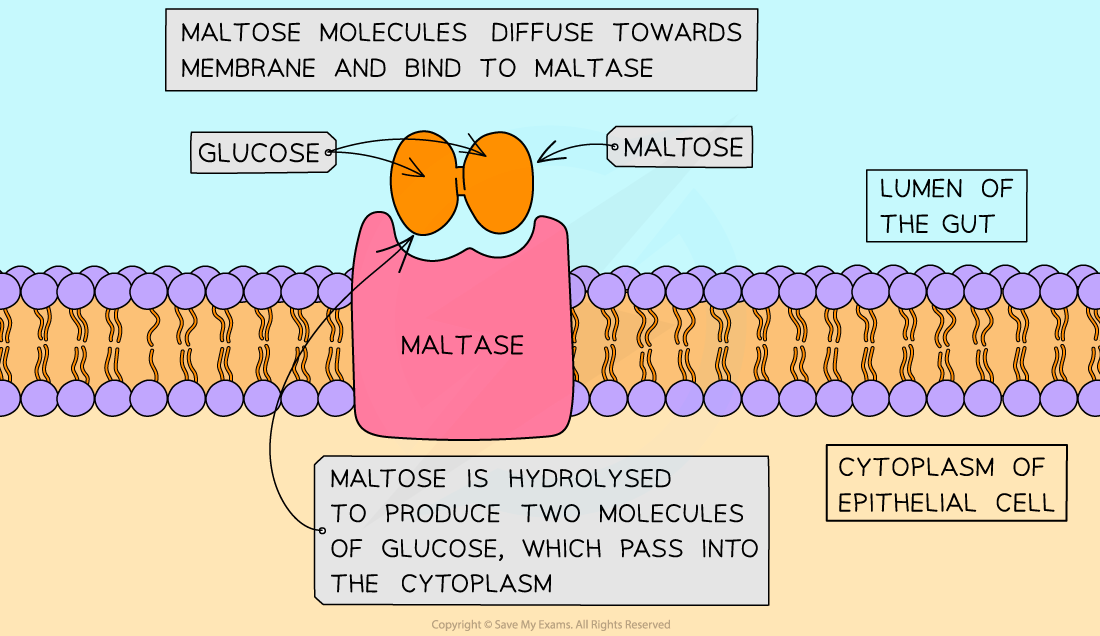
Image showing maltase inside the cell-surface membrane of an epithelial cell
Digestion of Proteins by Proteases
- Protein digestion begins in the lumen of the?stomach?by protease enzymes
- A protease enzyme called an?endopeptidase?hydrolyses?peptide bonds?within proteins, creating smaller sized protein “chunks”
- This enzyme is secreted along with?hydrochloric acid, meaning the pH in the stomach is low and therefore acidic
- The partially digested food moves from the stomach into the?small intestine
- Fluid secreted by the pancreas travels to the small intestine and helps to neutralize the acidic mixture and increase the pH. This?pancreatic juice?contains endopeptidases and exopeptidases
- Endopeptidases hydrolyse peptide bonds?within?polypeptide chains to produce dipeptides
- Exopeptidases hydrolyse peptide bonds at the?ends?of polypeptide chains to produce dipeptides
- Lastly, there are?dipeptidase?enzymes found within the cell surface membrane of the epithelial cells in the small intestine. These enzymes hydrolyse dipeptides into?amino acids?which are released into the cytoplasm of the cell
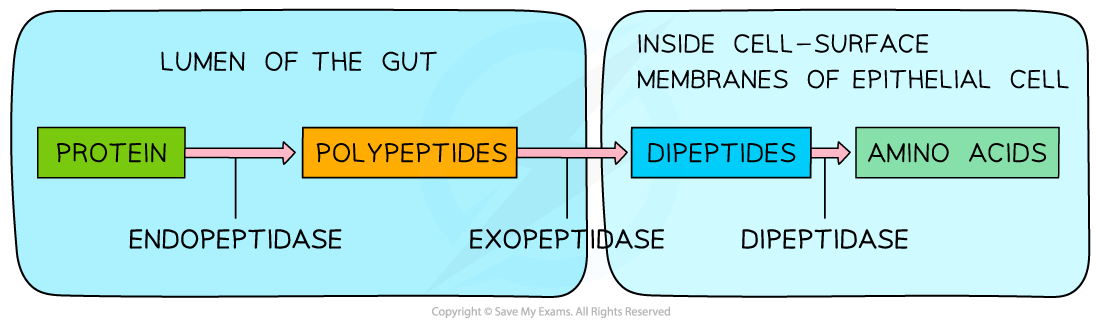
Image showing the digestion of protein by several enzymes
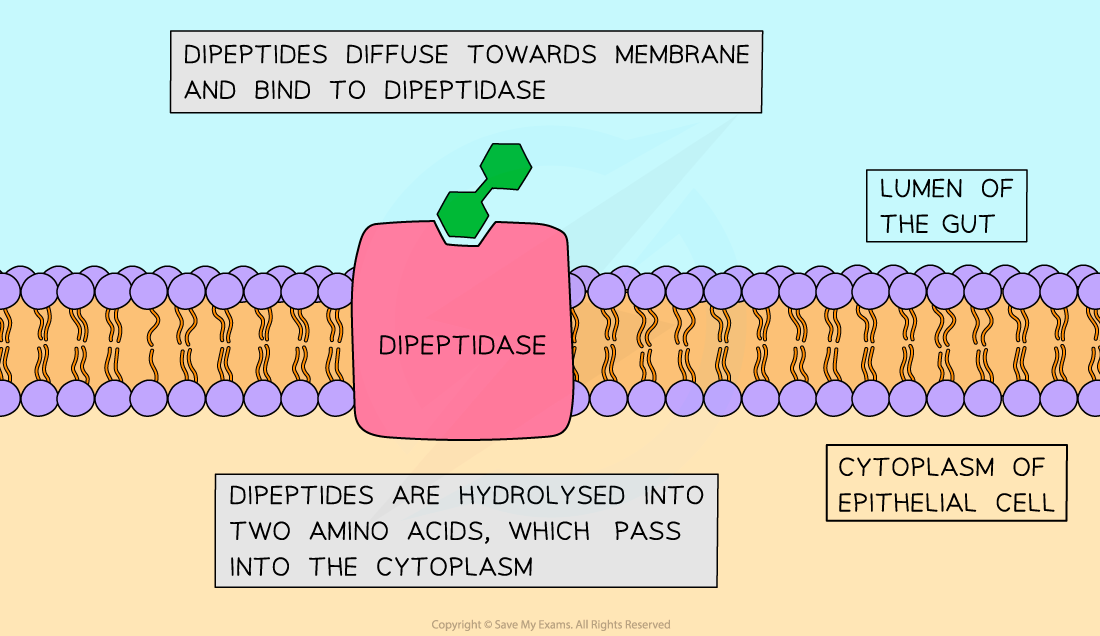
Image showing dipeptidase inside the cell-surface membrane of an epithelial cell
Digestion of Lipids by Lipases
Emulsification
- There are several stages of breakdown that lipids go through prior to digestion
- In the stomach, solid lipids are turned into a fatty liquid consisting of fat droplets - but this is?not digestion
- When the fatty liquid arrives in the small intestine,?bile?(containing bile salts) which has been made in the liver and stored in the gallbladder?is secreted
- The bile salts bind to the fatty liquid and breaks the fatty droplets into smaller ones via?emulsification
- Emulsification helps to?increase the surface area?of the fatty droplets for action of digestive enzymes
Digestion of Lipids
- The digestion of lipids takes place solely in the?lumen of the small intestine
- Lipase enzymes break down lipids (fats) to?glycerol and fatty acids
- Lipase enzymes are produced in the?pancreas?and secreted into the?small intestine?by the pancreas
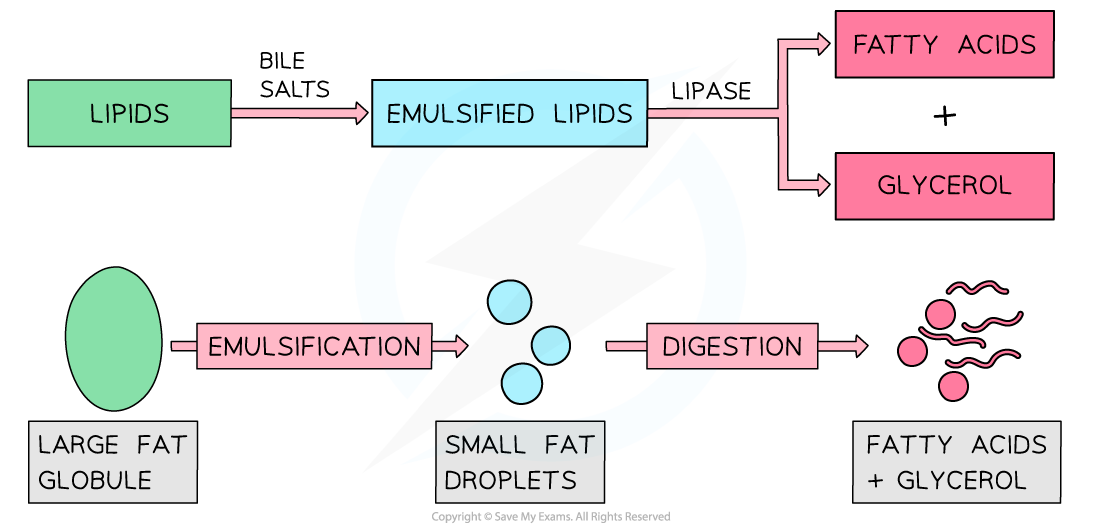
Image showing the digestion of lipids by lipase enzymes in the lumen of the gut
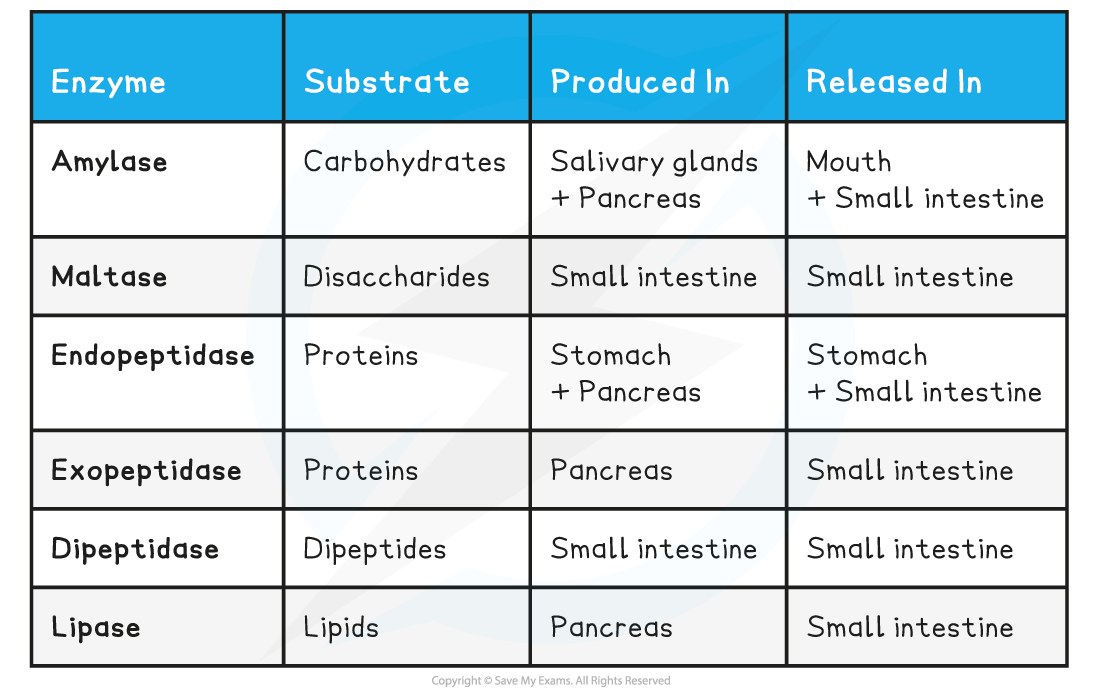
Table of Digestive Enzymes
Exam Tip
You could be asked where a digestive enzyme is secreted from and where they digest their substrate as well - these are sometimes different places!
轉(zhuǎn)載自savemyexams
以上就是關(guān)于【AQA A Level Biology復(fù)習(xí)筆記3.3.2 Enzymes in Digestion】的解答,如需了解學(xué)校/賽事/課程動態(tài),可至翰林教育官網(wǎng)獲取更多信息。
往期文章閱讀推薦:
斯坦福大學(xué)官方推薦書單!名校學(xué)霸們暑假都在讀什么?
MIT官方發(fā)布【2026年夏季推薦閱讀書單】!橫跨科學(xué)/人文/經(jīng)濟(jì)...


翰林AMC8視頻課重磅上線!

國際競賽真題資源免費領(lǐng)取






