藤校學(xué)霸們都參加的美國四大數(shù)學(xué)頂尖夏校!

參加的學(xué)生中67%都進(jìn)入哈耶普斯麻,想要get藤校錄取學(xué)霸的同款活動(dòng)嗎?今天翰林就為大家來詳細(xì)介紹一下四大數(shù)學(xué)夏校!感興趣的同學(xué)們趕緊收藏收藏!
ROSS數(shù)學(xué)營
Ross Mathematics Program
ROSS于1957年在圣母大學(xué)創(chuàng)立,并于1964年起與俄亥俄州立大學(xué)聯(lián)合舉辦,是美國三大數(shù)學(xué)營(另外兩個(gè)是PROYMS,斯坦福數(shù)學(xué)營)之首,在數(shù)學(xué)圈內(nèi)名聲極大。
ROSS數(shù)學(xué)營每年只接受40名第一年參與的學(xué)生以及10-15名青年輔導(dǎo)員(junior counselors)。其中青年輔導(dǎo)員是上一年在項(xiàng)目中表現(xiàn)優(yōu)異,想重返參加的學(xué)生。
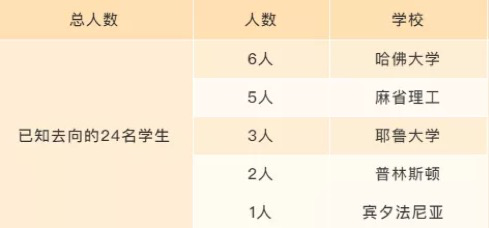
ROSS數(shù)學(xué)營學(xué)員的大學(xué)申請成績極為亮麗,以上是24名已知去向的參加,其他7位學(xué)生分別選擇杜克大學(xué)、UC伯克利大學(xué)、滑鐵盧大學(xué)、密歇根大學(xué)、東北大學(xué)、亞利桑那州立大學(xué)等等。
由于疫情影響,2020和2021年ROSS數(shù)學(xué)營都采用了線上模式進(jìn)行,2022年預(yù)計(jì)為線上形式(以官方具體通知為準(zhǔn))。
適合學(xué)生:全球15-18歲學(xué)生
申請時(shí)間:1月開放申請窗口,4月1日截止。招生委員會(huì)將于3月開始做出錄取決定。
開營時(shí)間:6月27日-8月6日共六周(參考2021年)
申請要求:申請表、簡答題、數(shù)論題、學(xué)校成績單、教師推薦信、托福不低于80分且口語22分以上。
數(shù)學(xué)測試題的特點(diǎn):Ross數(shù)學(xué)測試有4道提供,每道題又包含很多小問題。注重引導(dǎo)申請者發(fā)現(xiàn)規(guī)律。小題目由淺入深,理論知識越來越難,需要總結(jié)的規(guī)律層次也越深。羅斯題目很開放,沒有固定答案,在做題過程中可以得出很多結(jié)論,申請者需要證明自己的結(jié)論,不論正取與否。
Ross數(shù)學(xué)營的申請難度極大,招生比例不超過10%。Ross美國營每年只招60位新學(xué)員,中國學(xué)生的錄取率則更低。所以充足的準(zhǔn)備,是一定不能少的,畢竟進(jìn)入Ross數(shù)學(xué)營相當(dāng)于半只腳已經(jīng)踏入了常春藤名校!
課程費(fèi)用:$1500
課程內(nèi)容:以數(shù)論為中心延伸至以下方向:歐幾里德算法、模塊化算術(shù)、多項(xiàng)式、二項(xiàng)式系數(shù)、連續(xù)分?jǐn)?shù)、高斯整數(shù)、數(shù)學(xué)幾何、有限域等。課程為期6周,每周上課8小時(shí)(講座5小時(shí),問題研討會(huì)3小時(shí))。除此之外,還需要?jiǎng)澐謺r(shí)間去解決課程上的數(shù)學(xué)遺留問題,每解決一個(gè)數(shù)學(xué)問題后,需要寫一份清晰完整的證明過程。
課程大致主題:
Euclid’s Algorithm.
Greatest common divisor. Diophantine equation ax + by = c.
Proof of unique factorization in Z.
Modular arithmetic.
Inverses. Solving congruences. Fermat’s Theorem. Chinese Remainder Theorem.
Hensel’s lemma for solving congruences (mod pm).
Binomial coefficients.
Pascal’s triangle. Binomial Theorem.
Arithmetic properties of binomial coefficients, like: (x+y)p = xp + yp (mod p).
Polynomials.
Division algorithm, Remainder Theorem, number of roots.
Polynomials in Zp[x]. Irreducibles and unique factorization.
Z[x] and Gauss’s Lemma.
Cyclotomic polynomials.
Orders of elements.
Units. The group Um. Computing orders.
Cyclicity of Up. For which m is Um cyclic?
Quadratic reciprocity.
Legendre symbols. Euler’s criterion. Gauss’s fourth proof of Reciprocity.
Jacobi symbols.
Continued fractions.
Computing convergents. |x – p/q| < 1/q2.
Best rational approximations. Pell’s equation.
Arithmetic functions.
phi(n), tau(n), sigma(n), and mu(n). Multiplicative functions.
Sum of f(d) as d divides n. Moebius Inversion.
Convolutions of functions.
Gaussian integers: Z[i].
Norms. Which rational primes have Gaussian factors? Division algorithm.
Unique factorization. Fermat’s two squares theorem.
Counting residues (mod a+bi).
Finite fields.
Characteristic. Frobenius map. Factoring xpn – x.
Counting irreducible polynomials.
Uniqueness Theorem for the field of pn elements.
Resultants.
Discriminant of a polynomial and formal derivatives.
Resultant of two polynomials and relation with Euclid’s algorithm.
Another proof of Quadratic Reciprocity.
Geometry of numbers.
Lattice points. Pick’s Theorem. Minkowski’s Theorem.
Geometric interpretation of the Farey sequence and continued fractions.
Geometric proofs of the two square and four square theorems.
Quadratic number fields.
Which quadratic number rings are Euclidean? For instance
Z[sqrt(d)] is Euclidean when d = -1, -2, 2, 3 but not when d = -3, -5 or 5.
Algebraic integers.
SUMaC斯坦福大學(xué)數(shù)學(xué)營
Stanford University Mathematics Camp
SUMaC成立于1995年,由斯坦福大學(xué)三位教授合作創(chuàng)立和運(yùn)營。每年招收40名學(xué)生,目前參與者已遍布50多個(gè)國家和地區(qū),是北美地區(qū)影響力非常大的數(shù)學(xué)項(xiàng)目制夏校之一。斯坦福大學(xué)數(shù)學(xué)營(SUMaC)通過課程,指導(dǎo)性研究和小組問題解決引領(lǐng)學(xué)員進(jìn)入高等數(shù)學(xué)之旅。在以數(shù)學(xué)為中心的活動(dòng)環(huán)境中,探索數(shù)學(xué)研究的趨勢,回顧重要數(shù)學(xué)領(lǐng)域的歷史發(fā)展以及跨科學(xué)學(xué)科的應(yīng)用。
項(xiàng)目特點(diǎn):SUMaC課程的重點(diǎn)純粹是研究數(shù)學(xué)這門獨(dú)立的學(xué)科,并在學(xué)習(xí)的過程中引進(jìn)各重要的應(yīng)用等。但是SUMaC課程并不是為了學(xué)分或成績而設(shè)計(jì)的,純粹是為了提高分享數(shù)學(xué)的魅力。在這樣的目標(biāo)為前提下,SUMaC為學(xué)生提供兩個(gè)研究方向的主題課程作為選擇,學(xué)生可以任選其中之一,深入地研究自己感興趣的課題而不必過多擔(dān)心自己的成績。20多年來,這已經(jīng)成為了SUMaC得以吸引眾多學(xué)生的亮點(diǎn)之一。
SUMaC項(xiàng)目專注于純數(shù)學(xué),同時(shí)提供高度挑戰(zhàn)性的Program I和Program II兩個(gè)系列課程。今年P(guān)rogram I的主題是抽象代數(shù)和數(shù)論,研究方向包括Cryptography, Constructibility, Coding Theory, and Symmetry。Program II的主題是代數(shù)拓?fù)鋵W(xué)。兩個(gè)系列都是當(dāng)前數(shù)學(xué)研究的核心主題,同學(xué)們只能選擇其中一個(gè)方向深入學(xué)習(xí)。
Program I-抽象代數(shù)與數(shù)論:該課程將通過5個(gè)問題進(jìn)行開展,包括直尺和羅盤構(gòu)造的局限性,二維模式的分類,糾錯(cuò)碼,密碼學(xué)以及結(jié)構(gòu)對稱性分
Program II-代數(shù)拓?fù)洌?/strong>該課程重點(diǎn)是代數(shù)拓?fù)洌負(fù)涫菍Σ皇茏冃斡绊懙男螤钐匦缘难芯浚@是當(dāng)前數(shù)學(xué)研究的主要領(lǐng)域。本課程將探索使用代數(shù)概念(例如群的概念)分析形狀的拓?fù)涮匦缘牟煌椒ā?/p>
由于疫情影響,2021年SUMaC轉(zhuǎn)為在線舉行,2022年預(yù)計(jì)為線上形式。 適合學(xué)生:全球10-11年級學(xué)生 申請時(shí)間:1月開放申請,3月10日截止(參考2021年) 開營時(shí)間:共2期,每期3周(參考2021年) 第一期:6月21日-7月9日 第二期:7月19日-8月6日 適合學(xué)生:全球15-18歲學(xué)生 申請要求:學(xué)校成績單、教師推薦信、數(shù)學(xué)作業(yè)樣本、入營考試題、學(xué)生陳述的入營理由、財(cái)政資助申請表(按照學(xué)生個(gè)人需求*)等。 PROMYS青少年科學(xué)家數(shù)學(xué)項(xiàng)目 Program?in?Mathematics?for Young?Scientists 青年科學(xué)家數(shù)學(xué)計(jì)劃Program in Mathematics for Young Scientists,簡稱PROMYS,于1989年由格倫?史蒂文斯教授和其他三位現(xiàn)任教職員工創(chuàng)立。它與羅斯數(shù)學(xué)訓(xùn)練營(Ross Mathematics Program)和斯坦福數(shù)學(xué)夏令營(Stanford University Mathematics Camp)并稱為美國三大頂尖數(shù)學(xué)訓(xùn)練營。 PROMYS旨在鼓勵(lì)有理想、有抱負(fù)的中學(xué)生探索充滿創(chuàng)造力的數(shù)學(xué)世界。每年有來自世界各地的約80名中學(xué)生(60名新生及20名老生),在波士頓大學(xué)校園里進(jìn)行數(shù)學(xué)探索項(xiàng)目。作為同樣以研究數(shù)論為主的訓(xùn)練營,他們有著相似的教學(xué)模式,但是也有細(xì)節(jié)上的區(qū)別,感興趣的同學(xué)、家長可以深入了解,選擇更適合自己的項(xiàng)目。 適合學(xué)生:14-18周歲,完成9年級學(xué)習(xí)的中學(xué)生 申請時(shí)間:1月開放申請(參考2021年) 開營時(shí)間:7月3日-8月13日(參考2021年) 地點(diǎn):波士頓大學(xué),線下(初步計(jì)劃) 申請要求:學(xué)校成績、教師推薦信、入營考試題、文書、申請表等。 注:PROMYS的申請材料中不包含托福成績,但是營期所有講座、交流都是全英文的,所以一定要英文過關(guān)才能參加。測試題是申請材料中最重要的部分,雖然不一定要全部答出來,但是從測試題中,招生人員能看出你的思維過程,如何面對有挑戰(zhàn)性的問題等,一定要認(rèn)真對待。 美加數(shù)學(xué)營 Canada/USA Mathcamp 美加數(shù)學(xué)營成立于1993年,是美國數(shù)學(xué)基金會(huì)的旗艦項(xiàng)目,Canada/USA Mathcamp是一個(gè)針對高中數(shù)學(xué)天才進(jìn)行為期5周的暑期強(qiáng)化課程,課程內(nèi)容均是大學(xué)數(shù)學(xué)甚至是研究生水平的數(shù)學(xué)主題課程,和數(shù)學(xué)學(xué)術(shù)活動(dòng)沒有直接關(guān)聯(lián),旨在使學(xué)生接觸高級數(shù)學(xué)思想和新的思維方式。數(shù)學(xué)營面向全球13至18歲且具有很高數(shù)學(xué)水平和興趣的中學(xué)生,其中不乏入選各國國家奧數(shù)集訓(xùn)隊(duì)的學(xué)生。 Mathcamp不僅僅是一個(gè)夏校,更是一個(gè)充滿活力的社區(qū),由各種各樣的人組成,他們對學(xué)習(xí)和數(shù)學(xué)有著共同的熱愛。在Mathcamp,學(xué)生可以探索本科,甚至研究生課程,同時(shí)建立解決問題的能力,以幫助他們想要研究的任何領(lǐng)域。美加數(shù)學(xué)營每年大概招手120名學(xué)員(新生65人,老學(xué)員55人),提供的國際生名額比例在10%-15%。值得一提的是,Canada/USA Math Camp非常鼓勵(lì)和支持喜歡數(shù)學(xué)的女孩子申請。每年學(xué)員中,女生占比達(dá)到45%-50%,這無疑對女孩子有很大的吸引力。 由于疫情影響,2022年為線上形式舉辦。 適合學(xué)生:全球13-18歲學(xué)生 申請時(shí)間:1月開放申請,3月10日截止(參考2021年) 開營時(shí)間:7月3日-8月8日(參考2021年) 申請要求:學(xué)校信息及數(shù)學(xué)背景、2封推薦信(數(shù)學(xué)推薦信、個(gè)人推薦信)、申請測驗(yàn)(5-10題)、申請文書。 Camp往年教授的數(shù)學(xué)科目: Discrete Mathematics 以上就是關(guān)于【藤校學(xué)霸們都參加的美國四大數(shù)學(xué)頂尖夏校!】的解答,如需了解學(xué)校/賽事/課程動(dòng)態(tài),可至翰林教育官網(wǎng)獲取更多信息。 往期文章閱讀推薦: ??2027年QS最佳留學(xué)城市排名發(fā)布!倫敦位列第三,北美竟無緣Top10 ? 王虹、鄧煜!兩位中國數(shù)學(xué)家同獲菲爾茲獎(jiǎng)!中國數(shù)學(xué)史新紀(jì)元!
Combinatorics (enumerative, algebraic, geometric)
Generating functions and partitions
Graph theory
Ramsey theory
Probability
Finite geometries
Polytopes and polyhedra
Combinatorial Game Theory
Algebra and Number Theory
Linear algebra
Groups, rings, and fields
Primes and factorization algorithms
Congruences and quadratic reciprocity
Galois theory
Algebraic number theory
Analytic number theory
Fermat's Last Theorem for polynomials
p-adic numbers
Geometry of numbers
Geometry and Topology
Euclidean and non-Euclidean (hyperbolic, spherical, projective, inversive) geometries
Geometric transformations
Algebraic geometry
Point-set topology
Combinatorial topology
Knot theory
The Brouwer Fixed-Point Theorem
Calculus and Analysis
Topics in calculus
Fourier analysis
Complex analysis
Real analysis
Dynamical systems
Set Theory, Logic, and Foundations
Cardinals and ordinals
G?del's Incompleteness Theorem
The Banach-Tarski Paradox
Model Theory
Category Theory
Computer Science
Theoretical CS
Complexity theory
Information Theory
Cryptography
Algorithms
Connections to Other Fields
Relativity and quantum mechanics
Neural networks
Mathematical biology
Game theory
Voting theory
Bayesian statistics
Discussions
Philosophy of Mathematics
Math Education
How to Give a Math Talk
College And Beyond
Problem Solving
Proof methods
Elementary and advanced techniques
Contest problems of various levels of difficulty
Relays and team competitions

翰林AMC8視頻課重磅上線!

國際競賽真題資源免費(fèi)領(lǐng)取






