雙語|如何高效學習AP課程

2017年已經是過去式了,2018年悄悄到來啦。要考AP的同學已經開始準備了,如果感到無從下手的話,可以借鑒田心的學長學姐們的學習經驗,看看他們是怎么學習AP的吧!
AP represents Advanced Placement, which obviously is attached closely to a higher study standard compared to the degree of difficulty of study in most senior highs in United States. As we all know, the high pressure-studying mode in Chinese schools helps a lot of students build solid foundations in science. The knowledge we learned in our high schools has already helped students gain confidence and lay a positive attitude towards subjects like mathematics, physics, biology and chemistry. Since I personally signed myself up to Calculus BC, Physics C: Electricity and Magnetism& Mechanics and Statistics, it is convincible to share some of my personal experience and ideas of learning these subjects.
AP是“進階學習”的簡稱,顧名思義,這些課程的難度高于大多數美國普通高中的課程。眾所周知,中國高中的高壓式教育使得大多數學生打下了扎實的理科基礎,尤其對數理化生幾門學科的學習態度尤為積極。由于我個人僅僅報名了微積分BC、物理C:電磁/力學和統計這四門學科,所以也就適合淺談一下自己個人的學習經歷和啟發
2Compared with other three subjects that I mentioned earlier, Calculus BC is definitely the easiest to learn. Calculus itself is always considered to be ‘the killer of GPA’ in lots of undergraduates’ minds in China, because it involves the memory of complex equations and laws, the sensibility of numbers and transforms and also, one of the most important, the ability of calculation. But AP Calculus BC does not require students to apply knowledge in a very flexible way, it focuses on the most basic utilizations of calculus. When we notice this trait of Calculus BC, it naturally gives us a train of thoughts on how to get a satisfied grade in Calculus BC.
與其他三門學科相比,微積分BC是最易學的。微積分本身在許多中國高校學生的眼中可謂是“GPA殺手”,因為它要求學生擁有記憶復雜公式和定理的能力,要有數字敏感度、對變型的觀察力以及最重要的,計算的能力。但是AP考試中的微積分并不如高數一樣要求學生十分靈活地掌握運用知識,而是將重點落在如何運用最基本的微積分和數理知識。當我們察覺到微積分BC的這一個特點的時候,自然就能啟發我們得出如何獲得滿意成績的方法
First, practicing in time is a necessary method of learning anything. But practicing should not be blindly. At the beginning of getting to know integrals, only calculating a simple integral is somewhat operose for me. I realized the necessary of doing more practice. Thus, besides completing the part of tasks (which can be finished in 20 minutes) asked by our teachers, I started to give myself more assignments to make a deeper impression of the knowledge. I would not rush to finish my assignments, because I always think it is very efficient to learn if I can use multiple ways to solve one question. Sometimes teachers provide more than one method to work out an example. During the process of using various ways to solve questions can help me conclude a set of rules about how to solve a question in the shortest period of time. Different individuals have very different habits to do calculations and reasoning, so I think it is needful to build our own system to solve problems better.
第一點,練習是掌握任何學科的必要方法但盲目練習并不是個好方法。在學習積分知識的初期,僅僅是計算一個最簡單的積分對我而言也難以解決。這也是促使我加強練習的原因。因此,除了完成老師所布置的學習任務(通常在二十分鐘以內就能夠全部完成),我開始通過額外練習以加深對于知識的印象。我不會過于著急地去完成任務,因為如果我能夠通過多種方法解決同一個問題,這才是高效學習的好辦法。有時,老師會為同一個例子提供不止一種解決方案。通過多種方式解決問題的過程幫助我總結出一套在最短時間內處理問題的規律。因為不同的學生在計算方式、推理習慣上都有所不同,所以我認為建立一個適合自己解決問題的系統為上策。
Second, as long as I am studying science, I have a habit of reread notes and examples every week or two. I am no good at memory; thus, it is indispensable for me to review important points once in a while. Besides, after taking all the courses for one subject, I would make my own error correction notebook. I never think it is necessary to record all the mistakes you have ever made. This mode can only be a stupid way to waste time. When all classes were over, I’d like to redo the questions that I did wrong or felt uncertain at the first round. After doing so, a blur concept of which part of knowledge that I was poor at became clear. At last, I would transfer all those selected questions on my notebook.
第二點,只要我是在學習理科,我養成了一個每隔一周或兩周就要復習筆記和例子的習慣。我不是個記憶性人才,也正因此及時復習才如此重要。除此之外,在每一門課結束之后,我都會制作糾錯本。我從不認為將所有自己曾經做錯過的題目摘抄下來是必要的。這樣盲目的糾錯只不過是在浪費時間而已。當所有課上完了,我會將自己第一次做錯或不確定的題目再做一邊。這樣以后,我原本對于自己到底哪些知識不擅長的模糊印象也變得清晰了。最后,我才將所選部分問題謄寫(或者剪下來貼)至筆記本。
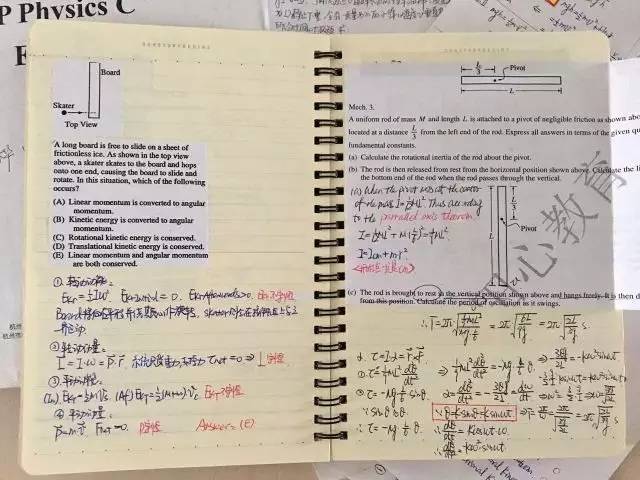
Third, for subjects like Physics C: Electricity and Magnetism& Mechanics, I prefer to prepare lessons before the class. Well, you might feel it is the same old shit again. I am not an expert of physics, so I always use Princeton as my textbook to prepare for the upcoming class. If you have a specialty in physics, there is definitely no need to prepare for the class at all. A big part of Physics C is based on senior high physics and calculus, so if you have time to review your high school textbooks and ‘just-learned’ calculus would be the best. I personally think some practicing questions in Princeton are more difficult than those in the real examinations. But do not give up practicing those challenging questions, because those questions are perfect materials to test whether you have mastered the class or not. It would be better if you can redo those challenging questions some days later.
第三點,對于物理C:電磁/力學這樣的學科,我偏好先預習再聽講。你或許覺得又是老生常談的東西。我不是一個物理專家的人,所以我會使用普林斯頓作為我預習的材料。如果你是一個擅長物理的人,自然就沒有必要提前準備了。物理C的很大一部分都是建立在高中物理和微積分上的,所以如果你有時間在課前重溫一下高中知識和剛學會的微積分就再好不過了。我個人感覺普林斯頓上的某些習題難度大于真考。但請千萬不要就此放棄這些具有挑戰性的題目,因為這些題目是檢驗你是否熟練掌握已學知識的完美材料。當然,如果你可以做完這些之后過幾日再做一次便更好了。
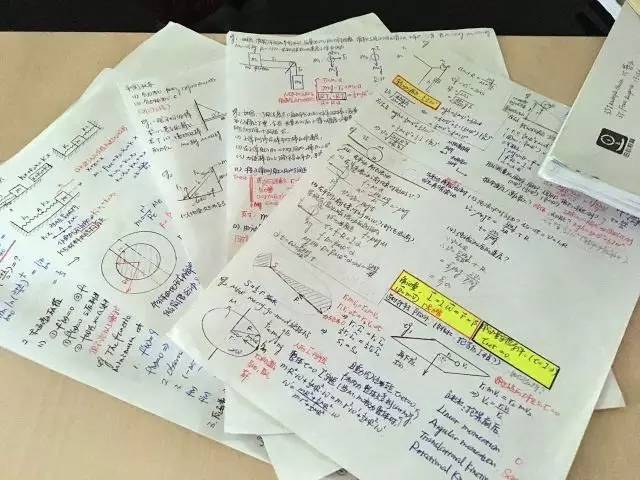
Fourth, using calculator is one of the most important skills for science-related subjects, especially for statistics. For students who spent their first 18 years in China, statistics is a brand new subject, which seems to be not as difficult as calculus but very tedious and requires patience. Most definitions in AP Statistics are explained with subordinate clauses, which means they are difficult to understand let along be used perfectly. A very big part of statistics requires calculators. Calculators are what make the process of understanding quicker. At first, I could not even remember the correspondence between the button and the method, but it got better and better with the practice of free response. If there is no enough time for you to do practice, just write down every single step you use when you do one set of free response. Then try to use the calculator while reading the written steps whenever you have some fractional time.
第四點,對于理科相關學科,學會使用計算器非常重要,特別是對于統計。對于前十八年都在中國接受教育的學生而言,統計是一個全新的學科,這門學科似乎雖不像微積分那樣難卻十分乏味,需要耐心。大多數AP統計的定義都在用從句被解釋,可見它們有多難以理解更加別提被完美運用了。很大一部分的統計題目都需要計算器才能解決。計算器也是幫助學生更快速深入理解復雜概念的手段。起初,我甚至無法將計算器上的按鈕和某一種算法對應起來,但隨著練習簡答題的次數變多,這也漸漸好轉了。如果你沒有足夠的練習時間了,就將你做完一套簡答題所用過的每一個計算器步驟都記錄下來。然后試著在自己有碎片時間的時候,按照自己的筆記步驟練習使用計算器。
ENDI guess you would feel a little bit challenged when you are in the process of learning AP, but the real AP examinations are not as difficult as you imagine. So, last but not least, be confident.
我猜想你會在學習AP的過程中感到有些小困難,但請放心,真正的AP考試不想你想像的那樣難。所以,最后,請保持自信。
以上就是關于【雙語|如何高效學習AP課程】的解答,如需了解學校/賽事/課程動態,可至翰林教育官網獲取更多信息。
往期文章閱讀推薦:
新賽季AP如何“彎道超車”?拒絕無效內卷!AP科學選課指南來了!
CB官宣重磅新規!2027年AP考試開考時間新規解讀+大考日程發布!大陸報名搶位開啟行動,翰林3大考點幫你提前鎖位!


翰林AMC8視頻課重磅上線!

國際競賽真題資源免費領取






