G9-11 | AI Lab Semester Summary 人工智能實(shí)驗(yàn)室學(xué)期總結(jié)

G9-11 |AI Lab Semester Summary
At the end of last semester, Shanghai Jiao Tong University (SJTU) and Shanghai High School International Division (SHSID) jointly funded an Artificial Intelligence (AI) lab on Computer Vision and Machine Learning (CVML). Fifteen grade 9 to grade 11 students participated in this program.During the following winter break, the students were assigned with tons of reading materials as well as coding practice as a jump start. Since the beginning of this semester, AI lab program has been rolled out with full speed. Professor Ni Bingbing and his team from SJTU traveled to the SHSID campus every Friday afternoon to provide lectures on a series of AI topics with lab work supervision, as well as homework assignments. The first few lectures were not easy, yet with Professor Ni and his team’s vivid teaching style, the Friday after-school AI lab studies soon became the most expected one for many of the students. Throughout the semester, the students not only learned many topics in AI, but also utilized numerous libraries of Python, and then experimented how parameters in the codes producing different results. The semester ended up with small group projects on three topics: generative adversarial network (GAN), recommender system, and semantic segmentation and object detection.
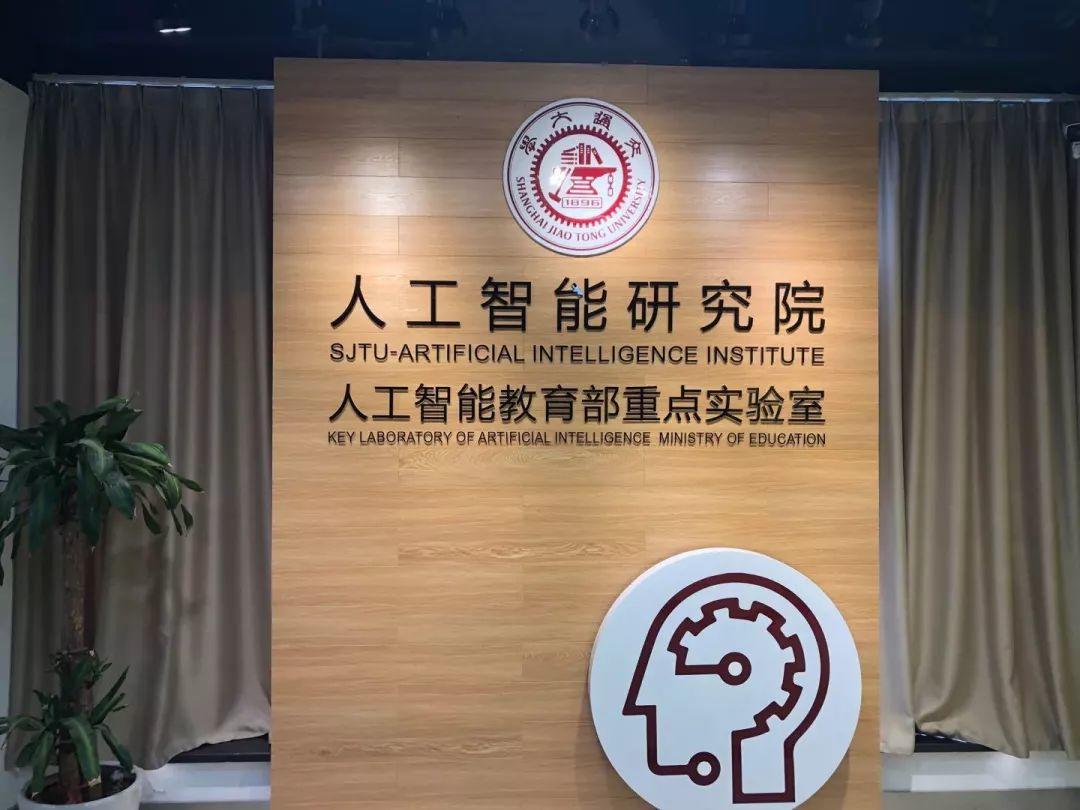
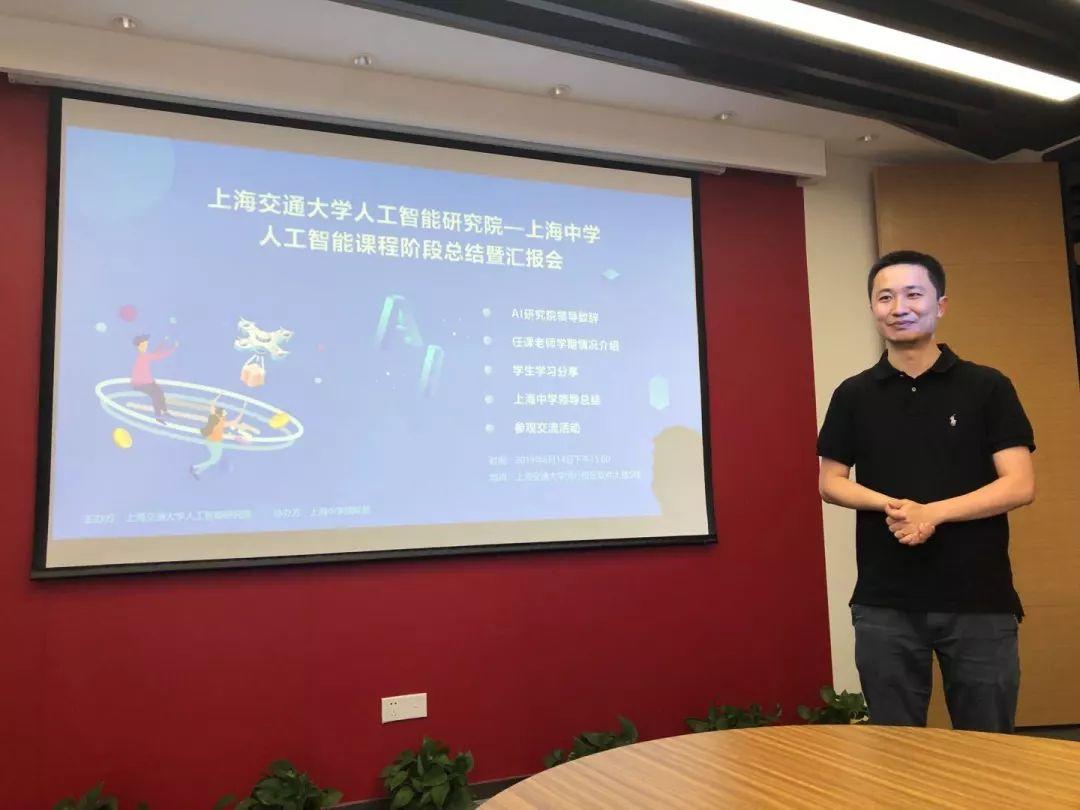
On the afternoon of June 14th, the students visited the AI Research Institute of SJTU as the last session for this semester. The conclusion meeting opened up with a speech from Mr. He, the AI Research Institute leader at SJTU. He welcomed SHSID students for joining this program and talked about his vision on AI researches. Then, Professor Ni, the main instructor for the program, summarized the topics conducted during this semester and laid out his future plans. He suggested the learning of more practical subjects such as human face detection, image search recommendation and the design of unmanned ground vehicles, a few hot areas that could engage the students even better in the near future. Professor Ni also mentioned the wishes of many students—doing more challenging research projects, which can further enhance the students’ abilities in more dimensions.
After the opening speeches, the students went up by groups and each presented their reflection for the program, learnings from the final project, as well as the suggestions to make this program more productive. Every student reflected that they have benefited a lot through the AI course, and even extend some of the learnings in competitions outside of the school, as well as applying their AI knowledge into other activities. Then, Mr. Liao from SHSID wrapped up the meeting and hoped that the students can be motivated to achieve more in breadth and in depth under the guidance of Professor Ni and his team. The trip to SJTU successfully ended with a visit to the AI laboratory, where students got to witness the various fields that AI can be applied to and the astonishing results created by AI research.
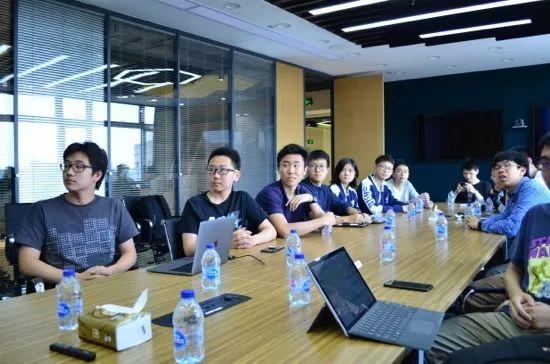
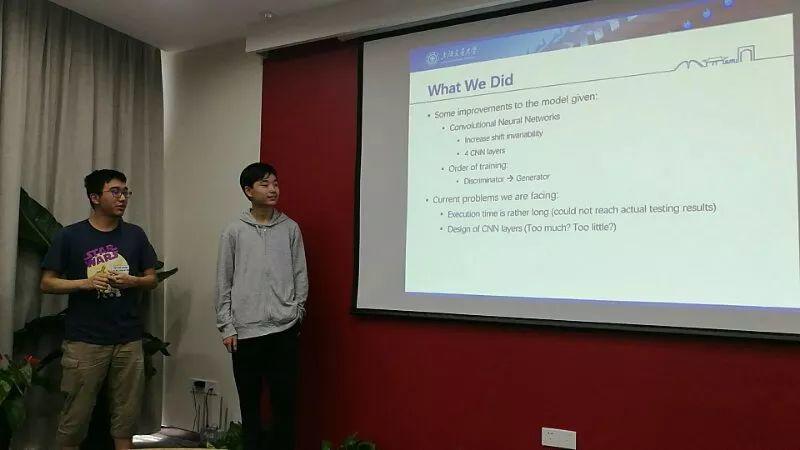
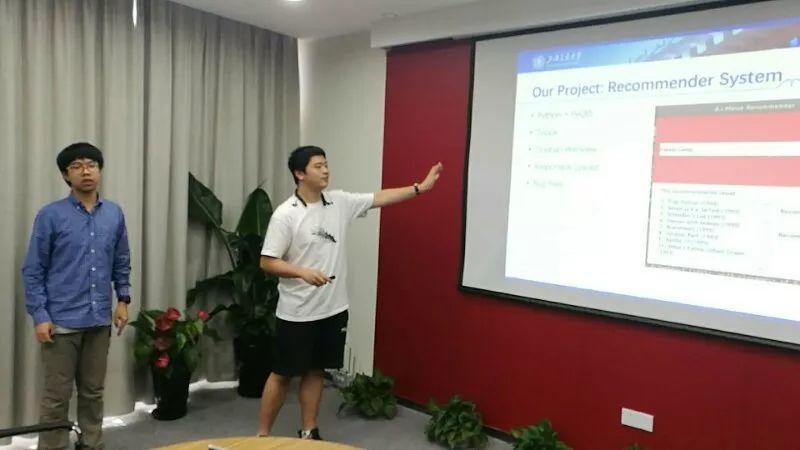
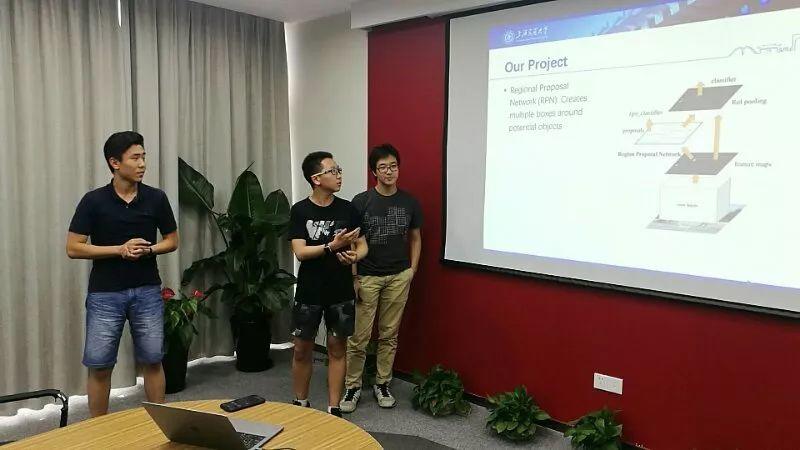
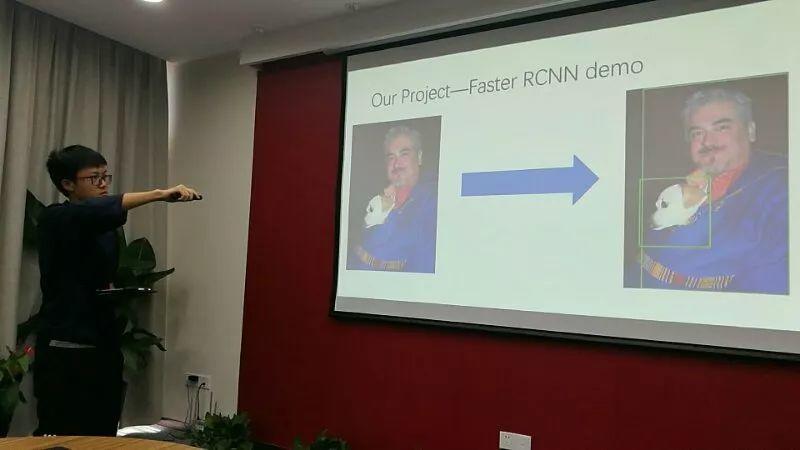
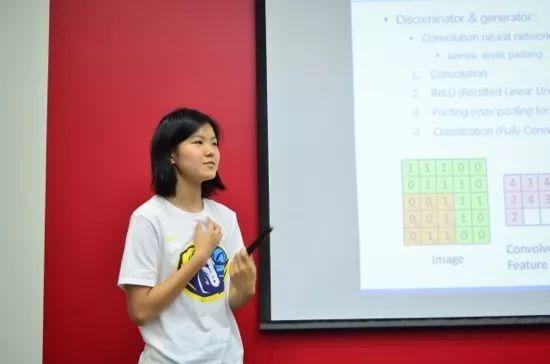
Group Presentation SessionsThe research and application of AI would make a significant impact on every aspect of the students’ lives now and in the near future. The AI lab program was such an eye-opening to SHSID students that they look forward to more exciting learnings in the next school year!
人工智能實(shí)驗(yàn)室學(xué)期總結(jié)
上學(xué)期末,上海交通大學(xué)與上海中學(xué)聯(lián)手創(chuàng)辦了一個(gè)為高中生學(xué)習(xí)計(jì)算機(jī)視覺與機(jī)器學(xué)習(xí)的人工智能實(shí)驗(yàn)室。來自上中國際的15位同學(xué)參加了該項(xiàng)目。
在接下來的寒假里,學(xué)生們領(lǐng)回大量的閱讀材料和編碼練習(xí)作業(yè)作為項(xiàng)目的準(zhǔn)備階段。從本學(xué)期開始,人工智能實(shí)驗(yàn)室的學(xué)習(xí)全面展開。來自上海交通大學(xué)的倪冰冰教授和他的團(tuán)隊(duì)不辭辛苦,每周五下午來到上海中學(xué)校園,帶給同學(xué)們一系列人工智能的專題講座,并輔以實(shí)驗(yàn)室學(xué)習(xí)指導(dǎo)以及作業(yè)討論。最初的幾次講座有一定難度,倪教授和他的團(tuán)隊(duì)的教學(xué)風(fēng)格生動(dòng)活潑,同學(xué)們非常喜愛,贊不絕口。整個(gè)學(xué)期下來,學(xué)生們不僅掌握了很多人工智能領(lǐng)域的知識(shí),還學(xué)習(xí)了如何用不同的 python 庫,并對(duì)代碼中的參數(shù)進(jìn)行了調(diào)試得出不同的結(jié)果。本學(xué)期以三個(gè)主題的小組項(xiàng)目結(jié)束:生成式對(duì)抗網(wǎng)絡(luò)、推薦系統(tǒng)和檢測(cè)分割。
6月14日下午,學(xué)生們?cè)诹卫蠋熍c何老師的帶領(lǐng)下,參觀了上海交通大學(xué)人工智能研究院,作為本學(xué)期的最后一次活動(dòng)。匯報(bào)會(huì)在上海交通大學(xué)人工智能研究所所長何老師的致辭中拉開序幕。他歡迎上中國際的學(xué)生加入這個(gè)項(xiàng)目,并談到了他對(duì)人工智能研究的展望。隨后,課程的主講老師倪教授總結(jié)了本學(xué)期學(xué)習(xí)的主要內(nèi)容,并介紹了后面幾個(gè)學(xué)期的教學(xué)規(guī)劃。他提到讓同學(xué)們學(xué)習(xí)更具實(shí)際性的領(lǐng)域,如人臉檢測(cè)、圖像搜索推薦、和無人車的設(shè)計(jì)。這些有趣又實(shí)用的課題激發(fā)了學(xué)生們對(duì)人工智能研究的興趣。除此之外,倪教授還提到了未來能做一些更具挑戰(zhàn)性的研究項(xiàng)目,希望提高學(xué)生們更多方面的能力。
接下來學(xué)生們以小組形式——展示了他們?cè)谶^去的一學(xué)期中所學(xué)到的寶貴知識(shí)、他們對(duì)項(xiàng)目的思考和成果,以及對(duì)后續(xù)課程的一些建議。學(xué)生們提及人工智能課程的學(xué)習(xí)讓他們受益匪淺,有些學(xué)生甚至在校外的比賽及其他活動(dòng)中,很好地應(yīng)用了課上所學(xué)。最后,廖輝老師做了會(huì)議結(jié)束寄語:他希望同學(xué)們?cè)谀呓淌诩捌鋱F(tuán)隊(duì)的指導(dǎo)下,再接再厲,更廣泛、更深入地學(xué)習(xí)人工智能。此次上海交通大學(xué)之旅以參觀學(xué)院里的人工智能實(shí)驗(yàn)室圓滿結(jié)束,學(xué)生們?cè)谀抢锟吹搅巳斯ぶ悄茉诓煌I(lǐng)域上的應(yīng)用,以及通過人工智能研究產(chǎn)生的令人炫目的成果。
人工智能的研究和應(yīng)用將對(duì)學(xué)生們今后的生活產(chǎn)生深遠(yuǎn)的影響。人工智能實(shí)驗(yàn)室項(xiàng)目讓他們大開眼界,他們也期待著在下一學(xué)年有更多令人興奮的收獲!
文:唐師禹 9(10)
Written by:Adelynn Tang 9(10)
Pictures by: Liao Hui
Edited by: He Tianzhou
以上就是關(guān)于【G9-11 | AI Lab Semester Summary 人工智能實(shí)驗(yàn)室學(xué)期總結(jié)】的解答,如需了解學(xué)校/賽事/課程動(dòng)態(tài),可至翰林教育官網(wǎng)獲取更多信息。
往期文章閱讀推薦:
2026年上海萬源城協(xié)和雙語學(xué)校秋招時(shí)間、考情與開放日活動(dòng)全覽
2026年WLSA上海秋招時(shí)間、流程與備考一文全!點(diǎn)擊立看!

翰林AMC8視頻課重磅上線!

國際競(jìng)賽真題資源免費(fèi)領(lǐng)取