從哈佛2019屆畢業(yè)數(shù)據(jù),看美國頂尖本科生的人生規(guī)劃

哈佛2019屆畢業(yè)數(shù)據(jù)
根據(jù)哈佛校報The Crimson報道,哈佛大學(xué)第368屆畢業(yè)典禮于5月30日星期四舉行,主題是,移民創(chuàng)造了夢想,會讓世界更美麗
自此哈佛大學(xué)2019屆本科生正式畢業(yè),而這些學(xué)生的大部分即將步入社會!按照慣例,哈佛校報向所有2019屆本科畢業(yè)生征集畢業(yè)計劃,以下數(shù)據(jù)來自參與校報調(diào)查的受訪者:
當(dāng)談到畢業(yè)規(guī)劃時,哈佛大學(xué)2019屆學(xué)生與往屆相當(dāng)類似:大多數(shù)參與校報調(diào)查的畢業(yè)生將定居?xùn)|西兩岸,在傳統(tǒng)諸如咨詢、金融和技術(shù)等高薪行業(yè)開啟職業(yè)生涯。哈佛畢業(yè)生第一年人均起薪遠(yuǎn)高于全美大學(xué)畢業(yè)生的平均水準(zhǔn)。
When it comes to post-graduate plans, Harvard’s Class of 2019 is pretty similar to its forebears — most surveyed seniors will move to the coasts, work in traditionally high-paying industries like finance or consulting, and draw salaries significantly larger than those seen by the average American college student in the first year after graduation.
在這些畢業(yè)生中,64%將直接工作;16%進(jìn)入研究生院或職業(yè)學(xué)院(醫(yī)學(xué)院、法學(xué)院或商學(xué)院)深造;8%將通過獎學(xué)金計劃繼續(xù)學(xué)業(yè);只有10%尚未確定下一年計劃,但有2%打算到各地旅行尋求詩與遠(yuǎn)方。
A clear majority of respondents — 64 percent — plan to enter the workforce, while 16 percent will attend graduate or professional school. Roughly 8 percent will stick to the books by pursuing fellowship programs, roughly 10 percent are undecided, and just 2 percent expect to spend the first year out of college traveling.
位置為王
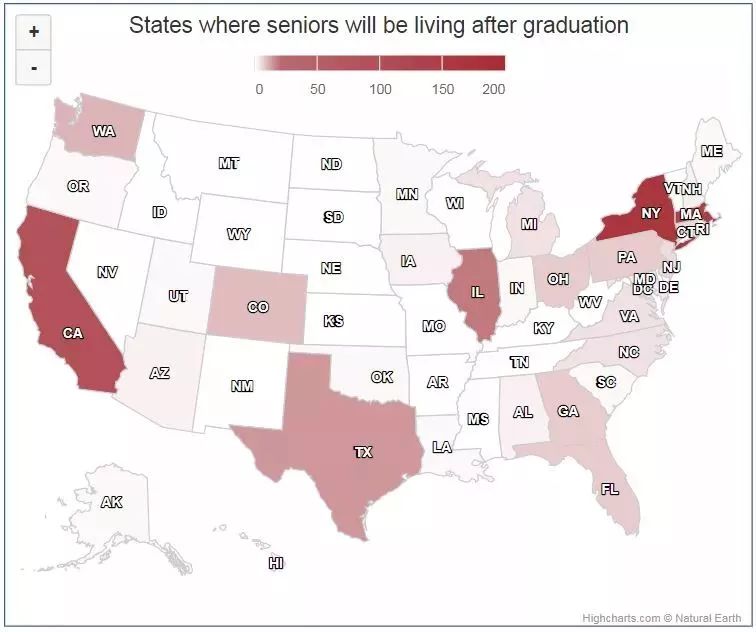
本屆畢業(yè)生畢業(yè)去向與往屆幾乎一致,數(shù)量可觀的哈佛學(xué)生(23%)將在畢業(yè)后前往紐約;而麻州和加州緊隨其后,為第二及第三大目的州,分別接納21%和14%的哈佛2019屆畢業(yè)生。10%的學(xué)生尚未決定去向。11%的畢業(yè)生計劃赴海外發(fā)展,其中超過半數(shù)選擇歐洲。
A majority of surveyed members of the Class of 2019 will be staying on one of the two American coasts after graduation. As in previous years, a plurality of respondents — 23 percent — indicated they plan to move to New York within the next year. The second and third-most popular states among graduating seniors are Massachusetts and California, which will host 21 penrcent and 14 percent of the Class of 2019, respectively. Eleven percent of students plan to live outside of the United States after graduation. Of those, more than half will relocate to Europe. Ten percent of students said they are still undecided about where to live after graduation.
就業(yè)藍(lán)圖
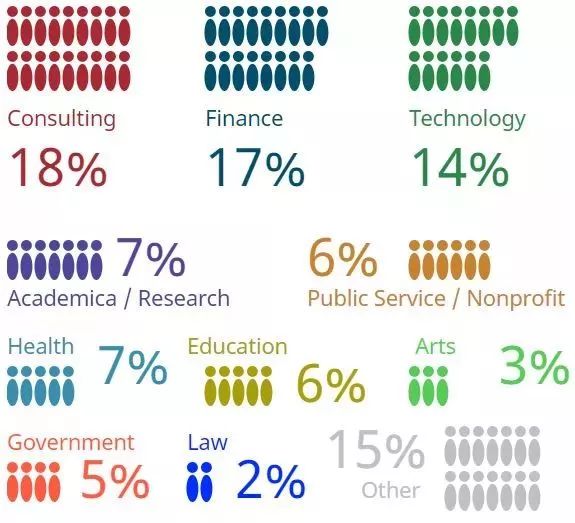
2019屆直接就業(yè)的學(xué)生選擇行業(yè)集中在三大領(lǐng)域:18%在咨詢行業(yè)就職、17%在金融業(yè)工作、而14%將從事科技行業(yè),本屆學(xué)生就業(yè)去向與往年非常相似。
As has been true for the past several years, three industries dominate Harvard seniors’ post-graduate plans. Of respondents who plan to enter the workforce, a plurality — 18 percent — indicated they are going into consulting. Finance and technology clocked in at a close second and third in terms of popularity, drawing 16 and 14 percent of graduating seniors, respectively.
7%的畢業(yè)生選擇從事健康產(chǎn)業(yè),5%的學(xué)生將成為政府部門公務(wù)人員或從事政治相關(guān)工作,6%將進(jìn)入非營利或公共服務(wù)機(jī)構(gòu)、而6%將成為教育工作者。6%的學(xué)生計劃進(jìn)入學(xué)術(shù)界或從事研究工作,而分別有3%和2%的學(xué)生選擇藝術(shù)和法律行業(yè)。
Of surveyed seniors who will enter the workforce, 6 percent indicated they plan to work in the health industry. Five percent will go into government or politics, 7 percent into public service or nonprofit work, and 6 percent into academia or research.
16%的受訪者稱2016年大選結(jié)果(當(dāng)時他們還是大二學(xué)生)對其畢業(yè)計劃造成影響。這其中35%決定放棄尋求聯(lián)邦政府機(jī)關(guān)就職機(jī)會、而15%則由此下定決心服務(wù)公共部門而非私營企業(yè);6%稱希望從政并競選公職。
Sixteen percent of respondents indicated the the 2016 election — which took place when members of the Class of 2019 were sophomores — changed their postgraduate plans. Of those, 35 percent said they decided not to pursue a job in the federal government after the events of November 2016, while 15 percent said they chose to take a job in the public sector rather than in the private sector. Six percent now hope to run for political office.
相比之下,分別有80%、62%和64%從事健康服務(wù)、學(xué)術(shù)研究以及事教育工作的畢業(yè)生為女生。咨詢、金融和技術(shù)三大行業(yè)的性別差異依然存在,不過相比往年程度略有縮減。在2019屆畢業(yè)生中,分別有57%、58%和54%在咨詢、金融和技術(shù)行業(yè)就職者為男生。
Gender gaps in consulting, finance, and technology still exist for the Class of 2019 — but shrank slightly as compared to previous years. Fifty-seven percent of those who indicated they will pursue post-graduate jobs in consulting are male, compared to 58 percent of those who will work in finance and 54 percent of those taking technology jobs.
展望未來十年,數(shù)量可觀的受訪者(17%)表示希望從事健康產(chǎn)業(yè)。學(xué)術(shù)和研究領(lǐng)域則緊隨其后,成為名列第二的熱門領(lǐng)域,11%的受訪者熱切期望于未來十年內(nèi)在學(xué)術(shù)界發(fā)展。僅有2%和5%受訪者認(rèn)為自己在十年后繼續(xù)從事咨詢和金融行業(yè)。
By contrast, 80 percent of those planning to pursue work in the health industry are female; as are 62 percent of those who will work in academia and research; and 64 percent of those who will work in education. Fifty-six percent of surveyed members of all-male final clubs or fraternities will enter finance or consulting, compared to 26 percent of respondents not involved in social organizations. Fifty-three percent of respondents who indicated involvement in a sorority or female final club will work in either finance or consulting.
2019屆畢業(yè)生職業(yè)分布
關(guān)于年薪
平均而言,2019屆選擇就業(yè)的畢業(yè)生的收入遠(yuǎn)遠(yuǎn)高于美國高校2018年畢業(yè)生大學(xué)生所掙的48,000美元。
Once again, the freshest batch of Harvard seniors will make — on average — much more than the average recent graduate in the United States. While the typical American college student can expect to draw roughly $48,000 a year, a slight majority of the Class of 2019 indicated they expect to earn a salary above $70,000 in their first year out of college. Gender discrepancies also persisted; as in previous years, male respondents were more likely to report higher salaries than were female respondents.
全體畢業(yè)生起始薪金
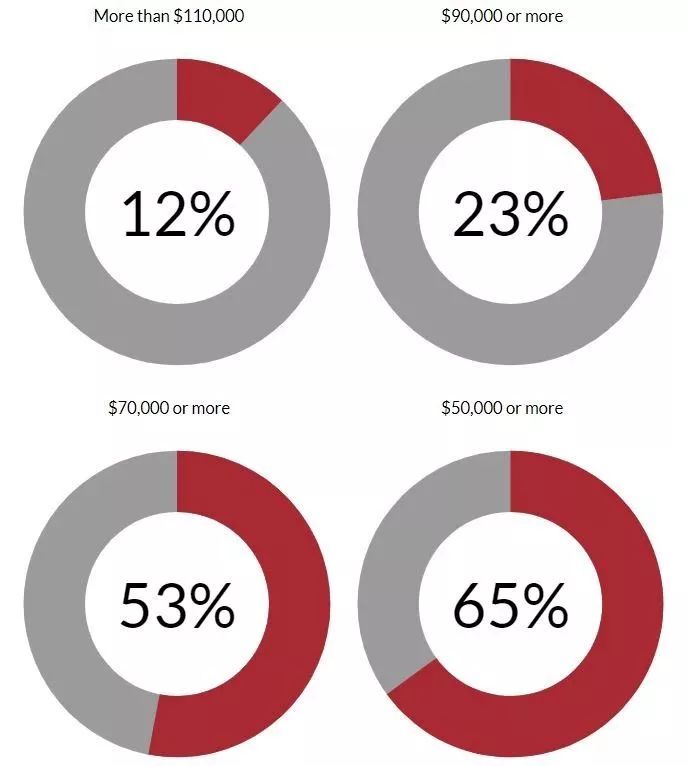
53%受訪者表示第一年收入達(dá)到或超過70,000美元,其中包括12%受訪者首年收入不少于110,000美元。9%的受訪者認(rèn)為他們第一年年薪將低于30,000美元,包括3%將任職無收入的公益崗位。
Fifty-three percent of surveyed Harvard seniors said they will earn salaries of $70,000 or more in their first year out of school, including 12 percent who indicated they will draw more than $110,000. Nine percent of surveyed students said they will earn less than $30,000, while 3 percent indicated they expect to take unpaid jobs.
男生起始薪金
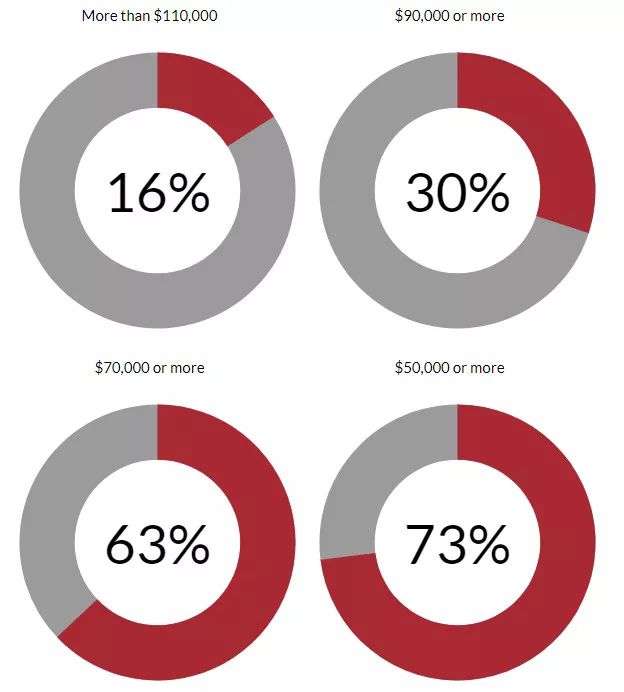
性別差異依然存在,與往年一樣,男生薪水高于女性。17%男生首年收入不少于110,000美元,而僅有8%的女生同樣如此;64% 的男生工資超過 7 萬美元,女生為 44%。
Sixty-four percent of male respondents indicated they expect to earn more than $70,000 each year, while 44 percent of female survey takers indicated the same. Seventeen percent of male respondents said they will earn more than $110,000, compared to just 8 percent of female respondents.
女生起始薪金
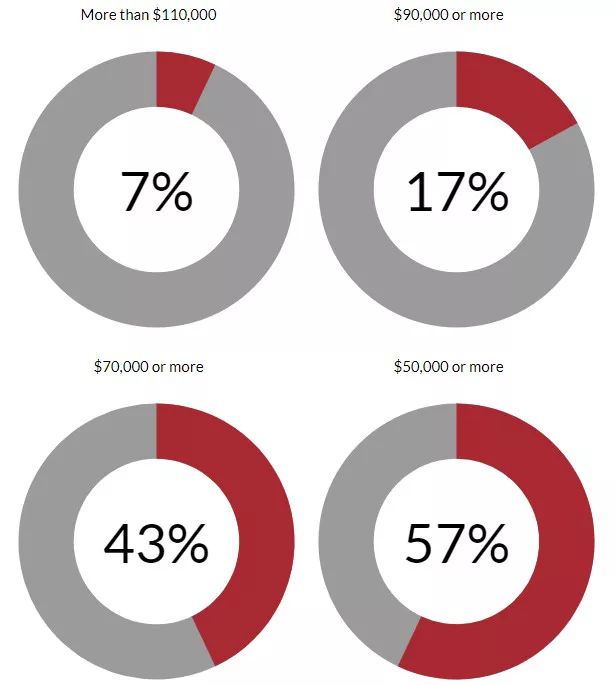
大部分受訪者(58%)期望在工作第一年就收獲獎金(bonus),其中22%的受訪者希望收到的獎金超過20,000美元。
As was the case last year, a majority of respondents — 58 percent — said they expect to earn a bonus in their first year of work. Roughly 22 percent believe the bonus will total more than $20,000.
就職于金融業(yè)和咨詢業(yè)的受訪者中,分別有68%和23%期望獎金額超過20,000美元,而93%就職于學(xué)術(shù)界、公共服務(wù)、教育和非營利性領(lǐng)域的受訪者壓根沒有指望有外快進(jìn)賬。
Sixty-eight percent of students working in finance expect to earn a bonus totaling more than $20,000 in their first year on the job, as do 23 percent of seniors who will take consulting jobs. No students who plan to work in academia expect to draw bonuses; nor do the vast majority — 93 percent — of respondents who intend to work in public service or nonprofit jobs.
家庭背景
約62%的受訪者承認(rèn)畢業(yè)后仍將從父母處獲得財務(wù)支持,這包括17%預(yù)計在房租或其他生活費用方面得到“相當(dāng)”程度的幫助。
Sixty-two percent of graduating seniors said they expect to receive some kind of financial assistance from their parents in the first year after graduation, with 17 percent indicating they expect that that support will be “substantial” — most likely coming in the form of rent or living expenses.
18%的受訪者表示他們畢業(yè)后需要償還學(xué)費貸款。在這些學(xué)生中,31%認(rèn)為貸款對畢業(yè)之后的人生規(guī)劃造成影響。
Eighteen percent of respondents indicated they will graduate from Harvard with student loans. Of those who will leave the school with student loans, 31 percent said the loans affected their post-graduate plans.
約20%的受訪者相信其家庭社會經(jīng)濟(jì)地位“極大”影響了他們的畢業(yè)規(guī)劃;另外52%認(rèn)為畢業(yè)規(guī)劃“一定程度上”與家庭社會經(jīng)濟(jì)地位有關(guān);剩余28%則認(rèn)為其家庭經(jīng)濟(jì)狀況與畢業(yè)選擇毫無關(guān)系。
Twenty percent of surveyed seniors said their family’s socioeconomic status “greatly” informed their post-graduate plans, while 28 percent indicated their family’s socioeconomic status did not inform their post-college decision-making. The majority of respondents — 52 percent — indicated their family’s socioeconomic situation “somewhat” informed their post-Harvard plans.
以上就是關(guān)于【從哈佛2019屆畢業(yè)數(shù)據(jù),看美國頂尖本科生的人生規(guī)劃】的解答,如需了解學(xué)校/賽事/課程動態(tài),可至翰林教育官網(wǎng)獲取更多信息。
往期文章閱讀推薦:
范德堡大學(xué)2029Fall恢復(fù)標(biāo)化!黃仁勛豪捐5億,卻沒投給AI?
重磅!College Transitions 2026美本工程排名出爐!MIT登頂、斯坦福僅列第十...


翰林AMC8視頻課重磅上線!

國際競賽真題資源免費領(lǐng)取






