【升學(xué)指導(dǎo)】解密美國大學(xué)排名 | What Do College Rankings Actually Mean?

解密美國大學(xué)排名
How Useful Are College Rankings?
What Do They Actually Mean?
導(dǎo)語
又是一年大學(xué)申請季,市面上又出現(xiàn)了數(shù)十種各不相同的大學(xué)排名體系,榮登Top20的學(xué)校就會讓中國家長和學(xué)生們趨之若鶩。那么,這些排名真的靠譜嗎?他們到底是按照什么標準排出來的?
七寶德懷特的資深升學(xué)指導(dǎo)主任Mr. Rafael Katz將為你揭開大學(xué)排名的神秘面紗......

關(guān)世寧 Rafael Katz
七寶德懷特升學(xué)指導(dǎo)主任
布朗大學(xué)、耶魯大學(xué)畢業(yè)
UCLA大中華區(qū)招生官
當我和家長學(xué)生聊大學(xué)列表時,我發(fā)現(xiàn)自己總是在說Top20大學(xué)、Top50大學(xué),使用這些排名的原因自然是因為它們很方便。如果我告訴一個學(xué)生,“你的成績足以考進排名前20的大學(xué)”,這里的“排名前20”其實只是泛指那些競爭激烈的頂尖大學(xué)。既然排名在大學(xué)申請中如此被大家重視,今天我們不妨來探究一下,排名究竟排的是什么?排名高低又意味著什么?
When I am talking to students and parents about college lists, I find myself frequently referring to top twenty schools or top fifty schools. The main reason I use rankings is that they are convenient.If I say to a student you have good enough grades to get into a top twenty school, top twenty basically means one of the most selective schools. Since rankings have become such a pervasive part of the college admissions conversation, I think it is worthwhile to look more closely at what the rankings are and what they really mean.
每年的大學(xué)排名都有起有落,比如斯坦福大學(xué)曾常年被U.S. News排在首位,今年竟然跌到了第七,這說明了什么?難道今年斯坦福比往年更容易考進了嗎?UCLA今年擠進了Top20,位列第19,第一次超越加州大學(xué)伯克利分校,難道這意味著UCLA比伯克利好嗎?具體好在哪里呢?
People follow the yearly rankings and look for changes. It is natural to attach significance if a college goes up or down year by year.Does it really say something meaningful about Stanford that they were ranked no. 1 by U.S. news for several years and now have fallen to seven?Does that mean Stanford has gotten worse or might be easier to get into?What does it mean that UCLA is now ranked 19 and in the top 20? For the first time, it is ranked higher than UC Berkeley. Does that mean it is better than UC Berkeley?Better how?
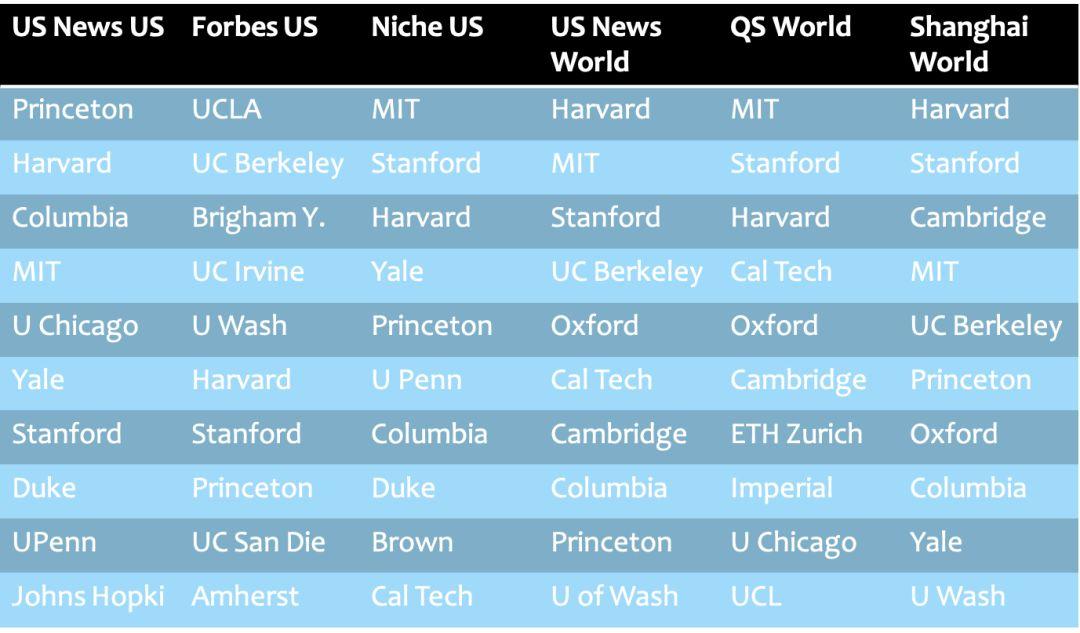
現(xiàn)在市面上的大學(xué)排名體系數(shù)不勝數(shù):美國新聞和世界報導(dǎo)(U.S. News),福布斯,QS世界大學(xué)排名,泰晤士報大學(xué)排名,等等。其中,U.S. News資歷最老,也被認為是最權(quán)威的排名。當留學(xué)中介讓你簽升學(xué)服務(wù)的合同時,你選擇的大學(xué)在U.S.News的排名決定了你支付的費用。然而,如果對比不同的排名列表,你會發(fā)現(xiàn)關(guān)于頂尖大學(xué)的排位永遠無法達成一致。比如說,今年U.S.News將哥倫比亞大學(xué)排第三,福布斯卻把楊百翰大學(xué)排第三,利基把哈佛大學(xué)排第三,我們究竟該信哪一個排名?今年普林斯頓大學(xué)在U.S.News的美國大學(xué)排行榜上榮居榜首,但在世界大學(xué)排行榜上卻排第九,哈佛反而排第一。這又是什么道理?難道普林斯頓在全美是最棒的大學(xué),但在全世界就比哈佛大學(xué)差了?這個邏輯我實在不懂。
There are numerous college ranking systems; U.S. News and World Report, Forbes, Niche, Times Higher Ed., The Shanghai Index, etc. U.S. News is the oldest and usually considered the authority in rankings.When an agent is having a parent sign a contract for college admissions services, the U.S. News rankings can often determine the cost of the service. If you compare different ranking lists, it is clear to see that there is no agreement about what the top colleges are.For example, this year US News ranks Columbia #3, Forbes ranks Brigham Young #3, and Niche ranks Harvard #3. Which one should we trust? Many ranking systems have different lists for world universities and U.S. universities.This year U. S. News ranks Princeton #1 on the national list but then #9 on the World list, with Harvard as number one.Does that mean that Princeton is best when compared to U.S. colleges but not as good when compared to colleges around the world?I’m not sure that I understand that concept.
大多數(shù)人在提到大學(xué)排名時,都對排名的真實含義一無所知。就拿U.S.News來分析,你會發(fā)現(xiàn)一所大學(xué)獲得高排名的原因?qū)δ銇碚f并不重要。對U.S.News排名來說,評比中占比最大的權(quán)重是所謂的“結(jié)果”,這個因素從去年的占比30%已經(jīng)漲到了今年的35%,大概這能解釋為什么UCLA在排名上趕超伯克利。“結(jié)果”評估的方面包括:學(xué)生畢業(yè)率,家族中第一個大學(xué)生或少數(shù)族裔的學(xué)生比重。作為學(xué)生和家長,你真的關(guān)心大學(xué)里的同學(xué)少數(shù)民族多不多,或者家庭收入低不低嗎?
Most people refer to college rankings without knowing what they really mean.If you analyze the U.S. News, the most widely quoted ranking system, you might discover that some reasons a university has a high ranking are not things that are important to you. The largest factor for U.S. News rankings is what they call `Outcomes’, this factor went up in importance from 30% last year to 35% this year and probably accounts for why UCLA is now ranked higher than UC Berkeley.Outcomes includes factors like how many students graduate and how many students are from underrepresented populations like first generation college students, or minorities.As a student or parent, you might ask yourself how important in ethnic diversity and having classmates with low incomes to you?
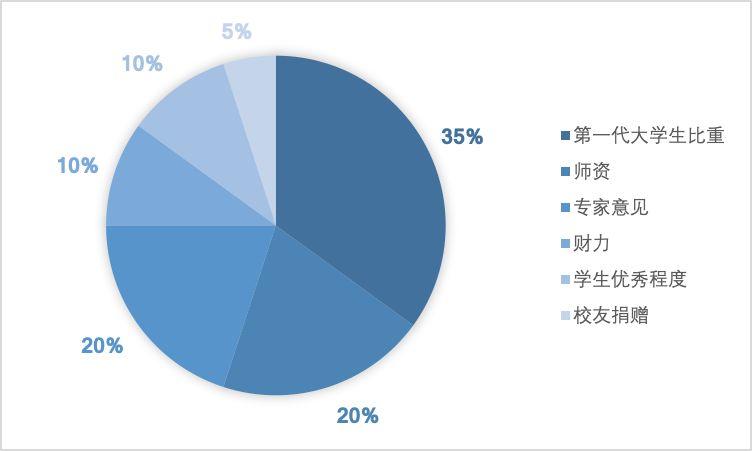
更加令人訝異的是,“專家意見”(學(xué)生及升學(xué)指導(dǎo)的觀點)的比重從22.5%降低到了20%。“學(xué)生優(yōu)秀程度”從12.5%跌至10%。大家最為關(guān)心的生源質(zhì)量和學(xué)生成就竟然僅占十分之一!
The factor of `Expert Opinion’, ( what students and counselors think about the college), was reduced from 22.5% to 20%.`Student Excellence’ was reduced from 12.5% to10% this year. I’m guessing that many students and parents would value `Student Excellence’, which means the quality and accomplishments of students, very highly.
對我來說,比大學(xué)排名更有用的數(shù)據(jù)是大學(xué)錄取率。一所大學(xué)每年錄取百分之多少的學(xué)生?ED和RD的錄取率是多少?中國學(xué)生的錄取率是多少?這所大學(xué)以前錄取過幾個七寶德懷特的學(xué)生?這些才是在制定大學(xué)列表時真正有用的信息。斯坦福大學(xué)今年雖然被排在第七,但它的錄取率依然只有5%,世界最低之一。比如兩年前,我校的Bailey同學(xué)在申請斯坦福時,斯坦福排名下降與否對她來說就毫無意義,因為她確定自己喜歡斯坦福的教育。
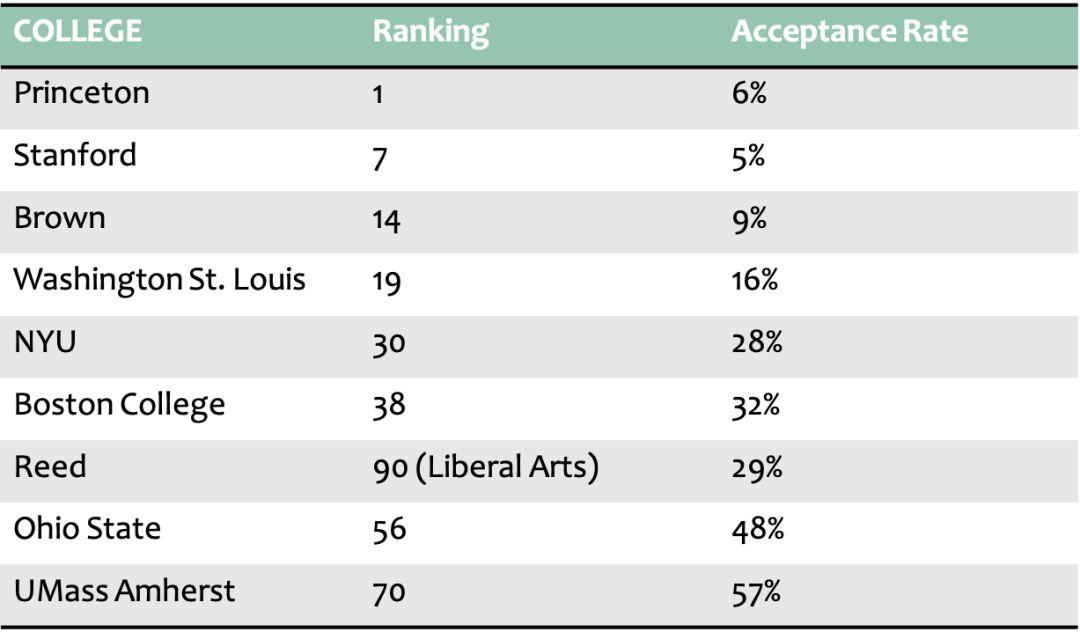
For me, a factor that is more useful than rankings is acceptance rate. What percentage of students does a college admit each year? What is the colleges percentage of ED and RD acceptances?What is the percentage of Chinese students admitted? How many QD students have they accepted in the past. These factors are useful to know when making college lists.Stanford is ranked 7 this year but it still has one of the lowest acceptance rates at less than 5%. When one of our students was accepted by Stanford two years ago, Stanford’s U.S. News ranking dropped after being at number one several years in a row. This was quite meaningless to our student, Bailey, who beat the odds by being accepted and more importantly loves the education she is getting at Stanford.
最后,祝愿大家在早申請季收獲滿滿!
以上就是關(guān)于【【升學(xué)指導(dǎo)】解密美國大學(xué)排名 | What Do College Rankings Actually Mean?】的解答,如需了解學(xué)校/賽事/課程動態(tài),可至翰林教育官網(wǎng)獲取更多信息。
往期文章閱讀推薦:
體制內(nèi)轉(zhuǎn)軌國際學(xué)校,暑期如何提升學(xué)科英語能力彎道超車!
上海IB二梯隊協(xié)和古北就讀體驗:師資、課程、食堂全拆解


翰林AMC8視頻課重磅上線!

國際競賽真題資源免費領(lǐng)取






